Commercial vs. Consumer Dash Cams for Fleets: 2026 Guide
20 Oct 2026
driver coaching


Improve fleet safety, reduce operating costs, and optimize field performance with an easy-to-use platform for video, GPS tracking, driver coaching, maintenance, asset tracking, and real-time fleet insights.
Drive your total fleet operations with SureCam’s all-in-one video telematics solution.
Valuable guides, case studies, and videos to help you optimize fleet management, safety, and productivity with telematics solutions.
Values, job opportunities, and ways to connect or partner with SureCam.
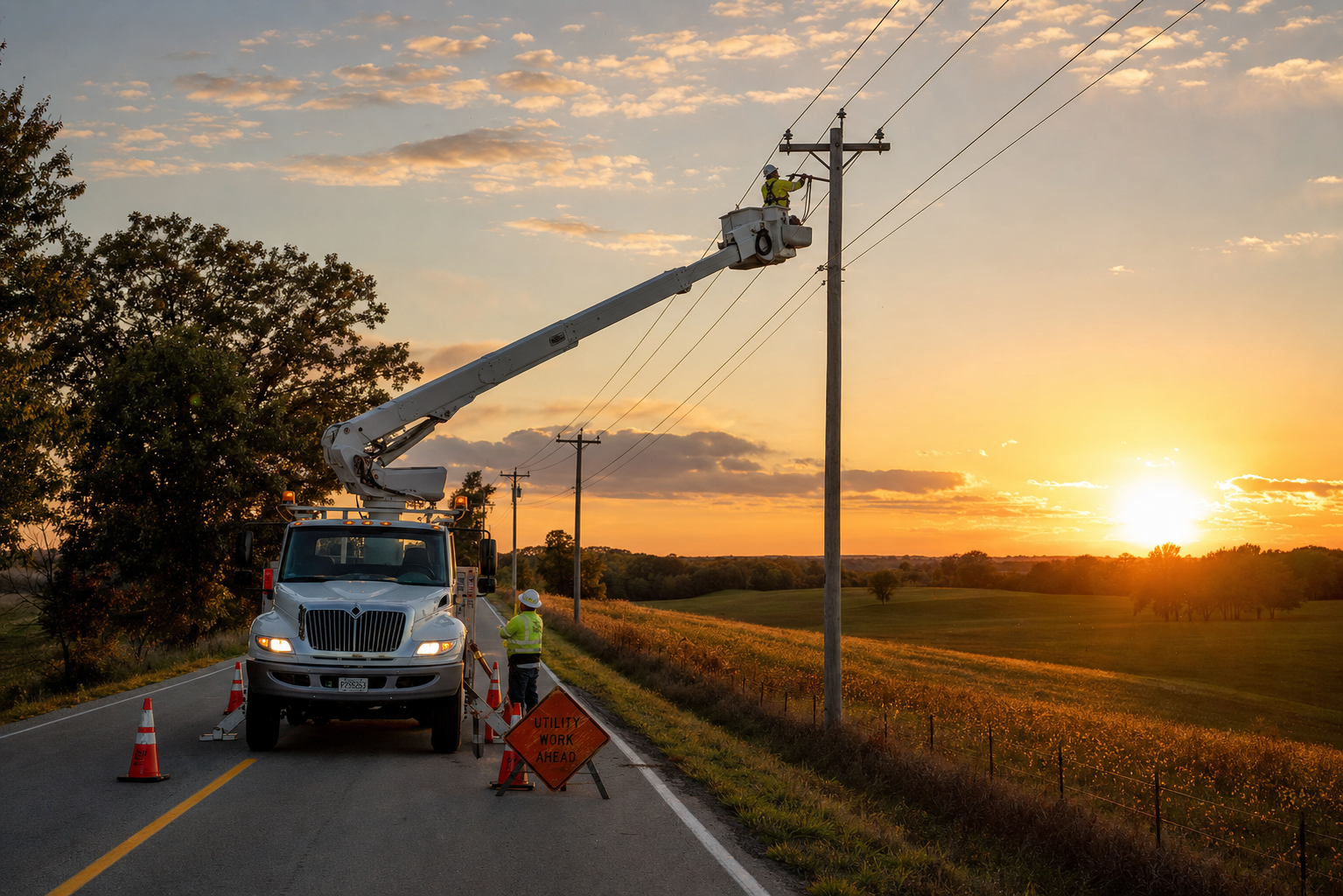




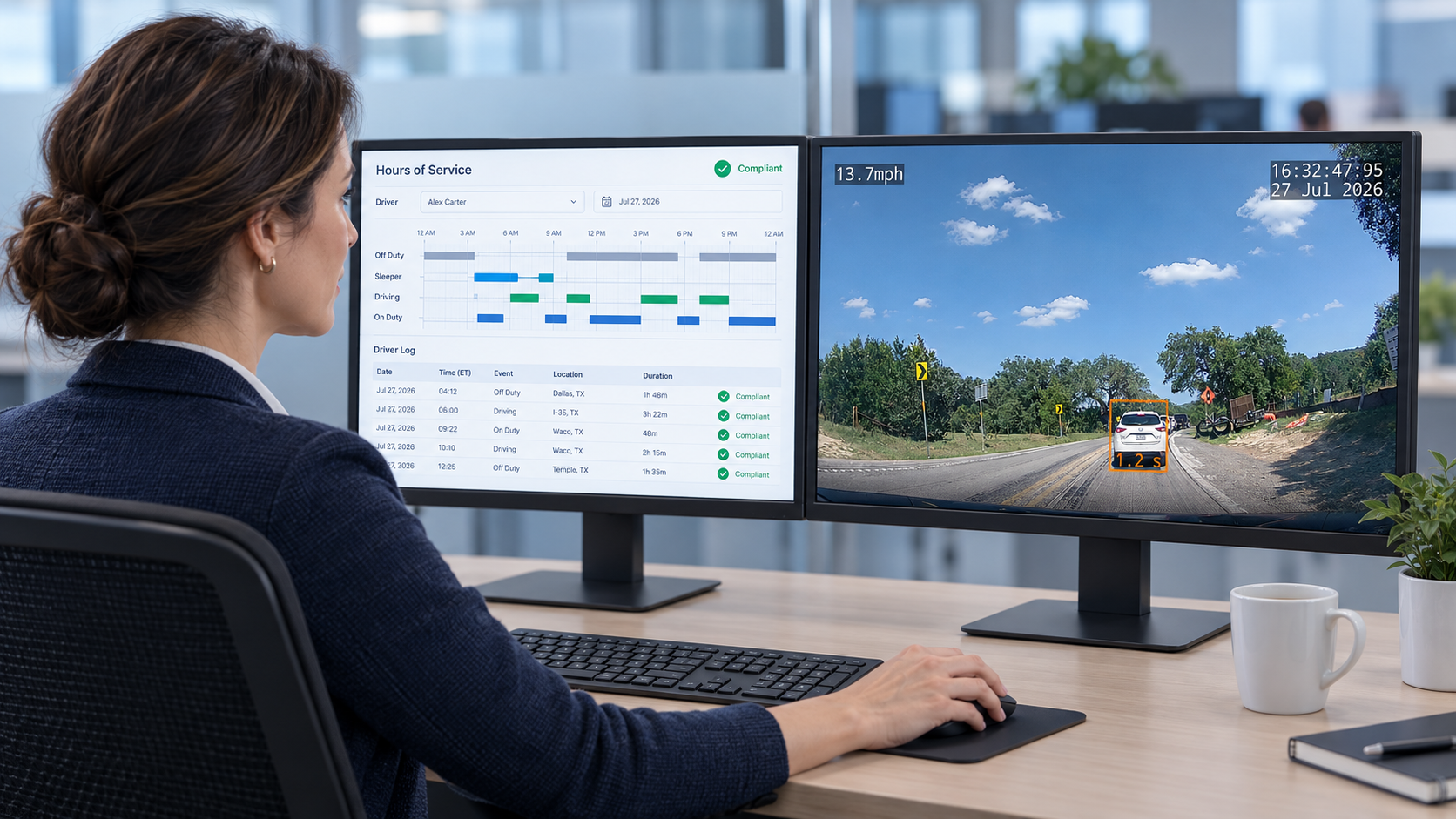
Field service fleets operate differently from long-haul trucking. A 40-truck HVAC company, a 50-vehicle traffic control outfit, a 75-unit local delivery fleet: these teams need real-time driver behavior visibility and quick incident response. They do not need in-cab electronic logging devices, compliance dashboards, or routing algorithms that require dedicated ops analysts.
Yet when small and mid-sized fleet owners evaluate driver monitoring systems, they encounter the same problem: vendors bundle camera technology with elaborate platforms designed for compliance-heavy, highly regulated operations. The result is overkill at premium pricing. The team gets overwhelmed. The cameras sit half-deployed.
This guide separates focused driver monitoring systems from bloated all-in-one platforms. It addresses the core decision field service leaders face: what combination of features, cost, and implementation ease delivers safety and operational visibility without organizational friction.
"Bloat" in fleet software means one thing: features you do not need bundled with features you do. For a field service fleet without Hours of Service regulation (HOS), this typically means ELDs, dispatch optimization, maintenance management, and driver coaching all packaged as a single monthly fee. You are paying for complexity that adds little to zero value.
Here is what bloat looks like in practice. A 30-truck service fleet switches from a simple telematics provider to an all-in-one platform. The software includes video monitoring, which they want. But the platform also includes ELD integration, automated DVIR workflows, predictive maintenance alerts, and fuel card reconciliation. The fleet manager now has six dashboards instead of one. Drivers see in-cab screens that flash warnings and log entries. Support tickets pile up.
Bloat compounds adoption friction. Small teams without dedicated IT resources and compliance staff cannot absorb the setup, training, and ongoing management burden that all-in-one platforms impose. Drivers resist. Managers stop logging in. The cameras sit underutilized. The investment underperforms.
Before evaluating any system, clarify whether your fleet operates under Hours of Service regulation. This single distinction separates appropriate solutions from over-engineered ones.
You need ELD compliance if: Your drivers operate in interstate commerce and your fleet exceeds 6 vehicles engaged in commercial transportation. The FMCSA mandates electronic record-keeping under 49 CFR Part 395. If this applies, an ELD is required. You need a system addressing HOS alongside driver monitoring.
You do not need ELD if: Your fleet operates intrastate only or runs fewer vehicles than compliance thresholds. Many small field service fleets fall here: local HVAC contractors, traffic control crews, municipal service vehicles. If this describes you, an ELD adds no compliance value and only friction.
The distinction matters because it changes vendor strategy. Compliance-first platforms (Motive, Samsara) bake ELD into their core product narrative. Focused vendors (SureCam, Lytx in focused mode) strip away compliance components and price accordingly.
If your fleet does not require HOS logging, an ELD-first platform locks you into paying for capabilities you will never activate.
The table below compares how each major vendor approaches small field service fleets that do not require ELD compliance. The key distinction: does the platform assume you need regulatory compliance, or does it focus on safety and visibility?
| Dimension | SureCam | Lytx | Samsara | Motive |
|---|---|---|---|---|
| Core DNA | Video + GPS: safety and visibility without compliance bloat | Video-first safety with optional tracking/ELD add-ons | ELD-first platform: HOS, dispatch, maintenance, compliance tooling | ELD + compliance automation: workflows, CSA scoring |
| Driver Monitoring Focus | Real-time video, driver coaching, incident alerts, claims defense | AI-driven video coaching, safety scoring, optional tracking | Broad operations stack; cameras + ELD + routing + maintenance | Automated compliance workflows, CSA coaching, ELD |
| ELD / Compliance | No native ELD; integrates with 3rd-party stacks (Geotab, etc.) | Optional ELD add-on; not the headline product | ELD is a headline feature; marketed for HOS, DVIR | ELD is flagship; compliance automation is core |
| Pricing Model | Per-vehicle/month for camera + software; scales cleanly | Per-vehicle/month; pricing scales with add-ons | All-in-one pricing bundled across ELD, cameras, dispatch, maintenance | All-in-one pricing for ELD, cameras, workflow automation |
| Typical Sweet Spot | Non-ELD field service: HVAC, Utility, local delivery, and construction fleets with 5–500 vehicles | Mixed small-to-mid fleets valuing safety and optional tracking | Mixed long-haul/regional fleets requiring ELD + dispatch + maintenance integration | Fleets where ELD compliance, CSA scoring, and workflow automation are central |
| Overkill Risk for Non-ELD Field Fleets | Low: you pay for video, GPS, coaching; nothing else | Low-to-medium: you can stay in focused video/track mode, but platform story assumes larger compliance-heavy fleets | High: you pay for ELD, dispatch, maintenance, docs even if you only need cameras + GPS | High: ELD and compliance workflows still shape pricing and complexity even if you never activate them |
When evaluating a system, focus on these core capabilities. Anything beyond this checklist likely represents platform bloat.
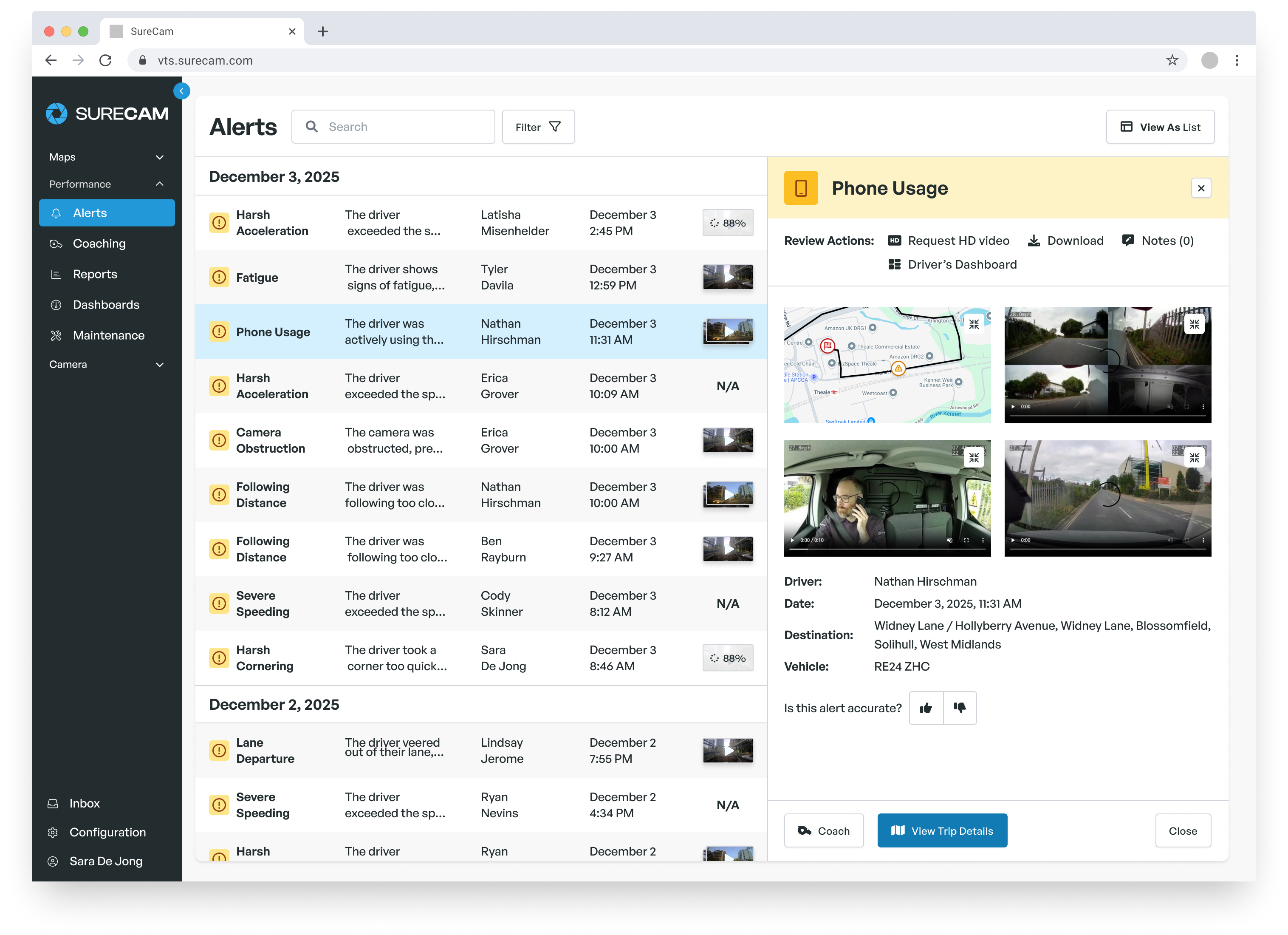
The camera detects a collision, hard braking, or harsh cornering via g-force sensors or AI video analysis. You receive an alert within seconds, not hours. This is the single most valuable feature for field service fleets because it allows immediate response: check on driver safety, open the incident window while memory is fresh, gather witness information before drivers scatter, begin the claims process before the third party locks in their narrative.
Systems that bundle incident data with hours-of-service logs, compliance warnings, and maintenance alerts dilute the signal. You want the alert to surface the actual incident without organizational noise.
Harsh event triggered? The system surfaces the video clip, g-force data (speed, acceleration forces), and contextual details. Managers review footage and coach drivers on specific behaviors: "I saw the hard brake on Main Street at 2:47 PM. The car ahead stopped suddenly. You handled it well, but watch following distance on this route." This is coaching rooted in evidence, not in generic safety platitudes.
Coaching works. It requires no compliance officer, no formal DVIR workflows, no regulatory sign-off. It requires video, context, and a manager willing to have a two-minute conversation with a driver.
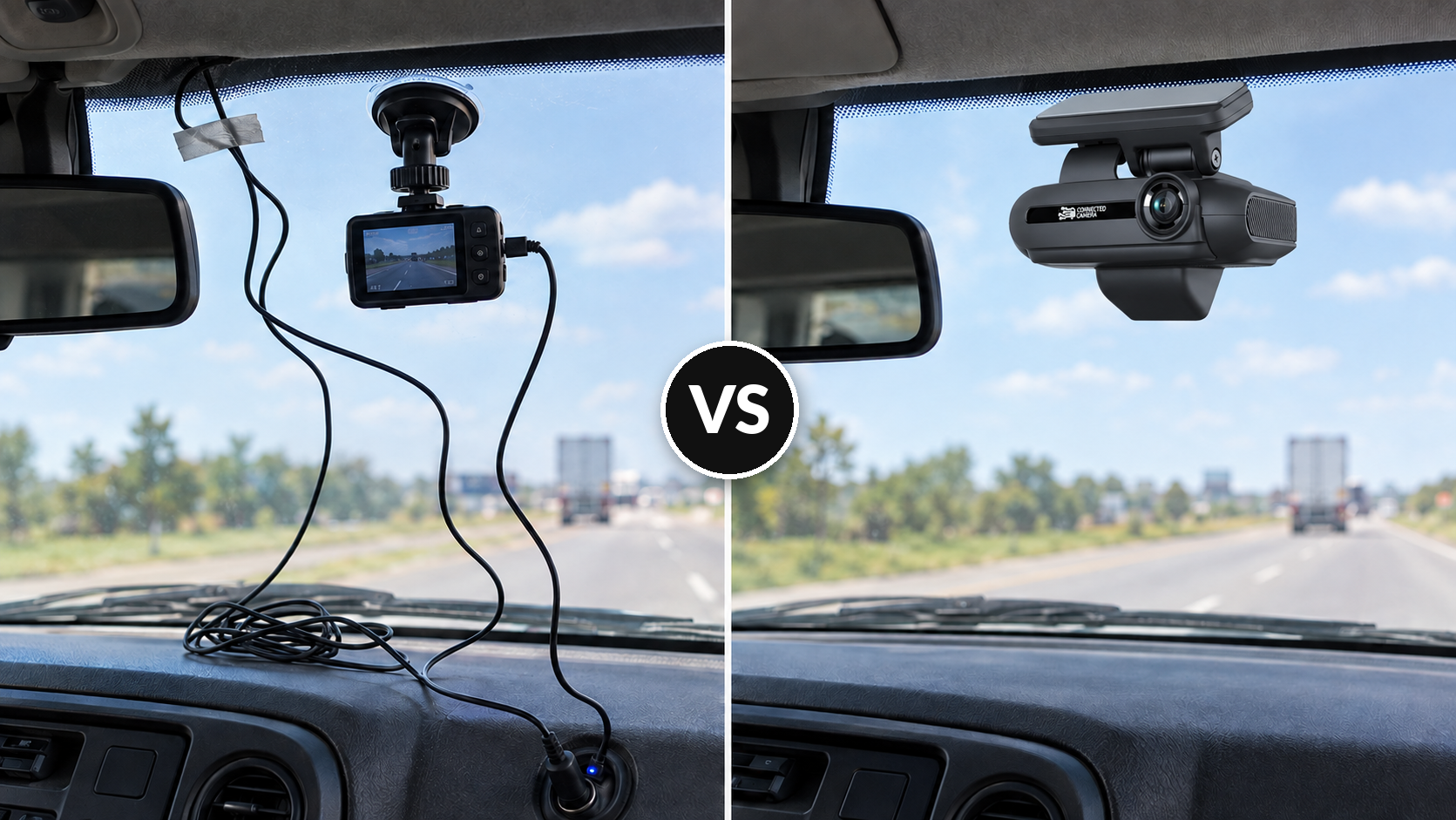
When you need to verify driver location, confirm a job completion, or assess a customer complaint, you access live or recent video instantly. No SD card retrieval. No "wait for the managed-service team to pull footage." This capability separates connected cameras from legacy SD-card systems and justifies the shift to cloud-based storage.
The operational value is immediate. A customer disputes service timing, and you pull video from the device timestamp to verify arrival time. A driver reports an incident, and you review footage within seconds instead of days. A safety concern surfaces, and you can watch the exact moment it occurred rather than reconstructing from police reports or witness statements. This real-time access does cost more per month than SD-card systems (you are paying for cellular data transmission and cloud storage), but the value in claims defense, safety investigation, and operational clarity easily justifies the premium.
The web interface or mobile app should let you pull video without opening a support ticket. You should not need an account manager to adjust camera settings, configure geofences, or create driver performance reports. Simple systems allow self-service; complex systems force you to call support or wait for reports to run overnight.
If you already use Geotab, Samsara, or another telematics platform, the camera system should integrate cleanly. Video should surface in your existing dashboard, not require you to log into a separate portal. Clean integration reduces training burden and ensures the camera data actually informs your operational decisions instead of sitting isolated.
Do not overweight integration need. If the core camera system is simple and your existing stack is reasonably open, loose integration is better than choosing a bloated all-in-one that tries to own every layer.
Maneri Traffic Control operates across California highways and construction zones. The company installs traffic control systems, manages lane closures, and staffs work zones. The work is fast-paced, hazardous, and depends entirely on driver behavior. Two employees died in highway incidents before the technology investment began.
The challenge: small team (30+ vehicles, 70+ employees), limited administrative resources, urgent need for real-time driver visibility and safety accountability. Previous telematics providers had intermittent failures and poor customer support.
Maneri chose SureCam for one reason: focused capability with live monitoring. Forward and rear-facing cameras plus LiveCheck, a real-time video feature that allowed supervisors to monitor job sites and driver behavior remotely during work hours. No ELD. No maintenance workflows. No dispatch algorithms. Just cameras and live visibility.
The results:
One critical detail: the safety benefits are compounded when Maneri reframed the technology culturally. Supervisors used LiveCheck not as a surveillance tool but as a support mechanism. Drivers saw cameras as protection, not punishment. When video exonerated a driver in a customer dispute, the entire team's perception of the tool shifted. Trust moved from resistance to acceptance to advocacy.
This trajectory is common in field service fleets that choose focused systems. The technology works because it solves a real problem (visibility, coaching, claims defense) without imposing organizational burden (compliance workflows, bloated interfaces, training overhead). Adoption accelerates. Value compounds.
Fleets that choose bloated platforms rarely reach this state. The complexity itself becomes the barrier.
When evaluating vendors, ask about the implementation approach. Can you self-install, or does the vendor require professional installation? Self-install reduces deployment time and keeps vehicles on the road during rollout.
Training burden matters. If vendor training takes two weeks, you have found a complexity problem. Simple systems train in hours. How long until your team goes from purchase to operational proficiency?
Ask vendors: "Walk me through the first 30 days. When are my teams fully operational and pulling incident footage?" Vendors with bloated platforms struggle to give a clear, fast answer. Focused vendors answer within days.
Drivers resist monitoring for two reasons: surveillance concern or work disruption. Both are solvable.
Surveillance concerns fade when drivers see the system protect them. Video exonerates a driver in a false claim. Maneri crews saw this repeatedly. Skepticism moved to acceptance.
Work disruption arises when systems are complex. In-cab screens, compliance warnings, and log management interrupt the driver's day. Simple camera systems require no driver interaction. The camera runs. Video uploads. Coaching happens asynchronously. The driver's job does not change.
All-in-one platforms mandate in-cab devices and compliance workflows that interrupt the driver's day. This friction is baked into the product. Adoption suffers as a result.
Field service fleets thrive with focused driver monitoring systems, not bloated all-in-one platforms. The difference:
If your fleet does not require ELD compliance, do not pay for an ELD-first platform. If your team cannot support five dashboards and ten workflows, do not buy an all-in-one system. Evaluate vendors against the checklist above. Prioritize implementation speed, ease of use, and cost. Ask for references from small fleets in your vertical.
The best AI driver monitoring system for your field service fleet is the one your team will actually use, that solves real safety and operational visibility problems, and that does not extract an organizational tax to maintain. Simplicity wins. Click here to schedule a quick call with one of our telematics experts today.