Three Risks on Every Job: Why Moving Fleets Need 360° Coverage
Moving companies face road incidents, property damage disputes, and roadside worker exposure on every job they run. A single forward-facing camera addresses only one of those three. A 360° camera system covers the full perimeter, documenting conditions at pickup and delivery, backing in tight residential spaces, and the environment around workers handling freight near active traffic.
The difference between a moving fleet and most commercial fleets goes beyond the vehicles. A concrete truck driver drops a load and leaves. An HVAC technician completes a service call and drives to the next stop. A moving crew parks a 26-foot box truck on a city street, carries furniture through a residence, loads property worth tens of thousands of dollars, and hands it over to a customer who is already stressed about the move. The driver manages the vehicle, the crew, and the customer relationship simultaneously. Every element of that interaction creates a potential liability moment.
That combination of road exposure, property handling, and customer proximity makes perimeter camera coverage less of an optional upgrade and more of an operational requirement.
False Damage Claims: The Cost That Compounds Quietly
Property damage disputes produce the highest-frequency liability events in residential moving. Most arise not from negligence, but from the absence of timestamped documentation at the moment goods change hands.
How Claims Happen in the Moving Industry
A customer calls a week after the job. A walnut dining table has a new scratch. A bookcase arrived missing a corner piece. The crew remembers the piece was already damaged at pickup. The customer insists the mover caused it. Without documentation, both accounts carry equal weight, and equal weight in a dispute defaults to settlement.
Disputed property damage claims in moving generate costs that compound in two directions: direct payments or goodwill credits to the customer, and indirect costs from insurance involvement, adjuster time, and the risk that a settled claim inflates the next renewal premium. Many operations settle not because they bear liability but because contesting costs more than paying. Camera footage changes that math.
How Video Documentation Changes That Math
Imagine a 35-truck residential moving company running box trucks across a major metro area. Before adding cameras, disputed damage claims dragged on for weeks. Documentation from loading day did not exist. Settlement meant writing credits based on whoever told the more credible story. After adding rear-mounted and cargo-area cameras with timestamped cloud video, disputes that once consumed weeks of back-and-forth resolve in a day. The footage from loading confirms exactly what was present before the truck left the origin address.
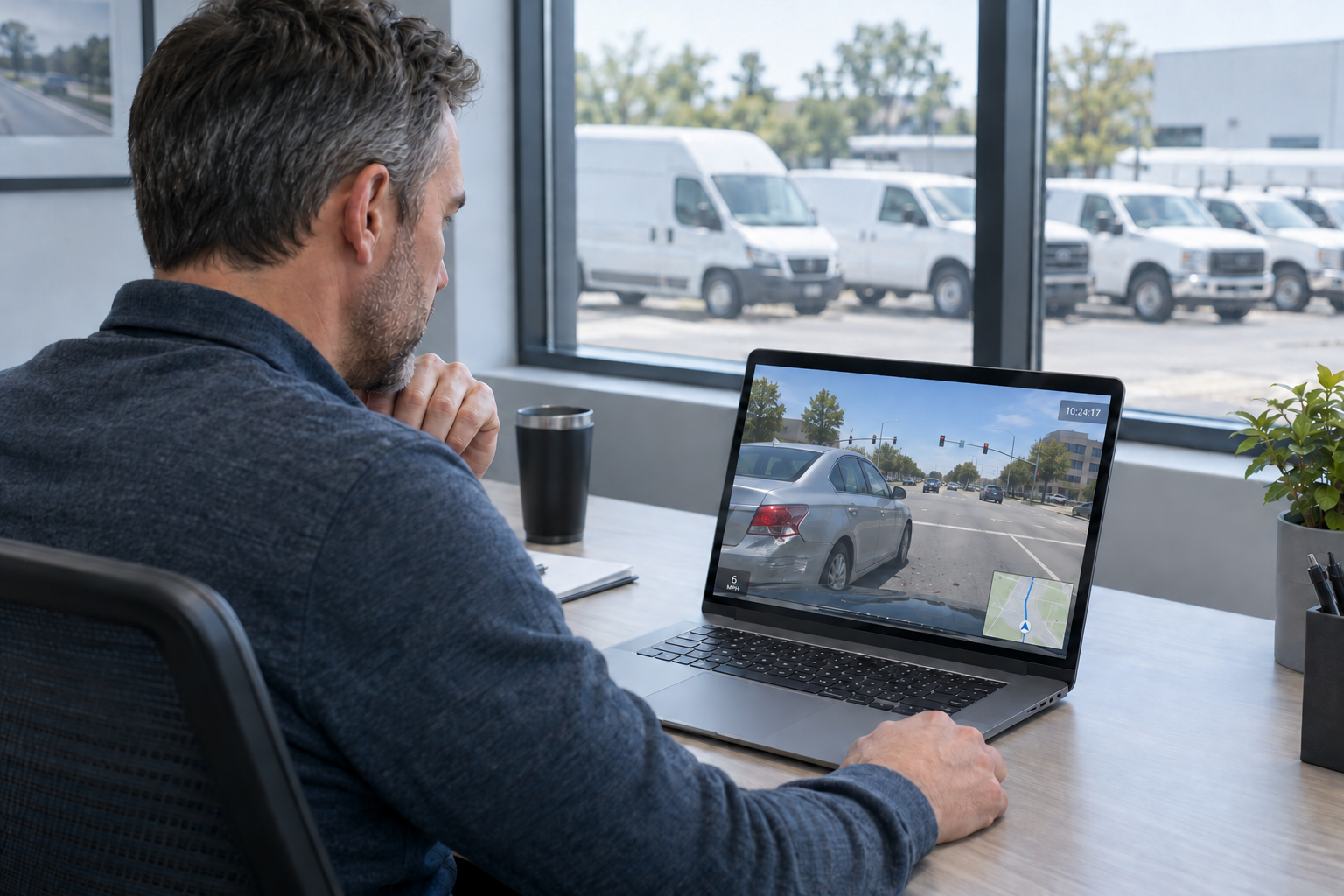
A timestamped video record establishes a before-state at pickup and an after-state at delivery. If furniture shows damage after drop-off that was not visible at loading, the footage identifies when it happened. If the damage predates the move, the footage shows that too, and the claim does not survive review. Either way, documentation replaces the dispute.
Blind Spots and Tight Fits: Why Forward-Facing Cameras Fall Short
Box trucks operating in residential neighborhoods create a backing and maneuvering risk profile that forward-facing cameras cannot reach on their own.
Why Box Trucks Generate More Backing Incidents Than Most Fleets
A 26-foot box truck maneuvering into a shared residential driveway operates in conditions far outside the geometry of a commercial dock or a highway interchange. Mirrors cover a portion of the blind zone. They do not cover side curbs, obstacles at bumper height, pedestrians crossing behind the vehicle, or cyclists on the road edge. The driver backs on experience and whatever partial view the mirrors provide.
The result: a high frequency of low-speed scrapes, clipped fences, and property damage events that generate their own claims category. The cost is rarely the repair itself. It is the dispute about who caused the damage to the fence, the curb, or the neighbor's car parked alongside the driveway. Without a rear or side camera recording what happened, the answer requires statements from the crew and statements from the customer, and those statements rarely agree.
In-Cab Monitors and Side Views for Tight Situations
An optional in-cab driver aid screen, paired with side-mounted cameras, gives the driver a real-time view of both flanks during parking and backing maneuvers. For residential moves where driveway width varies dramatically from one job to the next, that visibility translates directly into fewer incidents. The driver sees what the mirrors cannot show.
Side cameras also document crew behavior alongside the vehicle during loading and unloading. If a customer later reports that a worker scratched a driveway, damaged a garden area, or struck a post with a dolly, that footage either confirms or refutes the account. Without it, the claim becomes another documentation-versus-memory dispute with no clean resolution path.
Protecting Movers Working Near Traffic
Moving crews work in physical conditions that most fleet safety frameworks do not model. A crew unloading a truck parked on a residential street, with vehicles passing at speed, faces a risk profile that has nothing to do with driving and everything to do with proximity to active traffic. Workers carry large, heavy items across sidewalks and, in some urban settings, across active traffic lanes to reach a building entrance. Falls, worker-vehicle incidents, and third-party pedestrian interactions all create liability exposure that standard fleet programs rarely capture.
A forward and rear-facing camera combination records the working environment at every stop. If a crew member sustains an injury near the vehicle, footage captures what the road and traffic conditions looked like at the time: vehicle speeds, pedestrian behavior, whether any traffic control measures were in place. That documentation supports workers' compensation review and defends against claims that describe the scene inaccurately.
For long-haul moves where drivers spend nights away from the home location, rear and side cameras also protect against overnight vandalism and parking lot damage. When footage shows a parked truck undamaged at a rest stop and damaged at the next inspection, the documentation removes any question about crew responsibility.
Local vs. Long-Haul: How Camera Priorities Differ
Camera requirements shift significantly between a local residential operation and a long-haul commercial carrier, though both share the same core need: a documented chain of evidence at every point where custody of property changes.
Local and Residential Moving Fleets
Local residential operations generate their highest-cost risk at the job site: backing incidents, disputed property damage, and crew exposure near traffic. Camera priorities for these fleets center on perimeter coverage, with rear-mounted cameras for backing, side-mounted cameras for loading and unloading zones, and cargo-area cameras if goods documentation matters to the operation.
Local fleets operate on tighter margins and face higher claim frequency than long-haul carriers. Individual claim amounts tend to be smaller, but they accumulate quickly. A camera program that produces timestamped evidence at every stop returns its cost when even a modest number of disputed claims resolve without insurance involvement.
Commercial and Long-Haul Moving Fleets
Commercial movers and long-haul residential carriers carry the road risk of any over-the-road fleet, including following distance events, highway incidents, and driver fatigue, alongside the property documentation exposure of moving work. A forward-facing event camera covers the highway-incident side of that equation. Rear and cargo cameras extend coverage to the chain-of-custody question.
Long-haul moves introduce more parties: origin and destination contacts, storage facilities where goods may sit between legs, and sometimes multiple crews handling the same shipment. A camera system that documents condition at each handoff protects against claims assigned to the wrong carrier or the wrong crew, and makes it possible to isolate exactly where in the chain damage occurred.
Evaluating Camera Systems for a Moving Fleet
Moving companies evaluating camera systems for the first time typically anchor on two questions: does the system cover the backing problem, and does it produce footage that resolves damage claims? A system that addresses both, with rear and optional side coverage for maneuvering and timestamped cargo-area footage for condition documentation, covers the majority of liability exposure the industry generates.
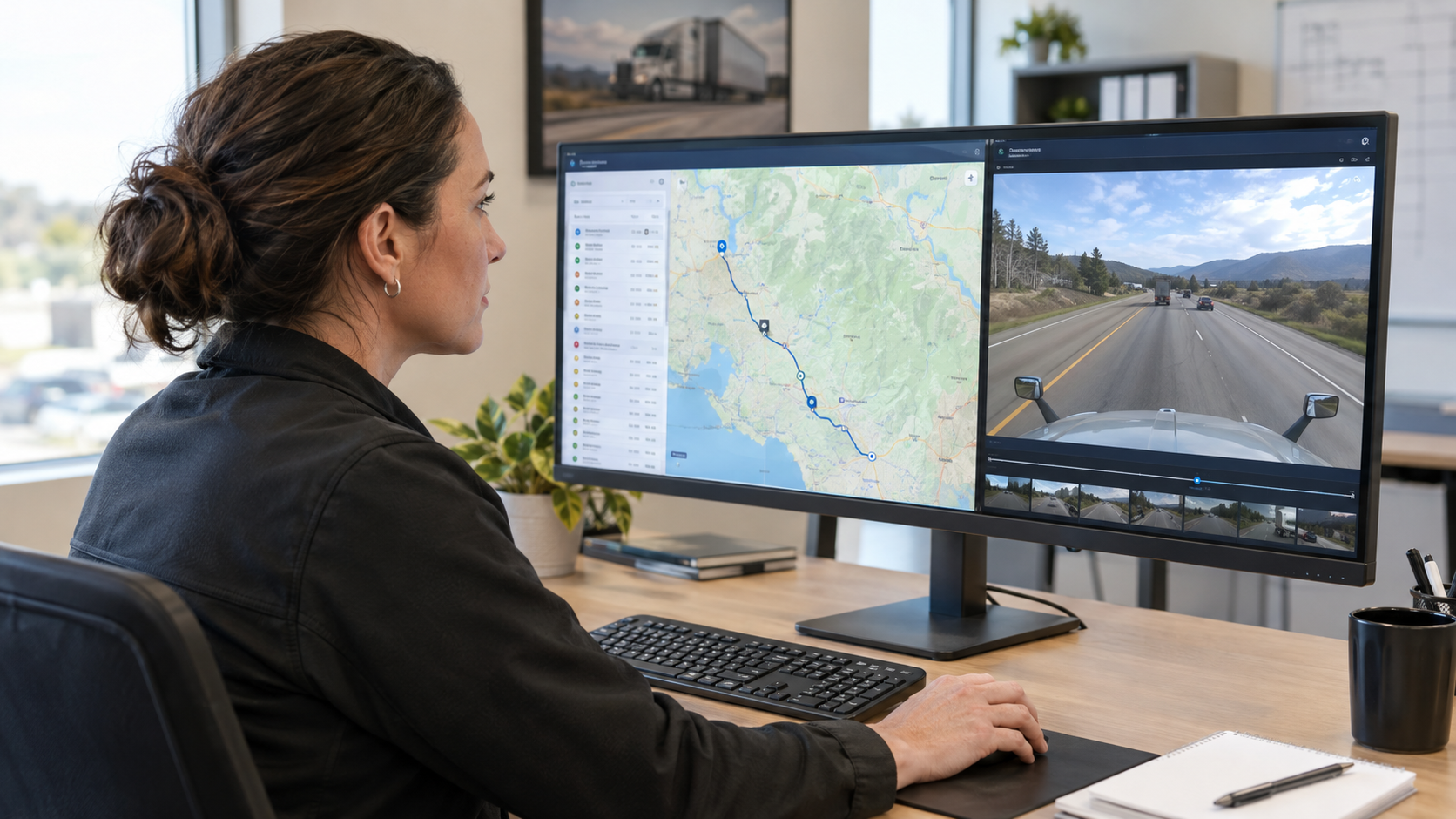
Beyond camera angles, storage duration matters. Most moving damage claims surface within two weeks of the job. A system that retains footage for 60 days covers that window with room to spare. Real-time event alerts address the road-incident side: when a harsh braking or collision event triggers an upload, the fleet manager has footage within seconds rather than waiting for a driver to return with a physical card.
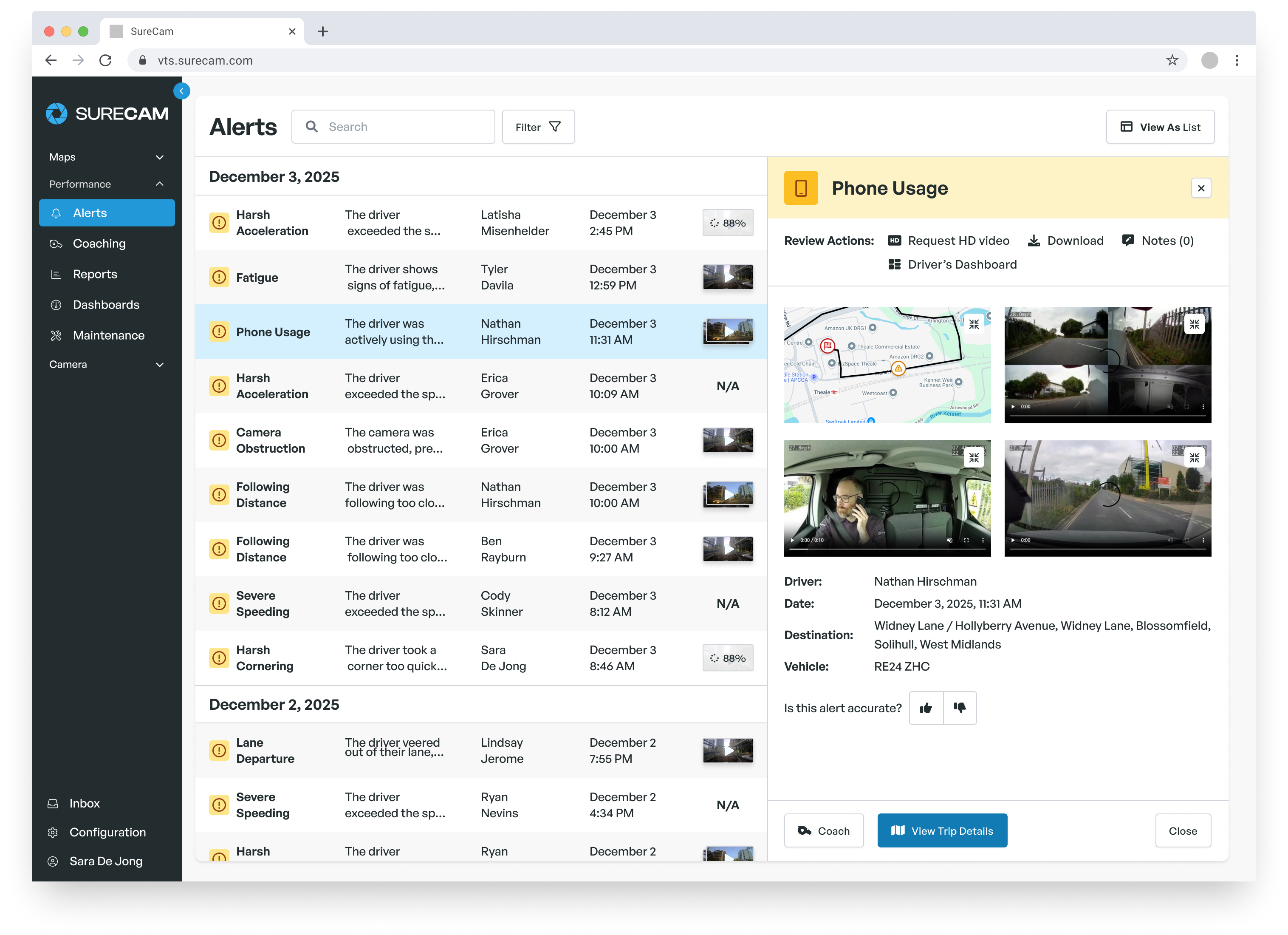
SureCam's connected dash cam platform supports multiple camera configurations, including forward, rear, side, cargo, and in-cab views, with footage accessible within seconds of an event and stored for up to 60 days. For moving companies building a claims defense and safety program together, the combination of perimeter coverage and fast video access closes the documentation gaps that most disputed claims exploit. Ready to see how SureCam can protect your teams? Give us a call, text, or book a call with one of our telematics experts today.


.png)