
Commercial vs. Consumer Dash Cams for Fleets: 2026 Guide
20 Oct 2026
driver coaching


Improve fleet safety, reduce operating costs, and optimize field performance with an easy-to-use platform for video, GPS tracking, driver coaching, maintenance, asset tracking, and real-time fleet insights.
Drive your total fleet operations with SureCam’s all-in-one video telematics solution.
Valuable guides, case studies, and videos to help you optimize fleet management, safety, and productivity with telematics solutions.
Values, job opportunities, and ways to connect or partner with SureCam.
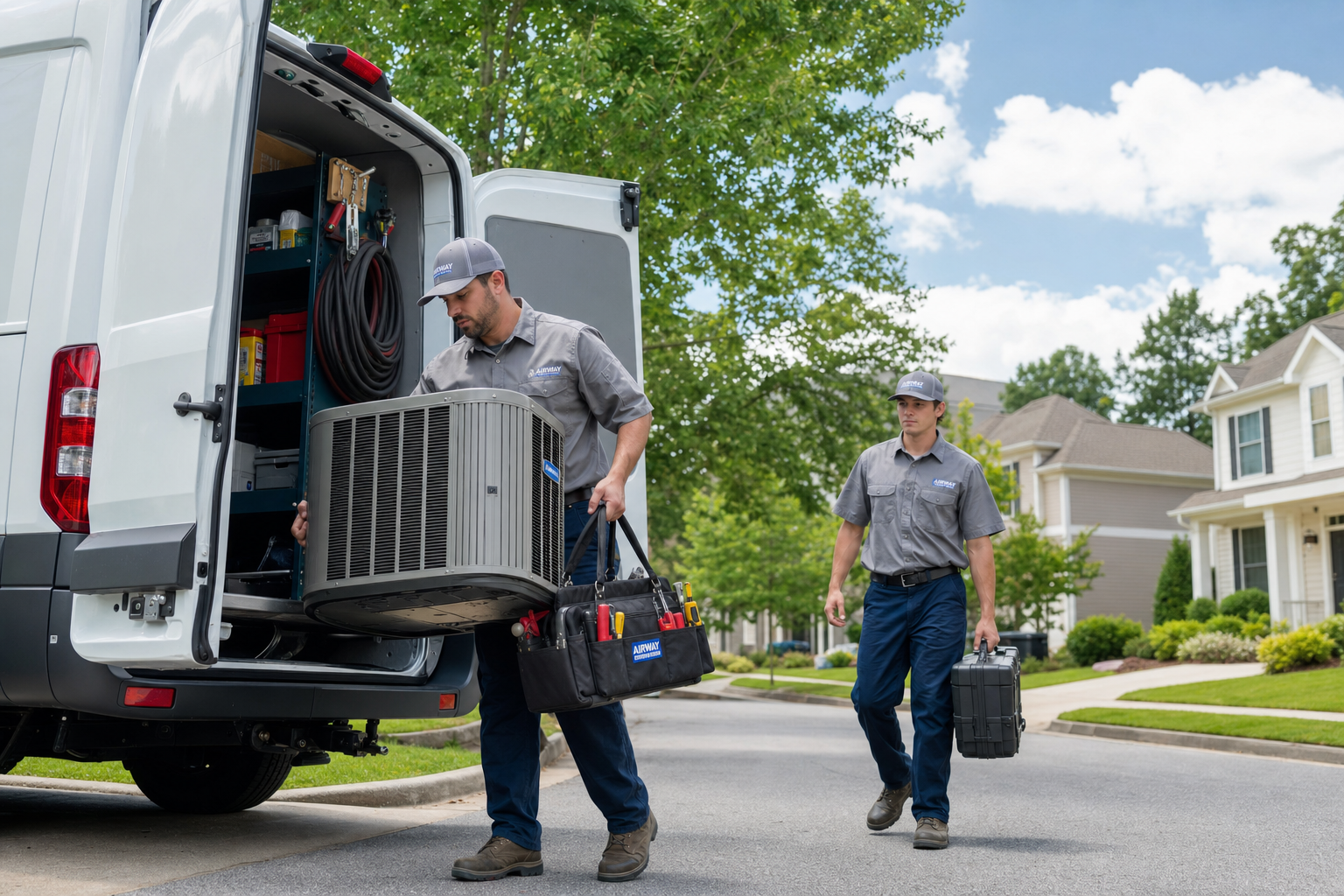




HVAC vans don't collect highway miles the way long-haul trucks do. They idle in school zones, back into residential driveways, and squeeze through cul-de-sacs where the speed limit tops out at 15 mph. A heating and cooling service fleet faces a risk profile that looks nothing like a trucking company's, and the dash cam system that protects those vans should reflect that difference.
Low-speed incidents account for the bulk of claims in residential service work. A customer claims the technician backed into a parked car. A neighbor reports the van clipped a mailbox on the way out. A homeowner insists the tech either left without completing the job or arrived two hours after the dispatch window allowed. These situations rarely involve a police report or an injury. They come down to one thing: who has evidence.
Without video, every dispute defaults to the homeowner's version of events. The customer relationship suffers. The claim gets paid. The driver gets blamed for something he may not have done. With video, most disputes resolve in minutes. The footage either confirms the customer's concern, giving the operations manager a clear and specific coaching moment, or it exonerates the technician and protects the relationship with the employee and, often, the customer.
The seasonal nature of HVAC work compounds the problem. Emergency heating calls come in before dawn in January. Air conditioning failures spike in July heat when the light cuts sideways across residential streets in late afternoon. Technicians work early shifts, late shifts, and on-call overnight windows. The risk window isn't nine-to-five, and neither is the potential for incidents in customer driveways or neighborhood streets. A dash cam system that performs well only in ideal conditions doesn't earn its place in a service van.
There is also the reputational dimension. HVAC companies depend heavily on repeat business and word-of-mouth referrals within neighborhoods. A single unresolved dispute, where a customer posts about the van that scraped their property and the company that went quiet afterward, carries real costs that extend well beyond one lost job. A camera system that generates fast, credible evidence protects the company's reputation with the same mechanism it uses to protect the insurance record.
The features that make a connected camera system genuinely useful for HVAC fleets are not the same features that matter on an interstate. What follows breaks down what to prioritize, what the minimum viable threshold looks like, and why each requirement exists in the context of residential service work.
A recorded incident is only as useful as the footage that captures it. For HVAC fleets, footage quality determines whether a dispute gets resolved in a three-minute manager review or drags into a weeks-long back-and-forth with an insurance adjuster. The standard to meet starts with 740p resolution, which delivers adequate detail for most residential incidents. Stepping up to 1080p HD resolution adds meaningful improvement in scenarios where license plate capture at distance matters: a vehicle that clips the van in a tight driveway and keeps moving, or a third party that rear-ends the van in a parking lot and disputes the account.
Resolution alone doesn't determine footage quality in variable conditions. The lens aperture and the camera's actual performance across the lighting range HVAC technicians encounter every day determine whether the clip from that 5 a.m. furnace call shows a clear image or an overexposed blur. Before committing to any system, request sample footage recorded at dawn and dusk. The vendor who resists this request is telling you something important. Hardware durability deserves equal attention in service van environments. Dust from crawlspaces, humidity from mechanical rooms, and interior temperatures that regularly exceed 130°F in summer-parked vehicles all degrade components rated for standard in-car use. A camera with a high IP (Ingress Protection) rating handles these conditions reliably over the multi-year life of a service fleet contract.
A forward-facing camera with a narrow field of view misses the full picture in residential environments. The vehicle parked half in the driveway and half on the street, the child on a bicycle who appears from behind a hedge, the oncoming vehicle on a residential road barely wide enough for two cars: all of these appear at the edges of the frame. A lens with a 140-degree or wider field of view captures these details. A narrower lens leaves gaps in the record that cannot be recovered after the fact.
Rear-facing coverage matters equally for HVAC service operations. Backing into driveways represents one of the highest-risk maneuvers in residential service work, and it happens at virtually every job. A rear-road-facing camera documents the full reversal: whether another vehicle occupied the driveway before the van arrived, whether a person or a child appeared unexpectedly behind the van, and whether the property damage visible in a customer's complaint photo was present before the technician's van ever got close. Rear camera footage converts property dispute conversations from extended negotiations into quick resolutions. Residential HVAC fleets without rear coverage carry an evidence gap that costs them money every year they operate without one.
Continuous recording creates a video archive that no operations manager has the capacity to review. Event-based recording solves this by capturing footage automatically when the camera's g-force sensor detects a triggering event: hard braking, collision impact, harsh cornering, or a sudden acceleration. The camera stores a clip covering the seconds before, during, and after the event, preserving the relevant moment without requiring anyone to sort through hours of routine driving footage to find it.
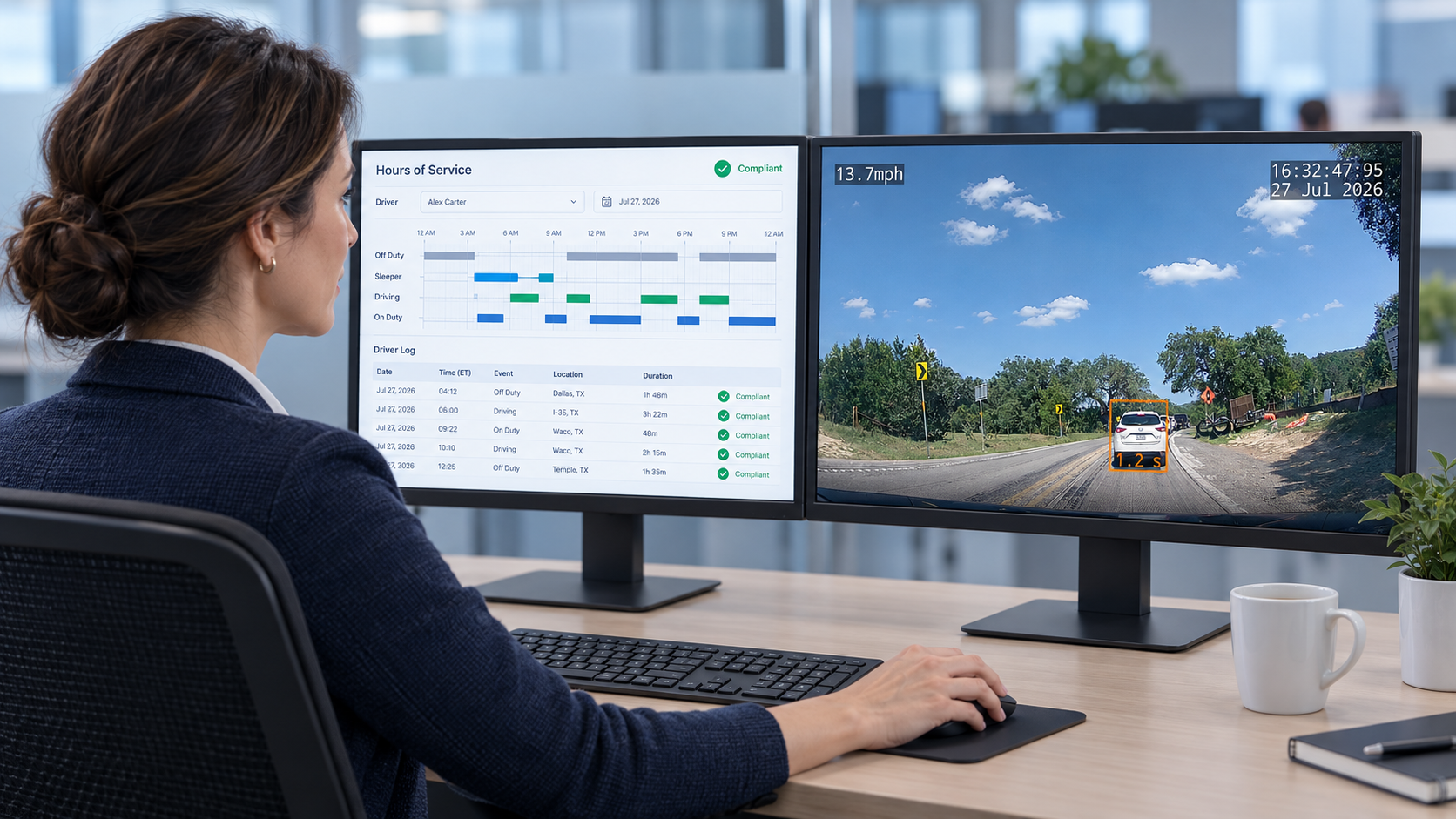
GPS overlay adds a layer of context that video alone cannot provide. Speed at the time of the incident, the route taken to the job site, arrival and departure timestamps, and the precise location of the event all embed in the footage or appear alongside it in the management portal. For HVAC fleet managers, this combination solves the most common customer complaints before they become formal claims. The technician who supposedly arrived two hours late: the GPS record shows the arrival timestamp. The van allegedly spotted speeding through a residential neighborhood at noon: the speed data attached to the footage either confirms or refutes the report in seconds. When it confirms a problem, the manager gains a specific, documented coaching conversation rather than a vague directive to drive more carefully.
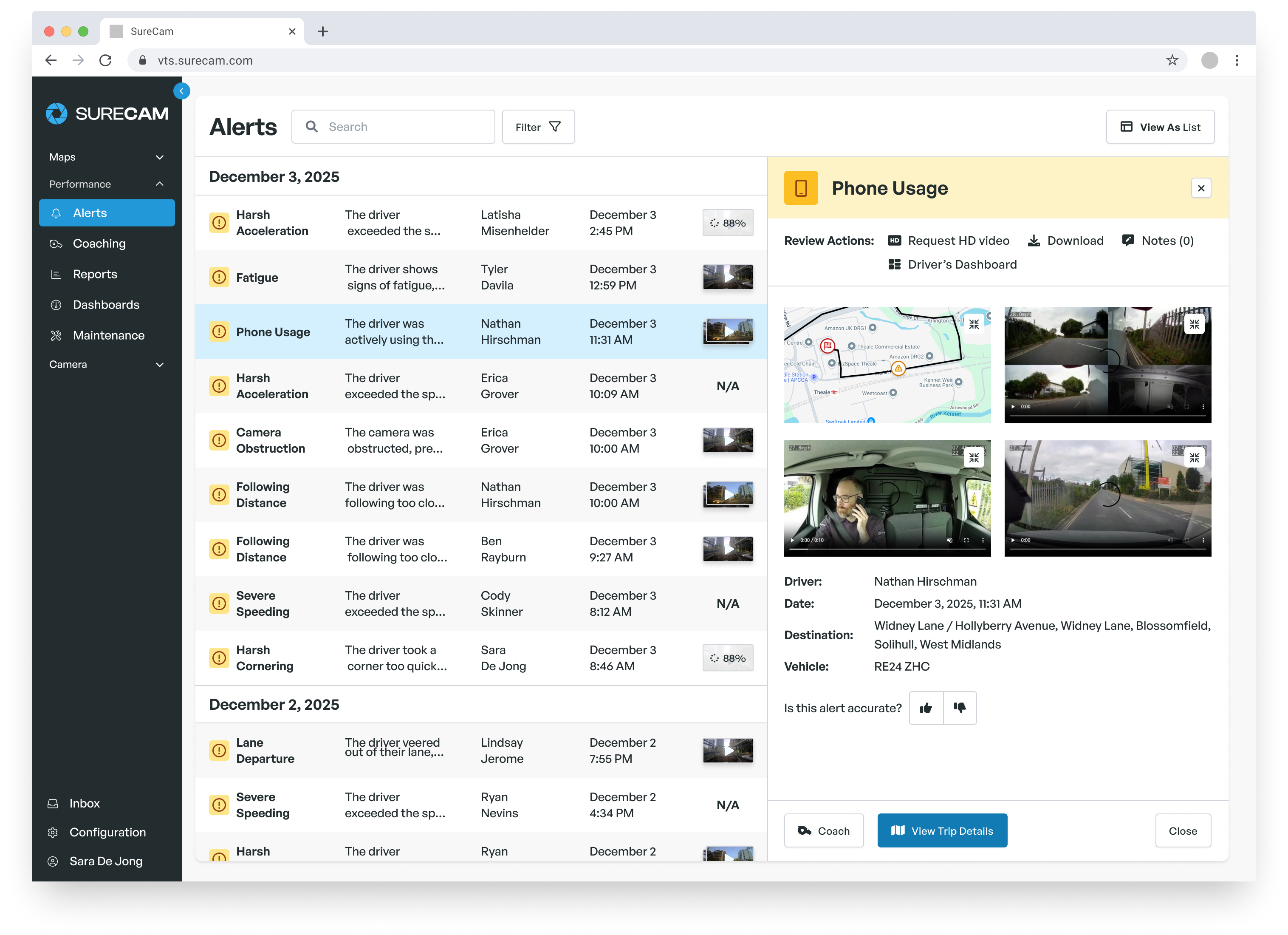
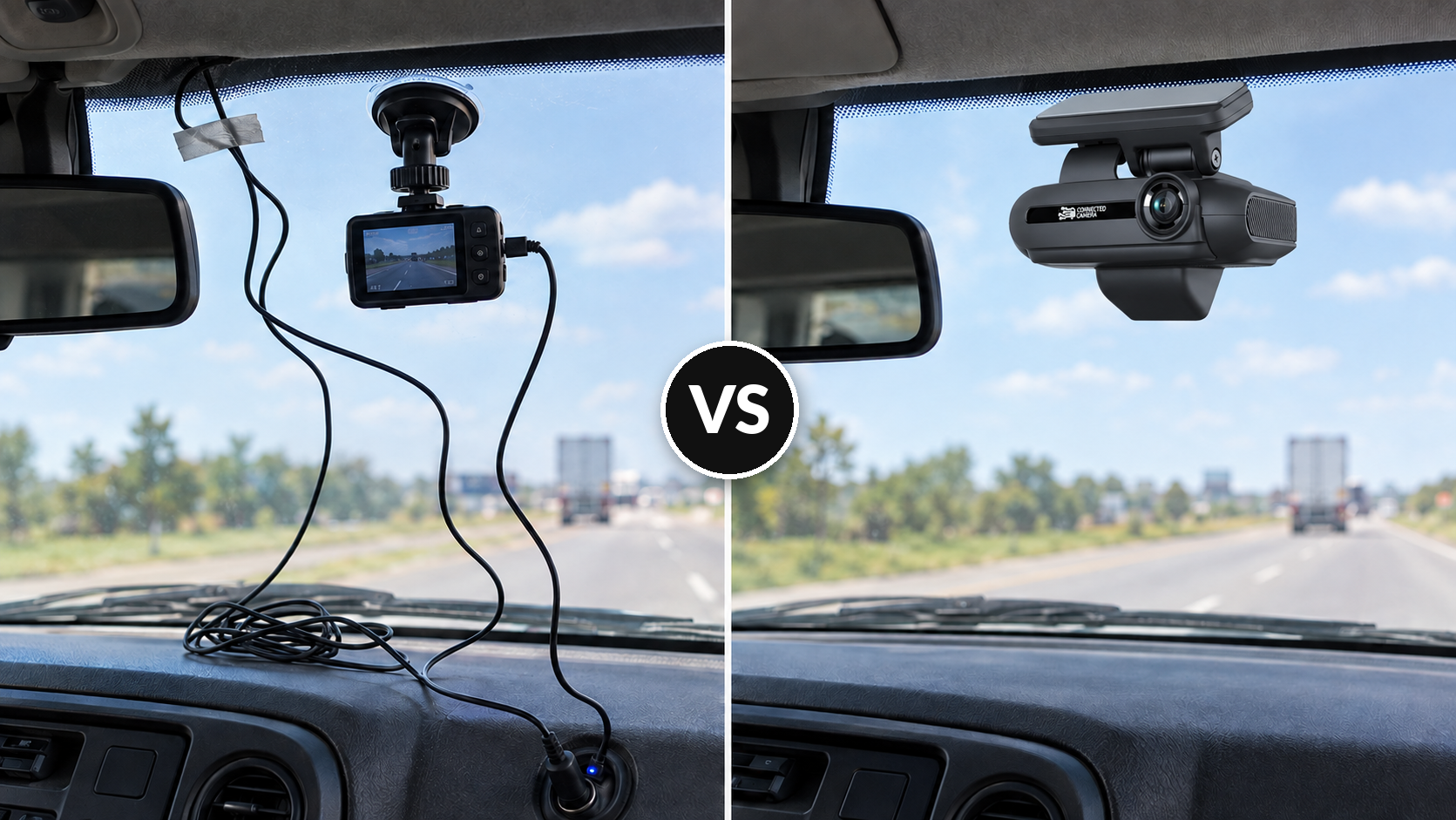
SD card cameras carry a structural flaw that matters most in residential service environments: the footage sits on a physical card, inside the van, under effective control of the driver. Cards get overwritten as new footage replaces old. In a dispute that develops hours after an incident, the clip the manager needs has sometimes already cycled out of storage. Network-connected cameras upload automatically via cellular connection, placing footage in a web portal where the manager can access it within seconds of the triggering event, regardless of where the van sits at that moment.
Near-real-time upload changes the response dynamic during customer calls entirely. When a homeowner calls to report that a technician scraped their vehicle or left without completing the work, the manager can pull the relevant footage during the conversation rather than promising to investigate and calling back two days later. That response speed signals professionalism, prevents the dispute from escalating to a formal insurance claim, and in many cases resolves the situation before it costs the company anything.
For a small HVAC operation where the owner handles dispatch, scheduling, and customer complaints simultaneously, this capability creates a defensible claims process without requiring dedicated safety staff to manage it. The math on connected versus SD card systems shifts further once a fleet experiences its first disputed incident where the SD card footage simply wasn't there: overwritten, corrupted, or left sitting in a van that the technician drove home for the weekend.
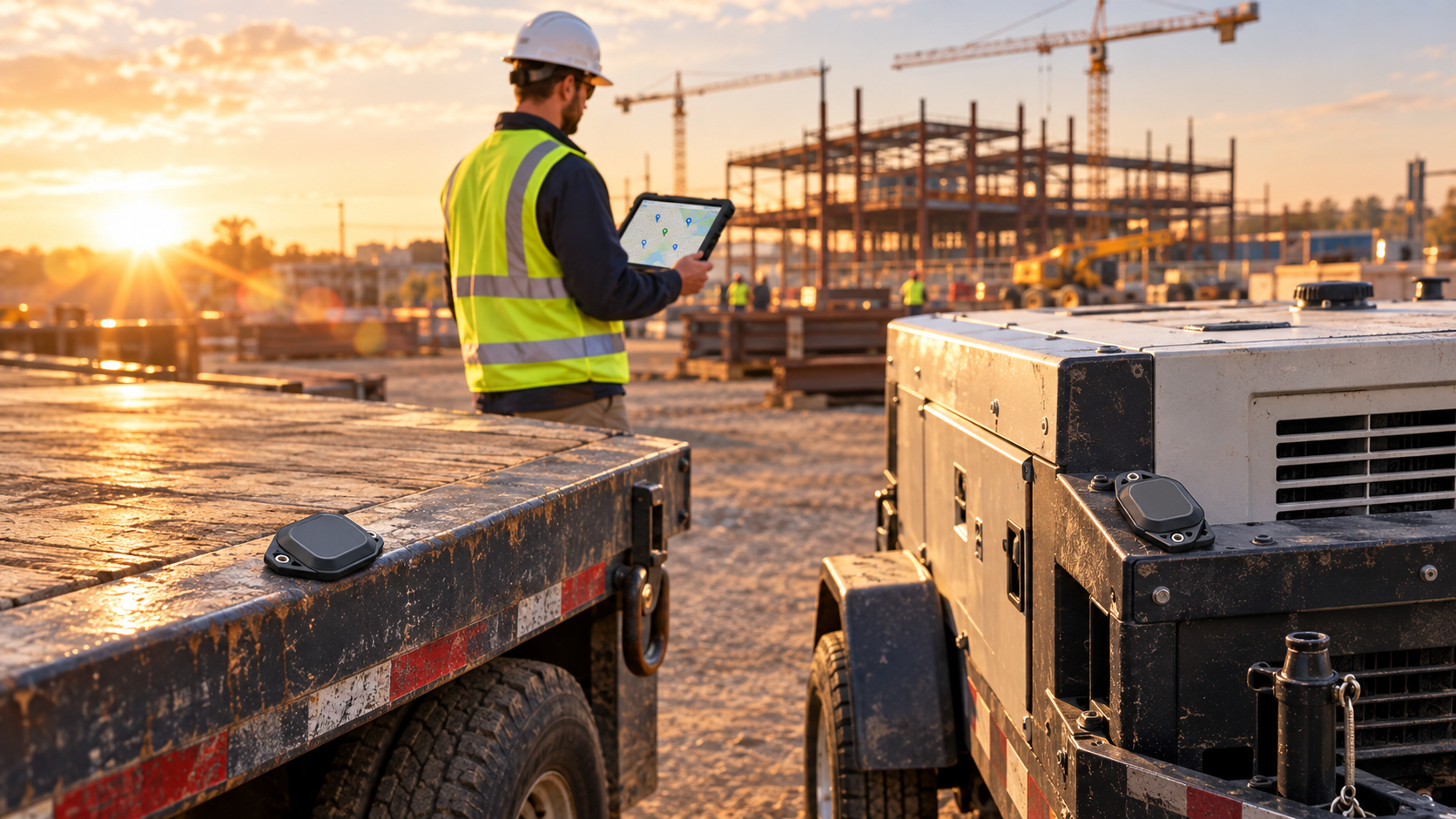
GPS location data and video footage tell a more complete story together than either tells separately. An HVAC fleet manager who knows where every van sits at any moment gains operational visibility. One who can also see what happened at a given location gains accountability. Choosing a dash cam system that integrates with an existing telematics or fleet-tracking platform consolidates this data into a unified view rather than requiring staff to manage two separate logins, two separate reporting formats, and two separate exports whenever a customer complaint arrives.
Integration enables specific workflows that matter directly for residential service operations. Geofencing alerts notify the manager when a van lingers in a job site area past the scheduled completion window, or departs before the service was supposed to finish. Driver scorecards draw on combined data from the camera (harsh events, g-force triggers) and the GPS system (speeding, excessive idling at job sites) to produce a complete picture of technician behavior over time. When the fleet runs multiple crews across a metro area, this consolidated view allows a single manager to track patterns across all drivers without requiring a manual review of each vehicle's footage every day. For most HVAC operations, the integration question should come before the purchase decision, not after: confirm compatibility in writing with your current telematics or fleet-tracking vendor before signing any camera contract.
In-cab alert systems provide real-time feedback to technicians without requiring manager intervention after the fact. A configurable audio warning when speed exceeds a defined threshold in a school zone or a residential street keeps the driver accountable at the moment of the behavior, not in a coaching session two weeks later. This kind of immediate, specific feedback consistently reduces harsh event frequency across service fleets over time, making the overall record cleaner and the insurance premium history more defensible at renewal.
Privacy settings matter for HVAC operators for a reason specific to the field service model: technicians frequently take vans home at the end of the shift. A camera recording continuously in personal driving situations creates legitimate objections during rollout, and those objections slow the program down or generate friction with experienced technicians the company cannot afford to lose. Configurable time-of-day privacy settings disable recording outside defined business hours. Location-based privacy zones disable recording when the van enters a driver's home address geofence. These settings protect technicians' personal time and remove the most common source of driver resistance before it develops. A documented privacy policy shared with the full team before cameras go live converts most objections into acceptance. Technicians who understand the system exists to protect them from false claims, not to monitor their personal driving, typically become advocates rather than opponents.
Maria Maneri, co-owner of Maneri Traffic Control, runs a field service operation where dispatched vehicles spread across job sites she cannot physically visit. Her team works in California highway work zones. The accountability and real-time visibility challenges she faces mirror what a residential HVAC operation encounters at a different scale: technicians at dozens of locations simultaneously, customer expectations about arrival and completion times, and liability at every job site where something could go wrong.
After equipping the fleet with forward and rear-facing SureCam cameras and adding live remote monitoring, Maneri reported a 70% increase in team productivity. The GPS overlay combined with camera footage verified arrival times and safety compliance without placing a supervisor at each site. When a technician's behavior crossed a line, the footage made the coaching conversation specific, documented, and actionable rather than relying on memory or a secondhand report. When an incident occurred, the management team handled it in real time.
The operational parallel for HVAC is direct. A 10-van heating and cooling fleet spread across a metro service area faces the same core visibility problem Maneri identified: the owner or operations manager cannot physically verify what happens at 30 different customer homes in a single day. Connected camera footage combined with GPS data provides that verification without adding headcount. Faster dispute resolution, more consistent technician behavior, and a measurable reduction in the time staff spend managing complaints that would otherwise drag across multiple calls and days: these outcomes arrive not because the camera changes driver behavior overnight, but because it closes the accountability gap that was always there.
If HVAC vans operate in residential neighborhoods, the dash cam system should clear these eight criteria before deployment:
1080p HD resolution with strong low-light performance. Early morning and late-afternoon calls happen year-round. Footage captured in poor lighting needs to hold up under scrutiny from a claims adjuster or a skeptical customer, not dissolve into noise at the moment it matters.
140-degree or wider field of view. Driveways, cul-de-sacs, and narrow residential streets produce incidents at the edges of the frame. A narrow lens misses the detail that resolves disputes. Confirm the rated field of view includes both horizontal and vertical coverage.
Event-based recording triggered by g-force sensors. The camera should capture what matters automatically, on hard braking, collision impact, and harsh cornering events, without requiring staff to search through hours of routine footage.
GPS and speed overlay on video. Arrival timestamps, departure times, speed at the moment of an event, and route history answer the most common customer complaints before they become formal insurance claims.
Cloud storage with remote access for managers. Footage stored on an SD card in the van requires physical retrieval and manual review. Connected cameras deliver the clip within seconds of the triggering event, anywhere the manager has internet access.
Near-real-time upload for incident review during customer calls. Response speed matters. A manager who references footage during the initial complaint call resolves more disputes before they escalate. A manager who promises to call back in two days loses that window every time.
Integration with the existing telematics or fleet-tracking system. Video and GPS data produce better outcomes together than in separate platforms. Verify compatibility with current systems before signing a contract, and ask specifically whether the integration requires a third-party middleware layer.
Configurable driver alerts plus a documented off-hours privacy policy. Real-time in-cab alerts reduce harsh events at the point of behavior rather than in a delayed coaching conversation. A documented privacy policy, covering off-hours recording, home address geofencing, and footage access permissions, reduces driver resistance at rollout and protects against HR complications down the line.