Update — August 12, 2026
Bill M217 received Royal Assent on May 28, 2026, as confirmed in the official B.C. Legislature Hansard. The compliance deadline is now confirmed: November 28, 2026. The sections below have been updated to reflect this date. Enforcement regulations are still being finalized through the BCTA Dashcam Task Force; this article will be updated as those specifics are published.
Key Takeaways
British Columbia's Bill M217 is the first commercial dash cam law to pass a North American legislature. The specifications it establishes (forward-facing, 1080p, 72-hour retention, and night vision) now represent a documented regulatory floor for commercial truck cameras. Whether or not your routes cross into B.C., these facts matter.
- B.C. passed Bill M217, the Dashboard Cameras in Commercial Vehicles Act, in May 2026, making B.C. the first Canadian jurisdiction to mandate forward-facing cameras on commercial vehicles.
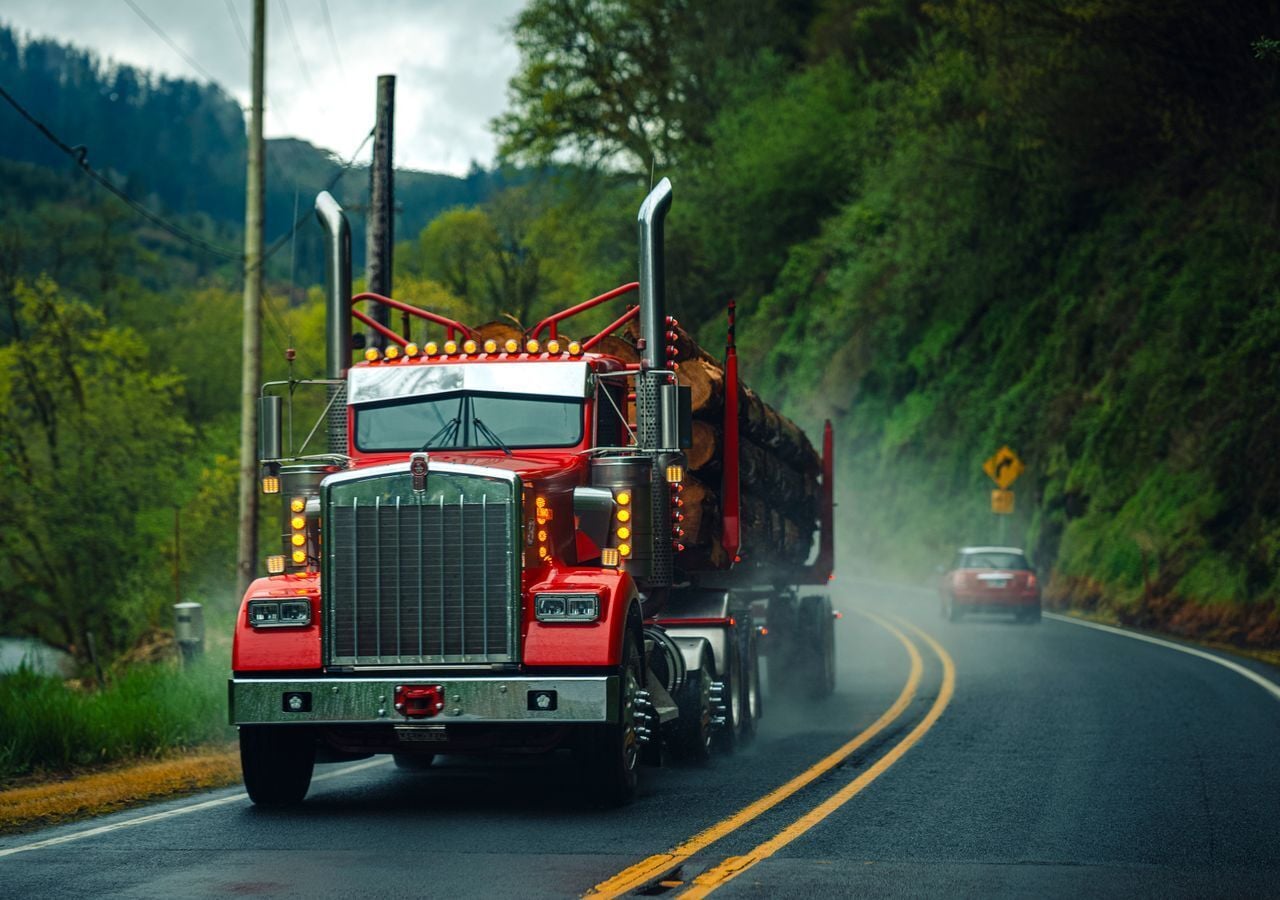
- The law applies to commercial vehicles over 11,793 kg GVWR operating on B.C. highways, including trucks registered outside the province.
- Minimum specifications: forward-facing only, 1080p resolution, 72-hour footage retention, and night-vision capability.
- Royal Assent confirmed: May 28, 2026, per the official B.C. Legislature Hansard. The law comes into force six months later, on November 28, 2026.
Why B.C.'s New Law Matters Beyond the Border
British Columbia became the first Canadian province to mandate forward-facing dash cameras on heavy commercial trucks when Bill M217 cleared all three readings in the B.C. Legislature on May 25-26, 2026, with unanimous, bipartisan support. Royal Assent followed on May 28, 2026, granted by the Administrator of British Columbia in the Legislative Chamber, setting the compliance deadline at November 28, 2026. For fleets with routes into B.C. or along the Alaska Highway, the obligation is now confirmed and the clock is running.
The argument that drove the bill is straightforward. The B.C. Trucking Association (BCTA) has reported that commercial drivers are not at fault in 75-80% of collisions involving their vehicles. Cameras exist precisely to document that majority and put evidence where it belongs. B.C.'s legislature found that argument strong enough to pass mandatory cameras with zero dissent. That logic applies equally in any state where commercial fleets face disputed liability, false claims, or drawn-out insurance investigations.
What Does B.C.'s Dash Cam Law Actually Require?
Bill M217 establishes minimum equipment standards for qualifying commercial vehicles on B.C. highways. Enforcement mechanisms, penalties, and operational specifics will follow through the provincial regulatory process, which the BCTA's Dashcam Task Force is actively shaping as of mid-2026.
| Requirement |
Specification Under Bill M217 |
| Camera direction |
Forward-facing, recording through the front windshield |
| Minimum resolution |
1080p |
| Footage retention |
72 hours minimum |
| Night vision |
Required |
| Operation |
Continuous recording while vehicle is in operation |
| Camera condition |
Must remain unobstructed during operation |
The bill explicitly excludes driver-facing or inward-facing cameras. That exclusion was intentional. Privacy concerns raised during the legislative process produced a forward-facing-only mandate; fleets that add inward cameras voluntarily take on the applicable privacy obligations in the relevant jurisdiction.
The BCTA Task Force has flagged a technical reality worth noting: the combination of 1080p resolution and 72-hour continuous retention demands more storage than many existing camera systems provide. Some systems deliver 72 hours at lower resolutions, or full 1080p for shorter windows. Compliance verification requires testing both requirements together under continuous recording conditions, not each spec in isolation.
Who Must Comply, and When Does the Clock Start?
The law covers commercial vehicles with a GVWR exceeding 11,793 kg (approximately 26,000 lb). That threshold captures standard semi-trucks, heavy straight trucks, and motorcoaches. Lighter commercial vehicles, including vans, pickups, and service trucks common across field service, last-mile delivery, and construction fleets, fall below it.
Scope runs by geography, not registration. Any qualifying truck on a B.C. highway must comply, whether registered in British Columbia, another Canadian province, or a US state. U.S. carriers running the Alaska Highway through B.C. fall within the law's reach.
| Stage |
Status |
| Introduced |
2025, First Session, 43rd Parliament |
| Passed all readings |
May 25-26, 2026, unanimous bipartisan support |
| Royal Assent |
May 28, 2026 (confirmed, official Hansard) |
| Regulatory process |
Underway; BCTA Dashcam Task Force convened July 27, 2026 |
| Law comes into force |
Six months after Royal Assent |
| Compliance deadline |
November 28, 2026 |
Is a US Federal Dash Cam Mandate Coming?
No equivalent American mandate exists for commercial fleets today, and no US state has enacted a commercial vehicle dash cam law comparable to B.C.'s. The regulatory environment has nonetheless been moving toward expanded safety equipment requirements through several indirect channels.
The most concrete signal comes from the federal AEB rulemaking. FMCSA and NHTSA carry a statutory mandate under the Infrastructure Investment and Jobs Act to require automatic emergency braking on heavy commercial vehicles. An original joint NPRM from 2023 was paused for revisions; as of mid-2026, a supplemental NPRM is expected through the agencies' 2026 regulatory agenda. AEB systems depend on forward-facing cameras and sensors, meaning AEB compliance would bring camera hardware to heavy trucks as a technical requirement even without a standalone dash cam rule.
The commercial insurance market has moved faster than federal rulemaking. Carriers without camera evidence increasingly face longer claims cycles, less favorable liability determinations, and tighter coverage terms in some fleet segments. That pressure is market-driven rather than regulatory, but produces the same practical outcome.
FMCSA's windshield placement rule (49 CFR 393.60) already governs camera mounting positions on commercial vehicles. State recording consent laws determine whether audio-enabled cameras require one-party or all-party consent, and they vary enough by state to warrant their own guide.
What Should Fleets Do Now?
The business case for forward-facing cameras does not require a mandate to make sense. Sam Lansberry II, founder of Lansberry Trucking, an 80-truck US and Canadian carrier, reported cameras reduced the company's claims losses by over 80% in a single year, independent of which jurisdiction those trucks were running through.
For fleets with B.C. routes, November 28, 2026 is a hard deadline with procurement and installation time built in. Four actions fleet operators should take now:
Audit current coverage. Map which vehicles carry forward-facing cameras and which do not. For fleets with B.C. routes, identify which trucks clear the 11,793 kg threshold and build procurement and installation timelines backward from November 28.
Treat B.C.'s specs as the emerging baseline. Forward-facing, 1080p, 72-hour retention, and night vision represent the minimum a serious legislative body chose after deliberation with industry input. Buying to that standard now avoids a second hardware cycle later.
Verify the 1080p and 72-hour combination together. Test both under continuous recording conditions that reflect actual shift lengths. Many systems meet one figure but not both simultaneously.
Write a camera and data policy before an incident forces it. Drivers have questions about what footage is captured, who accesses it, and how long it is retained. State audio consent rules vary. A written policy reviewed by counsel costs far less before an incident than after one.
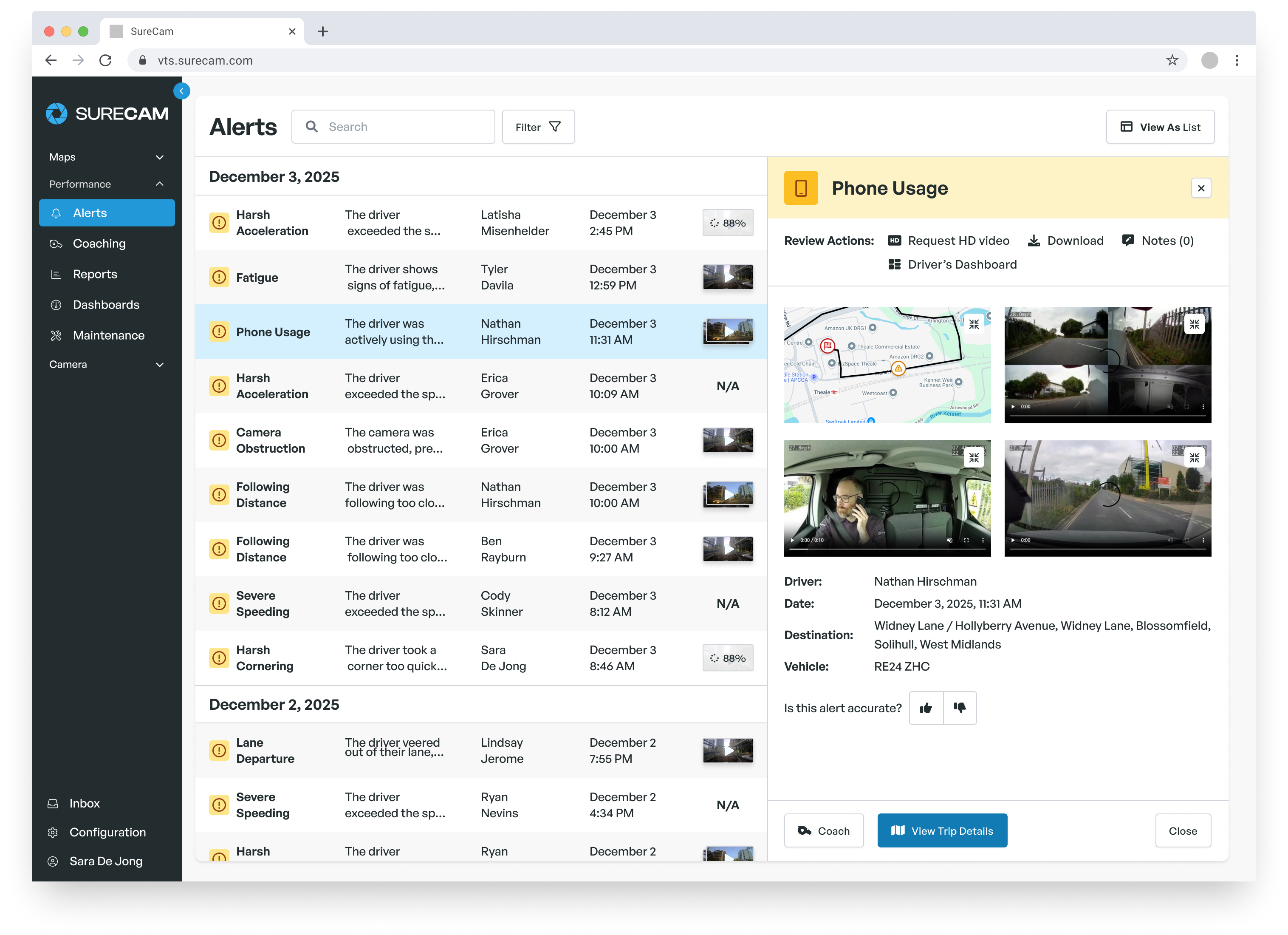
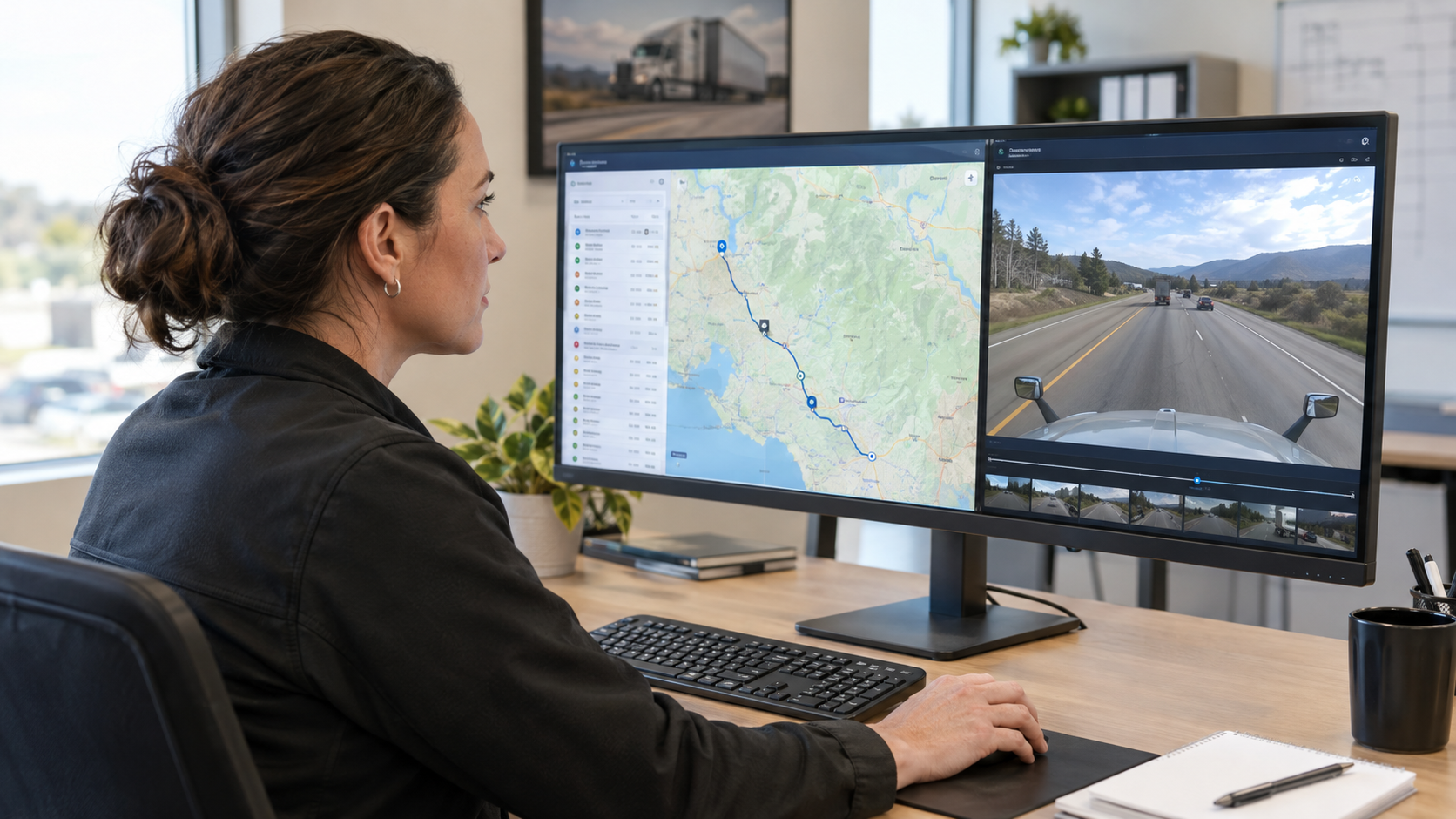
SureCam's network-connected cameras meet the forward-facing, 1080p, and night-vision specifications in Bill M217, and pair video with GPS telematics data in a single platform, compressing investigation time and reducing claims exposure for US and Canadian fleets.
Frequently Asked Questions
Does B.C.'s dash cam law apply to Canadian and US-registered fleets?
Yes, if those fleets operate qualifying vehicles on B.C. highways. The law applies by geography, not registration. A truck registered in any Canadian province or US state falls within the scope if it exceeds 11,793 kg GVWR and operates on B.C. roads. Lighter commercial vehicles, including most vans and service trucks, fall below the threshold.
What are the minimum technical requirements under Bill M217?
The law requires a forward-facing camera recording continuously at 1080p or better, with at least 72 hours of footage retention and night-vision capability. Storage must use the device's default manufacturer settings. Enforcement mechanisms and additional operational details will follow through provincial regulations; the BCTA Dashcam Task Force is actively working through those specifics as of mid-2026.
Are driver-facing cameras required?
No. The mandate covers outward-facing cameras only. Inward cameras were deliberately excluded over privacy concerns. Fleets may install them voluntarily but take on the applicable privacy obligations in the jurisdictions where they operate.
When is the compliance deadline?
Royal Assent was granted on May 28, 2026, as recorded in the official B.C. Legislature Hansard. The law comes into force six months after that date, setting the compliance deadline at November 28, 2026. Fleets with B.C. routes should begin procurement and installation planning immediately. Six months moves quickly when coordinating vendor selection and fleet-wide installation across a large fleet.
Is a US federal dash cam mandate coming?
No federal dash cam mandate for US commercial fleets has been proposed as of this writing. The closest indirect path runs through the FMCSA/NHTSA heavy-truck AEB rulemaking, which would bring forward-facing camera hardware to new heavy trucks as a byproduct of AEB compliance, not as a direct camera requirement. Commercial insurance pressure is outpacing federal rulemaking in most fleet segments right now.
What if existing cameras cannot meet both 1080p and 72-hour retention simultaneously?
That combination is more demanding than it looks. The BCTA Task Force noted that many existing systems deliver 72 hours at lower resolutions or shorter high-definition windows. Evaluating compliance requires testing both figures under continuous operating conditions. Where hardware falls short on either dimension, begin the upgrade evaluation well before November 28. Procurement and installation lead times extend when an entire industry is moving simultaneously.
Do the same rules apply across Canada?
No. B.C.'s Bill M217 makes British Columbia the first province in Canada to mandate dash cameras on commercial vehicles. No other Canadian province has enacted a comparable law as of this writing. Each province operates its own legislative process; no national Canadian standard currently exists. Contact one of our video telematics experts to learn more about how we can help you ensure compliance with this or other fleet visibility mandates.