The Blind Spots That Single Cameras Cannot Close
One camera captures one angle. Everything else stays dark.
For many fleets, a single forward-facing dash cam handles the majority of incidents. Highway events, following-distance disputes, and rear-end collisions that strike from behind: forward footage covers these cases well. But a growing category of commercial operations faces a risk profile that no single lens can address. Sideswipes in tight loading docks. Backing accidents that unfold behind the cab. Pedestrian contact in urban intersections. Freight-loading disputes that begin and end inside a cargo bay. None of those events appear in forward-facing footage.
When a disputed claim lands on a fleet manager's desk and the camera is pointed in the wrong direction, there is nothing to review. No evidence to submit. No position to defend. The coverage gap becomes a financial gap, and the financial gap can be large.
360-degree fleet cameras exist because fleet risk does not travel in one direction.
What 360-Degree Fleet Camera Coverage Actually Means
The term "360-degree fleet camera" describes a multi-camera system that captures simultaneous, synchronized footage from multiple angles around a commercial vehicle: forward, rear, driver-facing, and one or both sides. Some configurations extend coverage to cargo bays and interior vehicle spaces. The camera count varies by system. The critical variable is synchronization.
Individual cameras recording to separate files produce footage that must be manually correlated by timestamp during a claims investigation, a slow and error-prone process. A true multi-camera fleet system packages every angle together in a single incident clip, timestamped and event-tagged, so a safety manager can review everything that happened from every relevant perspective in one session.
SureCam Vantage supports up to six synchronized camera views, configurable to each fleet's specific risk profile. The system captures the road ahead, the driver, the rear, and both sides. Cargo and loading-zone coverage extends with additional camera configurations. Every angle uploads automatically over a cellular connection when an event triggers, without waiting for a driver to return to base.
Which Fleets Need Multi-Camera Coverage Most
Not every fleet requires 360-degree coverage. A ten-van HVAC company on straightforward point-to-point routes may run effectively on forward-facing cameras alone. But specific fleet types carry risk profiles that single-camera setups cannot fully address.
Towing and Recovery Operations
Tow trucks operate in some of the most hazardous conditions in commercial transportation: highway shoulders, breakdown lanes, active traffic, and nighttime recovery scenes. The risk does not approach only from the front. Rear collision during a roadside hookup, sideswipe during vehicle maneuvering, and contact with equipment during loading all fall outside the frame of a forward-facing camera.
A multi-camera dash cam system gives towing operators rear-facing and side documentation of the hookup process, the departure from the scene, and every vehicle interaction along the route. When a disputed claim arrives, the footage covers every angle of the event rather than only the approach, turning a potential he-said/she-said dispute into a reviewable record with a clear answer.
Construction and Heavy Equipment Fleets
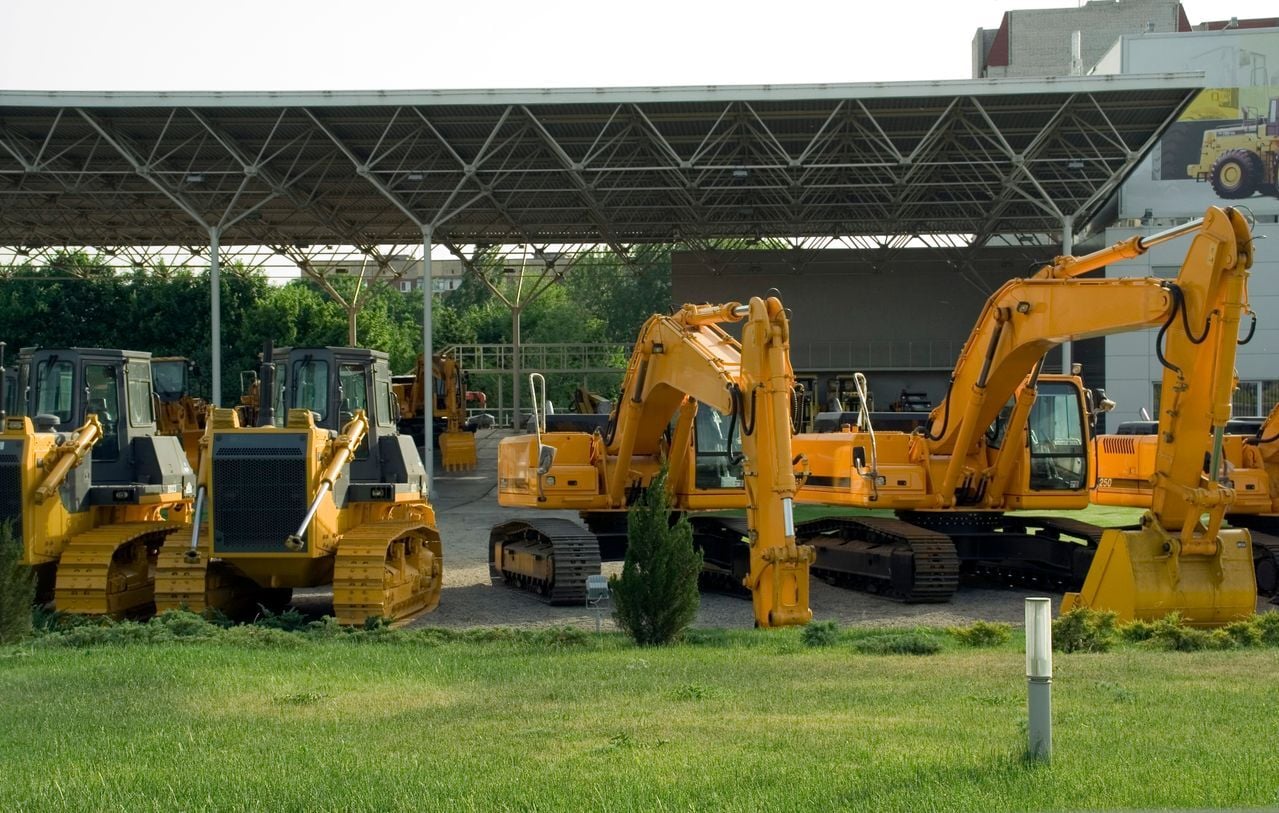
Concrete mixers, dump trucks, flatbeds, and equipment haulers share a common vulnerability: they operate in congested job sites, make wide turns, and regularly back into positions where a pedestrian or piece of equipment can appear without warning. Third-party claims against construction fleets frequently center on backing accidents and debris-contact events, and without rear or side footage, liability becomes difficult to establish and expensive to dispute.
Concrete Strategies, a national concrete fleet, cut third-party claims by 75% after deploying video documentation across their heaviest vehicles. That result came from their overall camera program rather than multi-camera coverage specifically, but it illustrates the financial exposure construction fleets carry on disputed claims and how decisively video evidence changes the outcome. For vehicles that operate in multiple directions simultaneously, multi-camera coverage matches the coverage to the exposure.
Urban Last-Mile Delivery
Package delivery, food distribution, and service vehicles in dense urban environments face pedestrian proximity, cyclist interactions, and tight maneuvering in commercial loading zones on every shift. Each stop introduces multi-directional exposure. A box truck pulling into a building dock or parallel-parking on a city block cannot rely on forward footage alone to document what happened on its left side or immediately behind its cargo doors.
360 cameras for commercial vehicles in last-mile operations provide a coverage footprint that matches the actual risk footprint of the work. In cities where pedestrian injury claims carry high settlement values, synchronized multi-angle footage removes the ambiguity that drives those settlement figures up.
Bus and Passenger Transport
School buses, transit buses, and charter vehicles carry additional legal exposure because passengers are aboard. Interior camera views document boarding incidents, in-vehicle behavior, and any personal injury claims that originate inside the vehicle. Exterior coverage captures stops, intersection events, and approach situations. For operators running under Vision Zero commitments or municipal safety reporting requirements, multi-camera documentation also supports compliance audits with the synchronized, timestamped evidence that those audits require.
How SureCam Vantage Delivers Fleet Surround View
The SureCam Vantage system starts with a configurable forward or dual road-facing camera and expands from there. An optional driver-facing camera, optional side cameras, and an optional rear camera build out to match the fleet's specific risk profile. The system supports Driver ID so every recording traces back to the individual behind the wheel. A driver safety panic button gives drivers a direct escalation path for emergency events.
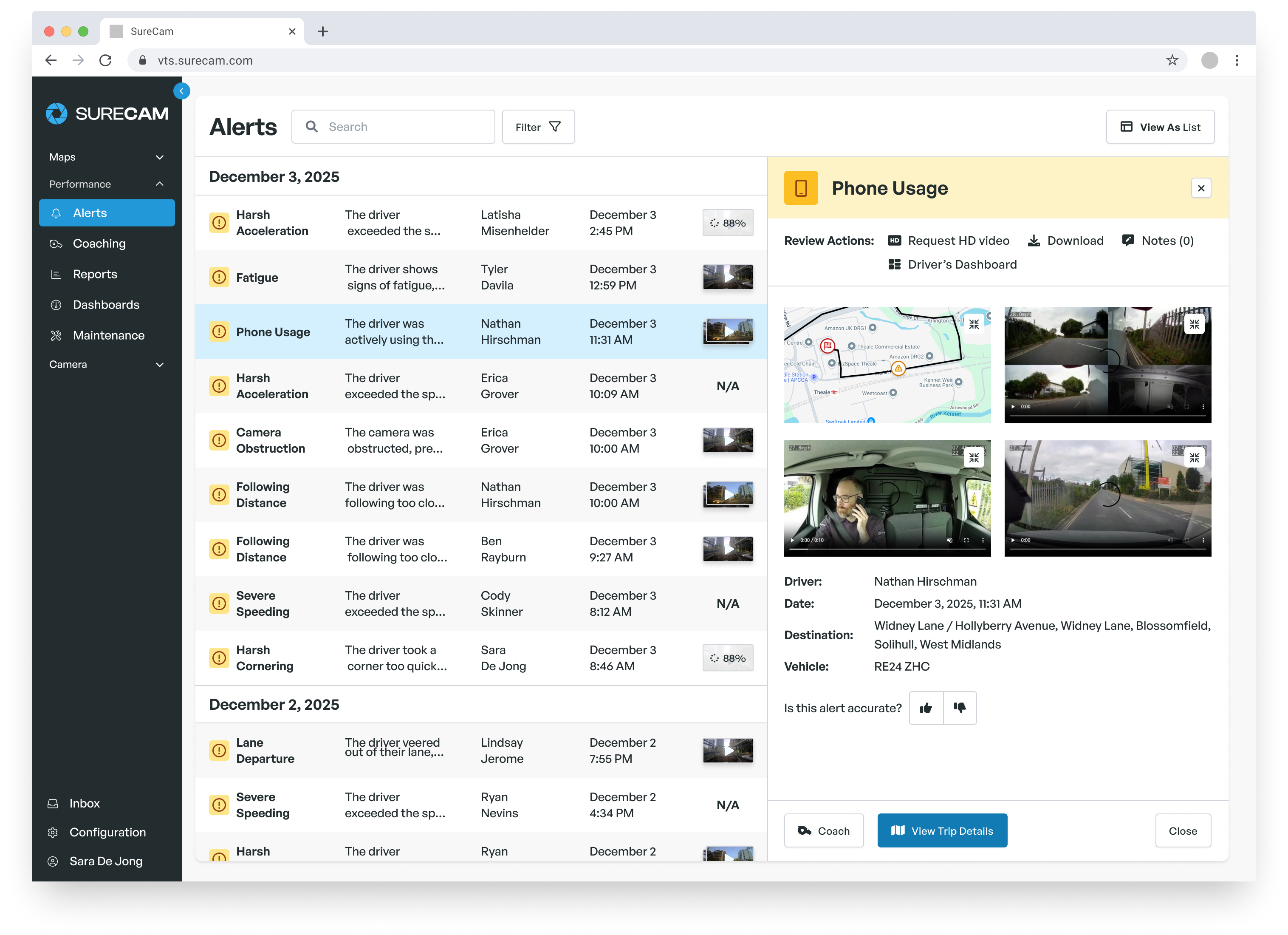
Every camera in the Vantage system connects through a cellular network. When a g-force sensor, telematics trigger, or AI-detection event fires, the system uploads video and data immediately. A safety manager receives an alert by email or through the SureCam platform and can pull synchronized multi-angle footage within minutes. No SD cards. No retrieval workflows. No waiting for the driver to return.
SureCam LiveCheck extends this further with live remote video access. A safety director can open a live view of any vehicle in the fleet at any time, from any camera angle the vehicle carries, without notifying the driver. For safety audits, for verifying compliance at a job site, and for monitoring vehicles during high-risk operations, that real-time visibility capability delivers oversight that SD-card systems cannot approximate at any price.
Ringway Jacobs, a UK highway services fleet managing 250 trucks and 350 vans for local government road network contracts, deployed SureCam cameras across their full fleet: forward and rear coverage on smaller vehicles, four-way camera coverage on larger vehicles, and 360 proximity sensors on their newest additions. Over two years, the fleet achieved a 54% reduction in accident rate and unsafe driving behavior. Dave Bonehill, Head of Fleet Operations, described the cultural shift directly:
"It was only when we had a number of incidents that we had to prove our drivers were not at fault. It was then that the cameras started to become respected and approved by drivers."
Initial resistance gave way to active trust once drivers experienced what camera evidence did for them in disputed situations. That shift from surveillance concern to driver advocacy marks the operational inflection point where multi-camera investment starts returning value beyond the claims ledger.
Vision Zero and Regulatory Compliance
Vision Zero, the road safety framework targeting zero traffic fatalities and serious injuries, has moved from a Scandinavian policy concept into active municipal and state-level transportation planning across the US and UK. Fleets operating under Vision Zero commitments, DOT compliance programs, or safety scoring requirements face increasing pressure to document safety outcomes with evidence, not assertion.
360-degree fleet camera systems generate the synchronized, multi-angle evidence base that safety reports and regulatory audits require. Backing incidents, pedestrian contacts, and intersection events all carry documentation when camera coverage matches a vehicle's full operational perimeter. For fleet operators responding to RFPs, insurance renewals, or municipal contract requirements that now include safety data provisions, that evidence base has a direct commercial value.
Single-Camera vs. Multi-Camera: An Honest Comparison
Single-camera systems serve most standard fleet use cases well. They capture forward events, support driver coaching, and generate the claims evidence that resolves the majority of disputes. For fleets on highway routes, point-to-point service calls, and lower-density operations, a well-implemented forward-facing system delivers strong ROI at lower cost and simpler installation.
Multi-camera systems carry a higher upfront investment and a more involved installation process. They make sense when the operation's risk profile generates exposure across multiple angles simultaneously. The calculation is not about technology preference. It is about whether the coverage gaps in a single-camera setup represent a realistic and material financial risk for a specific fleet's actual work.
The practical question: what are the three most common incident types in this fleet over the past 24 months? If backing accidents, sideswipes, or loading-zone disputes appear on that list, multi-camera coverage addresses documented exposure rather than theoretical risk.
Frequently Asked Questions About 360-Degree Fleet Cameras
What does a 360-degree fleet camera system include? A full surround-view fleet system typically combines forward-facing, rear-facing, driver-facing, and one or more side cameras, all synchronized to package footage from every angle into a single incident event.
How many cameras does SureCam Vantage support? SureCam Vantage supports up to six synchronized camera views, configurable to the fleet's specific use case and risk profile. Not every fleet requires all six. The system grows as fleet safety priorities change.
Do multi-camera systems work across different vehicle types? Yes. SureCam Vantage supports OBD and hardwired installation across a wide range of commercial vehicles, from vans and pickups to heavy trucks and specialty vehicles.
How does 360-degree camera footage help with insurance claims? Synchronized multi-angle footage removes the coverage gaps that create disputed liability. When every relevant angle of an incident records automatically, investigations move faster and fleet operators defend their position from complete documentation rather than partial evidence. Ringway Jacobs' 54% reduction in accidents over two years reflects how comprehensive coverage changes driver behavior before incidents happen, not only after.
What is the difference between 360-degree cameras and proximity sensors? Camera systems capture visual footage for review, coaching, and claims defense. Proximity sensors deliver real-time in-cab driver alerts when objects enter blind zones. Both address safety goals and can operate together. Ringway Jacobs deployed four-way cameras on larger vehicles and 360 proximity sensors on their newest fleet additions, combining evidence capture with active driver warning for maximum protection.
Which fleet types benefit most from multi-camera coverage? Towing and recovery, construction, urban last-mile delivery, and passenger transport fleets carry the highest multi-directional risk profiles. Any fleet with frequent backing maneuvers, tight urban routing, or operations where pedestrians and cyclists share the vehicle's path on a daily basis warrants a serious look at multi-camera coverage.
Interested in speaking with a fleet video expert to see these systems in action? Schedule a call with us here!



.png)