What Changes on October 22, 2026
On October 22, 2026, New York's updated Section 800.26 takes effect, setting new equipment standards for emergency ambulance service vehicles that fall outside the traditional ambulance classification. If a certified agency operates fly cars, quick-response units, supervisor vehicles, or similar non-transport responders as part of its response system, this regulation governs what those vehicles must carry when they enter the fleet after that date.
The camera and equipment requirements in the updated regulation go further than general fleet standards that many agencies currently meet. Understanding what the regulation requires, which vehicles it covers, and when the compliance obligation actually attaches gives fleet and operations managers the lead time to factor these requirements into procurement specifications before the effective date arrives.
Which Vehicles Section 800.26 Covers
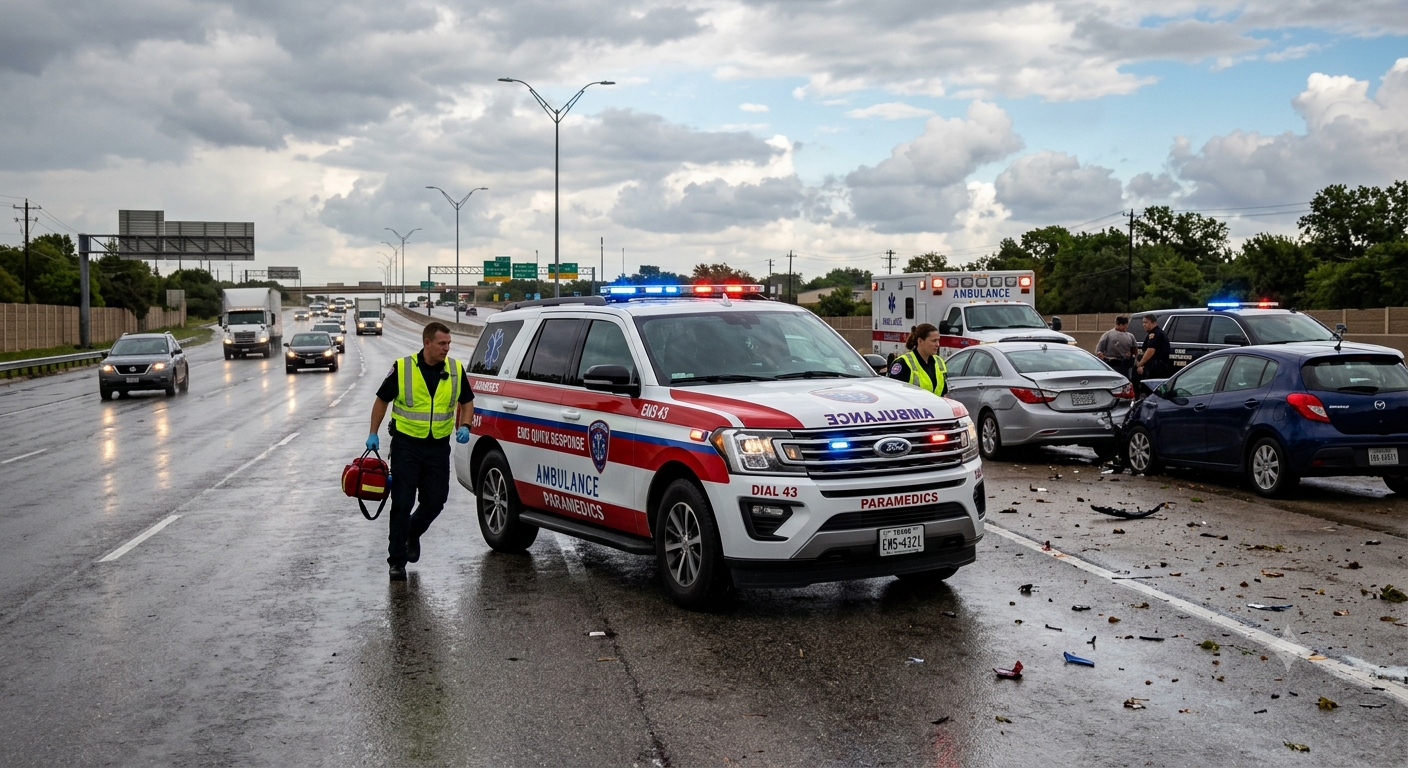
Section 800.26 applies to emergency ambulance service vehicles other than an ambulance. That classification includes fly cars, quick-response vehicles, supervisor units, and other non-transport response vehicles that a certified ambulance service deploys as part of its response system. These vehicles bring personnel and equipment to the scene but do not provide transport capability.
Traditional ambulances fall under Section 800.24, which sets a separate and independently administered equipment standard. The updated 800.26 does not amend or supersede those requirements. An agency replacing a standard transport ambulance should consult Section 800.24 for that vehicle class. The new camera and equipment requirements in the updated 800.26 apply specifically to the non-ambulance category.
This distinction matters most for agencies running mixed fleets. A service with both transport ambulances and fly cars needs to apply two different equipment frameworks depending on vehicle type. The updated 800.26 tightens the requirements for the fly car category, bringing its documentation and safety technology obligations closer to the standards that govern transport ambulances.
The Dash Camera Technical Specification
Section 800.26(c)(4) sets the minimum dash camera requirements for any non-ambulance emergency ambulance service vehicle acquired on or after October 22, 2026. Four capabilities must be present. The camera must record from the driver's perspective toward the front of the vehicle, activate on g-force change, capture footage before and after the triggering event, and record both audio and video. Recordings must remain retained for a minimum of 10 days.
What G-Force Activation Requires from a Camera System
G-force activation means the camera fires automatically when the vehicle experiences a sudden change in velocity or force: hard braking, a collision, or a sharp swerve. This removes any dependency on a driver pressing a button or starting a recording manually. When an incident occurs, the system captures it without driver action.
For procurement teams evaluating camera systems, this requirement rules out passive recording-only devices that lack automated event flagging. The regulation does not specify a minimum g-force threshold, but the system must respond to g-force change as a trigger mechanism. Systems that rely entirely on manual activation, or that only record continuously without event-based detection, do not satisfy the specification.
Pre-Event and Post-Event Capture
Pre-event capture means the system stores footage from a buffer that precedes the triggering event. When a g-force event fires, the clip saves not just the moment of impact but the seconds leading up to it. That context answers the operational questions that matter most: what the traffic pattern looked like, what the driver did, and what happened on the road before vehicle contact.
Post-event capture extends the recording window past the triggering moment, covering the immediate aftermath: where the vehicle stopped, what occurred in the roadway, and whether secondary incidents followed. Together, these two capabilities produce a complete evidentiary record. For agencies managing liability exposure on busy emergency response corridors, that record supports defensible claims and quality assurance reviews in ways that event-only snapshots cannot.
Equipment Requirements Beyond the Camera
Section 800.26 mandates more than a forward-facing dash cam. Four additional equipment categories apply to non-ambulance EMS vehicles acquired after October 22, 2026, and each deserves a line item in any vehicle acquisition specification.
Section 800.26(c)(3) requires a rear-view camera system with both visual and audible reverse alerts. This sits as a separate requirement from the forward-facing dash cam under (c)(4). Agencies should confirm that any vehicle acquisition includes both a compliant rear camera and a compliant reverse alert system. These may come as factory-installed features, aftermarket additions, or a combination depending on the vehicle platform.
Section 800.26(c)(7) requires an anti-theft device beyond the standard ignition key or keyless fob, one that disables the vehicle from operation by anyone other than an authorized user. This standard goes beyond a basic alarm. Fleet managers should confirm with vehicle vendors what anti-theft devices qualify and ensure they appear on the vehicle specification before ordering.
Section 800.26(c)(1) requires seatbelts on all seats and seating areas, meeting or exceeding federal Motor Vehicle Safety standards under 49 U.S.C. Chapter 301. Agencies acquiring used vehicles after the effective date should verify that every seat position, not just front-row positions, meets this standard. Sections 800.26(c)(5) and (c)(6) require commercially manufactured securing methods for all equipment and materials inside the vehicle, and mounted equipment must not interfere with airbags, seatbelts, or other manufacturer-installed safety features.
How the Compliance Trigger Works
Section 800.26(d) contains the most important detail for current fleet planning: the new standards apply to vehicles acquired after the effective date, not to every vehicle currently in service. Existing non-ambulance EMS vehicles remain exempt until they exit the fleet and require replacement. This is not a retrofit mandate.
An agency with fly cars or supervisor vehicles in active service on October 22, 2026 faces no obligation to modify those vehicles. They continue under the prior version of 800.26 until replaced. The new requirements attach at the point of acquisition: when an agency purchases or otherwise obtains a non-ambulance EMS vehicle on or after the effective date, that vehicle must meet the updated standard.
Vehicles ordered before October 22, 2026 also carry an exemption. If a purchase order predates the effective date, that vehicle falls under the old standard even if it delivers after October 22. Agencies placing orders in the weeks before the effective date should document the order date clearly for compliance records.
How SureCam Meets the Section 800.26 Specification
The table below maps Section 800.26(c)(3) and (c)(4) requirements to SureCam capabilities. Seatbelt compliance, anti-theft devices, and commercially secured equipment fall outside camera system scope and require separate procurement decisions at the vehicle or agency level.
| Section 800.26 Requirement |
SureCam Capability |
| Forward-facing camera (driver's perspective) |
Forward-facing lens standard across the SureCam product line |
| G-force activation |
Built-in accelerometer triggers event recording automatically on impact events |
| Pre-event capture |
Configurable buffer saves footage from before the triggering event |
| Post-event capture |
Recording extends through the post-event window automatically |
| Audio and video recording |
Dual microphones capture in-cab and ambient audio alongside full HD video |
| Minimum 10-day retention |
Cloud storage retains event footage; retention configurable beyond the 10-day floor |
| Rear-view camera with reverse alerts (c)(3) |
Rear camera available as a compatible add-on |
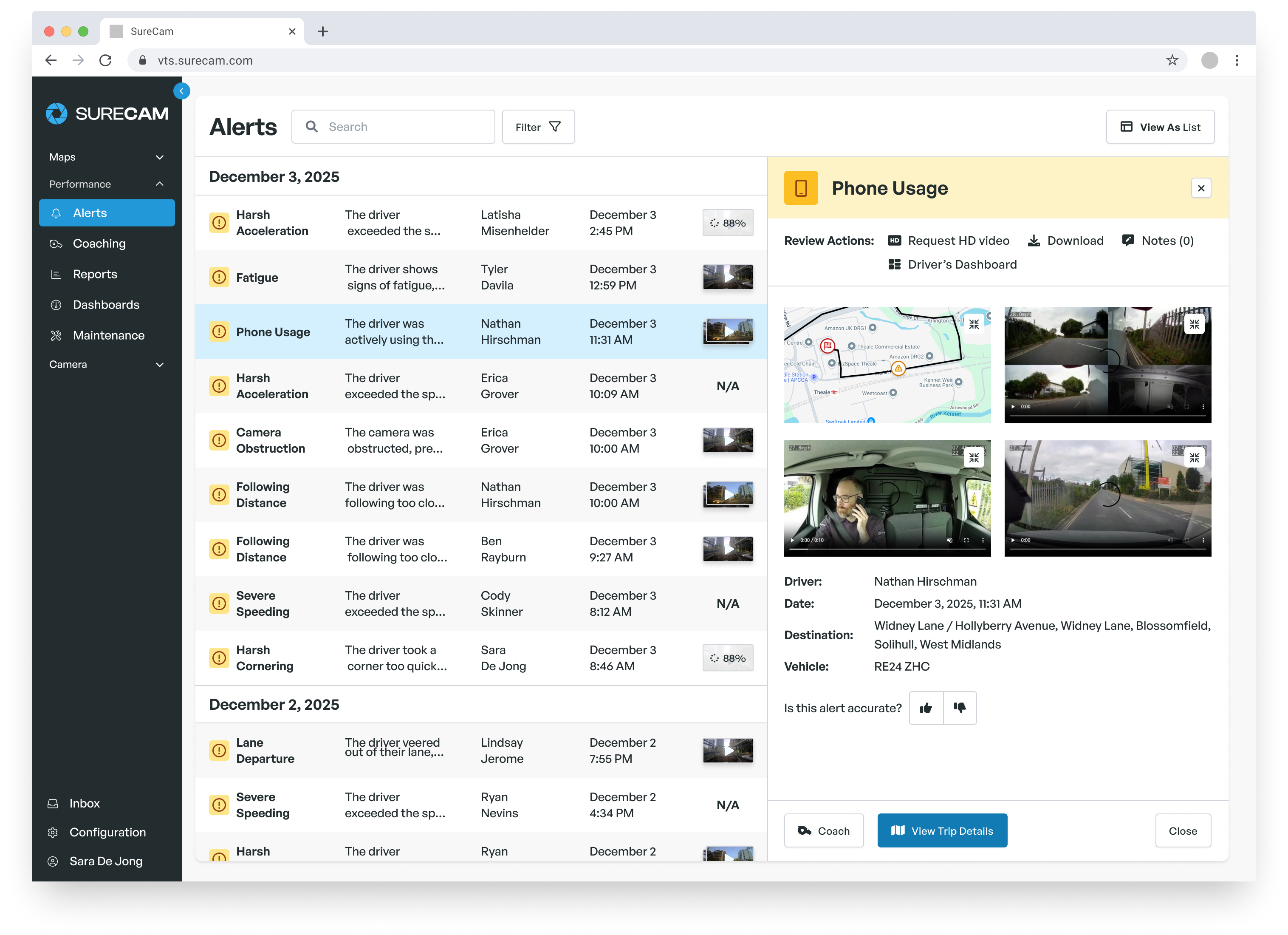
SureCam's network-connected architecture uploads event footage to the cloud within seconds of a triggering event, rather than storing it on a local SD card that requires physical retrieval. For EMS agencies managing vehicles across a wide response territory, that remote access means agency leadership can review incident footage without waiting for the vehicle to return to base.
Frequently Asked Questions
Does Section 800.26 Apply to All NYS Ambulances?
No. Section 800.26 covers emergency ambulance service vehicles other than an ambulance. Traditional transport ambulances operating as part of a certified service fall under Section 800.24, which sets a distinct equipment standard administered separately. The updated 800.26 requirements taking effect October 22, 2026, including the new dash camera and rear-view camera mandates, apply only to the non-transport vehicle category: fly cars, quick-response units, supervisor vehicles, and similar responders that bring personnel and equipment to the scene without transport capability.
Agencies should apply the correct section to each vehicle type. Purchasing a new supervisor vehicle after October 22 triggers 800.26. Purchasing a new transport ambulance after that date triggers 800.24. For vehicles that serve in both capacities, or where classification is unclear, the relevant Regional EMS Council or qualified legal counsel should confirm which regulatory framework controls.
Do Existing Non-Ambulance EMS Vehicles Require Retrofitting?
No. Section 800.26(d) explicitly exempts vehicles already in service when the updated regulation takes effect. An agency with fly cars or supervisor vehicles operating on October 22, 2026 faces no obligation to modify those vehicles to meet the new dash camera or equipment requirements. Those vehicles continue under the prior version of the regulation until they leave the fleet.
The compliance obligation attaches to acquisition. When an agency replaces, adds, or otherwise obtains a non-ambulance EMS vehicle on or after October 22, 2026, that transaction triggers the updated equipment standards. Agencies with aging fly car fleets that expect to replace vehicles in the near term should factor the new requirements into replacement planning now, both for budgeting and vendor specification purposes.
What Capabilities Define a Compliant Dash Camera Under Section 800.26?
Section 800.26(c)(4) defines the minimum. A compliant camera must face forward from the driver's perspective, activate on g-force, capture footage before and after the trigger event, record both audio and video, and retain recordings for at least 10 days. Any system that cannot demonstrate all five of these capabilities falls short of the regulatory floor, regardless of other features it may offer.
Beyond the regulatory minimum, fleet and operations managers should evaluate whether the system provides remote access to footage without requiring a driver to physically handle media, whether event-based alerts notify fleet management when a trigger fires, and whether cloud storage eliminates the retention risk that comes with overwritten or damaged SD cards. The regulation defines the floor; a network-connected camera system delivers operational value well above it, particularly for agencies managing vehicles across wide response territories.