Do You Need Your ELD and Dash Cams From the Same Provider?
16 Oct 2026
Fleet Safety


Improve fleet safety, reduce operating costs, and optimize field performance with an easy-to-use platform for video, GPS tracking, driver coaching, maintenance, asset tracking, and real-time fleet insights.
Drive your total fleet operations with SureCam’s all-in-one video telematics solution.
Valuable guides, case studies, and videos to help you optimize fleet management, safety, and productivity with telematics solutions.
Values, job opportunities, and ways to connect or partner with SureCam.




Fleet insurance premiums keep climbing. Carriers continue tightening underwriting standards, nuclear verdicts dominate headlines, and claims severity shows no signs of slowing. For fleet managers, CFOs, and operations directors running 20 to 1,000 vehicles, the annual renewal conversation has turned from routine to painful.
The pressure comes from multiple directions at once. Distracted driving incidents have pushed claims frequency higher. Litigation funding has made plaintiff attorneys more aggressive, turning fender benders into six-figure lawsuits. And the labor market has forced many fleets to hire less-experienced drivers, which carriers view as elevated risk. The result: premiums that rise even when the fleet's own loss history stays flat.
The good news: insurers reward fleets that demonstrate measurable risk reduction. Every lever pulled on the safety and operations side can translate directly into lower premiums, faster claims resolution, and a stronger negotiating position at renewal. The path forward starts with understanding which levers actually move the needle, and then packaging the results into a story that underwriters can price with confidence.
Before investing in any technology, fleets can take concrete steps that signal risk reduction to carriers and brokers. These operational fundamentals form the baseline that every insurer evaluates.
Hiring practices and ongoing training programs rank among the first things an underwriter reviews. A fleet that screens MVRs quarterly, conducts post-incident retraining, and documents every coaching session tells a different story than one that onboards drivers and hopes for the best.
Build a written driver qualification file for every operator. Include MVR pulls (at minimum annually, ideally quarterly), road test documentation, and records of any corrective coaching. When renewal time arrives, this file becomes evidence of a proactive safety culture, not just a compliance checkbox. Carriers want to see that risky drivers get identified early and either improve or exit the fleet.
New-hire orientation deserves special attention. Fleets that put new drivers through a structured onboarding program (ride-alongs, documented road tests, mentor pairing for the first 30 to 90 days) send a clear signal to carriers that the operation takes hiring risk seriously. The alternative, handing over keys on day one with minimal oversight, creates the exact kind of exposure underwriters price aggressively.
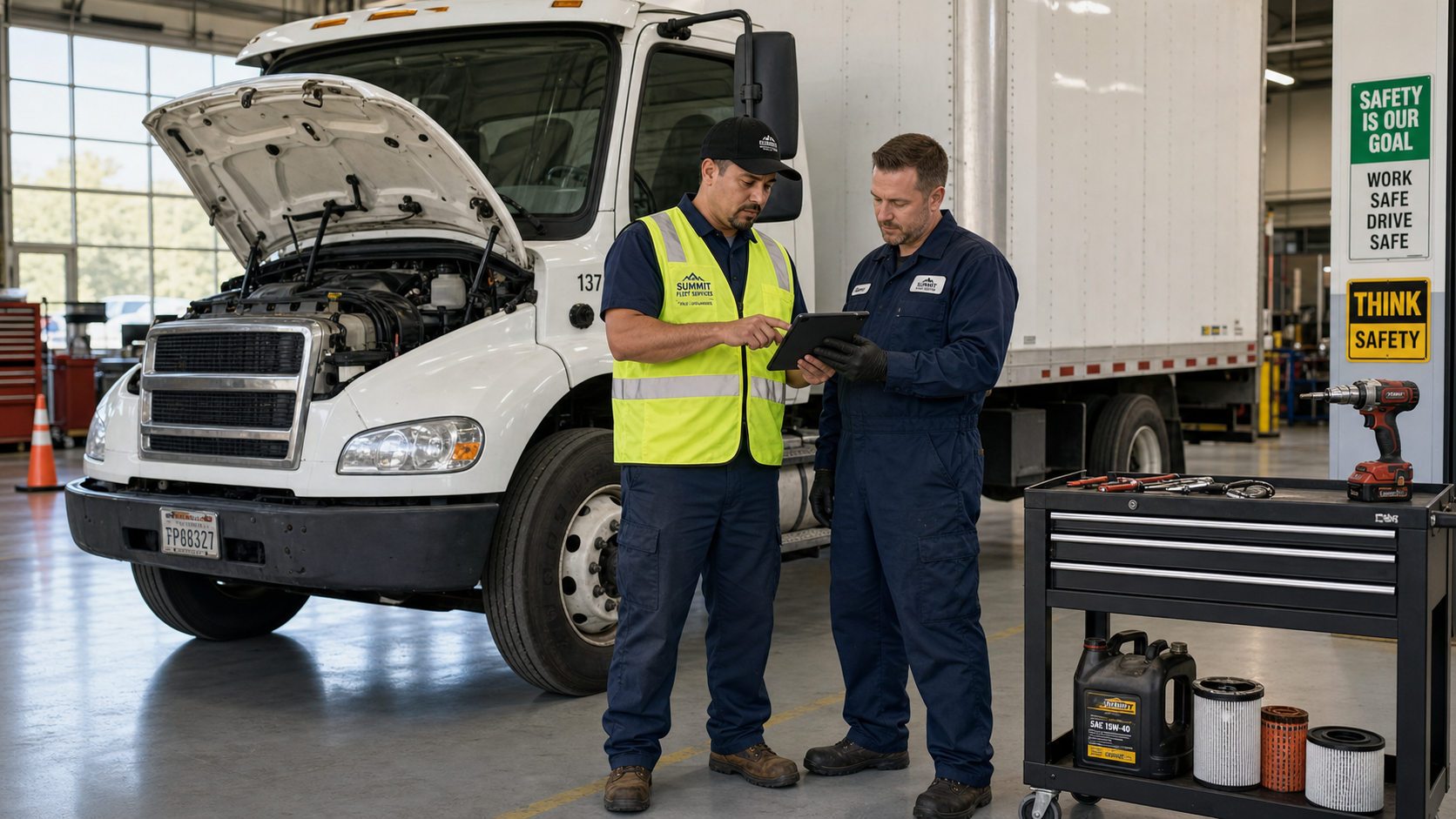
A vehicle that breaks down on the highway creates liability exposure far beyond the repair bill. Tire blowouts, brake failures, and lighting deficiencies all trigger DOT violations, increase accident probability, and give plaintiff attorneys ammunition in post-crash litigation.
Fleets that follow manufacturer-recommended maintenance schedules typically extend vehicle life by 30–40% compared to neglected vehicles. Preventive maintenance costs three to four times less than emergency roadside repairs. Documenting every service event (parts, labor, vendor, cost) in a centralized system gives underwriters confidence that the fleet takes asset condition seriously. That confidence translates into premium relief.
Not all miles carry the same risk. Urban routes with heavy pedestrian traffic, highway corridors known for aggressive driving, and job sites with complex backing maneuvers each present distinct exposure profiles. Fleets that analyze their route data, identify high-risk corridors, and adjust scheduling or routing accordingly demonstrate operational maturity.
Sharing route analysis with a broker gives the underwriter a clearer picture of actual exposure versus assumed exposure. A 50-truck fleet that operates primarily on rural highways between distribution centers carries a fundamentally different risk profile than a 50-truck fleet running downtown deliveries in a major metro. Making that distinction visible at renewal can shift how the carrier prices the policy.
Geofencing technology adds another layer to this strategy. Fleets that define geographic boundaries for their operations and track compliance against those boundaries generate data that quantifies their actual exposure footprint. When that data shows tight operational discipline (vehicles staying on approved routes, avoiding high-risk zones, minimizing unnecessary mileage) the underwriter can model risk more favorably than the generic industry benchmarks carriers apply by default.
Operational fundamentals build the foundation. Video telematics accelerates the return. Carriers increasingly recognize that connected dash cams change the economics of claims management, fraud defense, and driver behavior in ways that GPS-only telematics cannot.
The single biggest factor in controlling claims cost involves speed. When an incident occurs, the clock starts immediately. Witness memories fade, vehicle positions change, and third-party attorneys begin building narratives. A fleet that can send HD video footage to its insurer within minutes of a collision (rather than days or weeks) fundamentally changes the claims dynamic.
Network-connected dash cams trigger automatic uploads on impact events, delivering g-force data, GPS coordinates, and synchronized video to a web portal before the driver even exits the cab. This capability, often called First Notification of Loss (FNOL), compresses the timeline from incident to resolution. Claims that once dragged through weeks of investigation can reach a disposition in days. Every day shaved off that timeline reduces legal exposure, rental costs, and administrative burden.
The operational difference between connected cameras and SD-card systems becomes starkest in the FNOL window. SD-card cameras require someone to physically retrieve the card, download the footage, and forward it to the right people. That process can take 12 to 24 hours under ideal conditions, and much longer if the vehicle sits at a repair shop or the card gets lost. Connected cameras eliminate this gap entirely, putting video into the claims workflow within minutes and allowing fleet managers to assess liability before the tow truck arrives.
False and exaggerated claims represent one of the most expensive line items in fleet insurance. Third-party claimants who stage incidents, exaggerate injuries, or fabricate property damage can cost a fleet tens of thousands of dollars per event. Without video evidence, these disputes devolve into he-said/she-said negotiations where the commercial vehicle almost always loses.
Sam Lansberry II, founder of Lansberry Trucking (an 80-truck short- and long-haul operation spanning the US and Canada), described how a single $550,000 claim for an accident that the fleet did not cause forced a rethinking of the entire approach to risk management. After deploying network-connected cameras across the fleet, Lansberry Trucking reduced claims losses by 80% in one year. "I don't view our investment in SureCam as a cost; it's a profit-center," Lansberry said. "Last year alone, our claims losses reduced by over 80%."
That kind of result catches an underwriter's attention. When a fleet can demonstrate a track record of exonerating drivers and defeating fraudulent claims with video evidence, the carrier sees a fundamentally lower-risk account.
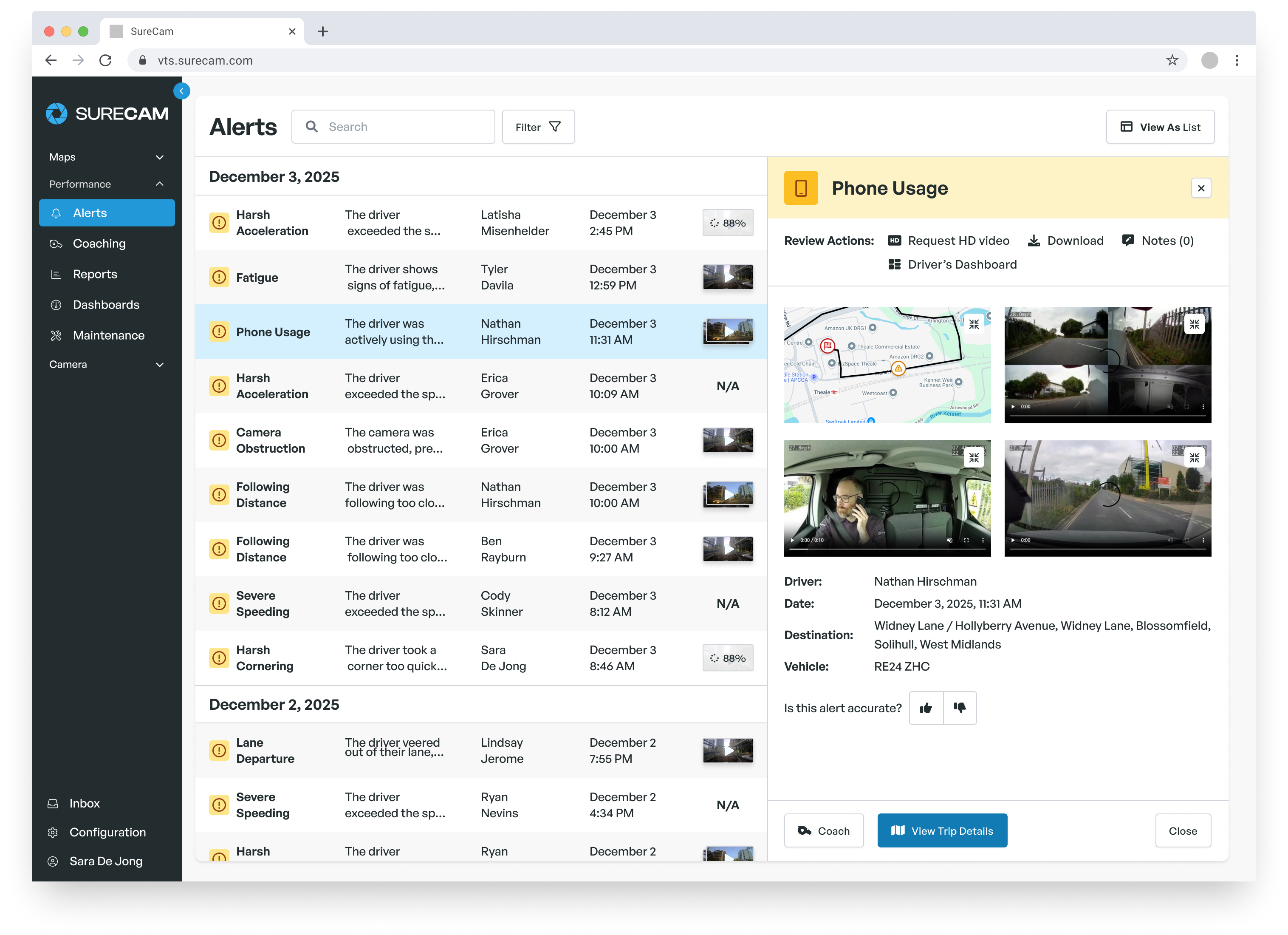
Cameras do more than capture incidents after the fact. Harsh-event alerts (hard braking, sharp cornering, rapid acceleration) create a continuous feedback loop that helps safety managers identify and correct risky driving patterns before they become claims. Over time, this coaching effect compounds: fewer harsh events lead to fewer near-misses, which lead to fewer actual collisions.
The key to making this work operationally: the coaching loop needs to stay manageable. A system that floods a safety manager with hundreds of unfiltered alerts per day becomes background noise within a week. The most effective approach prioritizes the highest-severity events, delivers them with context (video plus speed and g-force data), and lets the manager review the full fleet's activity in minutes rather than hours. That efficiency gap separates video telematics programs that produce lasting behavior change from ones that get ignored after the initial rollout fades.
Fleets that present driver coaching data alongside claims history at renewal give underwriters a forward-looking indicator of risk, not just a backward-looking loss run. A downward trend in harsh driving events signals that the fleet's safety program produces measurable results, and carriers price that improvement into the premium.
Too many fleets approach renewal passively, waiting for the broker to deliver a quote and then reacting to the number. Fleets that build a proactive renewal package shift the dynamic from "price taker" to "risk storyteller."
A strong renewal package includes the current loss run (with context for any large claims), documentation of safety program improvements made since the last renewal, driver training records, maintenance logs, and (where applicable) video telematics data showing incident trends, exoneration rates, and driver behavior improvement over time. The goal: make the underwriter's job easier by presenting a clear, evidence-backed picture of a fleet getting safer, not just older.
Timing matters. Start assembling this package 90 to 120 days before renewal. Share preliminary data with the broker early enough for them to market the account to multiple carriers, rather than scrambling for alternatives two weeks before the policy lapses.
Not every carrier values the same risk-reduction measures equally. Some offer explicit discounts for telematics adoption. Others weigh driver training programs more heavily. A good broker knows which carriers in a given market reward which investments, and can steer the fleet toward the best match.
Questions worth asking a broker before renewal: Which carriers in this market offer explicit telematics or dash cam discounts? What loss ratio threshold triggers a premium increase versus a decrease? How does the carrier view video-based FNOL in claims adjudication? Has the carrier flagged any specific risk factors on this account that the fleet could address before the quote comes in? These conversations turn the broker from a quote-delivery service into a strategic partner in premium reduction.
Every fleet carries unique variables (vehicle types, operating radius, claims history, driver tenure), so no single formula predicts exact savings. However, the mechanics of the premium reduction scale predictably across fleet sizes.
Imagine a hypothetical 10-vehicle service fleet spending $3,000 per vehicle annually on commercial auto insurance. Even a modest 10–15% premium reduction (achievable through documented driver training and a clean two-year loss run) saves $3,000 to $4,500 per year. Adding connected dash cams to the mix strengthens the renewal story and positions the fleet for deeper discounts in subsequent years as the claims record improves.
Now scale that to a hypothetical 50-vehicle operation. At the same per-vehicle cost, a 15–20% reduction (supported by video-based FNOL, exoneration data, and documented driver coaching) saves $22,500 to $30,000 annually. At 150 vehicles, the same percentage range produces $67,500 to $90,000 in annual savings. These figures represent premium reduction alone, before counting the operational savings from fewer accidents, less vehicle downtime, and reduced administrative hours spent managing claims.
The compounding effect deserves attention. A fleet that reduces claims frequency in year one earns a better loss ratio. That improved ratio strengthens the renewal position in year two. By year three, the fleet has built a multi-year track record of declining losses, which represents the single most powerful negotiating tool at the renewal table.
Insurers and their attorneys operate on evidence. A fleet that produces organized, timestamped, verifiable documentation for every incident (whether that involves video footage, maintenance records, driver qualification files, or route logs) resolves claims faster and at lower cost than one scrambling to reconstruct events after the fact.
This principle extends beyond cameras. A well-maintained driver qualification file can defeat a negligent hiring claim. A complete maintenance log can counter an allegation of mechanical failure. A documented safety meeting schedule can demonstrate that the fleet takes training seriously. Each piece of documentation removes a potential attack vector for plaintiff counsel, and each removed attack vector lowers the carrier's expected loss on the account.
The gap between "having good records" and "using good records at renewal" represents one of the most common missed opportunities in fleet insurance management. Fleets generate safety data every day through telematics, maintenance systems, training logs, and (increasingly) video platforms. The ones that package this data into a coherent narrative for underwriters gain a measurable advantage.
Consider designating a single person (safety manager, operations director, or fleet administrator) as the "renewal owner" responsible for assembling and presenting the fleet's risk story. That person should maintain a rolling file of safety improvements, incident resolutions, and program investments throughout the policy year, rather than trying to reconstruct twelve months of progress in the final weeks before renewal.
Fleet insurance premiums respond to demonstrated risk reduction, not promises. Every step outlined here (from MVR screening to maintenance documentation to video-based claims defense) generates evidence that carriers and brokers can price.
For fleets evaluating connected dash cam solutions as part of a broader premium reduction strategy, the key question to ask any provider: does the system generate the kind of claims-ready evidence and behavioral data that strengthens a renewal package? Technology that captures video but buries it behind complicated workflows or slow retrieval times delivers limited insurance value. The system needs to put footage and data into the hands of safety managers, brokers, and adjusters quickly enough to change the outcome.
SureCam delivers network-connected dash cams and video telematics designed for exactly this workflow: instant incident notification, fast footage retrieval, driver coaching tools, and integration with leading telematics platforms. To see how the system supports fleet insurance strategy, visit surecam.com/pricing or call 1-855-870-7205 to schedule a time with a product specialist.