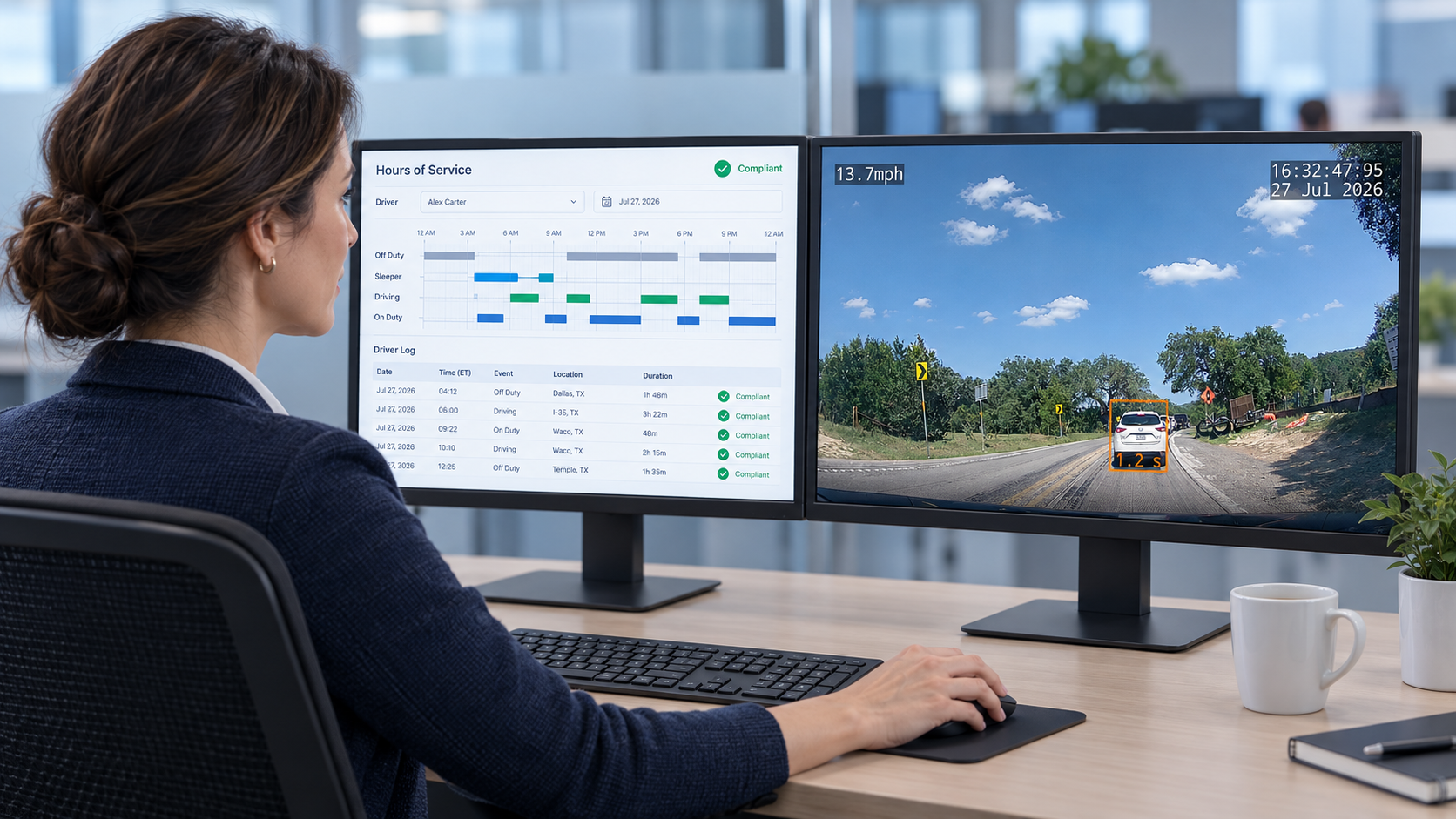
The GPS-Only Blind Spot
Fleet managers spend money on GPS tracking for good reason. Real-time location data solves dispatch problems, shortens routes, and proves drivers showed up where they said they would. GPS answers the logistical question: "Where is my fleet right now?"
But GPS doesn't answer the question that matters most when something goes wrong: "What actually happened?"
A driver collides with a parked car. GPS shows your vehicle was at that intersection at that time. Does it prove your driver caused the accident or prove the parked car was in a no-parking zone? No. GPS data alone cannot defend against a false claim. It cannot show whether your driver was speeding, distracted, or hit by another vehicle. GPS tells you when and where an incident occurred. Video tells you why.
This gap between data and evidence costs fleets money every year in claims they could have won with footage.
Where GPS Tracking Falls Short (And Video Fills In)
False Claims and Liability Defense
GPS proves location. Video proves liability.
A third-party claimant alleges your driver caused a collision. Without video, the claim becomes a credibility contest. Insurance adjusters default to the third party's version of events, especially when injuries are claimed. Your GPS log showing your vehicle at the scene strengthens the case, but it doesn't end it. The claimant argues a different scenario, their medical records surface, and the case stretches into negotiation and potential settlement costs.
With video, the incident resolves in days. Your driver is exonerated within 24 hours, or your footage allows you to resolve fault quickly and fairly. Consider Lansberry Trucking, a family-owned US and Canadian trucking operation with 80 trucks. A single $550,000 claim for an accident the company didn't cause became the catalyst for a full deployment of network-connected dash cameras. After implementation, Lansberry recorded an 80% reduction in claims losses in just one year. Sam Lansberry II, the founder, reframed the investment: "I don't view our investment in SureCam as a cost; it's a profit center. Last year alone, our claims losses reduced by over 80%."
GPS alone could not have achieved that outcome. The data would have placed the truck at the scene. The video proved innocence.
Driver Coaching and Behavior Change
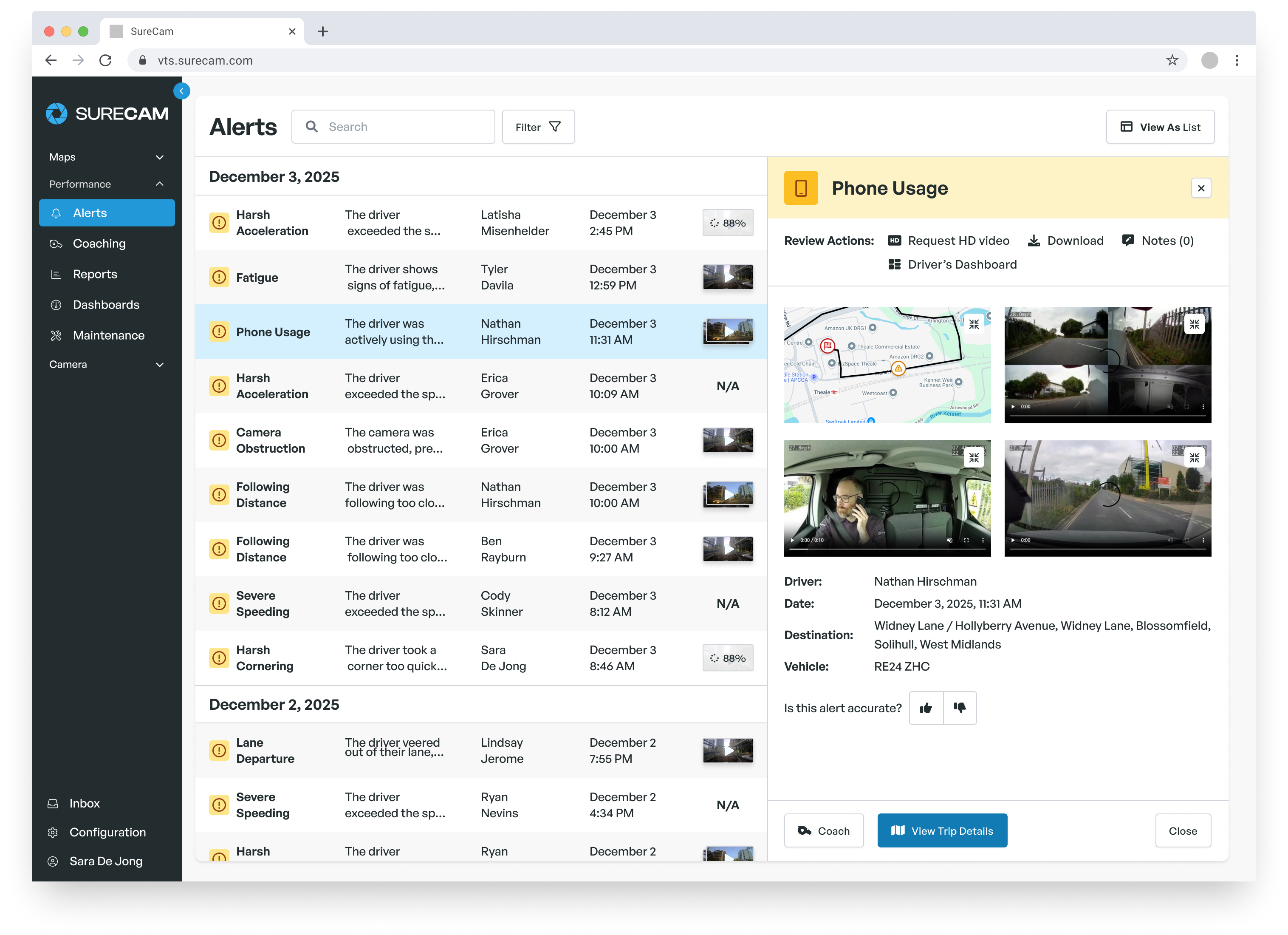
GPS tells you a driver exceeded the speed limit. Video shows you why.
Maybe the driver was exiting a highway onto a service road where the speed dropped 20 mph without clear signage. Maybe they were avoiding a pothole. Maybe they were distracted by a phone. GPS generates a speeding alert. Video reveals the coaching opportunity.
Fleets that invest in video telematics (cameras plus GPS plus g-force and speed data) report measurable behavior change because coaching becomes specific and credible. Drivers see their own footage and accept feedback differently than when a manager cites a GPS log alone. Real coaching reduces harsh braking events, aggressive acceleration, and collisions driven by preventable driver choices.
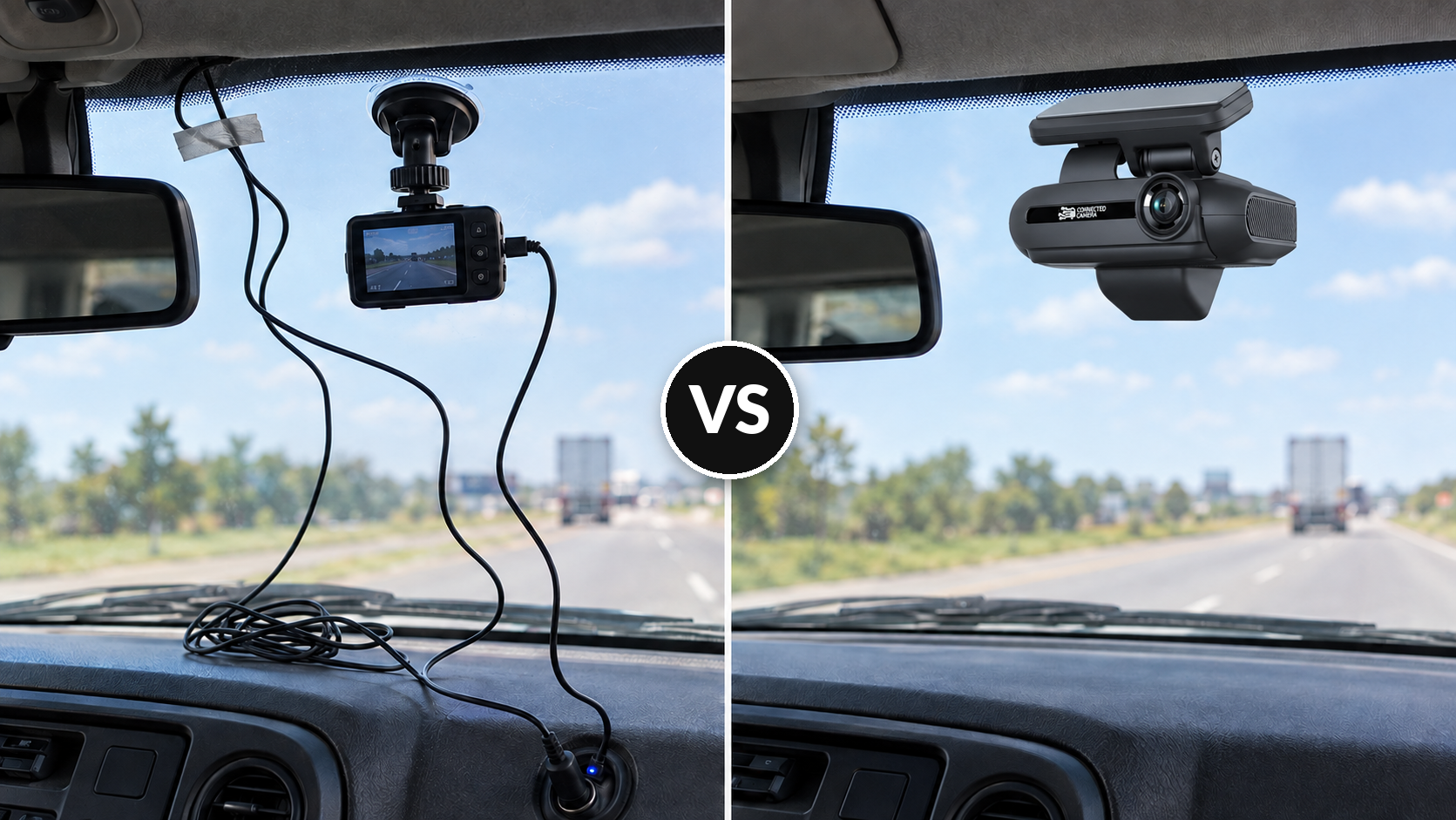
GPS-only fleets rely on driver reports, camera footage you have to retrieve manually from SD cards, or nothing. Behavioral data without visual context produces less coaching traction.
Operational Visibility and Claims Processing Speed
GPS tells you vehicle locations. Video telematics give you situational awareness.
When an incident occurs, GPS locates your vehicle. Network-connected video cameras deliver footage within seconds via cellular connection. HD footage arrives in the claims platform automatically, timestamped and linked to g-force, speed, and direction data. Your insurance partner receives a FNOL (First Notification of Loss) package within minutes of the incident, not days. Claims adjust faster. Liability settles faster. You move forward.
GPS-only workflows still require someone to pull a report, document the incident details, reach the driver for their account, file paperwork, and email everything to the insurance partner hours or days later. By then, the third party's narrative shapes the adjuster's initial impression.
Speed of response and video evidence together reduce claims costs. GPS alone does neither.
When GPS-Only Works (And When It Doesn't)
GPS tracking alone solves specific fleet problems efficiently. Consider whether your fleet faces these constraints.
GPS-Only Makes Sense If
You operate a high-visibility service fleet where customer verification and routing optimization are your primary business pressures. A plumbing or HVAC service fleet that needs proof of arrival time, efficient routing, and job completion photos can operate sustainably on GPS plus customer-facing documentation tools. The liability risk profile (local, short-haul, residential) supports this model. Claims tend to be straightforward: "Did they show up?" and "How long were they on-site?" GPS answers both.
You focus on fuel efficiency and vehicle utilization as core KPIs. GPS data (speeding events, idle time, trip distance) feeds into dashboards that reward or coach drivers on these specific metrics. For some sustainable-energy-focused or cost-optimization-first fleets, this metric suite is sufficient, and adding cameras doesn't change the business case.
Your industry operates under strict privacy regulations that make in-cab video collection legally complex or culturally resisted. Some sectors have strong union or labor law concerns around video. In these cases, GPS-only (without in-cab recording) sidesteps that friction entirely.
Your current insurance partner does not require or incentivize dash cam data. Some legacy insurance programs haven't updated their claims workflows to accept video evidence, or they offer no premium reduction for dash cams. In that environment, the ROI calculation shifts. GPS alone may suffice if your claims history and driver profile already support reasonable premiums.
Video Telematics (GPS + Video) Becomes Essential If
Your fleet handles high-liability routes or environments. Long-haul trucking, construction site delivery, urban last-mile delivery, and any operation where third-party collision risk runs high benefit immediately from video. The single exonerating footage clip pays for years of camera subscriptions.
You experience frequent false or inflated third-party claims. If your insurance partner flags you as a "claims-prone" operation or if you've absorbed multiple marginal losses where "he said / she said" shaped the outcome, video telematics reduces this friction dramatically.
You manage a team of drivers you cannot personally oversee. GPS tells you they were at job sites. Video confirms they followed safety standards, treated equipment responsibly, and executed work to your standards. For field service managers running crews across regions, video provides the coaching and accountability visibility GPS cannot.
You operate under DOT, CSA, or industry-specific safety compliance requirements. Video documentation of safe driving practices, equipment maintenance, and driver behavior supports compliance audits and regulatory demonstrations in ways GPS data alone cannot match.
Your insurance or risk management partner offers premium reductions for dash cams. Modern insurers recognize video-telematics reduces claims frequency and severity. If your carrier incentivizes camera adoption with measurable premium cuts, the ROI math flips decisively in video's favor.
Building Your Decision Matrix
Think through five dimensions to clarify whether your fleet needs GPS-only, video-only, or the combination.
Risk exposure: Quantify your third-party collision risk. Long-haul operations on highways, urban delivery fleets, construction site work, and high-pedestrian-area service fleets face high collision risk. Local service fleets (plumbing, electrical) in residential areas face lower risk. High-risk fleets justify video immediately. Low-risk fleets can operate sustainably on GPS alone if other factors align.
Claims history: Pull your loss runs from the past 24 months. Count claims where liability was disputed, third parties claimed injury, or your driver's account differed materially from the claimant's version. If you absorb 3+ marginal losses per year where footage would have resolved the dispute within days, video telematics produce measurable ROI within 12 months.
Insurance incentives: Call your broker or risk manager. Ask whether your current carrier offers premium reductions for telematics data, video-documented safety practices, or dash cam adoption. Some carriers discount 5–10% for video fleets. For a mid-sized fleet spending $500K–$2M annually on insurance, a 5–7% reduction ($25K–$140K) justifies a video telematics investment in year one.
Regulatory environment: Confirm whether your industry operates under DOT (hours-of-service), CSA (Compliance, Safety, Accountability), or state-specific safety compliance mandates. If yes, video documentation of driver compliance, vehicle maintenance, and safe driving practices supports audits and reduces regulatory risk. GPS alone documents location; video documents behavior and compliance.
Operational coaching needs: Assess whether driver behavior, safety culture, and training outcomes would improve with visual feedback. If you have experienced problematic behaviors (speeding, aggressive braking, distracted driving, rough equipment handling), video coaching produces measurable results. GPS alerts generate friction without context; video coaching generates behavior change because drivers see their own actions and accept feedback differently.
The ROI Case for Combined GPS Plus Video Telematics
A mid-sized fleet scenario illustrates the math.
Assume a 40-truck fleet running regional delivery. Current insurance costs run $600K annually. Current claims history: 4 third-party collision claims per year, averaging $35K in legal and settlement costs (including marginal losses where liability was disputed). Fuel costs run $400K annually. Average vehicle operates 120K miles per year.
Without video telematics, baseline annual cost impact from claims: 4 × $35K = $140K annually.
Implement network-connected video telematics at $1,200 per truck per year (all-in hardware and software costs). Total fleet cost: 40 × $1,200 = $48K annually.
Insurance partner offers 6% premium reduction for video-documented safety program. Premium reduction: $600K × 6% = $36K annually.
Documented outcome from comparable fleets: 60% reduction in third-party claims through faster resolution and exoneration.
New claims impact: 4 × (1 − 0.6) = 1.6 claims per year × $35K = $56K annually.
Claims cost reduction: $140K − $56K = $84K annually.
Year one ROI calculation:
- Telematics investment: $48K
- Insurance premium reduction: $36K
- Claims cost reduction: $84K
- Total benefit: $120K
- Net savings: $120K − $48K = $72K year one
Payback occurs within six months. The investment compounds in year two because you carry no new equipment costs (software-only renewal runs $36K), meaning net savings approach $120K annually.
Fuel efficiency improvements (5–15% reduction through route optimization and idle time reduction) add another $20K–$60K in annual savings, depending on your baseline and driver engagement.
GPS-only fleets do not realize claims reduction or insurance premium improvement, and capture fuel efficiency data without behavior-driving video context.
One More Reality Check
Video telematics require upfront clarity of adoption. Some fleets resist in-cab cameras due to privacy concerns or driver resistance. Privacy-respecting configurations (in-cab camera that only activates on hard events, facial blurring, audio opt-out, geofence-based recording disablement) address most concerns, but the conversation with drivers happens before installation, not after.
GPS-only avoids this friction. If cultural adoption or union negotiations delay or block camera deployment, GPS-only allows you to deploy quickly and upgrade to video later once internal alignment is clarified.
For most commercial fleets facing liability, claims, or regulatory pressure, the evidence points toward combined GPS and video telematics. The ROI case is strongest for trucking, construction, delivery, and field service operations where third-party collision risk runs high and insurance partner incentives align.
For small local service fleets with low collision exposure and minimal claims history, GPS-only with customer-facing documentation tools can function sustainably if liability risk remains low.
Start with your claims history, your insurance partner's incentives, and your safety coaching needs. Let those three factors drive the decision. GPS alone solves a logistics problem. Video telematics solves business problems. Speak with a video telematics expert today to learn more.


-1.png)