The Short Answer
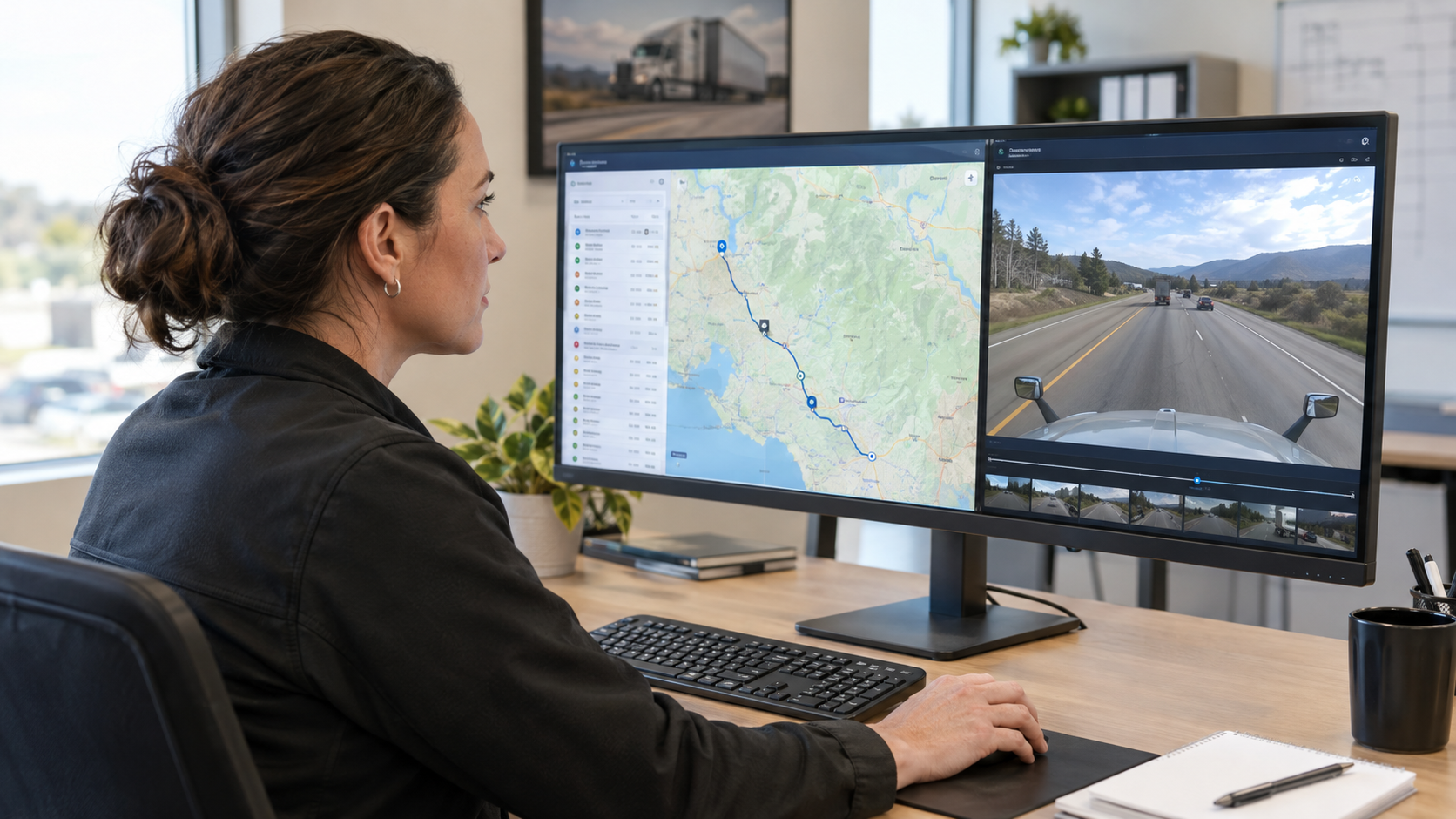
The best GPS tracking provider that also has video combines real-time location data with event-triggered, cloud-connected dash cam footage in a single platform. For small and mid-sized commercial fleets, the strongest options in this space include SureCam, Lytx, Samsara, and Motive. Each takes a different approach: SureCam and Lytx built their platforms around video first, with GPS layered in from the start. Samsara and Motive built broad operations suites where cameras arrive as one feature among dozens. The right choice depends on how much platform complexity a fleet actually needs, and whether video or compliance tooling drives the purchase.
Why Fleets Are Moving Beyond GPS-Only Tracking
GPS tracking changed how fleet managers ran their operations. They gained location visibility, route history, speed data, and basic event alerts. For many years, that package represented a meaningful step forward.
The problem: location data alone no longer covers the risk. Courts, insurers, and claimants have grown sophisticated. A fleet can prove a truck was at an intersection at a specific time, but GPS cannot answer the questions that actually determine liability. Who had the right of way? What did the driver do in the two seconds before impact? Was the third party already stopped, or did they pull in front? Without video, those questions remain open, and open questions cost money.
What Location Data Alone Cannot Tell You
GPS records position, speed, and time. It does not capture context. In a disputed accident, the difference between an exonerated driver and a settled claim often comes down to a few seconds of footage that GPS systems simply cannot provide.
This gap matters more than it once did. Nuclear verdicts (jury awards exceeding $10 million in commercial vehicle cases) have risen sharply over the past decade. Plaintiff attorneys regularly request GPS data as part of discovery. When that data places a vehicle at the scene without supporting video, it can cut both ways. Fleet managers who relied on GPS-only systems for years have discovered that the same technology designed to protect them can create exposure when context disappears.
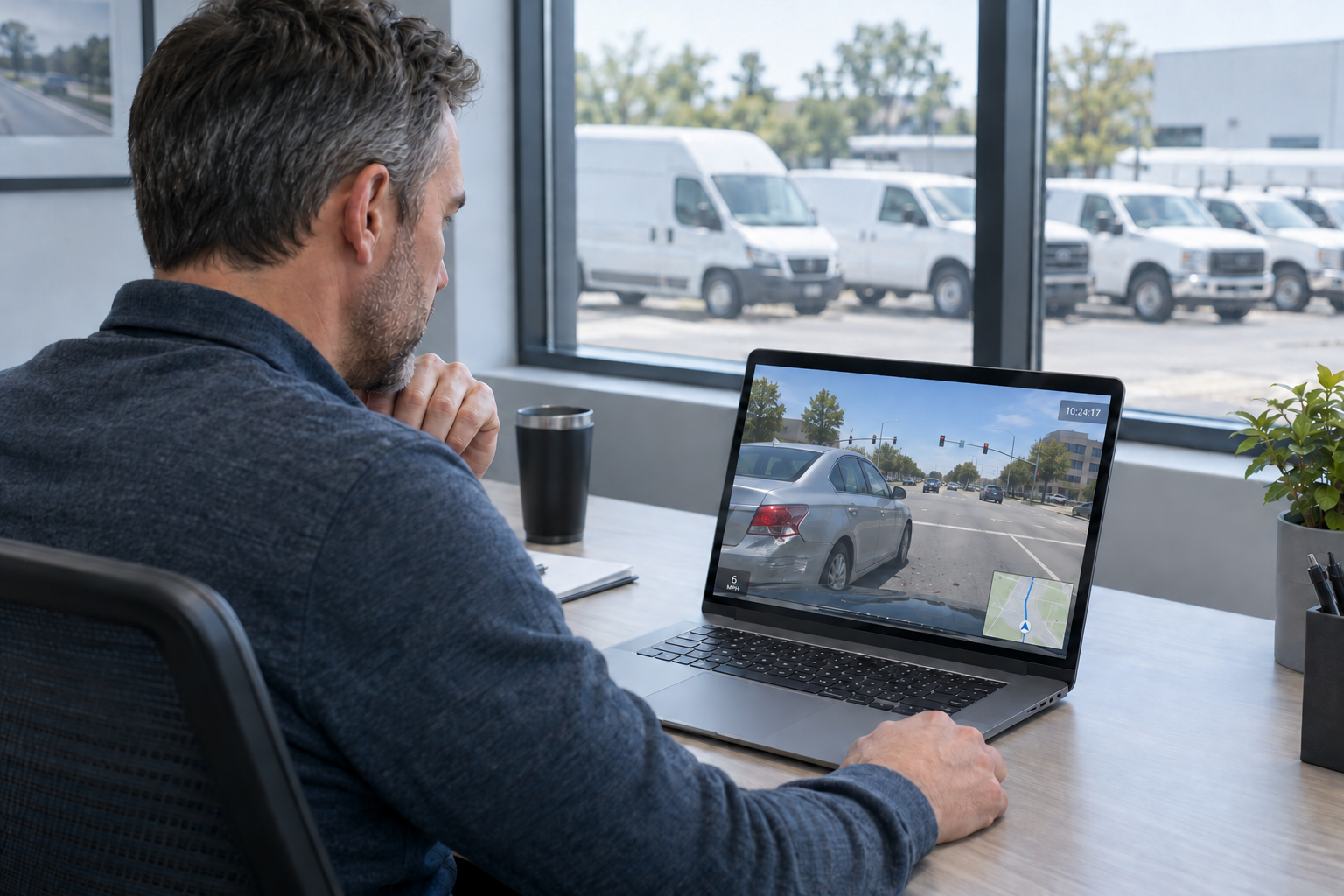
Driver behavior data from GPS (harsh braking, rapid acceleration, posted-speed violations) adds useful context, but still falls short. A GPS system might flag a hard-braking event. Video shows whether the driver avoided a rear-end collision through fast reflexes, or caused one through following too closely. That distinction matters enormously in a claims scenario, and it matters even more when a plaintiff attorney frames the narrative.
The Insurance and Liability Gap That GPS-Only Fleets Face
Commercial auto insurance rates have increased substantially over the past several years as carriers respond to rising claim severity. Many insurers now ask about dash cam programs specifically during underwriting. Some offer premium discounts for fleets that provide video evidence as standard practice.
The reasoning runs in one direction: fleets with video resolve claims faster, with lower legal costs, and with better exoneration rates. Fleets without video rely on driver statements, police reports, and whatever witnesses happened to stop. The asymmetry of those two situations plays out in loss ratios, and insurers price accordingly.
GPS data without video footage rarely satisfies the evidentiary standard that enables early, favorable claims resolution. A claims adjuster working with only GPS data either waits for litigation to develop or recommends a settlement that may not reflect what actually happened on the road.
How Four Provider Types Approach GPS and Video
Not every provider in this market built GPS and video with the same intent. Understanding the starting point of each platform type clarifies what a fleet actually receives.
| Provider |
Primary Focus |
GPS Tracking |
Video Access |
ELD/Compliance |
Best Fit |
| SureCam |
Video telematics and GPS safety |
Baked into every camera; live map, trip history, speeding and harsh event data |
Network-connected, cloud-stored, retrievable within seconds; real-time LiveCheck streaming |
No native ELD; integrates with third-party providers such as Geotab |
Home Service, construction, local delivery, EMS, and towing/recovery fleets wanting video and GPS without compliance overhead |
| Lytx |
Video safety and AI driver coaching |
Fleet tracking available; GPS and video map views |
Best-in-class video with strong AI driver risk detection and managed review services |
ELD and compliance services available as add-ons |
Larger trucking safety-driven fleets wanting premium video analytics and professional driver risk scoring |
| Samsara |
All-in-one connected operations |
Deep telematics: live GPS, trailer and asset tracking, dispatch, route optimization |
Video available as one component of a broad platform suite |
ELD is a headline feature; built for HOS and compliance workflows |
Mixed long-haul and regional fleets that need ELD, dispatch, and maintenance in one system |
| Motive |
ELD, compliance, and fleet automation |
Full telematics suite with GPS, safety scores, and integrated compliance data |
AI cameras integrated into the broader ELD and workflow platform |
ELD serves as the flagship product; compliance automation and HOS tools lead the story |
Fleets where HOS score improvement and automated compliance workflows drive the purchase decision |
For a small or mid-sized fleet without ELD requirements, Samsara and Motive carry significant platform complexity that goes largely unused. Lytx delivers excellent video but skews toward enterprise-scale safety programs with managed review services. SureCam targets fleets that want GPS and video to work immediately and, without the overhead of a broad compliance platform.
Built-In Video vs. Bolted-On Cameras
How a Platform's Origins Shape Its Video Performance
A traditional GPS vendor that adds cameras as a product extension typically delivers video as secondary functionality. The GPS data remains the primary deliverable; camera software often runs on separate infrastructure, feeds into a different section of the portal, or requires the fleet manager to move between systems to correlate location and footage.
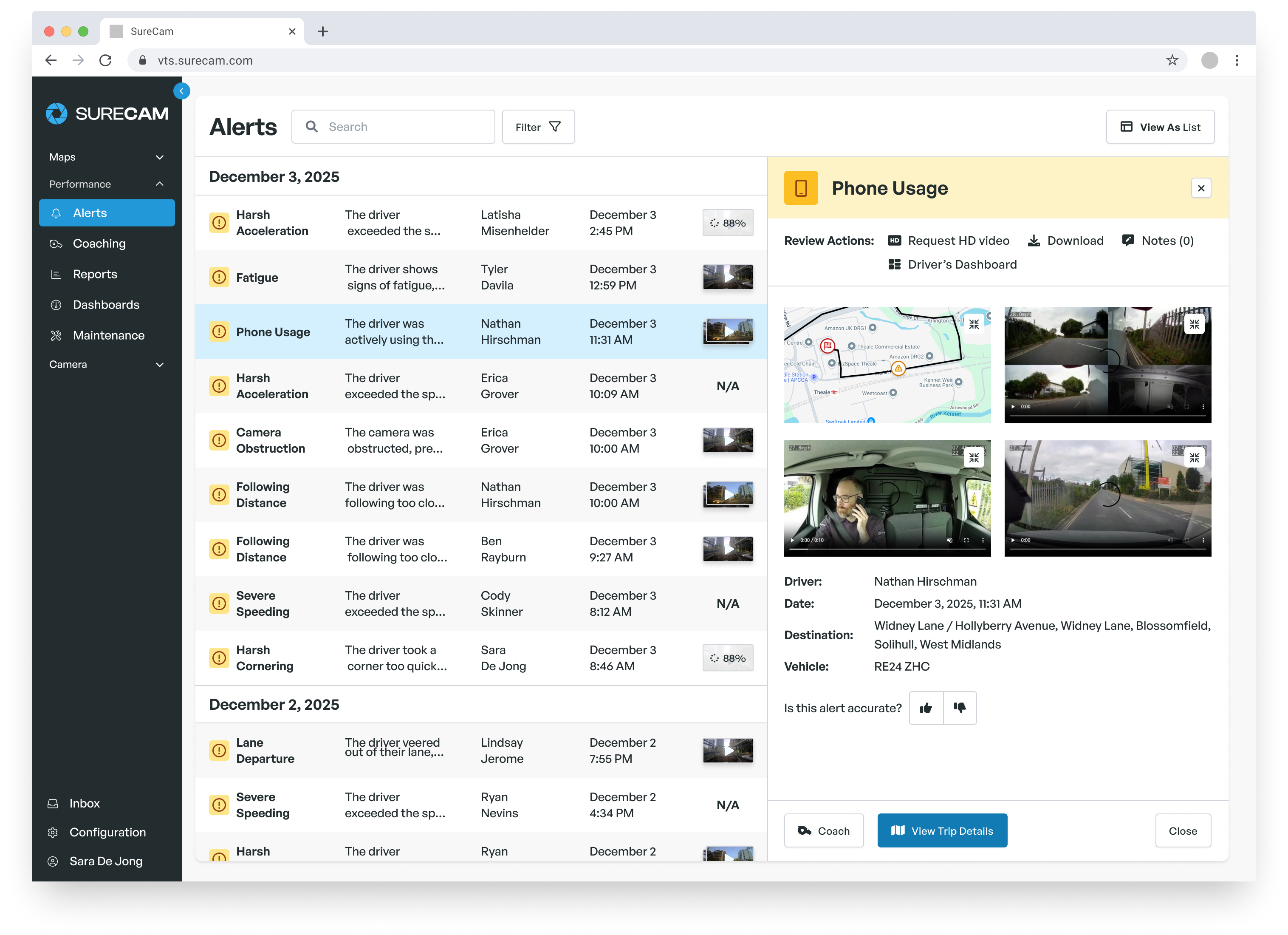
This architectural split creates friction in exactly the moments that matter most. When an incident triggers an alert, a fleet manager should see the event location, the footage, the speed and g-force data, and the driver record in one view. When GPS and video live in different systems, that investigation takes longer. Delays cost money at claim time and create gaps that opposing counsel can exploit in litigation.
Providers that built video telematics from the ground up designed GPS and camera data to coexist in the same event record from the start. The alert arrives with location, footage, and telematics data already assembled. Resolution time drops. The fleet manager spends less time reconstructing what happened and more time acting on it.
The Operational Difference for Small and Mid-Sized Fleets
Fleet managers at smaller operations wear multiple hats. The person reviewing footage on a Tuesday morning may also handle driver scheduling, customer calls, and vehicle maintenance by afternoon. Simplicity has direct operational value that a feature-count comparison misses.
A single device delivering GPS tracking and video through one login, one portal, and one monthly invoice removes adoption friction. There are no integrations to configure between separate GPS and camera systems. No reconciling two platforms when an incident occurs alongside a GPS hard-brake event. No separate customer support contacts depending on whether the problem involves location data or footage access.
SAV Express, a dry goods truckload carrier based in Coon Rapids, Minnesota, experienced this problem directly. Before adopting SureCam, the company used a combined platform from another provider whose camera product had poor video quality, expensive data costs, and a significant structural problem: the vendor claimed ownership of the footage. SAV Express had no independent access to the evidence captured on their own trucks. After switching to a purpose-built video telematics solution, the company recovered over $1 million in repair and claims costs, including a truck stop incident that would otherwise have gone unchallenged without witnesses. Matt "Jake" Jacobson, Director of Fleet Operations, described the effect directly: video "suddenly puts in the truth of the matter."
Six Questions to Ask Before Signing with Any Provider
Evaluating GPS and video providers requires more than comparing feature lists. The questions below surface the contractual, operational, and evidentiary issues that determine long-term value.
Who owns the footage? Some vendors retain ownership or restrict access to video captured on fleet vehicles. A provider that controls incident footage controls claims outcomes. Confirm in writing that all video belongs to the fleet, with unrestricted access at any time.
How fast does footage upload after an event? SD-card camera systems require physical retrieval. Network-connected systems should surface footage within seconds of an event trigger. Understand the upload path and what happens if cellular coverage interrupts transmission.
What triggers an upload? G-force thresholds, speed events, and manual driver button presses all generate different video records. Know what events the system captures automatically, what requires manual review, and how the alert workflow reaches the fleet manager.
Does GPS and video live in the same platform? Ask for a demonstration of the incident view. If location data and footage require separate logins or browser tabs, the integration runs shallower than the sales materials suggest.
What contract terms apply to hardware? Some providers lock fleets into multi-year agreements with hardware that cannot transfer if the relationship ends. Understand the ownership model (purchase vs. lease), what happens to devices at contract end, and whether early termination costs reflect the actual hardware investment.
What does claims support look like? The best video telematics providers help fleets use footage effectively at claim time. Ask whether the provider has worked directly with insurers, whether the platform produces timestamped evidence packages, and whether support can respond when an incident happens outside business hours.
Where SureCam Fits in This Market
SureCam targets commercial fleets that need GPS tracking and video to work together without the operational weight of an all-in-one platform. The device delivers network-connected footage, real-time GPS location, harsh event alerts, and live streaming through a single portal. No native ELD (fleets can pair SureCam with third-party compliance tools like Geotab when needed), no route optimization modules, and none of the compliance workflow features that most small and mid-sized operations never activate.
The SAV Express outcome illustrates what that focus produces in practice. Data ownership, video quality, and claims resolution speed represented the three failure points with the previous provider. Correcting all three through a purpose-built platform generated measurable financial recovery that paid for the system many times over. The same pattern holds across SureCam's customer base: fleet managers adopt the system because GPS and video solve a specific problem, and they retain it because the evidence it produces demonstrates clear return.
For fleets evaluating providers, SureCam fits best when the decision starts with video telematics and GPS tracking rather than ELD compliance or broad operational software. Pricing reflects what a fleet actually uses. Support runs through direct channels rather than ticketing queues, which matters when an incident happens on the road at 6 a.m.
Making the Right Call for Your Fleet
The best GPS tracking provider with video depends on the primary problem a fleet needs to solve. If ELD compliance and HOS management drive the decision, Samsara and Motive offer deeper tooling in those categories. If enterprise-scale AI video analysis and managed driver coaching take priority, Lytx delivers strong capabilities in that space.
If the goal is reliable GPS tracking and network-connected video that a small or mid-sized fleet can deploy, operate, and use effectively without a dedicated telematics administrator, the field narrows considerably. That combination of simplicity, data ownership, and evidence quality defines where purpose-built video telematics consistently outperforms GPS platforms that added cameras as an afterthought. If you want to learn more about how SureCam can help protect your drivers and your bottom line, click here to contact our team of experts today.