One Fleet, Three Vehicle Classes, Zero Consistent Safety Coverage
Ask most fleet managers what their dash cam setup looks like, and you'll get a complicated answer. The pickup trucks got cameras last year when the insurance renewal came up. The vans run a different brand the operations team sourced independently. The Class 8 trucks have the original system from four years ago that nobody's replaced because it technically works. And the box trucks in the middle? Nothing yet.
That patchwork reflects how most mixed fleets end up here: reactively, one vehicle class at a time, solving the immediate problem without a plan for the whole fleet. The result is fragmented coverage, inconsistent driver accountability, and a management headache that grows with every new vehicle on the roster.
Mixed fleets have a real opportunity to do this differently. The question is how to build a consistent video telematics program across vehicle classes that vary in size, duty cycle, mounting configuration, and driver population, without creating a different system for every vehicle type.
Why Mixed Fleets Present a Different Challenge
Most dash cam guides assume a homogeneous fleet. Forty vans. Eighty tractor-trailers. Two hundred delivery trucks. The hardware fits, the mounting locations repeat, and the policy applies the same way across every vehicle. Mixed fleets don't get that simplicity.
Consider a company running 30 service pickups, 20 refrigerated vans, and 10 Class 8 flatbeds. That fleet faces three distinct challenges inside one program: hardware selection that fits each vehicle's mounting options and duty cycle, policy design that holds all drivers to the same behavioral standard regardless of what they're driving, and centralized management that gives fleet managers one view of everything without running separate portals for separate systems.
Get any one of these wrong, and the whole program develops blind spots.
Hardware Selection Across Vehicle Classes
Pickups and Light-Duty Service Vehicles
Pickup trucks and light-duty service vehicles present the most straightforward installation scenario, but they carry their own complications. Windshield real estate often shares space with required DOT stickers, GPS mounts, and mirrors. The shorter hood and lower profile mean the camera captures more sky and less of the road ahead in steep terrain.
Drivers in this vehicle class tend to be field technicians rather than professional drivers, which changes the coaching dynamic and the in-cab camera conversation.
For pickups and light vans, a forward-facing network-connected camera typically covers the primary risk exposures: at-fault collision documentation, false claim defense, and harsh event capture. Dual-facing cameras (with an inward-facing lens) work well when driver coaching forms a core part of the safety program, though fleet managers should address driver privacy concerns during rollout rather than after. A rear-road-facing camera adds value for service vehicles that back into tight jobsite locations regularly, where backing incidents tend to be disproportionately expensive relative to the vehicle class.
Vans and Medium-Duty Vehicles
Cargo vans and medium-duty vehicles carry more camera options because they offer more mounting surfaces and, in many cases, higher cargo liability. A forward-facing camera captures road-level incidents. A rear-facing camera protects against backing incidents in loading docks, parking lots, and tight urban delivery zones where this vehicle class spends most of its time. Some operations add a side-facing camera on cargo vans running busy urban corridors where sideswipes against parked vehicles generate a steady stream of low-severity, high-frequency claims.
The cargo area presents an additional consideration for fleets carrying valuable product. Cameras monitoring the cargo door or interior can document loading and unloading, reducing disputes with customers or recipients about condition on arrival. This layer of coverage often surprises operations managers who frame cameras purely as a driving-behavior tool. Video evidence inside the vehicle has the potential to prevent six-figure product damage disputes for fleets that plan for it.
Class 8 Trucks and Heavy Equipment
Class 8 trucks represent the highest risk-per-vehicle in most mixed fleets. The combination of weight, stopping distance, load value, and litigation exposure means that a single incident on a Class 8 vehicle can dwarf the annual insurance cost of the entire pickup fleet. Camera coverage here typically goes beyond a single forward-facing unit.
Four-way camera configurations covering the front, rear, driver-side blind spot, and passenger-side blind spot address the major incident vectors for heavy trucks: rear-end collisions, backing accidents, and sideswipes during lane changes. Rear-road-facing cameras document the following traffic behavior that contributes to rear-end incidents. For flatbeds and exposed-load carriers, rear cameras also capture load integrity during transport and any contact at the delivery site. Imagine a flatbed operation where the product gets damaged not during transport but during customer unloading: a rear-facing camera capturing that sequence turns a disputed liability claim into a documented fact.
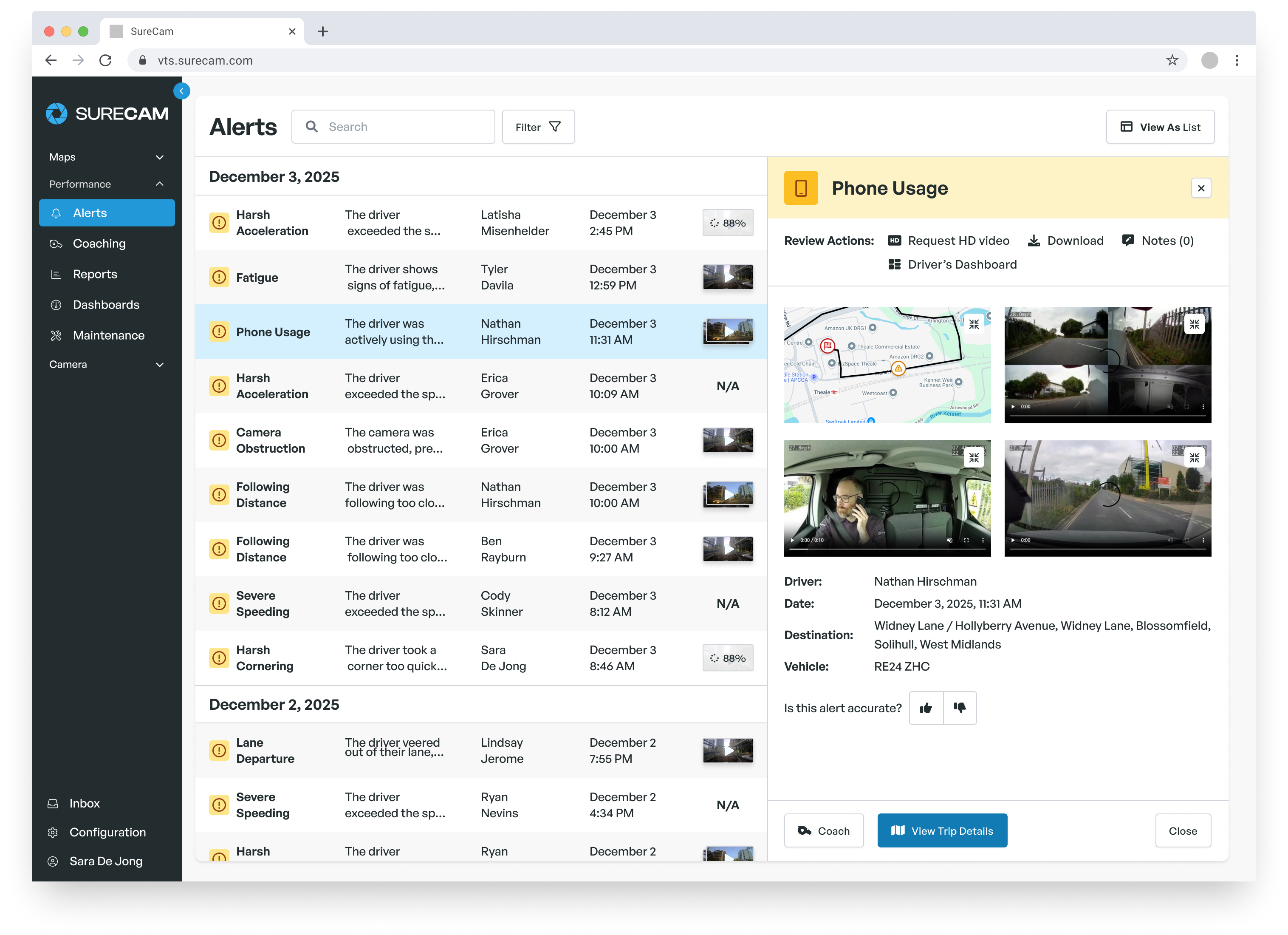
The driver-facing camera question becomes more acute on Class 8 vehicles, where driver fatigue, phone use, and distraction produce the most severe outcomes. Many fleets that hesitated to deploy driver-facing cameras on pickup trucks run them as standard on their heavy vehicles because the risk calculus justifies the additional monitoring.
Building a Consistent Policy Across Vehicle Classes
Hardware variety creates a policy risk that fleet managers often discover too late: if the rules differ depending on what someone drives, accountability becomes uneven and drivers notice. The pickup driver who knows his smaller vehicle has a camera but no behavior scoring tends to figure out quickly that the consequence structure doesn't match the heavy truck driver's experience. That inconsistency erodes the safety culture the cameras were supposed to build.
The more durable approach treats the policy as consistent and the hardware as adaptive. Every driver, regardless of vehicle class, operates under the same behavioral standards: speed thresholds, harsh braking limits, phone use prohibition, backing protocols. What changes by vehicle class is the camera configuration needed to enforce those standards, not the standards themselves. The pickup may run a single forward-facing camera. The Class 8 may run four views. Both drivers know that harsh events trigger a review, that incidents generate footage, and that accountability applies equally.
Rollout communication matters here. Ringway Jacobs, the UK highway services company, operates a mixed fleet of 250 trucks and 350 vans with camera configurations tiered by vehicle size: forward and rear cameras on smaller vehicles, four-way coverage on larger vehicles, and 360 proximity sensors on the newest additions. Drivers initially resisted cameras across the fleet. It was only after incidents required exoneration and cameras defended drivers against false claims that the technology shifted from surveillance to protection. Dave Bonehill, Head of Fleet Operations, noted that the cameras started to become respected and approved by drivers once they proved their value in the field. The result was a 54% reduction in accident rate and unsafe driving behavior over two years.
That cultural shift doesn't happen by itself. It requires a rollout process that explains what footage gets reviewed, under what circumstances, and by whom.
Centralized Management vs. Vehicle-Specific Configurations
The Case for a Single Platform
Running multiple camera systems across multiple vehicle classes creates a management burden that compounds over time. A fleet manager checking three separate portals for pickup footage, van footage, and truck footage doesn't have fleet visibility. They have three partial views that require manual correlation to produce anything useful. When an incident involves two vehicle types, or when a driver moves between vehicle classes, the fragmented system produces gaps.
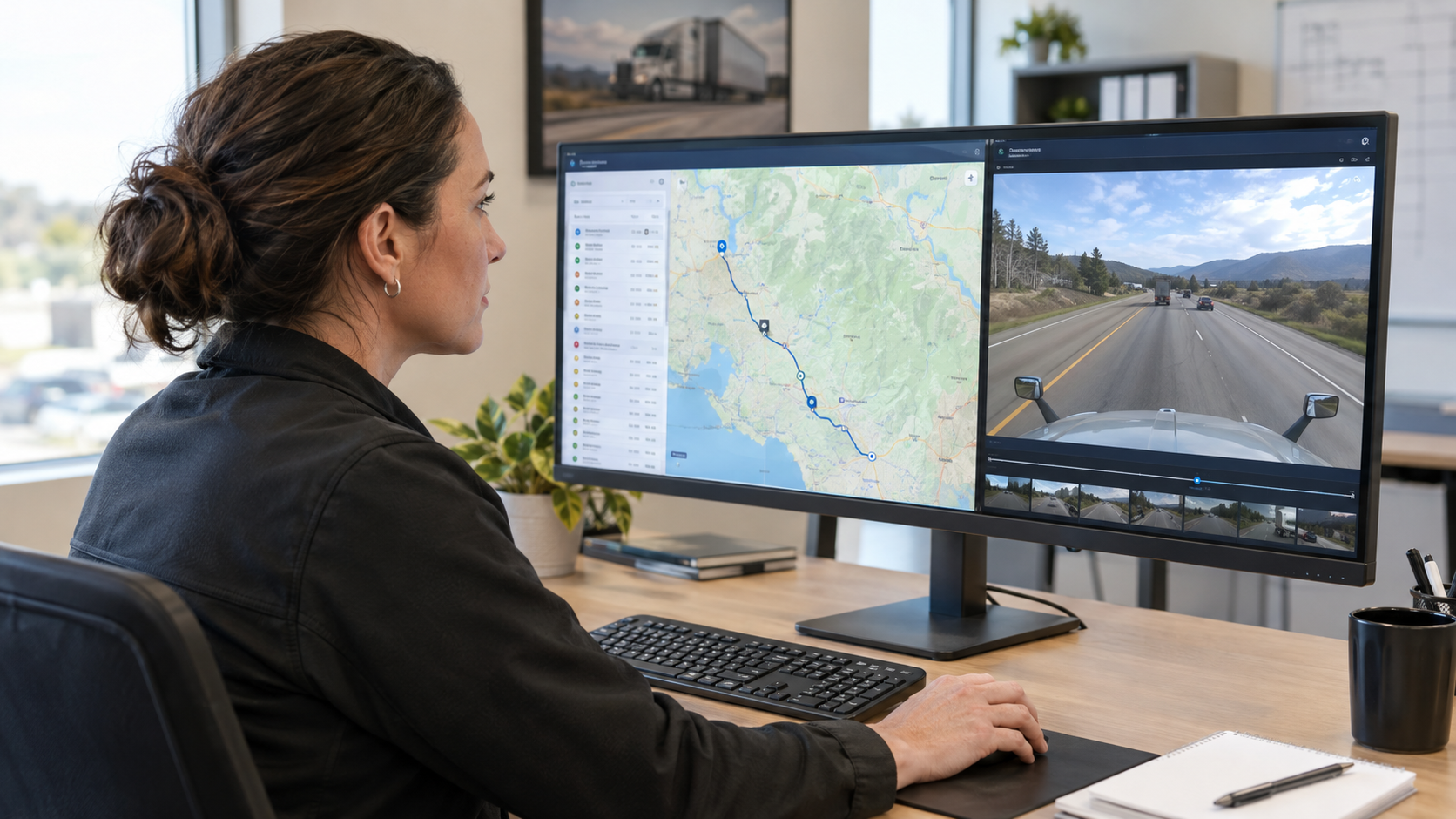
A single platform that handles all vehicle classes regardless of camera configuration solves the operational problem at the cost of requiring a system capable of supporting hardware variety. The trade-off: upfront discipline in vendor selection pays off in daily management time. Fleet managers who standardize on one platform report that the safety review process becomes routine in a way that multi-system environments never achieve. Lansberry Trucking's safety director reviews all fleet footage in 15 to 20 minutes per day because the footage, alerts, and incident records all live in one place.
Configuration Flexibility Within One System
The practical requirement for mixed fleets is a platform that handles different camera counts per vehicle without treating each configuration as a separate product. Pickup trucks running a single forward-facing camera and Class 8 trucks running four synchronized views should appear in the same dashboard, trigger the same alert types, and populate the same driver scorecards, even though the underlying hardware differs.
This matters most at the incident review stage. When a fleet manager receives a harsh braking alert, they need the same workflow regardless of whether it came from a van or a flatbed. The footage review, driver note, and coaching record should follow a consistent process. Systems that handle this uniformly reduce training burden for safety managers and produce more consistent coaching outcomes across driver populations.
Procurement and Rollout Strategy
Mixed fleets face a practical sequencing question: which vehicle class to equip first. The answer depends on where the risk concentration actually lives. For most mixed fleets, Class 8 trucks represent the highest per-vehicle liability exposure, which argues for starting there. For fleets where van and pickup drivers handle the most customer-facing interactions, the claims exposure from customer disputes may concentrate in the lighter vehicle classes. A simple analysis of claims history by vehicle type over the prior 24 months usually reveals the answer.
Phased deployment has a second advantage beyond risk management: it creates a pilot population. Starting with one vehicle class allows the operations and safety teams to refine the alert configurations, coaching workflow, and management review cadence before rolling to the full fleet. Attempting to deploy across all vehicle classes simultaneously compresses the learning curve and increases the likelihood that something gets configured incorrectly and stays that way until an incident surfaces it.
Procurement should also account for hardware compatibility across camera placements. A vendor whose hardware mounts cleanly in a pickup cab but requires custom fabrication for a Class 8 windshield brow or a cargo van bulkhead adds installation cost and time that multiplies quickly across a large fleet. Request installation specifications for each vehicle type before selecting a vendor, not after.
Making the Mixed Fleet Program Stick
The technical decisions matter less than most fleet managers expect. Hardware selection, mounting configurations, and platform choice produce a baseline of coverage. What determines whether the program actually changes behavior is the management process that follows.
Mixed fleets need a review cadence that applies consistently across vehicle classes, a coaching framework that addresses the incidents each vehicle type generates most often, and a communication rhythm that reminds drivers in all vehicle classes that the system runs and that footage gets reviewed. Without those operational habits, cameras become a reactive tool that only gets opened after an incident rather than a proactive program that prevents incidents before they happen.
The fleets that realize the largest returns from video telematics treat it as a daily operational input, not a break-glass resource. That mindset doesn't require different cameras for different vehicles. It requires the same commitment across every vehicle type on the roster.



.png)