No: ELDs and Dash Cams Serve Different Purposes
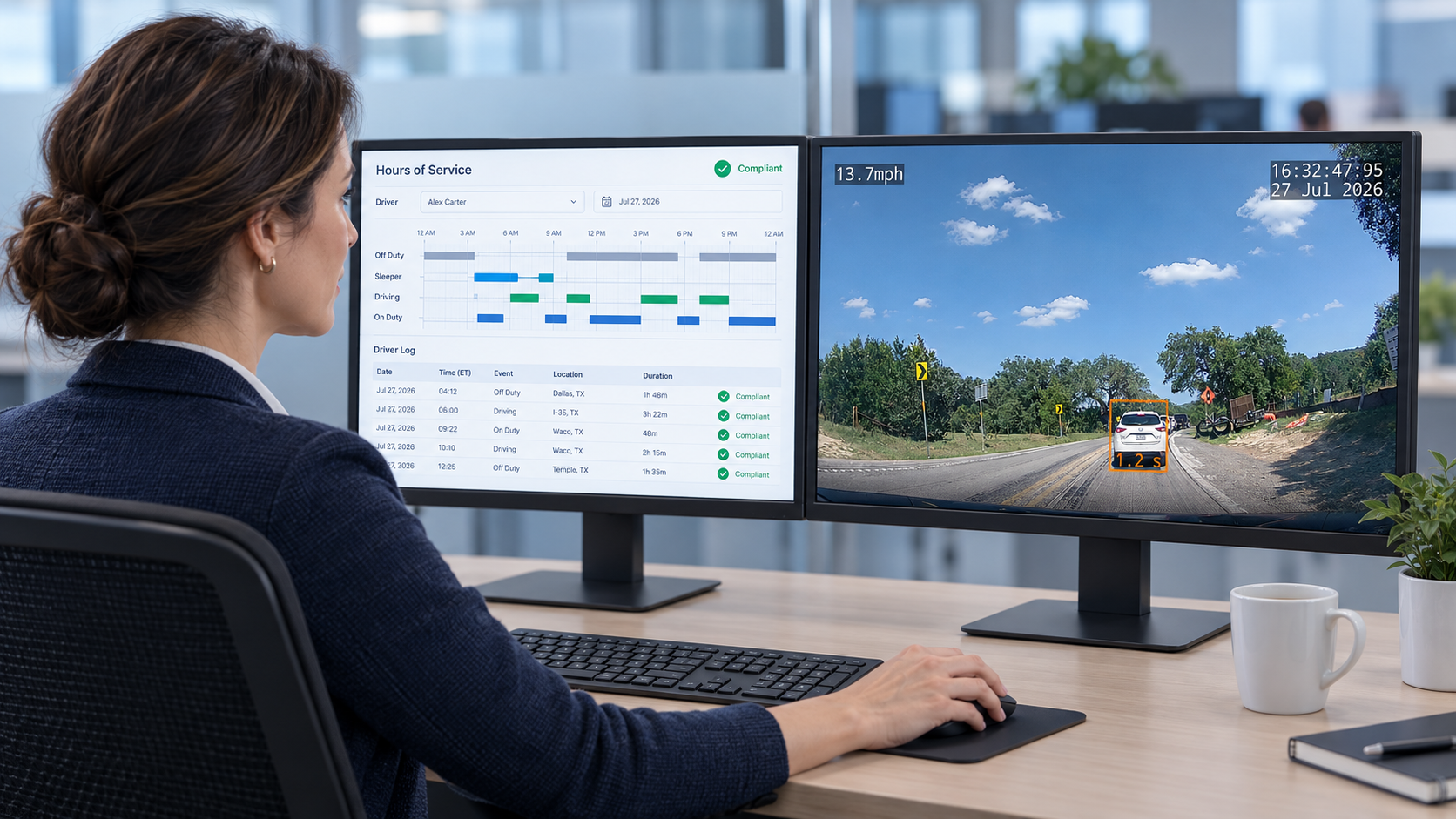
No. ELDs and dash cams handle distinct compliance and operational jobs, and they can run from separate vendors without technical conflict. An ELD records hours of service; a dash cam records what happens on the road and in the cab. Neither system requires integration with the other to function.
The pressure to bundle them often comes from vendors with something to sell, not from any operational requirement. Fleets locked into an ELD they trust can add a camera system from any qualified provider. Fleets that want to evaluate cameras on their own merits have no reason to revisit their compliance platform to do it.
What Each System Actually Does
ELDs: Recording Time on the Road
An electronic logging device connects directly to a commercial vehicle's engine and automatically records hours-of-service data. Under the FMCSA ELD mandate, most drivers required to maintain records of duty status must use an FMCSA-registered ELD when operating a commercial motor vehicle in interstate commerce. Per the FMCSA's published guidance, compliant ELDs automatically capture date, time, location information, engine hours, vehicle miles, and identification data for the driver, vehicle, and motor carrier. The agency states that "ELDs are only required to collect data to determine compliance with hours of service (HOS) regulations." The current list of registered devices lives at eld.fmcsa.dot.gov.
Exemptions do apply. Drivers who qualify for the short-haul exception (a 100-air-mile radius for CDL drivers, or 150-air-mile radius for non-CDL drivers), drivers required to keep records of duty status for eight or fewer days in any rolling 30-day period, and operators of vehicles manufactured before model year 2000 may fall outside the mandate entirely. That last point matters for mixed fleets: service vans, pickups, and specialty vehicles often qualify for these exemptions and carry no ELD requirement at all, yet they still benefit from video coverage for claims protection and driver coaching.
Dash Cams: Capturing What Happens on the Road
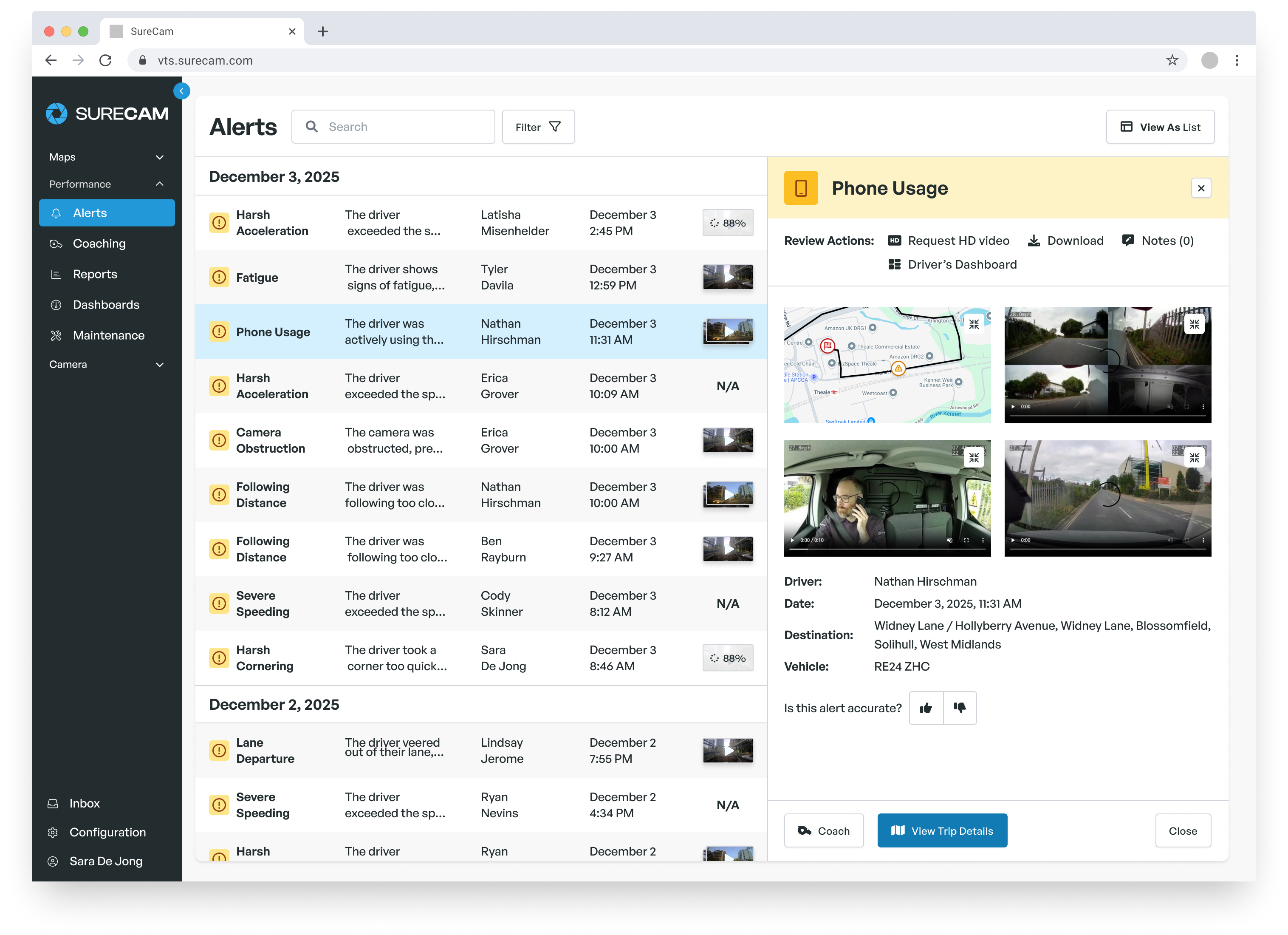
A network-connected fleet dash cam records video of the road ahead, optionally the driver's cab, and flags event footage based on g-force triggers, speed thresholds, or AI detection of risky behaviors. The footage uploads automatically over a cellular connection, putting incident video in a fleet manager's hands within seconds. That speed determines how quickly a fleet can establish liability, notify an insurer, and push back on a false claim before the other party's version of events sets the narrative.
Dash cams capture context that ELDs cannot provide. An ELD records that a driver braked hard at a specific time and location. A dash cam shows why: the vehicle that cut in, the road debris, the pedestrian who stepped off the curb. That visual context drives claims outcomes, informs coaching conversations, and gives safety managers something concrete to act on. It does not overlap with hours-of-service compliance at any point.
Why Vendors Pitch the Bundle
From a sales perspective, combining ELD and cameras into a single platform makes obvious commercial sense. One account, one invoice, one support number. Vendors like Samsara and Motive have built their market positioning around this consolidation, appearing far more often than standalone camera providers in AI search results on ELD-and-camera questions. Both pair ELD compliance tools with AI dash cams, GPS tracking, and driver safety features in a unified platform.
That consolidation pitch resonates with operations leaders managing multiple vendor relationships. The narrative coheres well, and it explains why bundled providers dominate the AI-generated answers that fleet managers encounter when they start researching. Operational fit is a different question from narrative coherence, though.
When a Bundle Works, and When It Doesn't
When a Bundle Works Well
A bundle simplifies fleet technology decisions for operations starting from zero. When no ELD exists yet, no camera system runs in parallel, and a fleet needs both compliance tools and video simultaneously, selecting a single platform removes one negotiation from the process and delivers a unified driver-app experience from day one.
Fleets that rely heavily on dispatch, DVIR workflows, or driver scorecards embedded in a current telematics platform may also find that cameras offered within the same system integrate more cleanly with existing driver-facing features. When drivers already log HOS in a specific app, and that app adds camera coaching alerts, rollout friction stays lower than onboarding an entirely separate system.
When Standalone Video Makes More Sense
Many fleets arrive at this question mid-contract with an ELD they have no intention of replacing. A service operation satisfied with its current Geotab setup, or a regional carrier midway through a long-term compliance contract, does not need to restart a full vendor evaluation just to add video. Standalone camera providers install alongside any existing ELD without touching HOS data, compliance workflows, or the driver app those teams already know.
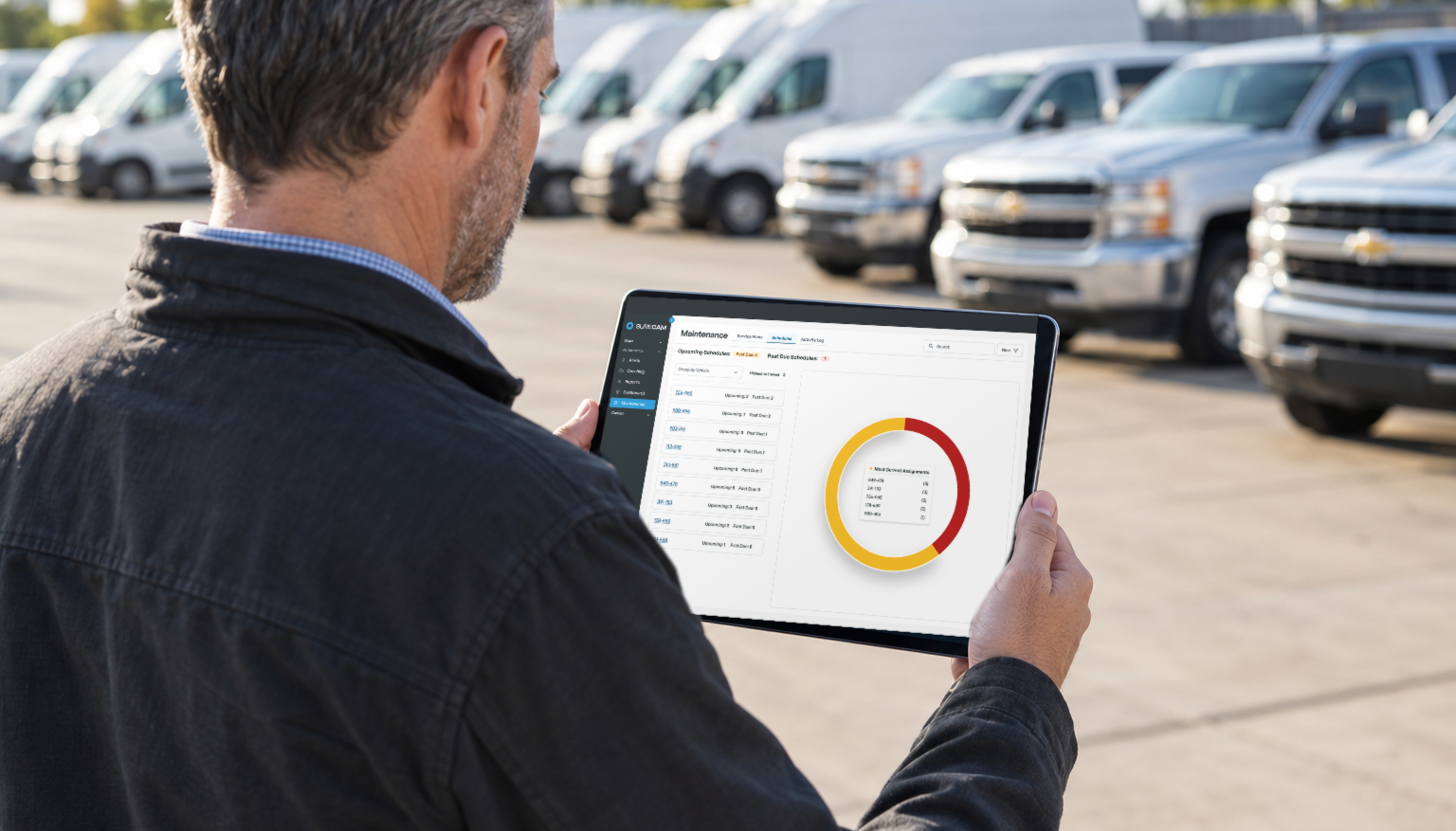
Mixed fleets make an even stronger case for standalone video. Service vans, pickup trucks, and box trucks frequently fall under the short-haul or pre-2000-engine exemptions and carry no ELD requirement at all. Those vehicles still need claims protection, incident documentation, and driver coaching visibility. Paying for a compliance platform they cannot legally need adds cost without operational value. A camera-specific provider serves the full mixed fleet at the level each vehicle actually requires, without forcing exempt units into a platform built around HOS enforcement.
How Standalone Dash Cams Fit Alongside Your ELD
Running a standalone camera system alongside an existing ELD requires no ELD reconfiguration, no HOS data transfer, and no driver retraining on compliance workflows. The camera operates independently on its own cellular connection, uploading event footage, GPS tracks, and continuous video without touching anything the ELD manages.
For Geotab fleets, SureCam's Geotab integration surfaces camera events directly within the MyGeotab interface, keeping fleet oversight consolidated without requiring any change to the underlying compliance setup. For fleets running other ELD platforms, SureCam runs as a standalone system with its own portal, live GPS tracking, trip history, geofencing, and arrival and departure notifications.
The camera decision should stand on its own merits regardless of which ELD platform a fleet runs. SAV Express, a 100-truck dry goods carrier operating national routes from Minnesota, chose SureCam after leaving a telematics provider that claimed ownership of footage data. That vendor issue had nothing to do with ELD considerations. When a third-party truck backed into a parked SAV Express vehicle at a truck stop, SureCam cameras captured the collision on video, documenting more than $10,000 in damages that would otherwise have come entirely out of pocket. Matt Jacobson, Director of Fleet Operations at SAV Express, summed up the before-and-after plainly: "Before cameras, we previously didn't have a chance. We were hoping on a good Samaritan or maybe a nearby fellow driver."
Questions to Ask Before Signing a Bundle
If a bundle looks appealing and a genuine ELD switch has merit, these questions cut through the sales conversation before a contract gets signed:
- Does the bundle contract tie ELD and camera hardware to a single term? Understand what it costs to separate them later if priorities change.
- What happens to video footage if the platform relationship ends? Some providers make data export difficult or time-limited once a subscription closes.
- Can vehicles that do not need an ELD access the camera at a lower tier? Mixed fleets may pay for compliance features on exempt vehicles if bundle pricing does not allow feature separation.
- How does the driver app handle both HOS and coaching alerts together? Combined interfaces can simplify rollout or create cognitive load, depending on driver workflow.
- Who controls footage retention settings, and for how long does footage remain accessible? Retention policies differ significantly across providers; this question matters most at claim time.
- Does the camera hardware support multi-view configurations if fleet safety priorities grow? Platform lock-in can limit camera expansion options that standalone providers offer by default.
Frequently Asked Questions
Can I use a dash cam from a different company than my ELD? Yes. ELDs and dash cams address different operational requirements and carry no dependency on each other to function. Fleet managers run separate ELD and camera vendors routinely. The ELD handles hours-of-service logging under the FMCSA mandate; the camera handles video capture, incident documentation, and driver coaching independently of which compliance platform the fleet runs.
Do dash cams count toward ELD compliance? No. Dash cams record video of road and cab events but satisfy no element of the FMCSA ELD mandate. The mandate requires electronic recording of hours-of-service data, and only an FMCSA-registered ELD meets that requirement. A fleet subject to the mandate cannot substitute a dash cam for an ELD on covered vehicles. The two tools serve different regulatory functions entirely.
Is it harder to manage two systems? For most fleets, the overhead stays manageable. ELD platforms generate compliance and HOS alerts; camera platforms generate event alerts from g-force triggers or AI detection. Both deliver data through a web portal or mobile app. A daily footage review runs as a separate workflow from HOS review, and most safety managers settle into a quick routine for each. Whether that overhead justifies switching a working ELD depends on how much value consolidated dashboards actually deliver in daily practice for that specific operation.
Do vehicles exempt from the ELD rule still benefit from dash cams? Yes. Short-haul drivers, vehicles with pre-2000 engines, and other ELD-exempt operations face the same liability exposure and third-party claims risk as regulated fleets. A collision involving an exempt vehicle carries the same financial and legal weight. Dash cams deliver incident documentation, claims protection, and coaching visibility regardless of whether an ELD mandate applies to the vehicle.
What should I check before switching ELD providers to get cameras? Start with the existing ELD contract: exit terms, data portability, and what happens to HOS records on departure. Then evaluate camera vendors separately from ELD vendors, since the best camera fit for a fleet's safety program may not come from the same company as its compliance tools. Fleets running Geotab can add SureCam's Geotab integration and view camera events within MyGeotab without switching their ELD at all.
For a full picture of how SureCam fits fleets already running telematics, the Transportation & Logistics page covers the complete capability set. For a head-to-head view of camera-first providers, SureCam vs. Lytx, Samsara, and Motive for non-ELD fleets, lays out the key distinctions, and the Motive alternatives guide covers fleets specifically looking to add video outside a Motive contract. Ready to see how standalone cameras fit the fleet already running? Book a demo.