Commercial vs. Consumer Dash Cams for Fleets: 2026 Guide
20 Oct 2026
driver coaching


Improve fleet safety, reduce operating costs, and optimize field performance with an easy-to-use platform for video, GPS tracking, driver coaching, maintenance, asset tracking, and real-time fleet insights.
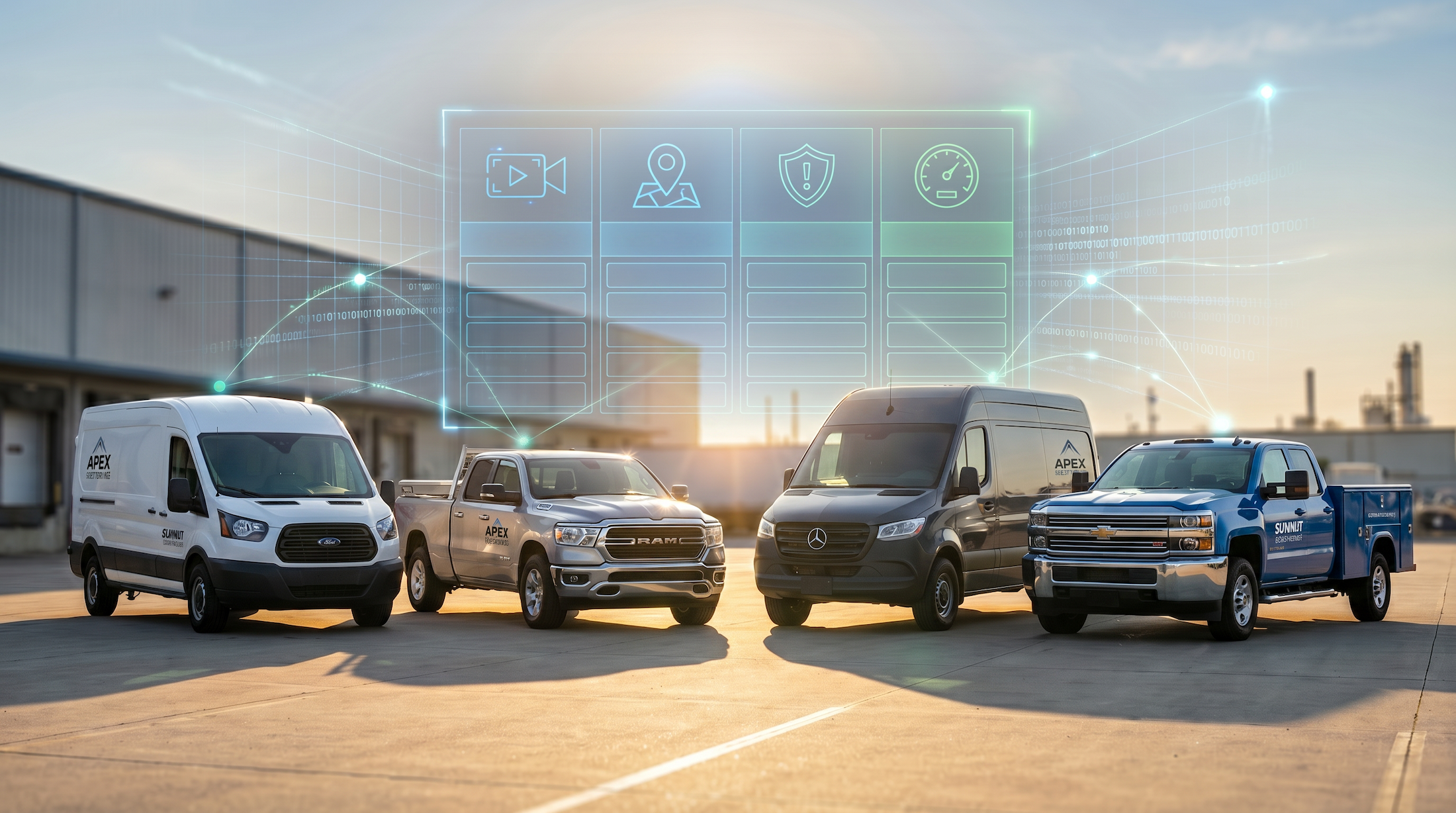




Every fleet camera and telematics vendor targets the same broad market. But "fleet" covers an enormous range: a 500-truck long-haul carrier running regulated Hours of Service has fundamentally different operational needs from a HVAC business with 40 Sprinter vans making local service calls. The pitch decks rarely make that distinction. The pricing models seldom do.

Samsara, Motive, and Lytx have all built genuinely capable platforms. The problem for service, construction, local delivery, and towing fleets that don't operate under ELD mandates: those platforms were architected around compliance workflows (HOS, DVIR, electronic logbooks, complex dispatch) that non-regulated “work truck” fleets don't need and won't fully use. The unused features don't disappear from the price. They stay dormant, generating cost and complexity with no return.
This comparison answers one specific question: if your fleet doesn't need ELD, which platform delivers the outcomes that actually matter (safer drivers, faster claims resolution, GPS visibility, and proof of service) without charging you for the parts you'll never touch?
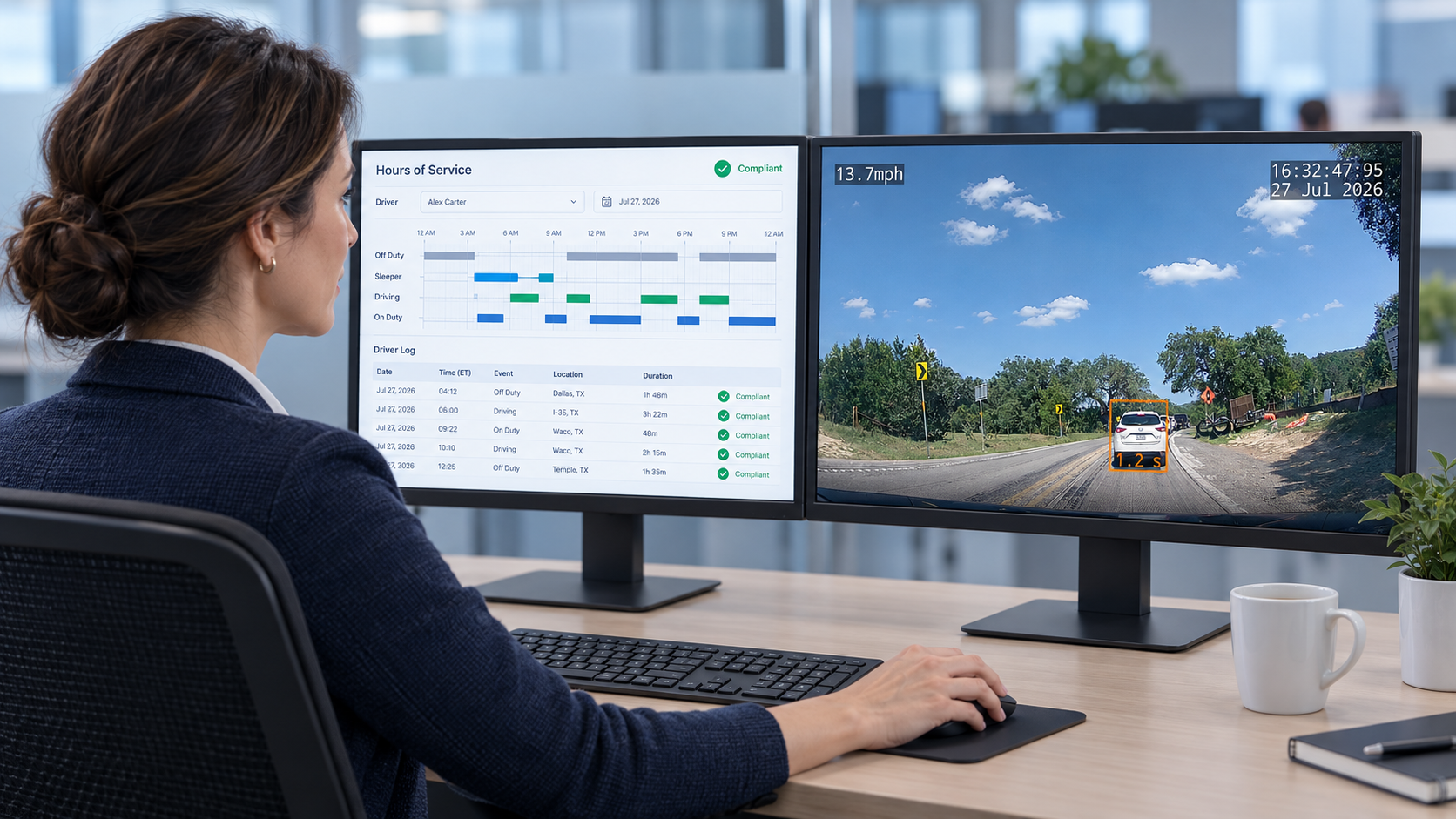
ELD mandates apply to commercial motor vehicle drivers in interstate commerce who are required to maintain Records of Duty Status under FMCSA Hours of Service regulations (49 CFR Part 395). Many commercial and municipal fleets operate in ways that qualify for ELD exemptions—for example, short‑haul utility and pickup‑based service fleets, local concrete and construction operations, last‑mile delivery within a metro area, towing operations, and field service vehicles whose drivers typically do not need to maintain RODS on most days.
For those fleets, ELD features carry no operational value. Samsara and Motive both lead their product narratives with ELD compliance. Their platforms bundle HOS management, DVIR (Driver Vehicle Inspection Reports), compliance scorecards, and automated CSA workflow tools as central features, and they price accordingly. For a fleet that runs local routes and never touches a logbook, that compliance-first architecture shapes every interaction: the dashboards displayed, the alerts received, the onboarding drivers sit through, and the support conversations required to configure a system around a use case it wasn't primarily designed for.
Strip away the compliance stack, and the core requirements for a service or construction fleet come into focus quickly. These fleets want to know their drivers behave safely, that the company can defend itself when a third party files a claim, that a manager can see where every vehicle sits in real time, and that the team can demonstrate proof of service or delivery when a customer dispute arises.
Video sits at the center of all four outcomes. A clear, timestamped recording of a harsh braking event turns a coaching conversation from an accusation into a teachable moment with evidence. That same recording turns a false liability claim from an expensive fight into a documented dismissal. GPS combined with video gives a fleet manager location and context together, not just a dot on a map.
A platform that serves those needs well doesn't require a routing optimization engine, a fuel card integration, or an electronic logbook. It requires cameras that capture reliably, a portal that makes footage accessible quickly, alerts that surface the right events without drowning the team in noise, and customer support that responds when something goes wrong.
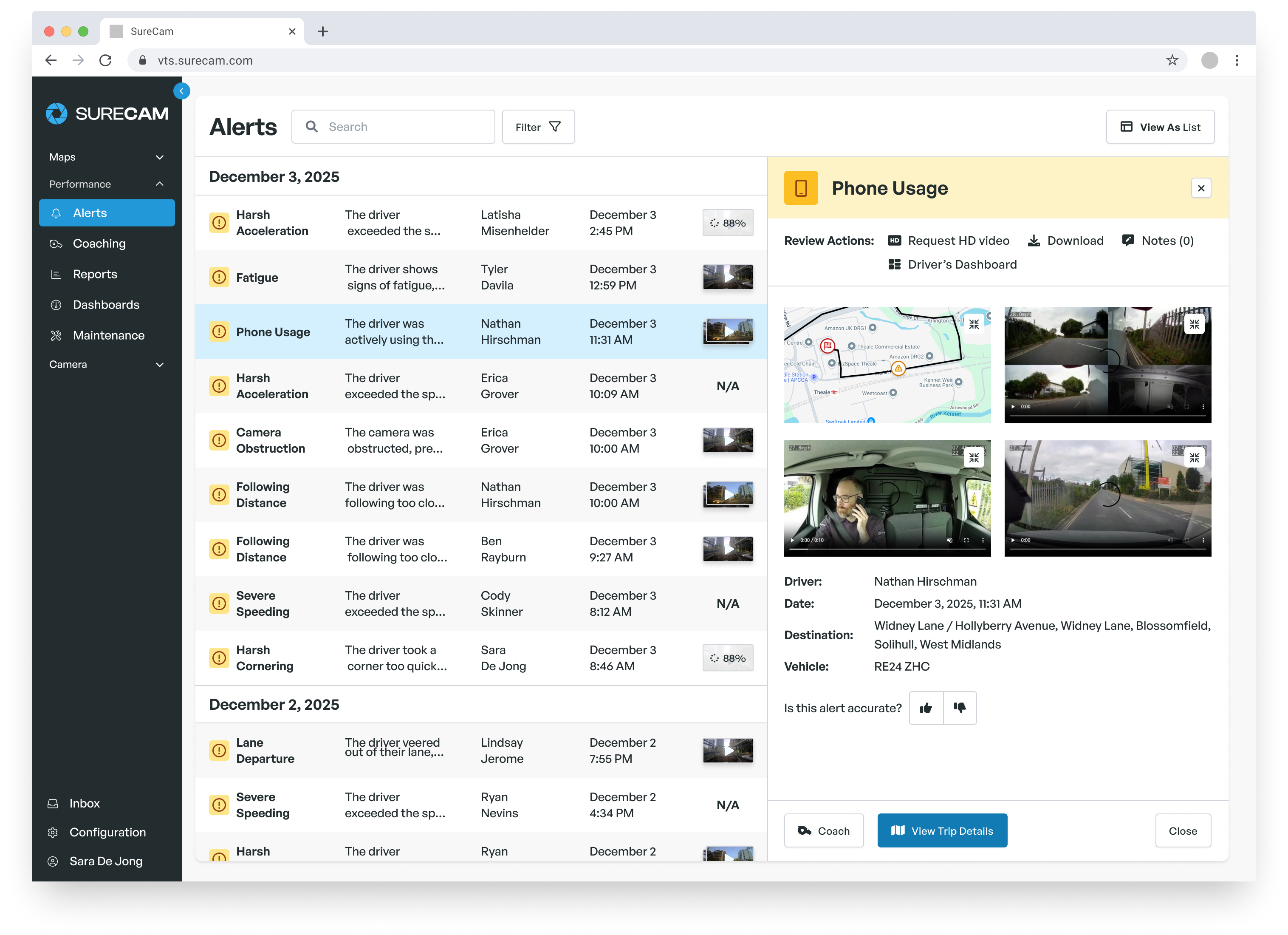
SureCam built its platform around the non-regulated fleet from the ground up. Every camera ships with GPS built in, so fleet managers get live map views, trip history, and speed and harsh event data without a separate telematics device or an additional subscription layer. The portal centers on what matters: incident video, coaching alerts, GPS location, and basic maintenance reminders.
The feature set doesn't extend into routing optimization, dispatch management, or HOS workflows. That's a deliberate design decision. For a local delivery or construction fleet, those omissions mean a simpler installation (typically under 30 minutes per vehicle), a shorter driver onboarding cycle, and a manager interface that doesn't demand hours of training to interpret. The team adopts a focused set of tools they'll actually open every day, not a platform full of features they'll need to route around.
SureCam also provides meaningful privacy controls that matter to field service fleets managing driver relations: configurable in-cab audio, facial blurring, location privacy for personal geofences, and time-of-day recording limits that disable cameras outside business hours. These options help fleet managers introduce cameras in a way that respects the workforce rather than antagonizing it, which directly affects adoption rates and long-term program success.
Lytx occupies a distinct position in this market. The company built its reputation on AI-powered video coaching, particularly its MV+AI dual-facing camera and DriveCam event analysis. For fleets where safety program sophistication and driver coaching depth sit at the top of the priority list, Lytx offers genuinely strong capabilities.
The tradeoffs appear at the mid-sized fleet level. Lytx positions itself around safety analytics for larger, safety-driven operations, and the pricing and implementation model reflect that orientation. A 30-truck HVAC fleet evaluating Lytx will find a robust coaching platform, but the total cost of ownership typically runs higher than a focused video-plus-GPS solution, and the implementation process tends to assume a dedicated safety team capable of running a structured, ongoing coaching program. Lytx also offers compliance services as optional add-ons, which adds flexibility, but the base product still carries the pricing assumptions of a safety-analytics platform built for enterprise buyers.
For non-ELD fleets that want strong driver coaching without the enterprise safety platform premium, Lytx delivers a capability that comes at a cost many smaller operations won't fully recoup.
Samsara's strengths are real. The platform handles ELD compliance, DVIR workflows, dispatch, route optimization, trailer and asset tracking, fuel monitoring, maintenance workflows, and AI cameras in an integrated stack. For a mixed long-haul carrier that needs all of those capabilities in a single connected system, Samsara delivers.
For a 50-truck concrete supply company or a regional towing operation, that architecture creates a different experience. The platform introduces onboarding complexity, ongoing management overhead, and a pricing model that reflects the full connected-operations stack, whether or not the fleet uses it. Dashboards surface metrics relevant to regulated carriers. Driver-facing workflows assume HOS compliance. Implementation timelines reflect a platform with many interdependencies, not a camera install.
The overkill risk for non-ELD service fleets rates high. The fleet ends up paying into a broad platform (ELD, routing, maintenance, compliance) even when cameras and GPS represent the only features that matter to day-to-day operations. Samsara genuinely serves the fleets it was built for. The misfit cost for fleets outside that profile adds up fast.
Motive (formerly KeepTruckin) built its market position on ELD. The company entered the fleet market with electronic logbooks during the mandate rollout and has expanded into AI cameras, fuel cards, workflow automation, and fleet management tools. That ELD foundation shapes everything downstream: how the platform presents driver data, how coaching connects to CSA scores, how compliance automation integrates with trip workflows.
For regulated fleets managing HOS scores and CSA rankings, that integration produces genuine value. For local service fleets, it produces noise. A plumbing company running 20 service vans in a metro area doesn't need CSA score management or automated DVIR workflows. Those features don't become invisible just because the fleet ignores them. They appear in platform complexity, in onboarding length, in alerts the team has to learn to filter out, and in the configuration work required to make a compliance-first system serve a use case it wasn't primarily designed for.
Motive has invested heavily in its AI camera capabilities, and the hardware itself captures quality footage. The gap for non-ELD buyers appears at the platform layer: the broader workflow automation, the CSA-oriented coaching metrics, and the compliance-forward reporting structure all assume a regulatory context that most service and construction fleets simply don't operate in. Motive remains an excellent choice for the fleet that genuinely needs ELD at the center of operations. For fleets that don't, the compliance scaffold adds weight without adding value.
The sticker price of a telematics platform understates the real cost for non-ELD fleets adopting a compliance-heavy solution. Hardware costs, subscription fees, and implementation charges appear on the invoice. The cost of unused features doesn't have its own line item, but it drives real expense in labor, configuration time, and management overhead.
Consider a hypothetical field service fleet (say, a 45-vehicle plumbing operation) that signs with a full-stack compliance platform and spends the first three months configuring ELD features it doesn't need, troubleshooting alerts it doesn't understand, and running a driver onboarding process designed for a regulated carrier context. The labor hours consumed by that miscalibrated implementation carry real cost, even if no one adds them to the TCO calculation. A right-sized platform focused on video, GPS, and coaching would put those same three months toward exonerating drivers, closing claims, and building a coaching habit the team actually maintains.
Driver adoption determines whether any fleet camera system delivers its promised outcomes. A platform that overwhelms drivers with complex workflows, in-cab alerts tied to features they don't understand, and app interfaces built for regulated fleet contexts generates friction. That friction translates into delayed adoption, more support calls, and a longer runway before safety improvements appear in the data.
Simpler platforms close that gap faster. When the driver's interaction with the camera amounts to: drive normally, receive an alert if something happens, and review a coaching clip when requested, the adoption curve runs shorter and resistance runs lower. Dave Bonehill, Head of Fleet Operations at Ringway Jacobs (a UK highway services fleet running 250 trucks and 350 vans), described a shift from initial driver resistance to driver acceptance once cameras began exonerating drivers in real incidents. That cultural shift came from straightforward event capture and footage retrieval. It didn't require compliance dashboards or complex driver-facing workflows to produce it.
Concrete Strategies operates a national construction fleet of 136 vehicles, including mixer trucks that generate a specific and recurring problem: flying debris claims. Before installing SureCam cameras on its 33 largest vehicles, Safety Training and DOT Compliance Manager Lisa Lamons described every incident as a dispute with no video to resolve it.
"You'd have to go on what the driver said, you'd have to go on a police report if a police report was made," Lamons explained. "Then, you had to go on pictures and hope that the pictures told a story : and a lot of times those pictures didn't tell the story."
Each claim required 8–10 hours of Lamons' time, spread over multiple days, and the total monthly claims burden consumed roughly one week of labor. False debris claim calls arrived weekly.
After deployment, third-party claims dropped 75%. The false debris call volume fell from weekly to approximately once a month or fewer. Claims time dropped from roughly one week per month to under 10 hours per month.
"One claim would take me at least 8-10 hours spread over a series of days," Lamons noted. "Now, with the cameras, it's pretty cut and dry. The answer is in the video."
Concrete Strategies didn't need routing tools, logbook management, or compliance dashboards to achieve that result. The cameras needed to capture reliably, the footage needed to surface quickly, and the coaching alerts needed to land with enough context for Lamons to act on them. Right-sized tools produced right-sized results, without the overhead of a platform built for a different kind of fleet.
The right platform for a non-ELD fleet comes down to four questions that cut through vendor feature lists and surface actual operational fit. Ask them in a demo before a contract gets signed.
Does the fleet operate under HOS mandates or require electronic logbooks? If no, every dollar spent on ELD features, DVIR workflows, and compliance automation delivers zero operational return. That portion of the platform cost belongs in the waste column, not the investment column. A vendor who leads the pitch with ELD integration is telling you something important about who they actually built the product for.
What does the team actually open every day? If the honest answer is "we'd check where vehicles are, review an incident clip when something happens, and look at coaching alerts after a harsh event," the platform that serves those behaviors well is the right one. Across both fleet telematics and enterprise software, adoption falls off when platforms impose complex dashboards and workflows that don’t line up with how managers actually run their day, so the system ends up ignored, and the promised outcomes never show up in real operations.
What does implementation and driver onboarding look like? A camera install that takes under 30 minutes per vehicle and a driver briefing that fits into a single team meeting produces results faster than a platform implementation requiring dedicated project management and weeks of configuration. Speed to value matters when a false claim could arrive on day one and a costly collision could happen on day two. Ask the vendor how long it takes their average small fleet customer to go from hardware delivery to the first meaningful coaching event.
Who owns the video footage? Data ownership matters more than most fleet buyers realize at contract time. A vendor that retains control over footage, limits download rights, or ties footage access to continued subscription terms creates leverage that shifts against the fleet at renewal. The footage SureCam cameras capture belongs to the fleet from the moment it records. That distinction becomes concrete the first time a legal hold or insurance investigation requires immediate, unrestricted access.
Non-regulated, non-ELD fleets operate under real pressure: driver turnover, tight margins, rising customer expectations, and the constant risk of a liability claim that goes the wrong direction without video evidence. The right camera system addresses those pressures directly, starting from day one. Paying for a compliance stack that never gets touched doesn't address them at all. It just makes the invoice larger and the implementation harder. Want to see SureCam in action? Book a call with a fleet telematics expert today.