Dash Cams and Fleet Insurance: What Underwriters Look At
17 Nov 2026
driver coaching


Products
Solutions
Resources
Company
Pricing
Products
Improve fleet safety, reduce operating costs, and optimize field performance with an easy-to-use platform for video, GPS tracking, driver coaching, maintenance, asset tracking, and real-time fleet insights.
Solutions
Drive your total fleet operations with SureCam’s all-in-one video telematics solution.
Resources
Valuable guides, case studies, and videos to help you optimize fleet management, safety, and productivity with telematics solutions.
Company
Values, job opportunities, and ways to connect or partner with SureCam.


A dash cam does not reduce commercial fleet insurance cost on installation alone. Underwriters price an account on loss history, fleet composition, radius, and driver records, then weigh evidence of how the fleet manages risk. Video telematics reaches that decision through four routes: loss runs that improve over consecutive policy periods, faster exoneration on contested claims, data shared with carrier and broker risk programs, and a documented safety process.
Carriers have shifted from asking whether a fleet has cameras to asking what the fleet does with them. Business Insurance reporting from August 2026 quotes brokers who call telematics a condition of entry for some programs, while Paul Haywood of USI cautions that installing systems no longer lowers costs on its own. Each route below depends on the fleet's follow-through, and the effect on price varies by carrier.
An underwriting file holds far more than claims history. Underwriters weigh fleet composition, radius of operation, driver motor vehicle records, claim frequency and severity, and evidence of a safety program, and they read these items together rather than one at a time. AssuredPartners' risk management team lays out the same list from the broker side.
Loss runs usually cover the last three to five years and show frequency, severity, trends and causes. Vehicle types and usage matter, including radius, because longer time on the road means higher exposure. Each driver's MVR gets reviewed for violations, accidents and license suspensions. Underwriters also look for a formal safety program with onboarding, training and a regular inspection cadence, and the same source warns that missing safety protocols can raise premiums or lead to a declined risk.
Fleet composition and radius set the base of the rating, and video leaves both untouched. Video acts on two items, the loss trend and the safety evidence, which explains why the mechanisms below read as records an underwriter can follow rather than as a discount.
Each mechanism below describes a way video can change what an underwriter sees. None promises a pricing outcome, and each depends on records the fleet keeps.
Loss runs carry the most weight in the file, and video can move them only gradually. Because a loss run covers several years, a single quiet year reads as an anomaly while three improving periods in a row read as a pattern. The broker quoted by Automotive Fleet makes the point from experience: a documented downward trend persuades more than a stack of raw reports.
SureCam customer Lansberry Trucking, an 80-truck carrier serving the US and Canada, reports an 80% reduction in claims losses in the year after it put network-connected cameras on its trucks. That figure belongs to one fleet, measures claims losses rather than premiums, and gave the company one improving line on its loss run. It marks the first step of a trend, and an underwriter will want the next periods before treating it as one.
Footage that settles fault early shrinks a claim before it reaches the loss run. Marcus Raspberry of Amerisure told Automotive Fleet about a low-speed backing incident in which a $500,000 demand fell to about $500 in repairs after the claimant's attorney reviewed outward-facing and driver-facing footage. He added that cameras help carriers mitigate claims even when the driver bears some fault, a reminder that video affects defense cost on contested losses beyond clean exonerations.
The Lansberry story begins the same way. A $550,000 claim for an accident the carrier did not cause pushed the company to install cameras across its trucks. SureCam cameras record continuously and store footage on the device (SD card) and in the cloud, with event-triggered auto-send of flagged events available as a setting that fleets can switch on or off. The savings from faster exoneration show up in claim payments and defense spend, which feed the loss run, and not as a separate credit.
Some carriers and brokers now ask fleets to share telematics data, and for certain programs the sharing works as an entry requirement. According to the Business Insurance report, Nicole McMurtry of USI says new market entrants often require telematics, electronic logging devices or cameras, and Dan Abrahamsen of Cover Whale says insurers may impose stricter standards on fleets that decline to share data, or decline to quote them at all.
Shared data feeds risk-control work. The Automotive Fleet piece notes that a broker, insurer or outside risk partner can help a fleet review events and spot patterns, which matters most for smaller fleets without a dedicated safety manager. SureCam works with insurance carriers and brokers through a formal partner program, and role-based access to footage lets a fleet decide which staff and which outside parties see what.
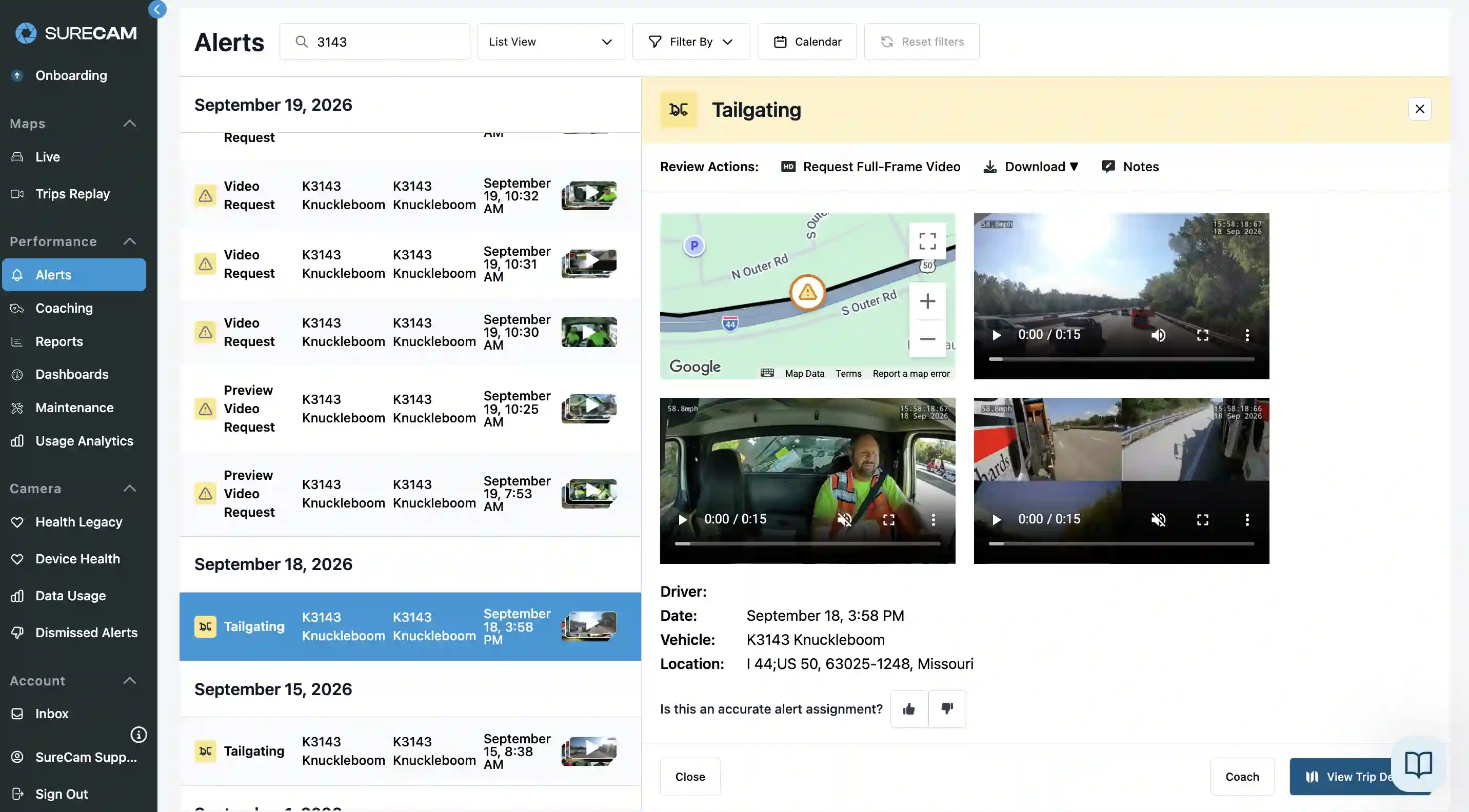
A documented process tells an underwriter that the operation controls its own risk. The AssuredPartners list asks for a formal safety program with driver onboarding, training and regular inspections, and the Automotive Fleet interview shows how the question has sharpened. Michael Kiris of Keystone says insurers now ask, "What are you doing with it?" A report full of recurring alerts proves little. A record of the review, the coaching conversation and the change in behavior afterward proves much more.
Process needs an owner and a rhythm. Lansberry's safety director reviews footage from the entire fleet in 15–20 minutes per day. SureCam offers driver coaching and integrates with third-party coaching platforms including SambaSafety. Whatever the tools, the underwriter-facing evidence lives in dated records: which events got reviewed, who coached whom, and what changed.
An underwriter wants four artifacts from a fleet safety program: a written policy, coaching records, a footage retention practice, and a clear answer on who can access footage. The Automotive Fleet interview adds that someone on the fleet team must own the process, and that smaller fleets can assign it to operations or a management role.
Coaching records carry the most persuasive detail. Kiris described a customer whose average driver score rose from 850 to 950 over three months after event review, coaching and training, and the article presents that as the kind of trend story an underwriter can follow. Retention and access shape credibility in a claim. SureCam configures footage retention per contract to meet each customer's requirements, so the written policy should state the retention the fleet needs after the broker and legal counsel weigh in. Role-based access then enforces who may view, export or share footage.
The same interview stresses that a fleet needs time to set a baseline and document trends, so preparation belongs in the months before renewal.
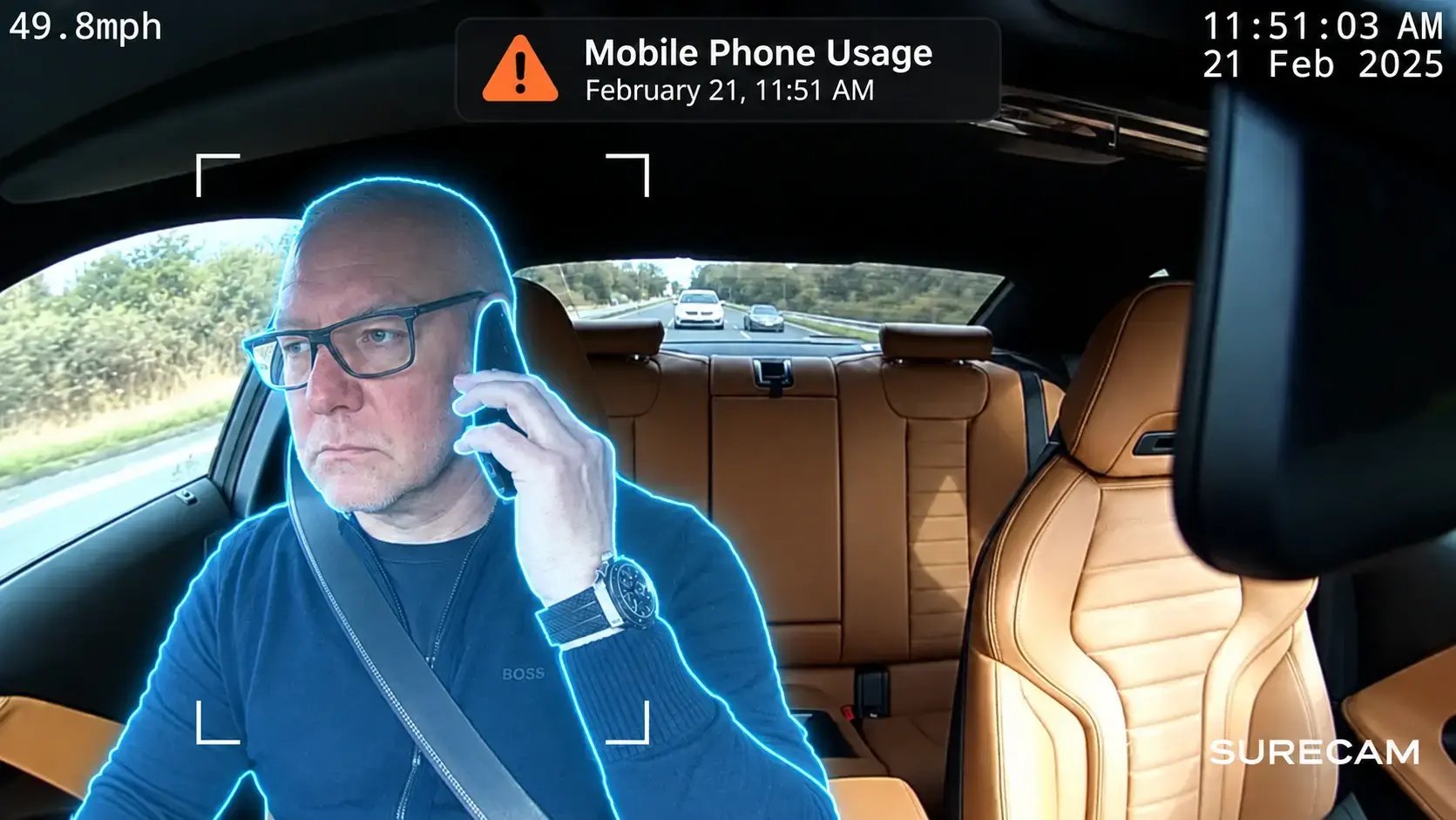
Driver-facing cameras stall many insurance-driven rollouts because drivers hear surveillance where the fleet intends protection. Objections tend to center on employee privacy, union bargaining and the "Big Brother" framing, and an unanswered objection can delay a program past renewal.
Privacy controls give a fleet concrete answers. SureCam offers a privacy mode with a lens shutter, ships with audio off by default, and applies role-based access to footage. Cameras record continuously, and fleets can switch the auto-send of flagged events on or off, so a fleet can decide how much footage leaves the vehicle. A written policy should state what gets recorded, who sees it and for what purposes, and drivers should receive it before the first camera goes live.
Law shapes the policy. FleetOwner's overview of driver privacy and legal risk notes that state wiretap, notice and tracking rules vary, and that New Jersey, for example, requires written notice before a private employer knowingly uses a tracking device in an employee's vehicle. Where a union represents drivers, bargaining terms may govern camera use, so labor counsel should review the policy early. Exoneration also gives the conversation a concrete opening, because footage often protects the driver in not-at-fault events.
Video telematics does not erase an existing loss history, does not override a hard market, and does not guarantee a credit. A loss run records what already happened. Raspberry told Automotive Fleet that carriers cannot guarantee a premium outcome from a given program, and that pricing still turns on loss history, claim frequency and severity, operation type, driver records and market conditions, many of which sit outside the fleet's control.
Market conditions set a ceiling on any effect. Matthew Payne of Lockton told Business Insurance the market has calmed but, in his words, "It's not soft by any stretch of the imagination." Mark Gallagher of Risk Placement Services says fleets with poor loss experience can still face increases or nonrenewal, and McMurtry says telematics-related credits can be hard to secure.
Data also cuts both ways. Haywood warns that collecting telematics data without acting on it may increase litigation exposure. Treat video as a management tool first and an underwriting input second.
A short conversation before purchase prevents a common mismatch: a camera program paired with a carrier that never asks for the data. Ask in this order:
Do dash cams lower commercial fleet insurance premiums?
Not by themselves. Premiums reflect loss history, claim frequency and severity, operation type, driver records and market conditions, and no carrier can guarantee an outcome from installation alone. Cameras can support the evidence an underwriter reads, including loss trends, faster claim resolution and documented coaching, but the effect on price depends on the carrier and the account.
Do commercial fleet insurers require dash cams?
Some programs do. Brokers quoted by Business Insurance in August 2026 described telematics, electronic logging devices or cameras as an entry condition for some programs and said insurers may tighten standards for fleets that will not share data. Requirements vary by carrier, so ask your broker which programs apply.
Can a dash cam improve an existing bad loss history?
No. A loss run records what already happened, typically over three to five years. Video can influence the claims that follow, and consecutive improving periods build a trend, but the earlier years stay on the record.
Who should have access to fleet dash cam footage?
Access should follow job role. SureCam provides role-based access to footage, so safety, operations and claims staff can see what their work requires. A written policy should name who may view footage, for what purposes, and who approves sharing with insurers or counsel.
How long should a fleet keep dash cam footage?
No single period fits every fleet. SureCam configures retention per contract to meet each customer's requirements, so the right setting depends on claim reporting windows, legal advice and the carrier's expectations. Ask your broker and counsel what applies to your operation, then record the answer in the camera policy.