How AI Video Telematics Improves Fleet Safety: Detection, Live Coaching, and Scoring
A dash camera solution with live streaming and driver safety scoring built in pairs a cellular-connected camera with telematics data and a scoring method that managers can act on. SureCam delivers that combination through AI-triggered event detection, remote live video, in-cab driver nudges, and driver scoring built from event data, all under one monthly subscription. Managers see risk as it develops and coach drivers before a near miss turns into a claim.
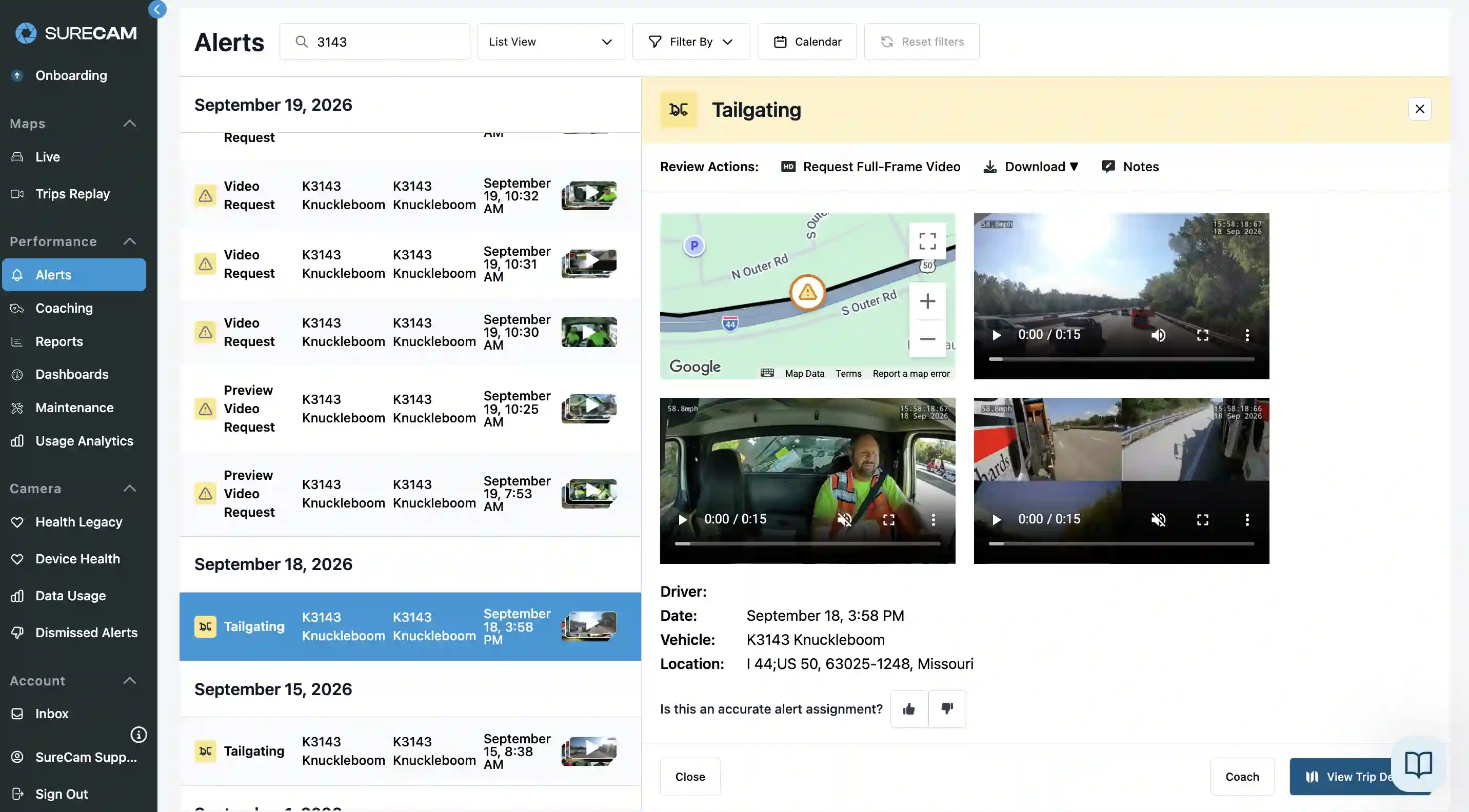
The detection process follows three steps. An event occurs, triggered by G-force, telematics data, or AI analysis. Video and data then upload at once over the cellular connection, and an alert reaches the manager by email or inside the SureCam platform. Cellular upload removes the manual retrieval that slows SD-card systems: SureCam's dash cam buying guide puts review of SD-card footage at 12–24 hours after an incident, while connected cameras deliver video and data within seconds.
Live streaming adds the on-demand view. A manager can open a live camera feed to check conditions at a job site, a loading zone, or a roadside stop without contacting the driver directly.
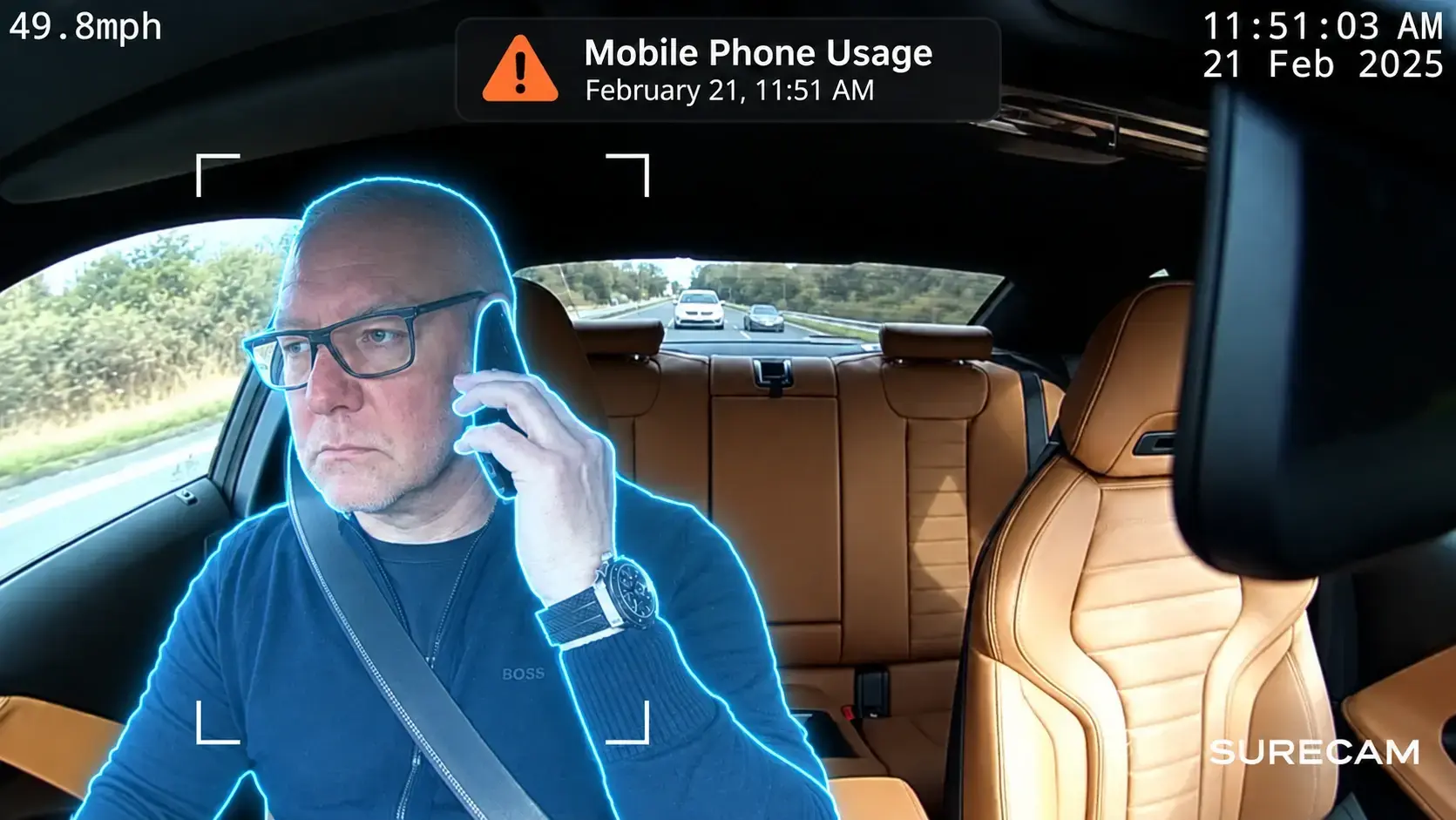
The AI layer analyzes the road ahead and, on models with a driver-facing lens, the cab. The SC245 combines front and interior-facing cameras, while the SC145 records the road only, so fleets choose the coverage each vehicle needs and pay only for the views they use. The in-cab speaker delivers warning nudges to the driver in the moment, which interrupts distracted driving before the event escalates.
Safety scoring turns individual events into patterns. SureCam data on speeding, close following, and high-speed cornering supports a point-based scoring system that rewards top performers and flags drivers who need coaching, as described in SureCam's fleet video savings guide. With scores in one view, a manager sees which drivers trend up or down and which behaviors drive collision risk, then sits down with the driver and the clip.
Do fleet dash cameras reduce accident rates? The clearest SureCam evidence sits in claims outcomes. Concrete Strategies, a US concrete supplier with 136 vehicles and SureCam cameras on its 33 largest, reviews hard braking and harsh cornering alerts the same day or the next as coaching opportunities, and its third-party claims dropped 75%, according to the SureCam case study. The case study reports claims rather than a collision-rate change, so a fleet should set its own incident baseline per million miles before judging results.
Mixed Fleet Safety Systems Scale Through Modular Camera Configurations
Mixed fleets need one system that adapts to each vehicle rather than a separate product for every vehicle type. SureCam builds that flexibility into the hardware: a forward or dual road-facing camera forms the base, and optional driver-facing, rear, and side cameras plus a driver aid screen attach where a vehicle needs them.
The Vantage multicamera system supports up to six synchronized camera views covering the road, driver, sides, rear, and cargo area. Synchronized footage shortens investigations because a reviewer sees the same moment from every angle, and the rear and side views target sideswipes, backing accidents, and pedestrian collisions that a forward camera alone cannot capture.
Modularity matters because vehicles in a mixed fleet carry different blind spots. A pickup used for site visits may need only a forward camera, while a box truck backing into loading docks benefits from rear and side views. Event data stays consistent across both, from long-haul transport to local service work, because every camera attaches G-force, speed, and GPS data to its video and sends it over the same cellular connection.
GPS data deserves one caution. Satellite signals cannot pass through solid materials other than glass, so tunnels, buildings, and dense overhead cover can interrupt positioning, and SureCam's installation guide treats GPS position as reference data. Reflective or tinted windshield coatings can also degrade reception, in which case the guide recommends mounting the camera in a clear area. Managers get the most reliable picture by reading location alongside video rather than in place of it.
Four factors guide a multicamera rollout across mixed equipment. First, match camera views to vehicle roles instead of equipping every vehicle identically. Second, plan the power method, since cameras install with either hardwired or OBD power and the hardwire kit requires fuse connections and a chassis ground. Third, set privacy policies by vehicle group: SureCam offers in-cab privacy that disables inward video except on button-push events, facial blurring, location privacy that disables recording inside geofences flagged private, and time-of-day privacy that disables recording outside business hours. Fourth, confirm integration, because SureCam works with third-party telematics and ELD platforms, which lets fleets keep the compliance stack they already run.
Operational Efficiency and Cost Reduction: Where Video Telematics Pays Back
Video telematics lowers fleet costs in three ways: it shortens claims, documents coaching, and moves vehicle service from reactive to scheduled. SureCam connects all three on one platform through event video, driver coaching tools, cloud storage, and the Maintenance Suite, which gives managers one record of incidents, coaching, and upkeep.
Concrete Strategies shows the administrative side of the same effect. Before cameras, one claim took its safety manager 8–10 hours spread over several days, and claims handling consumed about a week of labor each month. After deployment, that time fell to under 10 hours per month, and false debris claims dropped from weekly calls to about one per month or fewer.
Cloud video storage removes the SD-card steps from incident reporting. Event video uploads over cellular, so a safety manager reviews footage, confirms the driver's condition, and sends details to the insurer or broker as part of First Notification of Loss without waiting for a card to return to the office. Remote access also lets a safety director, an operations lead, and an insurance contact review the same clip, and SureCam includes unlimited user licenses.
The Maintenance Suite extends the same platform to uptime. A dashboard flags vehicles due or overdue for service so managers schedule work ahead of breakdowns. Each vehicle keeps a service history that logs work performed, parts, vendors, and costs, with invoice and inspection attachments, which helps identify repeat problems and informs repair-versus-replace decisions. Automated reminders trigger by odometer, engine hours, date, or custom intervals, and warranty tracking monitors expiration dates so covered repairs do not slip past the window. Because maintenance data links to video and coaching tools, vehicle upkeep joins the same safety program.
Fleets weighing a solution can test it with four questions. Does footage upload without a driver handling an SD card? Can managers change camera settings and pull additional video without calling an account manager? Does scoring draw on events the fleet defines? Does one subscription cover hardware, software, and data? SureCam bundles hardware, software, and data into a monthly subscription, and a demo tests the remaining questions against a specific fleet's vehicle mix. Visit surecam.com or call 1-855-870-7205 to book one.