How Dash Cam Footage Defeats False Claims: Evidence Instead of Competing Accounts
Dash cam footage defeats false and disputed claims by showing what happened before, during, and after a collision, with time and location attached, so liability rests on evidence instead of competing accounts. It does not stop claimants from filing. It stops weak claims from succeeding, which protects the driver first and the business second.
Evidence matters more as litigation grows. The American Transportation Research Institute (ATRI) analyzed 600 US trucking litigation cases from 2006 to 2019 and counted 26 verdicts above $1 million in the first five years of that data and nearly 300 in the last five. That count comes from US trucking data and does not describe other countries or provinces. Claims and liability processes vary by province and state.
Six Disputed Claim Scenarios Where Video Settles the Question
Video settles disputed claims most often when the dispute turns on who moved where, and when. The six scenarios below come up often in fleet claims, and anonymized examples of each appear in the fleet video case studies SureCam has published.
Improper Merge or Lane Change Into the Fleet Vehicle
Forward-facing video shows which vehicle held its lane and which one cut across it, including the gap, the signal and the closing speed. In a published example, a sedan merged improperly in front of a semi, and the three-way collision claim that followed ended in dismissal after the video showed it.
The footage also fixes the sequence. A merge that happens in the final second before contact reads very differently from a slow drift, and the clip preserves that difference after memories shift.
Abrupt Stop in Front of the Fleet Vehicle, Including Staged Accidents
Rear-end claims depend on why the lead vehicle stopped. Forward-facing footage shows whether traffic, a signal or a hazard explained the stop, or whether the vehicle braked hard with no warning and no visible cause.
One published example documented an abrupt stop with no warning, a pattern consistent with a staged accident. Video cannot read intent, but it records the road conditions, the braking and the following distance, and those facts give an insurer and counsel something concrete to review.
Improper Left Turn Across the Fleet Vehicle's Path
Left-turn collisions usually come down to right of way: which vehicle entered the intersection first, and whether oncoming traffic had room to stop. Video shows the turning vehicle's path, the signal, and the fleet vehicle's approach.
A published example involved a $250K claim that ended in dismissal after video showed the other party made an improper left turn. A claim of that size shows how much can rest on a few seconds of recording.
Oncoming Vehicle Crossing the Center Line
When an oncoming vehicle crosses the center line and strikes a fleet vehicle, the account that follows can differ from what happened, and the fleet driver may have no witness. A forward-facing camera records the lane position of both vehicles in the seconds before impact.
In a published example, a civilian vehicle crossed the center line and struck the fleet vehicle, and the false claim that followed ended in dismissal. The recording gave the claims handler a direct view of the crossing instead of two competing stories.
False Hit-and-Run and Erratic-Driving Reports
Some disputes start with an accusation instead of a collision. A caller reports erratic driving, or another party claims the fleet vehicle hit a car and left. Footage from the fleet vehicle shows whether contact occurred and how the vehicle moved.
Published examples include a semi driver cleared of an erratic-driving report when video showed evasive action to avoid an improper merge, and a false hit-and-run claim that video disproved. In both cases the recording supplied what the driver's word alone could not.
Low-Speed Sideswipes Where Fault Seems Unclear
Low-speed contact in parking lots, tight lanes and stop-and-go traffic produces murky disputes, because neither driver felt much and each remembers the moment differently. Video shows which vehicle moved, which one stayed still and where the contact occurred.
In published examples, video identified the other vehicle as the source of damage in a sideswipe, and it cleared a driver of a driver-awareness allegation by showing the vehicle boxed in by traffic.
What Makes Footage Decisive Instead of Ambiguous
Footage decides a dispute when it answers the questions an adjuster or attorney asks first: where the vehicles stood, how fast they moved, what the driver did, and when it all happened. Six features separate decisive recordings from ambiguous ones.
- Forward-facing view of the road and other vehicles. This view captures lane position, signals and the other driver's actions, which covers most merge, turn and stop disputes.
- Driver-facing view. A clip showing a driver looking ahead and responding to traffic answers distraction allegations directly.
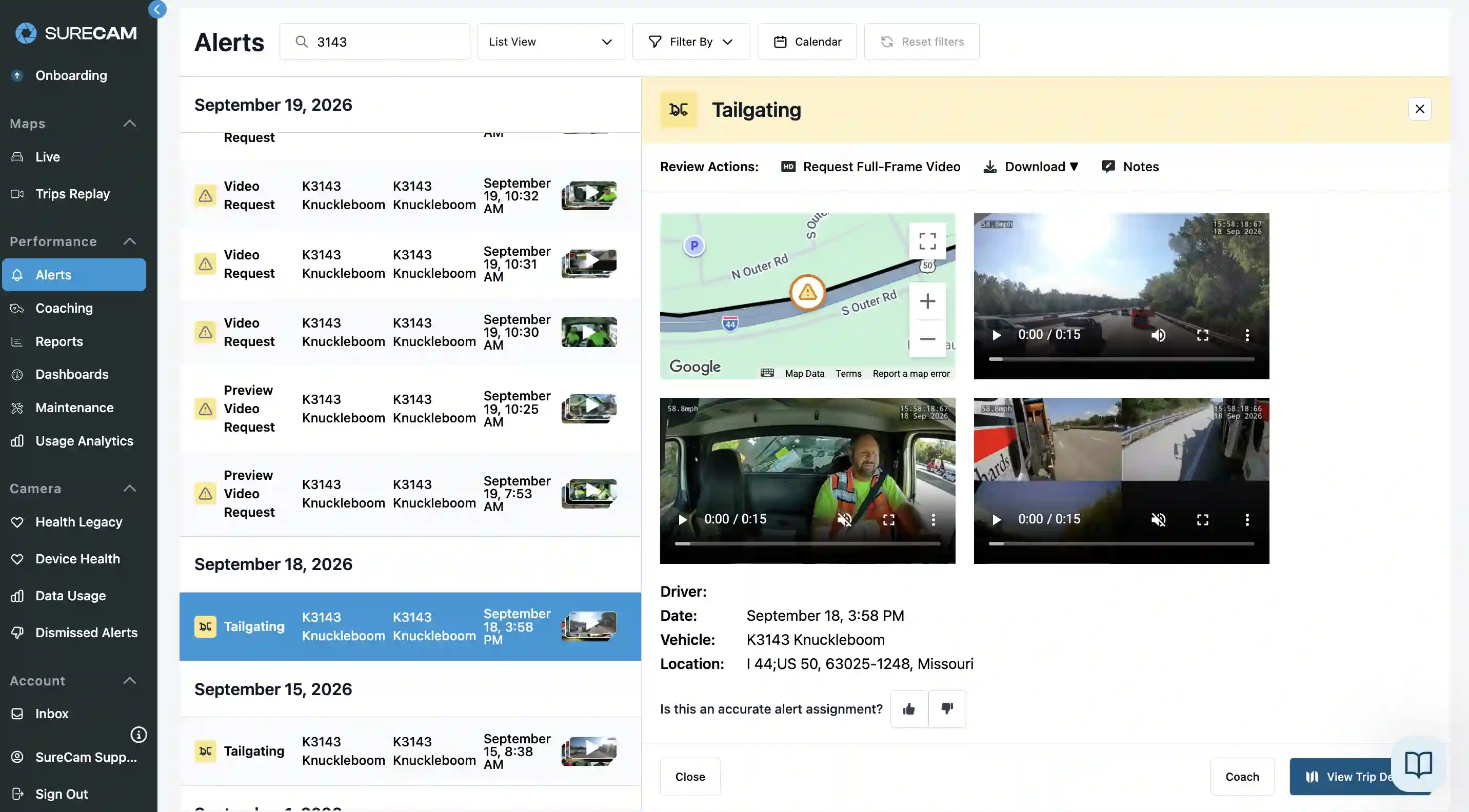
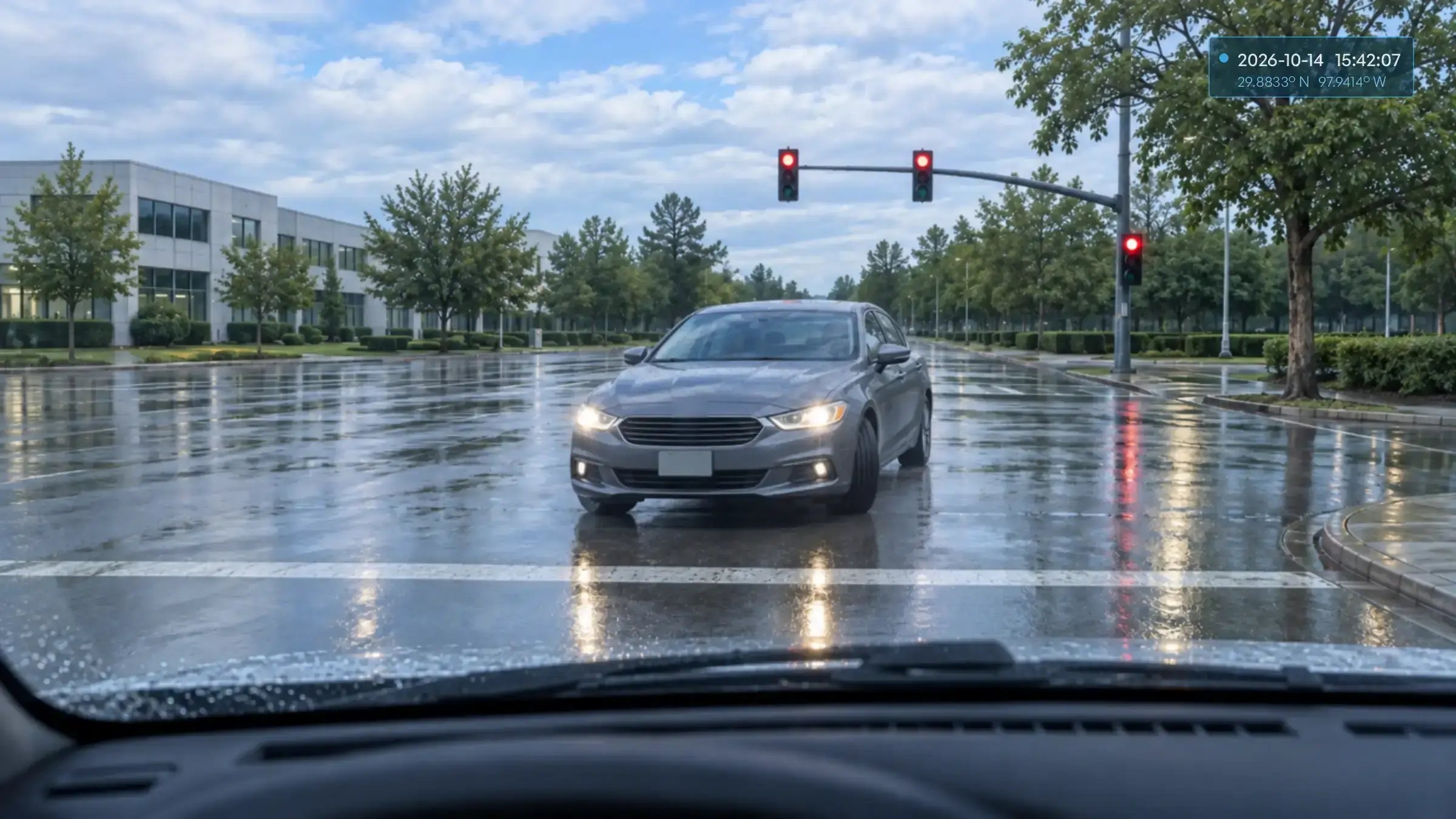
- Time, date, GPS location, and speed context. A recording tied to a place and a moment ends arguments about where and when an event happened. A platform with live GPS tracking and trip history behind the video can confirm the route independently.
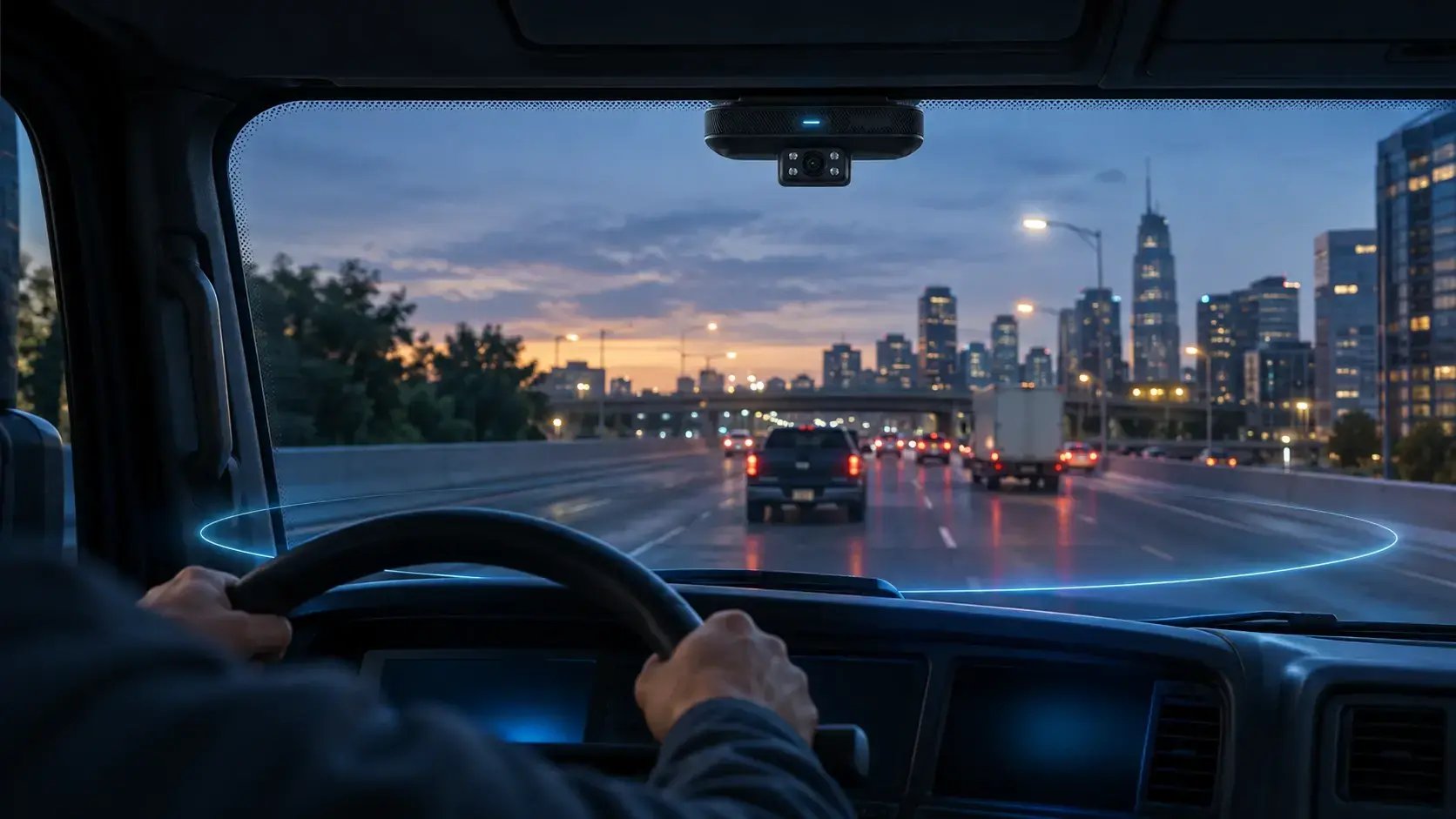
- Low-light video for night incidents. Infrared low-light video keeps dusk and night collisions readable, which matters when glare and shadow erase detail in standard footage.
- Additional angles for side and rear impacts. A forward camera misses a sideswipe on the passenger side or a bump while backing. SureCam Vantage, a multicamera system with 1 TB of on-device storage, adds those views.
- Continuous recording. Footage exists even when nobody flagged the event, which matters when a claim arrives days after an incident the driver considered minor.
Standalone dash cams can capture some of these elements, while video telematics adds the platform layer for review, access, and GPS context.
What Happens in the First Hours After an Incident
The first hours shape how smoothly evidence reaches the claim. When event auto-send stays on, a flagged clip arrives automatically, a manager reviews it, and the footage goes to the insurer or claims handler through controlled access.
SureCam cameras record continuously, and event-triggered auto-send of flagged events works as an on/off setting, so it deserves a decision before the first incident. Footage lives on the device (SD card) and in the cloud, and role-based access limits who sees it. The guide to dash cam footage for traffic violation defense covers preservation and chain of custody.
What a UK Claims Study Shows About Camera-Equipped Vehicles
Claims on camera-equipped vehicles cost 57% less on average in a September 2020 study of UK claims data for more than 2,000 vehicles, conducted by claims handling and insurance litigation firm Plexus Law with SureCam. SureCam co-produced the study, and the data comes from the UK. The study compared vehicles fitted with SureCam connected cameras against vehicles without.
The gap ran widest in claims where a third party caused the collision, with pedestrian claims and rear-end claims among the largest differences. In pounds, the average claim cost £4,097.88 on vehicles without cameras versus £1,760.54 on vehicles with them.
Source: Plexus Law case study (PDF).
When the Footage Shows Fault: Settle on Known Facts and Keep Everything
When footage shows the fleet driver caused the collision, the honest response works from the known facts: settle quickly, avoid escalation and keep every clip. Disputing a claim the video cannot support tends to add cost and delay without changing what the recording shows.
Selective retention creates its own legal risk, so footage that hurts stays with the footage that helps. Involve your insurer and legal counsel early, and keep all relevant footage.
The clip also serves coaching. A driver who sees the sequence, such as the following distance or the missed signal, learns more from the recording than from a summary. How AI Driver Coaching Works explains how fleets turn clips like this into consistent coaching.
Exoneration Protects Drivers First, and It Changes How They See Cameras
Exoneration protects the driver first. A driver wrongly blamed for a collision can face discipline, a mark on a driving record and the stress of an open dispute, and a clip showing what happened removes that exposure.
That protection changes how drivers feel about cameras. A camera that feels like oversight on day one can start to look like a witness once it clears a driver.
Concrete Strategies, a US concrete supplier, put cameras on its 33 largest vehicles. Before that, Safety Training and DOT Compliance Manager Lisa Lamons said, claims rested on driver statements, police reports and photos that often failed to tell the story, and a single claim could take 8 to 10 hours across several days. With video, she said, "The answer is in the video." The company reports that false debris claims fell from weekly calls to about one a month or fewer.
Checklist: Building an Exoneration-Ready Camera Setup
An exoneration-ready setup answers three questions before any incident happens: what the cameras capture, who sees the footage, and how fast it reaches the claim. Use this checklist to confirm each one.
- Cover the road ahead and the driver's cabin, so the event and the driver's attention both appear on video.
- Add side or rear coverage on vehicles where sideswipes, backing, and rear impacts drive claims.
- Confirm continuous recording, and check low-light footage at night before an incident forces the test.
- Decide whether flagged-event auto-send stays on, and name who receives those clips.
- Set role-based access so the manager, insurer, and claims handler each see what they need.
- Ask your camera provider how long footage stays stored on the device and in the cloud. SureCam configures retention per contract to meet each customer's requirements.
- Brief drivers on what the cameras record and on the privacy controls: privacy mode, a lens shutter, and audio that stays off by default.
- Assign one owner for incident review, with a written path for sharing clips with the insurer and counsel.
Frequently Asked Questions
Can dash cam footage show that a driver did not cause a collision?
Dash cam footage can show lane position, braking, timing and location, and that evidence often supports a driver who did not cause the collision. It does not guarantee an outcome, because insurers, counsel and courts weigh every fact in a claim.
Does a dash cam stop people from filing false claims?
No. A camera does not stop anyone from filing a claim. It gives the insurer and counsel evidence to test the claim, which helps weak claims fail.
What footage helps most when a stop looks staged?
Forward-facing video of the vehicle ahead, with time and location attached, shows the braking, the traffic, and the following distance. Video cannot prove intent, so share the clip with your insurer and legal counsel instead of drawing your own conclusions.
What if the footage shows the driver caused the collision?
Keep all footage, involve your insurer and legal counsel, and use the clip for coaching. Selective retention creates its own legal risk.
Do claims and liability processes differ between the US and Canada?
Claims and liability processes vary by province and state. Ask your insurer and counsel which rules apply where the incident happened.
See How SureCam Protects Drivers After a Collision
SureCam pairs commercial-grade connected cameras with a video-first fleet management platform, so the clip that protects a driver after a collision sits alongside the fleet's GPS tracking and trip history. Talk to the SureCam team about exoneration-ready video.