One citation. One disputed red light. One speeding ticket, a driver insists, never happened. For a fleet running 50 vehicles across a metropolitan service area, moments like these arrive with uncomfortable regularity and carry costs that compound fast: fines, points on commercial licenses, insurance surcharge triggers, and the administrative drag of managing disputes without real evidence.
Dash cam footage for traffic violation defense has moved from a nice-to-have into a front-line legal and operational tool. As more fleets equip vehicles with AI-powered cameras that capture high-definition video paired with GPS coordinates and timestamped telematics data, the question has shifted from "should we use this footage?" to "do we know how to use it effectively?"
This guide breaks down how fleet managers, risk managers, legal teams, and insurance coordinators can build a repeatable system for leveraging dash cam evidence for traffic tickets, from documentation practices through court admissibility.
Why Traffic Citations Hit Fleets Harder Than Individual Drivers
A traffic citation against a personal driver rarely creates downstream consequences beyond a fine and a defensive driving course. Against a commercial fleet driver, the exposure multiplies across several dimensions.
Commercial Driver's License (CDL) holders face stricter moving violation thresholds. A single serious traffic violation can trigger a 60-day CDL disqualification under FMCSA rules. Two serious violations within three years carry a 120-day disqualification. For fleets operating under DOT authority, those violations also feed into CSA scores, which attract additional roadside inspections and can affect carrier safety ratings over time.
Insurance consequences arrive on a slower fuse but hit harder. Underwriters review loss runs and driver motor vehicle records at renewal. A cluster of moving violations, even when disputed, can shift a fleet into a higher risk tier or prompt exclusion of specific drivers. With commercial auto insurance rates climbing at a compounding pace for mid-sized fleets, even a handful of uncontested tickets represents a real premium exposure.
Then there's the false citation problem. Busy intersections, misread speed limits in school zone transitions, disputed stop sign compliance near commercial loading zones: these situations generate tickets that drivers dispute verbally but rarely win without supporting evidence. Dash cam footage as legal evidence in traffic court changes that equation entirely.
What Makes Dash Cam Evidence Admissible in Traffic Court
The Foundation: Authentication and Chain of Custody
Courts across the U.S. generally accept dash cam footage as admissible evidence when the presenting party can establish three things: that the footage accurately depicts the event in question, that no alteration took place after capture, and that the recording system functioned properly at the time of the incident.
Connected commercial dash cams strengthen all three requirements. Because network-connected cameras upload event video automatically via cellular connection within seconds of an incident trigger, the footage never passes through a manual download step where tampering could occur. The upload timestamp, GPS coordinates, and vehicle identification data attach to the file automatically, creating a documented chain of custody that attorneys and courts can follow.
Contrast this with SD card-only systems, where footage requires a driver to remove the card, transfer data manually, and reinsert the card. Defense attorneys for opposing parties regularly challenge that chain of custody, and the challenge often lands.
Supporting Data That Strengthens the Video Record
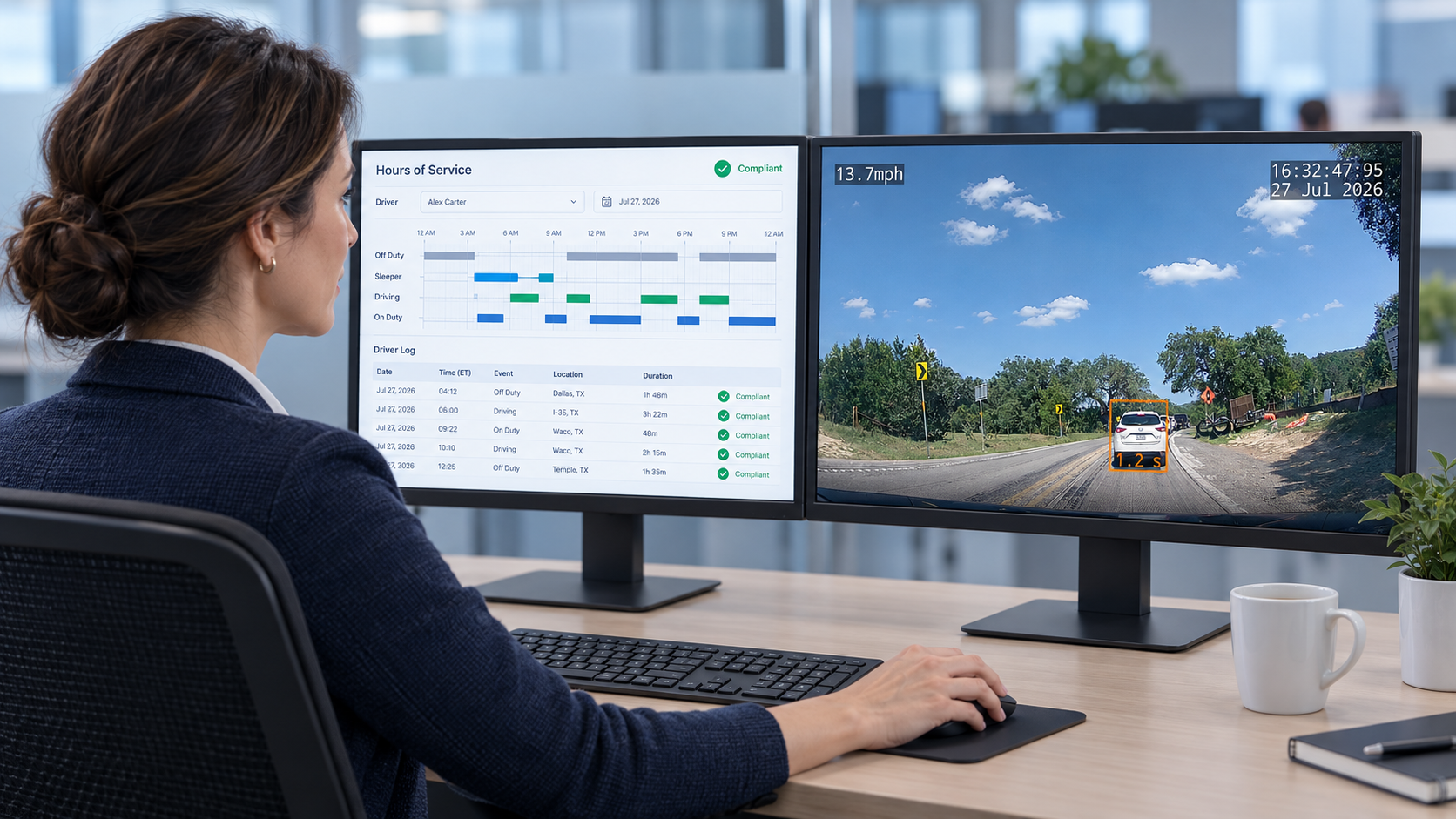
Video alone carries weight. Video paired with corroborating telematics data carries significantly more. When a fleet driver contests a speeding ticket using dash cam video to fight a speeding ticket, the relevant evidence package typically includes:
- Timestamped GPS speed data at the moment of the alleged violation
- G-force data showing no aggressive acceleration event prior to the stop
- Route and location data confirming the vehicle's position relative to speed zone boundaries
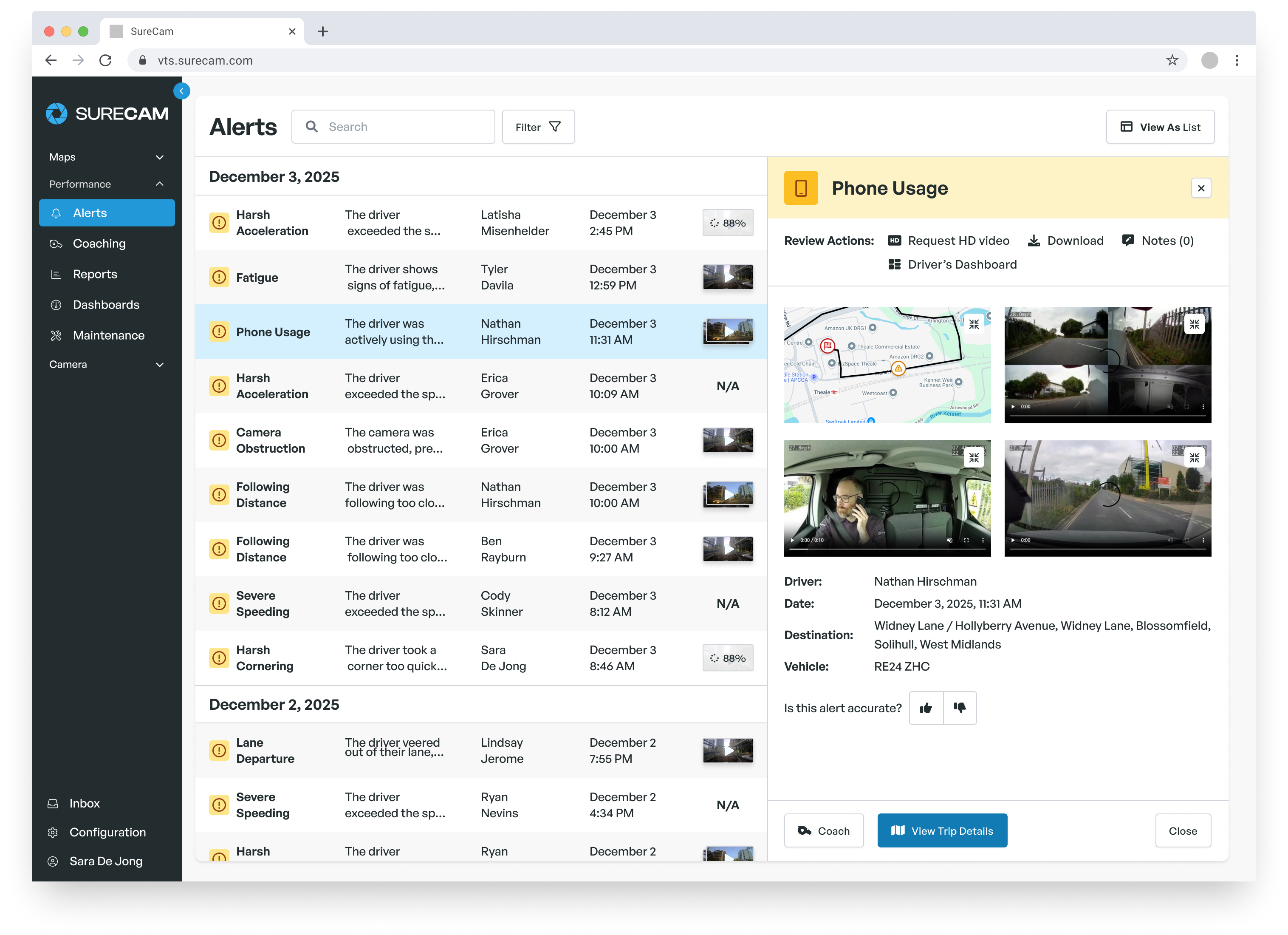
- Event video from both the road-facing and driver-facing cameras showing environmental conditions, signage visibility, and driver behavior in the cab
This multi-layer evidence package makes the difference between a credible defense and a driver's word against an officer's. Legal teams handling fleet traffic matters increasingly treat telematics data as a co-equal exhibit alongside video.
Jurisdiction Matters
Admissibility of dash cam footage in court varies by state and municipality. Most U.S. traffic courts accept properly authenticated digital video under rules governing electronic records and business records. Some jurisdictions require a sworn affidavit from a company representative attesting to the system's normal operation and the video's authenticity. Others accept a certificate from the dash cam provider.
Fleet legal teams and risk managers should establish a working relationship with local traffic court administrators and outside counsel in the jurisdictions where their drivers operate most frequently. Understanding local evidentiary procedures before a citation arrives removes scramble time from an already compressed response window.
Building a Traffic Citation Defense Workflow
Step 1: Preserve the Footage Immediately
Event-triggered dash cam systems capture and upload footage automatically when a g-force, AI behavior detection, or manual trigger activates. That footage typically enters cloud storage within seconds and stays accessible for a defined retention window, often 60 days for event video.
The risk: a citation that arrives by mail two to three weeks after the alleged incident may leave only a narrow window before routine footage overwrites or ages out. Fleet managers and risk coordinators should establish a policy requiring drivers to report all traffic stops, whether or not a citation was issued, within 24 hours. Upon notification, a designated user should immediately log into the fleet platform and preserve or download the relevant event and surrounding continuous footage before the retention clock runs.
Network-connected systems allow this preservation remotely, without requiring the driver to return the vehicle or interact with the footage. That remote access capability matters: it protects the chain of custody by keeping footage retrieval in the hands of designated personnel rather than drivers.
Step 2: Build the Evidence Package
Once footage is preserved, the evidence package for a traffic ticket defense should include:
- The video clip of the incident, including at least 60 seconds of pre-event and post-event footage for context
- Exported GPS track data covering the same timeframe
- Speed data at the alleged violation point
- A system certification or affidavit confirming the camera's normal operation
- The driver's written account, collected within 24 hours of the stop
- A copy of the citation itself with the alleged violation location cross- referenced to GPS data
The goal: present a unified factual record that a hearing officer, judge, or insurance adjuster can follow without relying on the driver's testimony alone.
Step 3: Match the Response to the Stakes
Not every traffic citation warrants full court defense. Fleet legal and risk teams should triage citations based on three factors: the nature of the violation, the driver's prior record, and the citation's potential CSA or insurance impact.
A parking violation with no moving violation component typically resolves with payment and minimal downstream exposure. A speeding violation at 15 mph over the posted limit in a school zone, by contrast, qualifies as a serious violation under FMCSA rules and demands immediate attention regardless of whether the driver contests it.
Dash cam proof for red light and stop sign violations often falls into a middle tier where the footage clearly exonerates the driver or clearly confirms the violation. When footage shows the driver stopped well behind the line before proceeding, contesting the citation with video becomes straightforward. When the footage shows a rolling stop, the risk team and legal counsel should evaluate whether contesting the citation risks a worse outcome through court costs and increased scrutiny.
Using Dash Cam Footage to Defend Against False Accusations
Defending against false traffic violation accusations with dashcams covers a broader category than routine traffic tickets. False accusations directed at commercial fleet drivers include:
- False moving violation reports filed by third-party drivers following road rage incidents
- Disputed pedestrian right-of-way claims in urban delivery zones
- Alleged school zone or crosswalk violations where signage transitions or signal timing creates ambiguity
- Stop sign violations at intersections where partial obstruction or unusual geometry creates genuine driver uncertainty
In each scenario, dash cam footage as legal evidence establishes what actually happened from the driver's vantage point. Forward-facing cameras capture road conditions, signage, signal states, and pedestrian movements. Driver-facing cameras document driver attention and reaction, which becomes relevant when opposing parties claim reckless indifference.
Proving safe driving with dash cam recordings goes beyond the single incident clip. A driver's coaching score history, alert frequency, and behavioral trend data from the fleet platform can serve as character evidence in cases where the driver's overall safety record matters to the outcome. Fleet managers should know how to export and present this historical data.
Best Practices for Building a Traffic Ticket Defense Program
Fleets serious about using dash cam video to fight traffic tickets and citations build program-level habits rather than treating each citation as a one-off event. The following practices form the operational foundation:
1. Standardize the 24-hour incident report. Every driver stop, cited or not, generates a written report within one business day. This creates a consistent documentation trail and ensures footage retrieval starts before the retention window narrows.
2. Designate a citations coordinator. One role owns the intake, footage preservation, and triage workflow for all citations. This prevents footage from aging out due to unclear ownership.
3. Establish relationships with local traffic court contacts in key operating jurisdictions. Understanding the local rules for submitting dash cam footage as legal evidence before an active case reduces delay and error.
4. Brief drivers on their rights during traffic stops. Drivers should know they can note the stop in the fleet's incident system immediately after the stop, while details remain fresh. They should not attempt to access or review footage themselves, which protects chain of custody.
5. Review and update camera positioning during routine vehicle maintenance. Footage that fails to capture the critical field of view due to camera drift or windshield obstruction has reduced evidentiary value. Maintenance checks should include a camera angle verification step.
6. Audit retention settings annually. As fleet operations evolve, retention windows and event trigger sensitivities should align with the risk profile of the routes and drivers involved.
The Compounding Return on a Strong Video Evidence Program
Fleet managers who close the loop between citation defense and broader safety programs generate a compounding return. A single successfully defended speeding ticket may save a driver's CDL status and prevent a CSA point accumulation event. Over a policy period, a clean traffic violation record directly informs insurance renewal conversations.
Insurance coordinators negotiating commercial auto renewals with carriers increasingly bring safety program documentation to the table. Demonstrated ability to defend against false citations, combined with AI coaching data showing proactive risk reduction, positions mid-sized fleets to negotiate from a posture of verifiable safety rather than hope.
SureCam's connected AI dash cam platform gives fleet operators the video evidence, telematics data, and remote access capabilities to run a traffic citation defense program that actually holds up, whether at a traffic hearing, in front of an insurance underwriter, or on a call with a claims adjuster who needs to see the footage today, not next week.
The fleets that build these habits now stop absorbing costs that never belonged to them in the first place.
To see how SureCam's video telematics platform supports traffic violation defense and fleet risk management, click here to talk with an expert today or call 1-855-870-7205.