
Commercial vs. Consumer Dash Cams for Fleets: 2026 Guide
20 Oct 2026
driver coaching


Improve fleet safety, reduce operating costs, and optimize field performance with an easy-to-use platform for video, GPS tracking, driver coaching, maintenance, asset tracking, and real-time fleet insights.
Drive your total fleet operations with SureCam’s all-in-one video telematics solution.
Valuable guides, case studies, and videos to help you optimize fleet management, safety, and productivity with telematics solutions.
Values, job opportunities, and ways to connect or partner with SureCam.
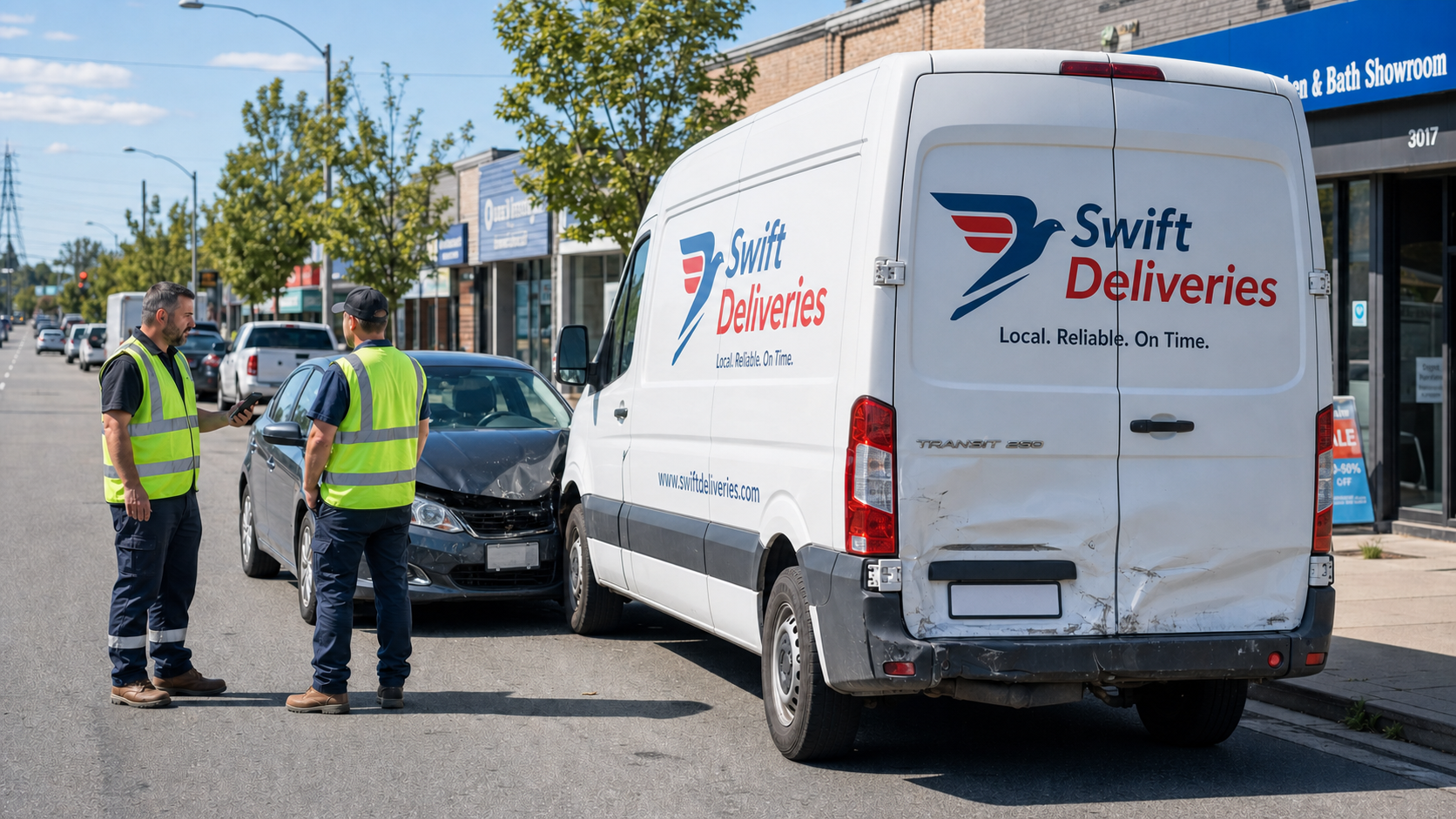




Dash cam footage qualifies as admissible evidence in commercial accident investigations when preserved correctly, authenticated properly, and captured in compliance with applicable recording laws. For fleet operators, three requirements determine whether that footage protects the fleet or complicates its legal position: a documented post-incident retrieval protocol, a written data retention policy, and camera configurations that comply with audio consent laws in every state where vehicles operate. Watch our webinar with Attorney Larry Hall, who breaks down how video can be your star witness, regardless of fault.
Most fleets deploy connected cameras for their insurance and safety value without building the legal management structure around them. The omission surfaces at the worst time. Footage deleted before litigation hold obligations attach can trigger spoliation sanctions. Audio recorded in a two-party consent state without driver acknowledgment can render a recording inadmissible. A retention window shorter than the typical commercial claims timeline can leave a fleet without the evidence it paid to capture.
Four areas demand attention before the next incident: evidence handling in the immediate aftermath of an accident, privacy law compliance across every operating jurisdiction, documented data retention policies, and the authentication requirements courts apply to digital video evidence. Each has clear, implementable answers.
When a commercial vehicle is involved in an incident, a duty-to-preserve clock starts. In most jurisdictions, the obligation to retain relevant evidence attaches the moment the fleet knows, or reasonably should know, that litigation is possible. That moment often arrives before the vehicle returns to the yard.
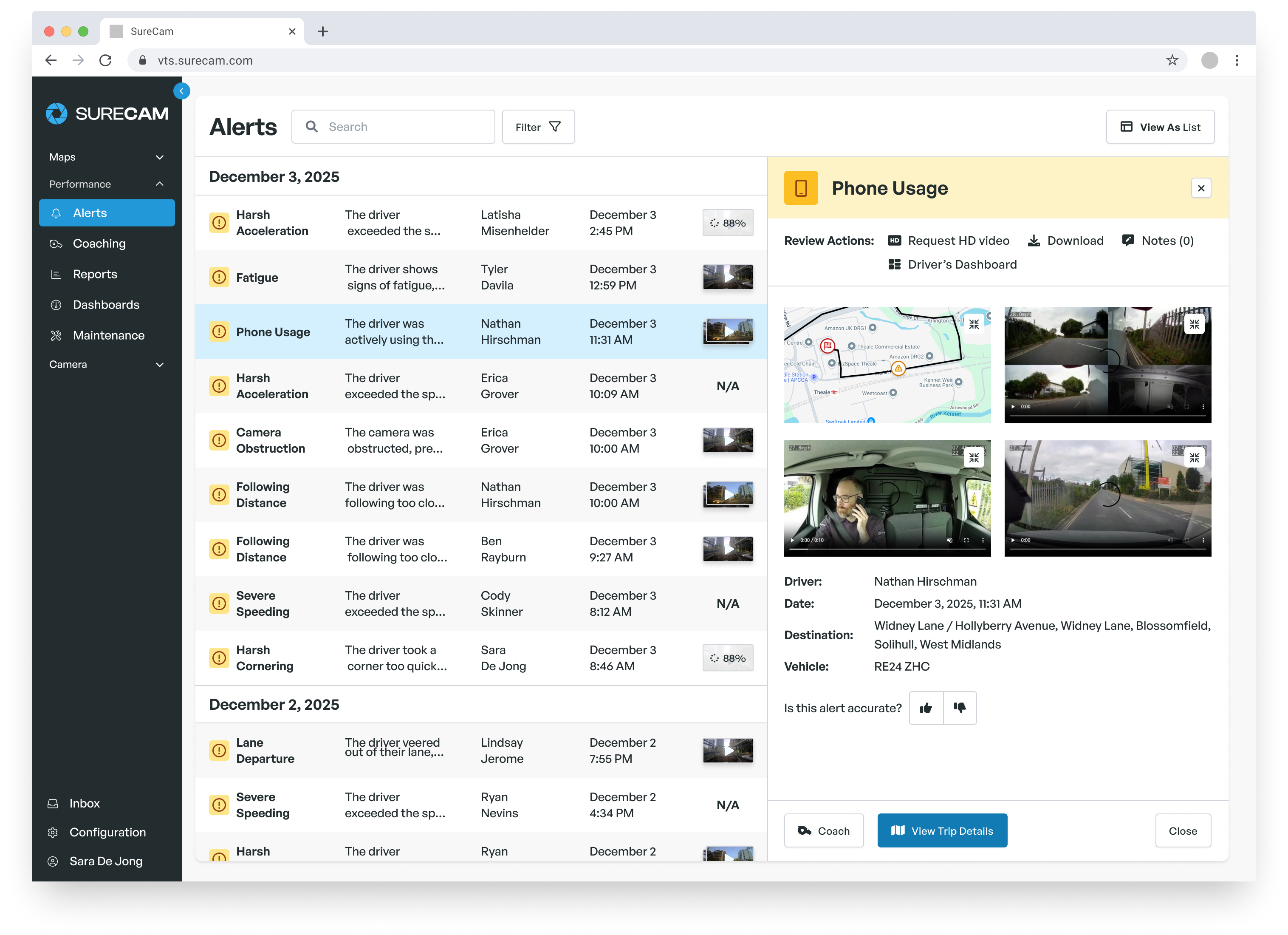
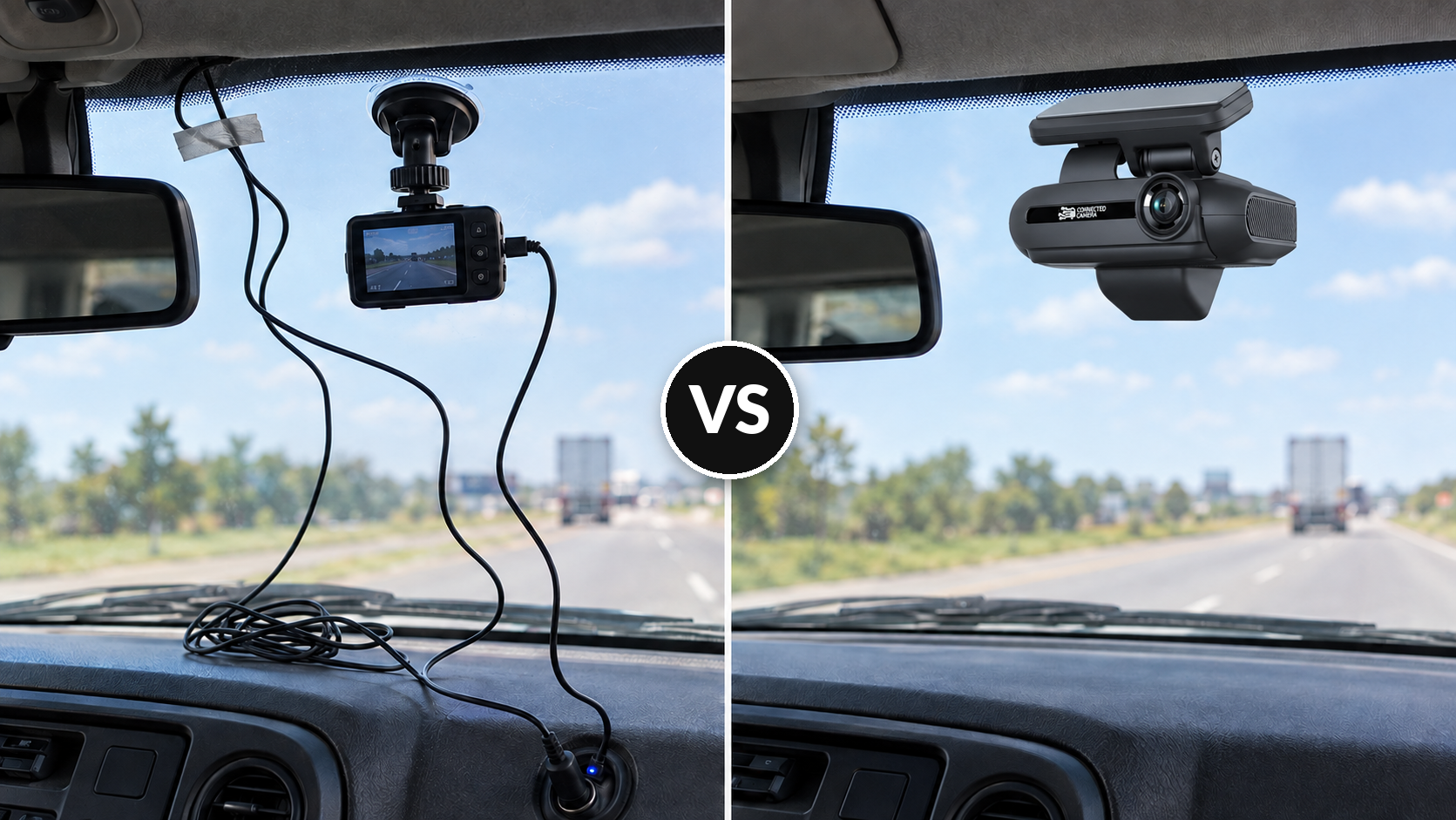
The single largest practical difference between connected and SD-card dash cam systems shows up in post-incident evidence handling. An SD-card camera requires physical retrieval: a driver removes the card, transfers the footage, and reinstalls it, all while risking overwrite or data loss during the process. A connected camera uploads event-triggered footage to the cloud automatically, within minutes of the incident. That footage becomes available to authorized platform users before a police report is filed, isolated and timestamped without any driver action required. SureCam utilizes both a tamper-proof SD card backup and a cellular connection for storing video on the SureCam platform.
Even with cloud-based systems, a documented retrieval protocol matters. The protocol should confirm the alert arrived, verify through a platform login that the footage was uploaded, copy a local version to a secure location, and record the timestamp and name of the person who performed the retrieval. This log is the first entry in the chain of custody record. Without it, the footage exists, but its handling history does not.
Chain of custody documentation addresses the core challenge to video evidence in commercial litigation: the argument that footage was altered between capture and court. A complete handling record, from the first platform access to delivery to legal counsel, provides a documented rebuttal. Every transfer, format conversion, or sharing action should carry an entry noting the date, the person involved, and the purpose.
The metadata embedded in connected dash cam footage carries significant legal weight alongside the video itself. Timestamps synchronized to the platform server, GPS coordinates logged at regular intervals, vehicle speed, and g-force readings at the moment of impact together provide a mechanical account of the incident. Brian Yuill, Managing Director of Yuill & Dodds Ltd., a Scotland-based road haulage company operating more than 100 vehicles, describes how real-time footage retrieval changed incident response at his fleet: "Using the vehicle cameras, we are immediately alerted of an incident, so we can ensure that the driver is safe, while quickly assessing liability and sending details to our insurance partner."
Yuill & Dodds coordinates the submission of footage through the First Notification of Loss (FNOL) process, allowing insurance partners to assess liability before third-party claims harden into disputed positions. When one third party deliberately braked without cause and filed a claim, the video resolved it. A second claimant who alleged serious injury was contested after footage showed the individual moving freely at the scene. Both claims were challenged successfully, and insurance costs fell as a result.
Recording laws vary significantly across U.S. states and between domestic and international markets. Fleets that operate across state lines face layered compliance requirements, and failing to configure cameras correctly for a given jurisdiction can affect the admissibility of footage captured there.
The critical compliance variable for dash cams across state lines centers on audio recording consent. Most U.S. states operate under one-party consent rules, requiring only one party to a conversation to consent to being recorded. A number of states, most prominently California, require all-party consent: every person audible on a recording must consent before capture begins. For commercial fleets with routes through California or other all-party consent states, this requirement applies to any in-cab audio recording.
For fleets with national or multi-state routes, the practical approach is to configure cameras at the fleet level to record video only, with audio disabled. This eliminates all-party consent risk without sacrificing the visual evidence that matters most in accident claims. Alternatively, fleets can obtain documented driver consent to audio capture within employment agreements, with a clear acknowledgment of what is recorded, in which vehicles, and for what purpose. Either approach works; undocumented audio recording in an all-party consent state does not.
Driver-facing cameras introduce compliance considerations beyond audio consent. Several states have notice requirements for electronic workplace monitoring, requiring written employee notification before video recording begins in the course of job duties. Fleet operators should address this in driver onboarding documentation: a signed acknowledgment covering both road-facing and driver-facing cameras, the purpose of the recording program, and who holds access to footage. This protects the fleet legally and supports the cultural case for cameras when footage later appears in a coaching context.
Platform-level privacy configurations help manage compliance without disabling safety value. SureCam's In-Cab Privacy mode disables inward-facing video by default and reactivates it only when a button-push event occurs, limiting continuous driver recording to incident moments. Facial Blurring automatically pixelates faces captured in footage. Both configurations let fleets tailor their program to local privacy requirements while preserving the evidence capability accident investigations depend on.
For UK-market fleets, data protection obligations under the UK GDPR add another layer. The Information Commissioner's Office requires that in-vehicle camera use be disclosed to employees, proportionate to the safety purpose stated, and governed by a documented policy. UK fleets should confirm their privacy notices and data subject access request processes are current before relying on footage in legal proceedings.
A written data retention policy serves two functions: establishing a consistent, defensible standard for how long footage is kept, and defining the trigger points at which auto-deletion must be suspended. Most fleets have addressed the first. Far fewer have documented the second.
Connected dash cam platforms allow fleets to configure separate retention windows for event-triggered footage and continuous rolling footage. A common configuration stores event footage for 60 to 90 days and continuous footage for a shorter period given the storage volume involved. The question most fleets fail to ask: does that window actually cover the gap between incident and formal claim? Minor incidents can produce injury allegations months after the event, and serious commercial vehicle accidents frequently generate litigation 12 to 24 months after the incident date.
A practical approach maps the fleet's historical claims timeline against the current retention schedule and adjusts the event-footage window accordingly. For any incident above a defined severity threshold (airbag deployment, injury reported, vehicle towed, emergency services called), manual preservation should be standing protocol regardless of the automated window. That threshold and procedure should appear in writing in the fleet's safety management documentation.
A litigation hold is a formal instruction to suspend routine deletion of any evidence relevant to anticipated or active litigation. For dash cam footage, the hold obligation typically attaches at the FNOL trigger: the moment a claim is reported to the insurer or the fleet receives a demand letter. Waiting until a lawsuit is formally filed is too late. Footage deleted between the FNOL submission and the lawsuit filing has already been destroyed during a period when preservation was required.
The hold process should be documented. When a hold is issued, the record should capture the date, the vehicles and time periods covered, the platform accounts affected, the instruction to disable auto-deletion, and the name of the person who issued and confirmed the hold. Courts evaluating spoliation claims look at whether the organization maintained a functioning process rather than a reactive one. A documented hold record demonstrates exactly that.
Video footage from a fleet camera earns its place as evidence through a defined process. Two requirements determine how well it performs as a legal exhibit: how the footage is authenticated, and what supporting data accompanies the video.
For dash cam footage to serve as evidence, the party offering it must establish that the recording is authentic: captured when and where claimed, by the identified device, and unaltered since retrieval. Authentication typically involves a declaration from the person who pulled the footage from the platform, confirming the retrieval process, the platform source, and the handling history from download to legal production. The chain of custody log provides the factual foundation for that declaration.
Connected dash cam platforms carry a practical authentication advantage. Platform-level records document the original upload automatically: the device ID, the upload timestamp, the GPS coordinates at capture, and the event type that triggered the recording. That metadata, submitted alongside the video file, gives courts an independent source of provenance beyond human testimony alone. Fleets should confirm with their platform provider what certification documentation is available specifically for litigation support.
The video is the headline evidence, but the data accompanying it often determines how persuasive that evidence becomes in court. GPS coordinates plotted against the reported incident location confirm the vehicle's position at the relevant moment. Speed data at the moment of impact addresses excess speed allegations directly. G-force readings establish the severity and direction of the collision force, which accident reconstructionists use to evaluate physical damage claims for internal consistency.
Fleets exporting footage for legal use should verify that the export format preserves embedded metadata rather than stripping it. Some workflows produce a standalone video file that loses the synchronized sensor data. A format that packages video, GPS trace, speed, and event data together presents a complete evidentiary record and reduces the need for separate technical testimony before a judge or jury.
The legal strength of dash cam footage in any accident claim depends less on video quality than on the surrounding documentation. Courts and insurers evaluate the full picture: response time, records kept, and consistent procedure. A post-incident documentation package should include the driver's scene report, the platform alert record confirming footage retrieval, the chain of custody log, the FNOL submission record with timestamp, and any police or third-party reports received.
Fleets should also define a legal notification threshold: a written set of criteria (injury reported at scene, vehicle disabled, third-party hospitalization, commercial vehicle above a defined GVW) that triggers immediate escalation to legal counsel rather than standard claims routing. When footage and documentation reach counsel before a claim matures into litigation, the legal team can assess exposure accurately and advise on preservation strategy before positions harden. Annual review of the full protocol keeps the fleet current with evolving case law and state-level changes that affect recording compliance and retention obligations.