Why Connectivity Shapes What Your Cameras Actually Deliver
The hardware spec sheet gets most of the attention during a dash cam demo. Resolution, field of view, night vision sensitivity. But the connectivity architecture underneath that hardware determines whether a camera functions as a real-time safety tool or a digital filing cabinet that gets visited after the damage is done.
Cellular and WiFi connectivity each deliver video footage from a moving vehicle to a back-office portal, but they do so on fundamentally different timelines, with different cost structures and different operational consequences. Choosing the wrong model for your fleet's exposure profile costs more than the monthly data fees suggest.
What Is Actually at Stake in the Connectivity Decision
A dash cam that uploads footage in near real time after a harsh-braking event lets a safety manager act within minutes. A dash cam that holds footage locally until the vehicle returns to the depot delivers that same clip 12 hours later, if the driver remembers to return, if the SD card survives the shift, and if no one has a reason to tamper with it.
That gap in time rarely matters for routine coaching. It matters enormously for liability disputes, insurance claims, and fraud defense. The connectivity model your fleet chooses defines which of those outcomes becomes standard practice and which stays aspirational.
Cellular Connectivity: Always-On, Wherever the Vehicle Goes
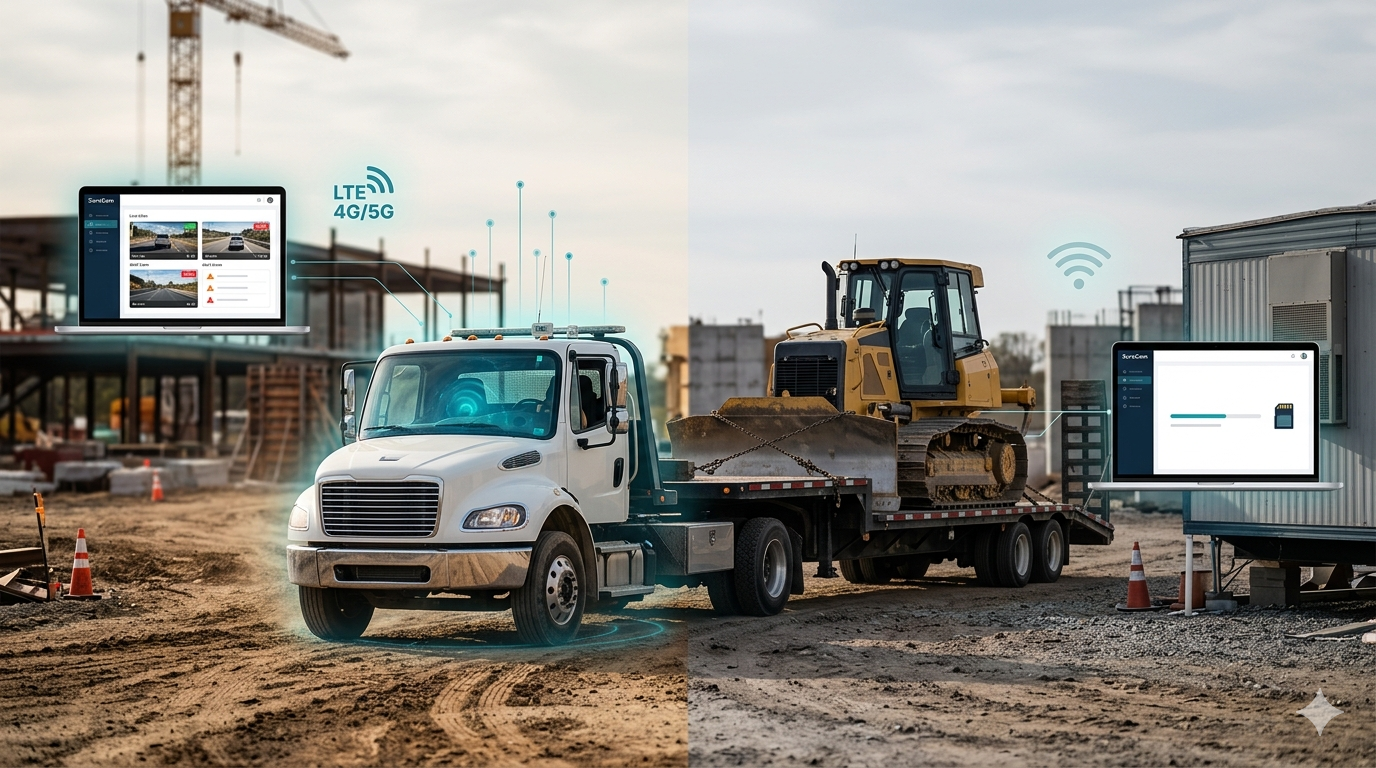
A cellular-connected dash cam operates like a smartphone with a dedicated SIM card. It connects to carrier networks (4G LTE, increasingly 5G in metro corridors) and transmits footage, alerts, and event data as long as the vehicle sits within coverage. No fixed infrastructure at the depot required. No waiting for vehicles to return to a sync zone.
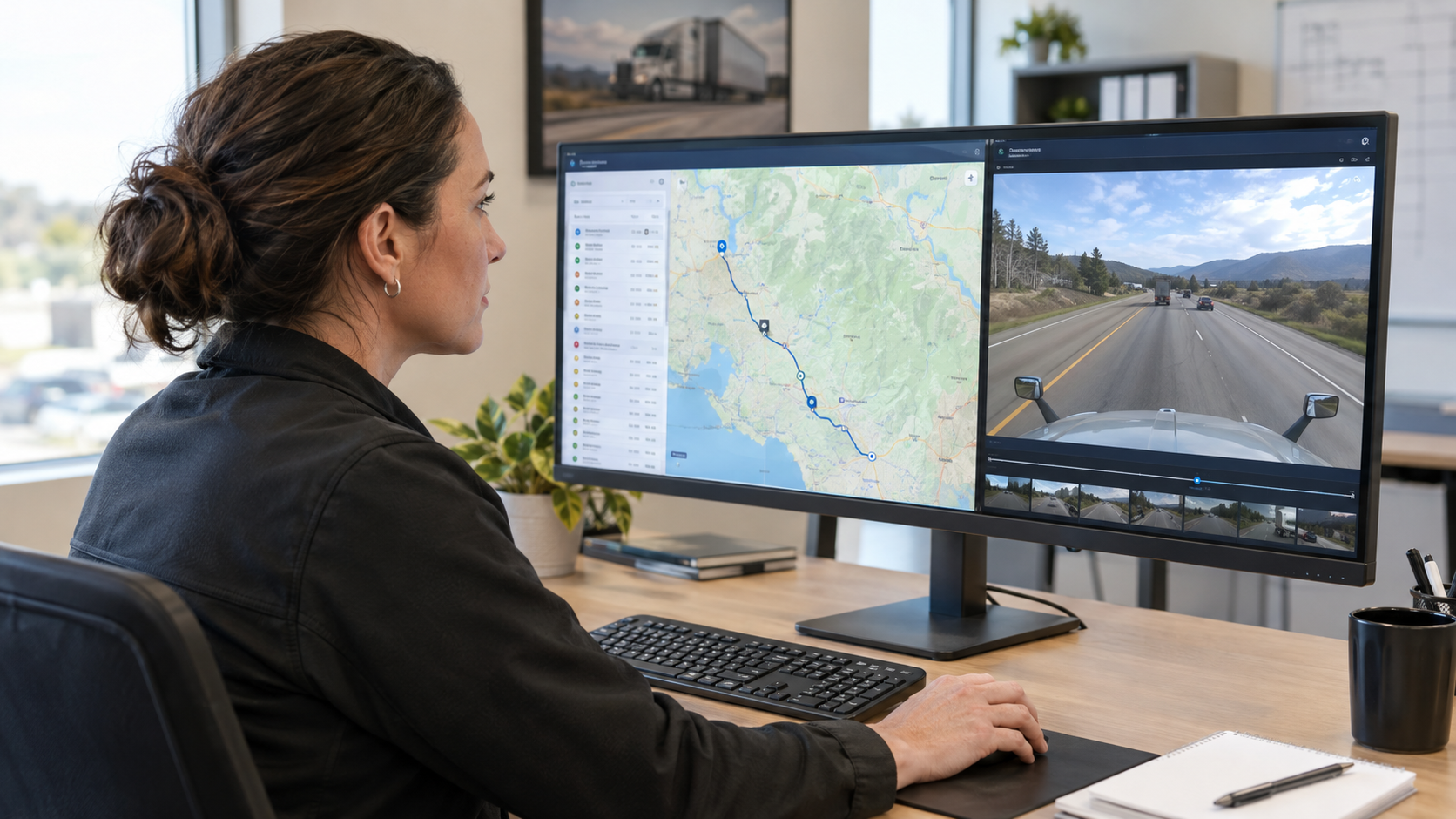
The practical result: incident footage, harsh-event notifications, and live video feeds reach the back office in near real time regardless of where the vehicle is operating. A truck on an interstate at 2 AM generates the same alert as a van two miles from headquarters. The geographic footprint of the fleet stops being a constraint on visibility.
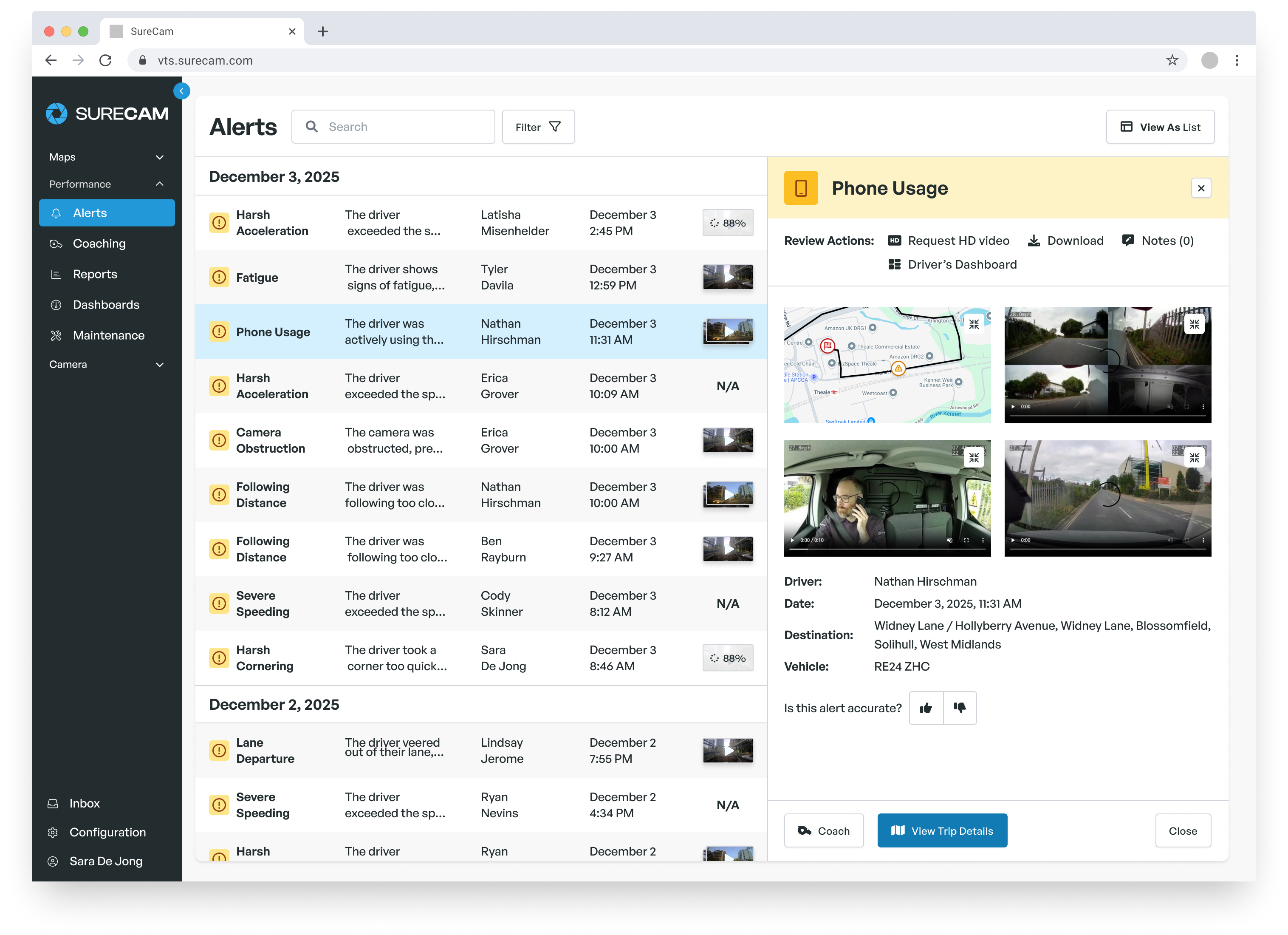
This always-on model also changes how claims management works. When Krispy Kreme deployed SureCam network-connected cameras across their UK delivery fleet, Logistics Manager Ben Povey described the operational shift directly: "By selecting a network-connected vehicle camera over an SD-card device, we have gained a live view of any incidents to ensure we are operating a safe and responsible fleet, while at the same time achieving insurance and fuel savings." The result: an 80% drop in incident and accident frequency, supported by the ability to act on footage immediately rather than retrieve it hours or days later.
When the Monthly Data Fees Pay for Themselves
Cellular plans for fleet cameras typically run on per-device monthly data fees, with costs varying by carrier, data tier, and upload trigger configuration (continuous vs. event-only). Across a 200-vehicle fleet, those fees accumulate quickly, and a line-by-line budget comparison with WiFi-only alternatives will almost always make cellular look expensive.
The calculus shifts when the cost of a single uncontested liability claim enters the calculation. A contested incident that generates a favorable outcome through immediate cellular-uploaded footage costs nothing beyond the monthly data fee already paid. The same incident, with footage trapped on a local SD card that arrived late or got damaged in transit, can run into six figures in legal exposure before settlement.
The stronger argument for cellular reaches beyond claims defense. Cellular connectivity eliminates retrieval friction entirely. Footage from an accident in a remote corridor, a load dispute at a customer site, or a breakdown on an unfamiliar route arrives in the same portal and on the same timeline as footage from a vehicle parked 500 yards from dispatch. The operational consistency matters as much as the speed.
WiFi Connectivity: Real Cost Savings, Real Trade-Offs
A WiFi-connected dash cam stores footage locally on an SD card or internal storage, then syncs to the back-office system when the vehicle comes within range of a designated access point, typically at the depot, yard, or terminal on return.
The cost appeal deserves acknowledgment. Eliminating per-device cellular data plans reduces monthly recurring costs, particularly for operations with high vehicle counts and predictable return-to-base patterns. For a school district, a shuttle company, or a short-range municipal fleet where every vehicle checks in nightly, WiFi sync may deliver adequate coverage at a fraction of the cellular cost.
Where WiFi-Only Connectivity Breaks Down
The limitation surfaces the moment a vehicle stays out overnight, diverts from its normal route, or becomes involved in an incident far from a sync point. Video sits on the device, unavailable. Alerts do not fire. The back office operates blind until the truck returns or a driver manually escalates the situation.
For a delivery operation running extended shifts, a carrier whose trucks run multi-day lanes, or any fleet where drivers operate independently away from a central yard, WiFi-only connectivity creates a visibility window that defeats much of the value dash cameras offer. Footage that arrives 18 hours after an incident rarely changes the outcome of a liability dispute in the fleet's favor. By the time the clip uploads, the third party has already filed, the insurance partner has already received an adverse account, and the driver's recollection has grown uncertain.
SD card dependency compounds the risk. SD cards fail. They get damaged in vehicle accidents, degrade through heat cycles, or get lost during driver transitions. Any system that depends on physical media retrieval builds a single point of failure into the evidentiary record at exactly the moment footage matters most. That is a structural vulnerability, not a theoretical one.
Real-Time vs. Batch Upload: What Each Model Enables
The real-time versus batch distinction extends beyond technical preference. It shapes what a safety team can actually accomplish on a given shift.
Real-time cellular upload supports FNOL to an insurance partner while incident details stay fresh, live coaching intervention when a driver shows harsh behavior mid-route, dispatch awareness of vehicle status without driver self-reporting, and legal protection from the moment of an event rather than days later.
Batch WiFi upload suits end-of-shift review for low-mileage, predictable-route fleets where regulatory reporting drives the compliance need more than real-time response.
The fleet profile determines which model fits. A fleet running predictable routes and returning nightly with minimal third-party claim exposure may find WiFi batch upload sufficient. A fleet with long-haul exposure, high liability risk, or active safety coaching programs will find that cellular's real-time capability justifies the premium.
Coverage Gaps and How to Address Them
Cellular connectivity depends on carrier infrastructure, and coverage maps have gaps. Rural corridors, mountain passes, and certain industrial zones present dead spots where cameras temporarily lose network connection.
The answer: evaluate camera systems that buffer footage locally during coverage gaps and automatically sync when connectivity resumes. This behavior (cellular as primary channel, local buffer as fallback) prevents a temporary signal gap from becoming a permanent gap in the evidentiary record.
Carrier selection carries weight. Not all fleet camera providers use the same underlying network infrastructure. Ask vendors whether their systems support multi-carrier SIM configurations or automatic carrier switching, and test actual coverage in the corridors where vehicles spend the most time rather than on major interstates where every carrier performs well.
Hybrid Architectures: Matching Each Channel to Its Best Use
Some dash cam platforms support a dual-connectivity model: cellular handles real-time alerts and incident clips; WiFi handles bulk footage transfer and firmware updates at the depot.
Under this structure, a collision triggers an immediate cellular upload of the incident clip, allowing FNOL and initial liability assessment within minutes. When the vehicle returns to the depot, the full-resolution shift footage transfers over WiFi without consuming cellular data. The approach controls monthly data costs while preserving real-time incident response where it matters most.
Hybrid configurations suit mid-sized fleets that want enterprise-grade claims management without enterprise cellular data expenses. They reward vendors who architect both channels from the ground up rather than treating WiFi as a bolt-on afterthought.
Five Questions to Ask Before Committing to a Platform
Coverage: What carrier infrastructure does the system use, and how does it handle gaps between towers? Does local buffering preserve footage in dead zones?
Upload triggers: Does the system upload continuously, on event trigger, or both? What determines which clips get prioritized when bandwidth is limited?
Data costs: What are the per-device monthly fees at your expected fleet size, and how do those costs scale with resolution or camera count?
Hybrid capability: Can the system offload bulk footage to a depot WiFi network while keeping cellular active for real-time alerts and FNOL?
SD card dependency: If cellular connectivity fails, how does the system preserve footage, and who owns the retrieval process if a card gets damaged or goes missing?
The right connectivity model differs by fleet. Imagine a 30-truck regional HVAC operation running predictable daily routes back to a single depot: WiFi batch upload may serve it well. Now consider an 80-truck carrier running multi-state lanes with overnight stops at third-party terminals: that operation carries materially different liability exposure, and the gap between cellular and WiFi connectivity carries materially different consequences. The frame for the decision stays consistent: match the connectivity model to where the liability exposure lives, not to where the cost looks lowest on paper.