What "All-in-One" Actually Means for Commercial Fleets
All-in-one fleet management solutions consolidate GPS tracking, video telematics, driver safety tools, maintenance scheduling, and equipment/asset tracking into a single platform. For most commercial fleets running between 20 and 200 vehicles, the right platform covers those operational essentials without pushing you into tools built for long-haul HOS mandates or enterprise dispatch routing. The real evaluation question is not which platform offers the longest feature list. It is which features your team will actually adopt and use consistently.
The category has expanded sharply over the past several years. What once meant basic location tracking now spans AI-triggered incident detection, real-time video streaming, digital vehicle inspections, driver scorecards, and in some configurations, full dispatch management with automated workflows. That breadth creates a legitimate buyer's problem: the more features a platform bundles, the harder it becomes to distinguish what is core to your operation from what ships in the subscription regardless of whether you need it.
A focused evaluation approach cuts through the noise. Define the operational problems your fleet needs to solve before evaluating any specific platform. Then map features to those problems. The sections below cover the features that carry the most weight for safety-focused commercial fleets, where complexity tends to add cost without adding value, and the questions worth asking every vendor before you commit.
The Features That Belong in Every Evaluation
Some features separate a capable fleet management platform from a basic GPS subscription. These represent the floor for any fleet with more than a handful of vehicles and any genuine safety or operational accountability requirement. Two in particular deserve close evaluation before anything else.
Connected Video and Incident Documentation
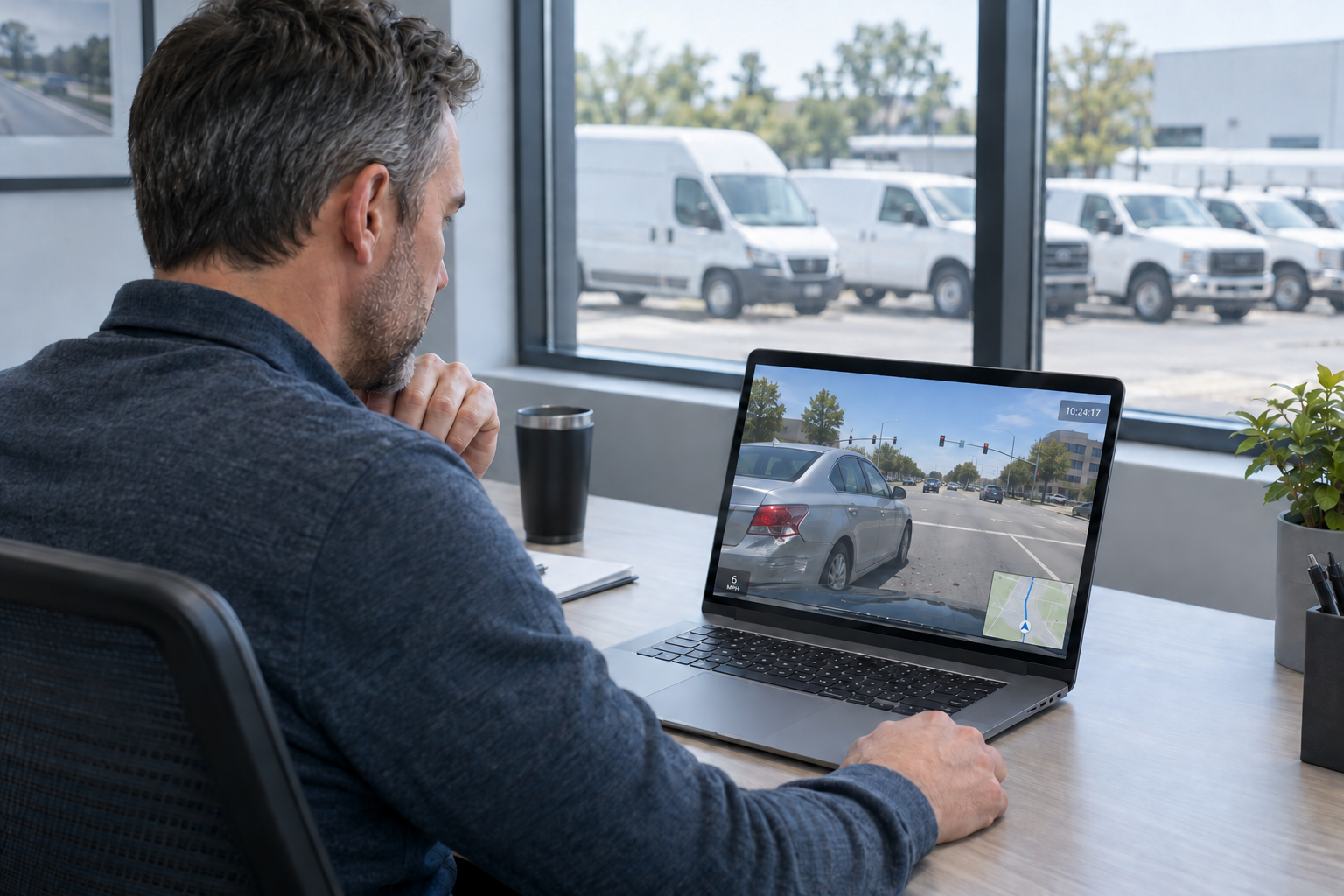
Road-facing cameras with cellular connectivity form the foundation of a defensible fleet safety program. The distinction between SD-card cameras and network-connected cameras matters considerably in practice. SD systems require a driver or manager to physically retrieve footage after an incident, introducing retrieval delays that can stretch from hours to days depending on vehicle location and driver availability. Network-connected cameras upload incident footage automatically to a cloud portal, typically within seconds of a triggering event such as hard braking or a collision.
For claims management, that timing difference often determines whether footage reaches an insurance partner before a third-party attorney does. When evaluating platforms, confirm that event video uploads automatically without driver action, that alerts notify fleet managers in real time, and that footage is accessible through a standard web portal without requiring a managed-service intermediary. Data ownership also deserves a direct conversation: some platforms control access to footage on the vendor's terms rather than the customer's. Confirm who owns the video and what happens to it at the end of a contract.
GPS Tracking and Live Operational Visibility
GPS tracking comes standard in nearly every fleet platform, but implementation quality varies considerably. At minimum, look for live vehicle location, trip history, geofencing with alert triggers on boundary exits or entries, and configurable speed monitoring tied to your specific thresholds rather than a fixed limit.
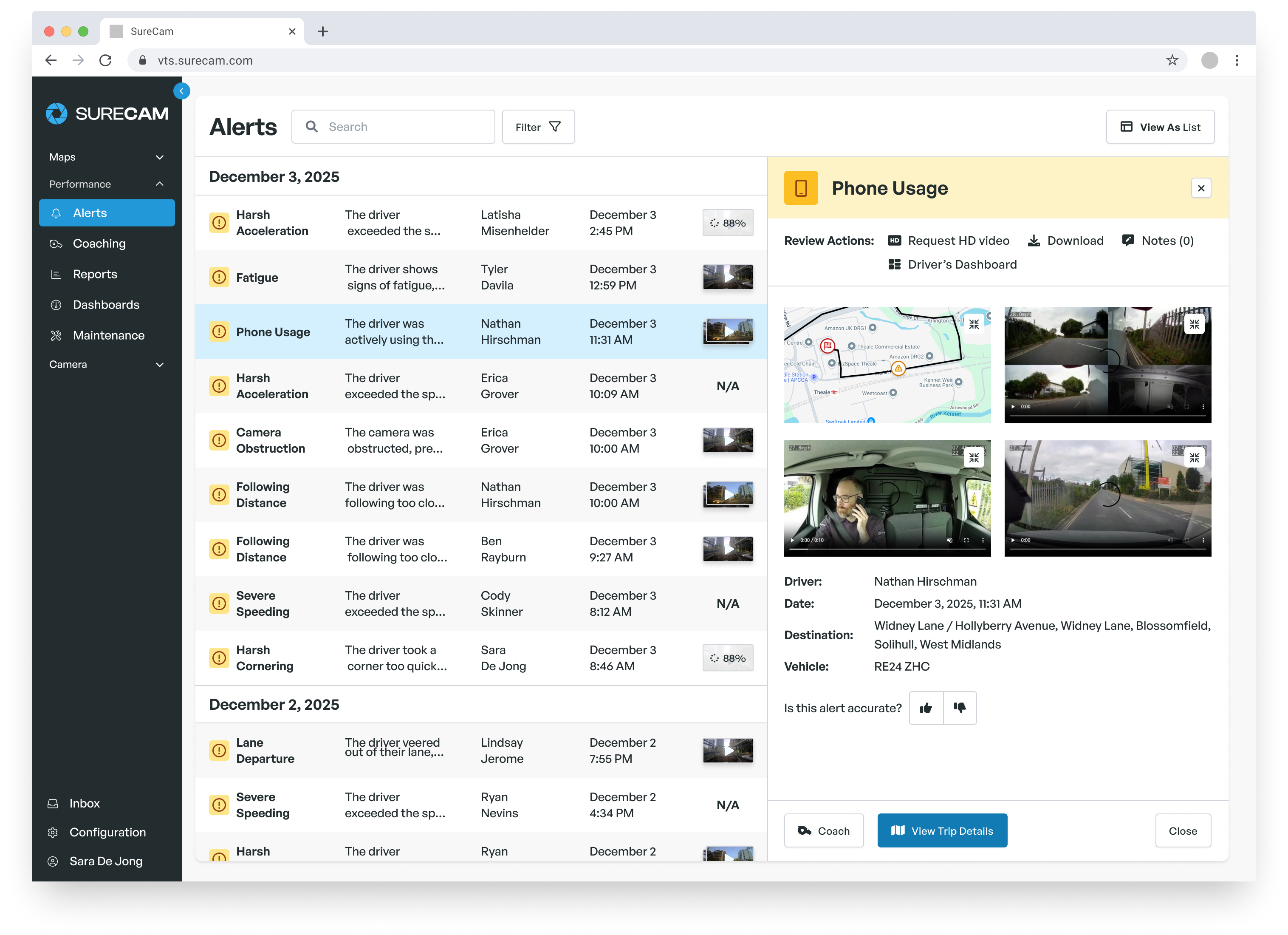
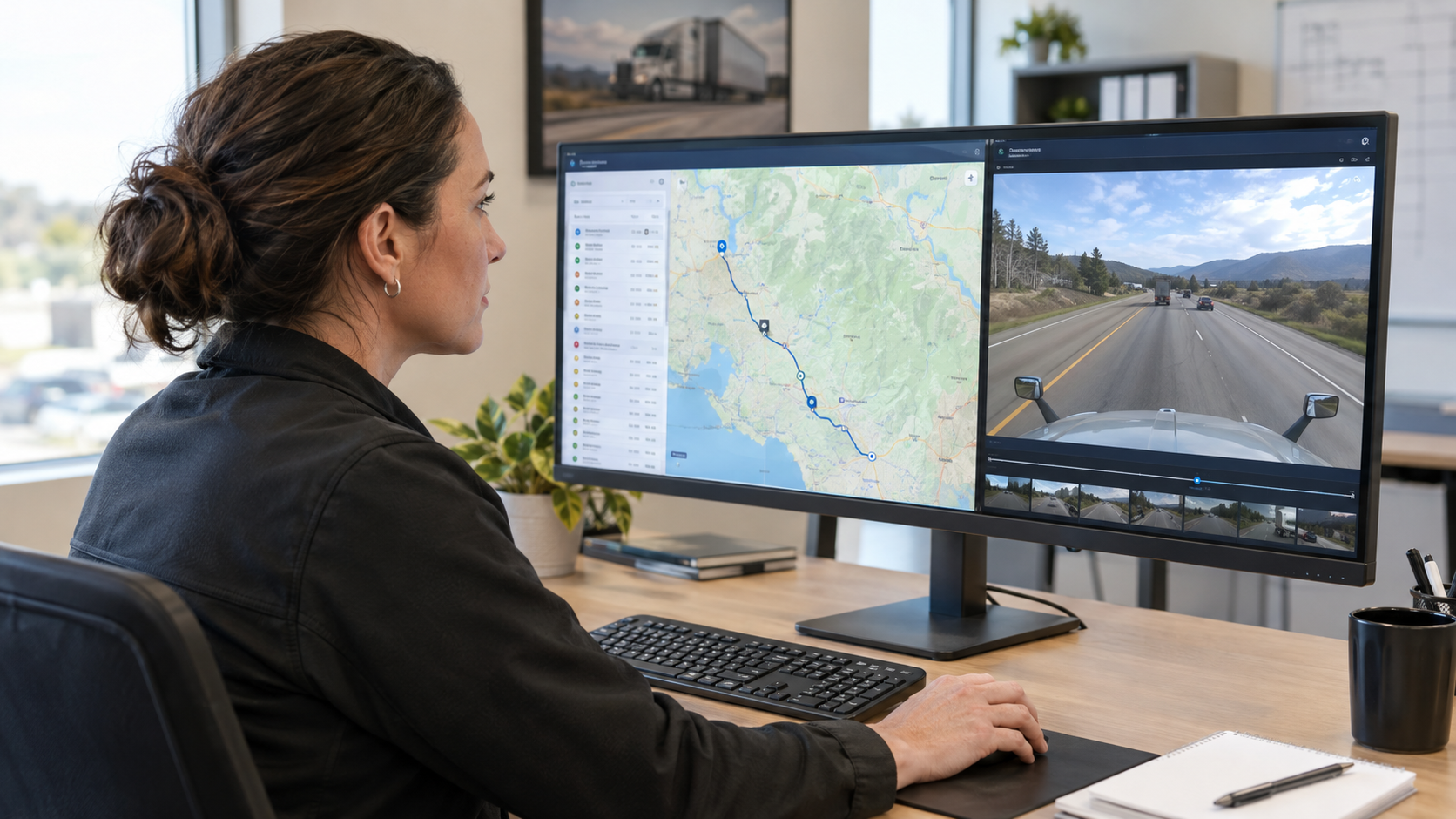
The more useful distinction in a platform evaluation is whether GPS data integrates directly with the video layer. A platform that links a triggered event to a simultaneous map position and a camera clip gives fleet managers a complete picture without cross-referencing multiple systems. For customer-facing operations, that integration supports faster dispute resolution. When a customer reports that a driver arrived late, left too early, or behaved unprofessionally, corroborated GPS and video evidence closes the loop quickly without a lengthy internal investigation.
Safety and Coaching Tools: Where ROI Tends to Concentrate
Driver safety features have moved well beyond simple speeding alerts. Modern platforms surface harsh braking, aggressive cornering, rapid acceleration, and in driver-facing camera configurations, distraction and phone use events. The value of these features depends heavily on whether the data connects to a repeatable coaching process. Alerts without a workflow generate noise. Alerts tied to driver scorecards, documented review conversations, and tracked behavioral change produce measurable outcomes.
The return on this investment can be significant. Sam Lansberry II, Founder of Lansberry Trucking, put it directly after implementing connected cameras across his 80-truck fleet: "I don't view our investment in SureCam as a cost; it's a profit center. Last year alone, our claims losses were reduced by over 80%." That framing reflects a meaningful shift in how leading fleet operators approach safety technology: not as a compliance expense, but as a lever on total operating cost.
When evaluating safety features, look for configurable alert thresholds you can tune to your operation rather than factory defaults, a clear coaching workflow that does not require a third-party managed service, and the ability to export driver scorecards for internal reporting. Some platforms offer AI-powered event filtering that reduces false positives before alerts reach the manager's queue. This detail matters more than it sounds: alert fatigue is one of the most common reasons fleet safety programs lose traction after implementation.
Maintenance Management: An Overlooked Cost Driver
Maintenance is the feature category most likely to deliver cost savings that do not show up in an accident report. Fleets following recommended maintenance schedules typically see vehicles last 30 to 40% longer than those managed reactively. [VERIFY BEFORE PUBLISH: statistic sourced from SureCam Fleet Maintenance page summary; confirm primary external source before publish.] Preventive maintenance also costs a fraction of emergency roadside repairs when measured across a fleet's operating life.
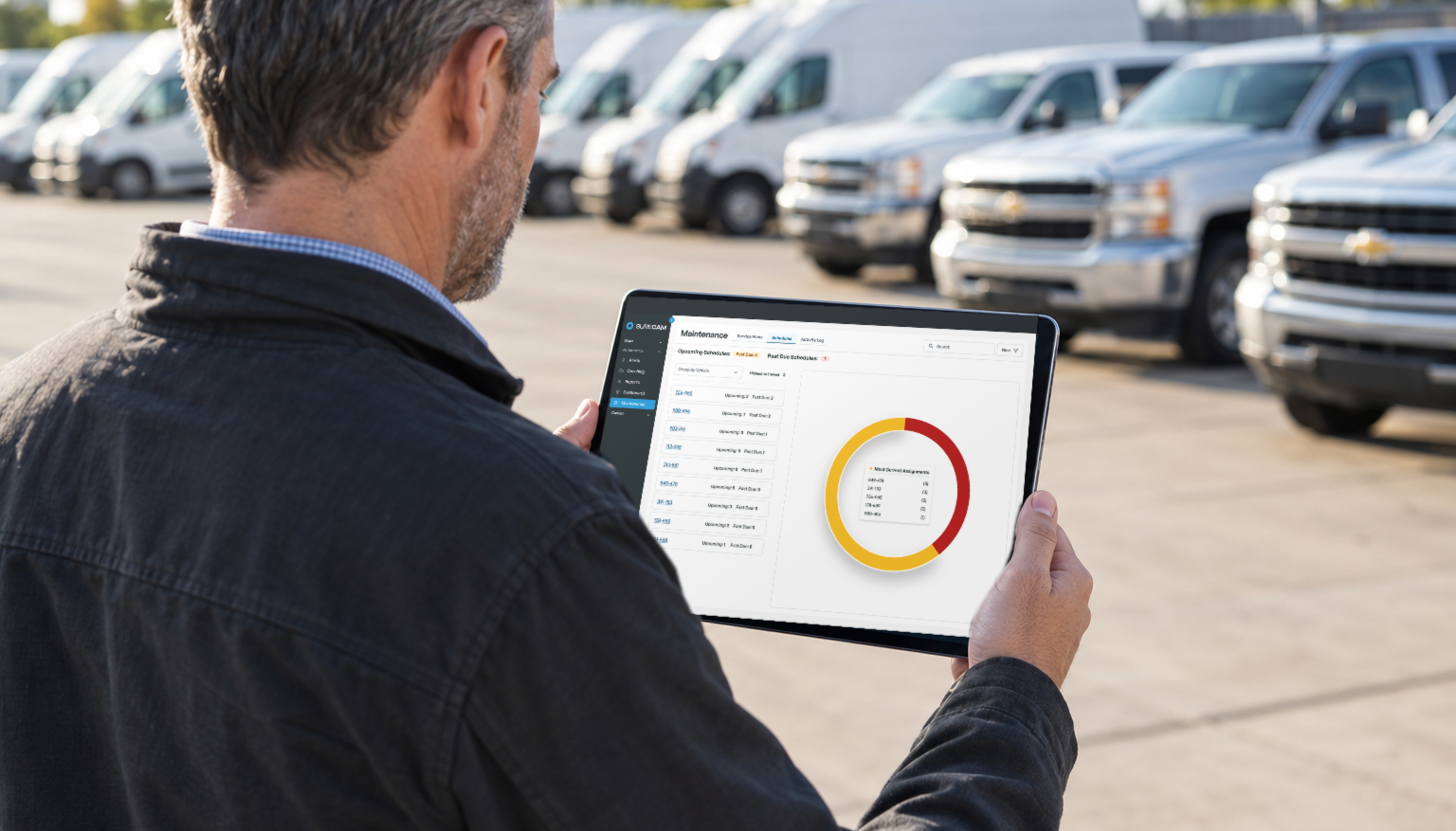
A capable maintenance module should schedule services by odometer, engine hours, or calendar interval, and send automated reminders before services come due. Centralized service history matters as much as scheduling: logs that capture work completed, parts used, vendors, and cost allow fleet managers to spot vehicles generating disproportionate repair expense. That visibility supports better replace-versus-repair decisions rather than discovering a problem vehicle only after it fails mid-route.
One additional consideration: maintenance tracking built into the fleet platform supports warranty compliance. Missed service intervals can void manufacturer warranties on vehicles still within their coverage window, a cost that tends to arrive without warning and without any corresponding record in a platform that does not log service history.
Matching Platform Complexity to Your Operation
Not every feature in a modern fleet management platform serves every fleet. Several categories that matter deeply for long-haul carriers and compliance-heavy operations carry limited value for regional and local commercial fleets. Matching platform complexity to operational reality is one of the most consequential decisions a buyer can make.
The table below maps common platform features to the fleet types where they typically deliver the most value.
| Feature |
Most Commercial Fleets |
Depends on Operation |
ELD / Long-Haul Focus |
| Connected video with auto-upload |
✓ |
|
|
| GPS tracking and trip history |
✓ |
|
|
| Driver safety alerts and coaching |
✓ |
|
|
| Maintenance scheduling and history |
✓ |
|
|
| ELD / HOS compliance tools |
|
|
✓ |
| Dispatch and route optimization |
|
✓ |
|
| Load and freight document management |
|
|
✓ |
| Fuel card integration |
|
✓ |
|
| Live video streaming |
|
✓ |
|
Before signing with any platform, map your must-have features to your operational reality. A useful filter: will your team actively use this feature within the first 90 days of a contract? If the honest answer is no, that feature should not drive the evaluation.
The practical risk of over-buying on features is adoption failure. Platforms that demand too much from fleet managers and drivers simultaneously, between new dashboards, alert configurations, training cycles, and compliance workflows, tend to see lower utilization than simpler, focused tools. Lower utilization means the ROI case never materializes. A platform your team will run with consistently outperforms a broader platform that impresses on a demo and sits underused for the remainder of the contract term.
Questions Worth Asking Every Vendor
The evaluation questions that reveal a platform's true fit often lie outside the standard demo script. These are worth raising directly in every vendor conversation, regardless of platform size or positioning. How a vendor responds to them often tells you as much as the demonstration itself.
Start with data ownership. Who controls the footage, and what access does the customer have independently of the vendor? This question separates platforms that treat video as an operational asset from those that treat it as a proprietary data stream. Follow that with a direct question about incident footage retrieval: does video upload automatically on a trigger, or does retrieval require manual action or a managed-service workflow? Ask specifically what happens to footage captured at the moment a camera sustains physical damage in a collision.
Ask about the alert workflow in practical terms. How does the platform handle high alert volumes? Does AI filtering reduce false positives before alerts reach the fleet manager, and can the thresholds be configured? Alert fatigue is a real operational risk, and how a platform manages alert volume reveals something about whether it was designed for long-term use or demo performance.
Integration depth matters more than integration lists. If your fleet already uses an ELD, a telematics platform, or a specific dispatch tool, ask for documentation and request reference customers who have made that specific integration work in a production environment. A listed integration and a tested, maintained integration are not the same thing.
Finally, probe post-implementation support. Implementation-phase support tends to be standard across vendors. The question is what happens six months after go-live when something breaks or a new driver needs onboarding. Ask what response time commitments look like, whether you will have a named contact, and how you reach the team outside of a ticket queue. Support quality at that stage often determines whether a platform delivers long-term value or becomes a cost your fleet is locked into.
Choosing the Right Platform for Your Fleet
Evaluating all-in-one fleet management software comes down to a clear discipline: match features to the problems your fleet actually needs to solve. A platform with the right safety tools, clean video integration, and a support model that stays engaged after installation will consistently outperform a broader platform your team only partially adopts.
SureCam offers a focused video telematics platform with connected dash cams, GPS tracking, equipment and asset tracking, and maintenance management built for commercial fleets that do not need ELD or to track HOS. To see how it works for your operation, book a demo or explore SureCam pricing.