Improve fleet safety, reduce operating costs, and optimize field performance with an easy-to-use platform for video, GPS tracking, driver coaching, maintenance, asset tracking, and real-time fleet insights.
Home Blog The Best Motive Alternatives for Non-ELD Fleets in 2026
21 Aug 2026 driver coaching
The Best Motive Alternatives for Non-ELD Fleets in 2026
The Best Motive Alternatives for Non-ELD Fleets in 2026
Posted On: 21 Aug 2026Tagged: driver coaching,Fleet Safety,dash cams,fleet management,fleet risk managementWritten by: Rob FreedmanShare this page:
The Best Motive Alternatives for Non-ELD Fleets in 2026
13:25
Which Motive Alternative Fits Your Fleet?
Motive suits regulated carriers that need ELD compliance and Hours of Service automation built into a single platform. For unregulated fleets running field service routes, construction vehicles, or local delivery, that compliance infrastructure adds cost without operational return. The leading alternatives include SureCam. The right choice depends on whether the fleet needs a full compliance stack or a focused, video-first fleet management platform built around incident documentation, AI-powered driver coaching, and claims defense. This guide covers where each alternative fits, what to prioritize in the evaluation, and how to avoid replicating the same mismatch with a different vendor name on the contract.
Why Non-ELD Fleets Outgrow Motive
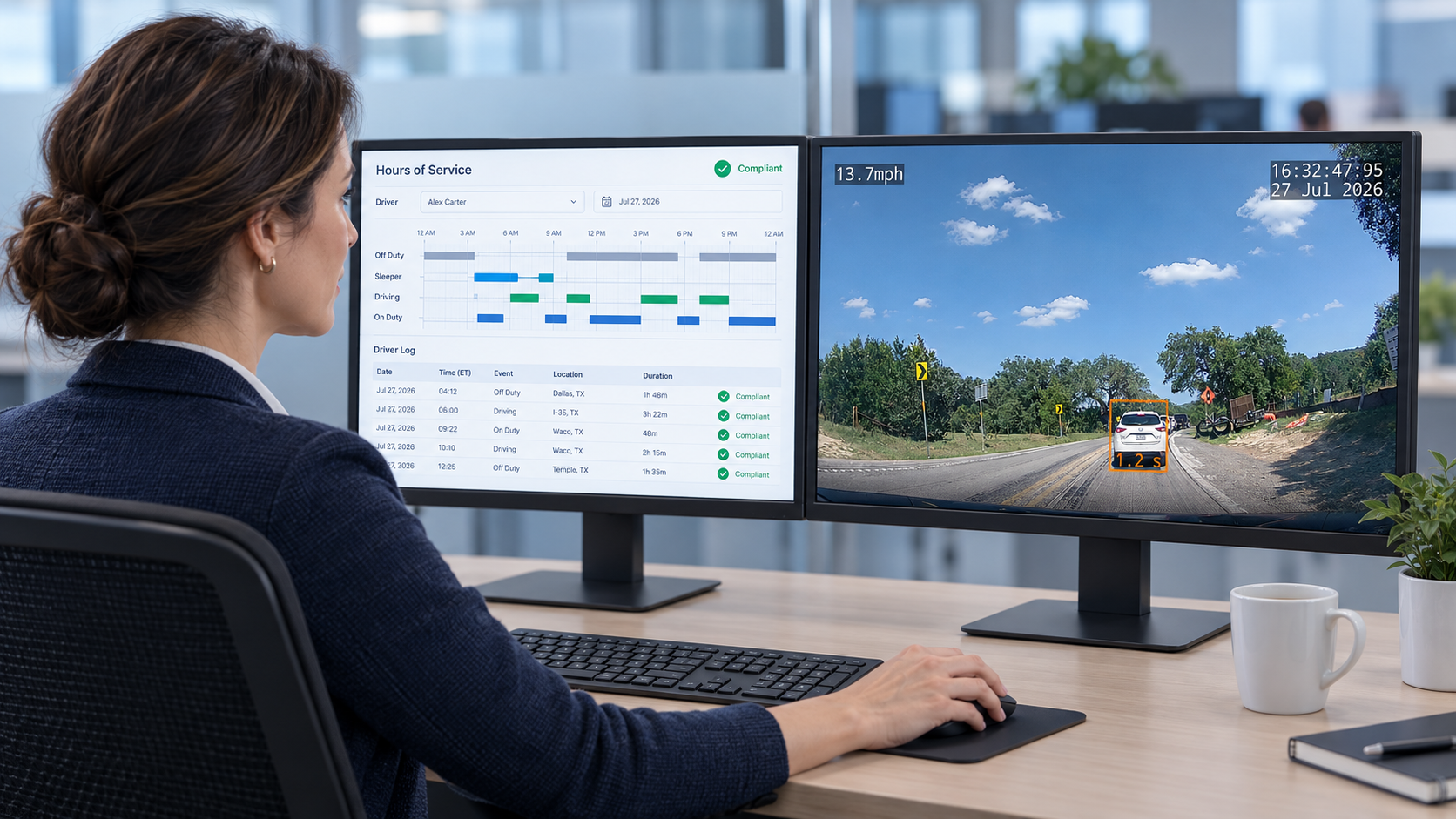
Unregulated fleets that adopt Motive pay for a compliance architecture built for a different regulatory situation. Motive's core product addresses Hours of Service tracking, DVIR workflows, and CSA score management: the requirements federal regulations impose on carriers subject to HOS rules. For those carriers, the platform depth delivers clear value. For service companies, HVAC contractors, construction firms, and local delivery operators running vehicles outside those requirements, the same architecture becomes overhead without a corresponding payoff.
This is a fit problem, not a product quality problem. Motive does what it promises. The question is whether what it promises matches what the fleet actually needs. A 50-truck electrical contractor dispatching crews on residential service routes does not operate under federal HOS requirements. When that fleet adopts Motive, it pays into a compliance-first design that was built to serve a different kind of operation entirely.
The ELD Compliance Tax
Non-ELD fleets using Motive commonly encounter the same pattern: dashboards built around compliance data the operation does not generate, configuration options for HOS rules the fleet does not follow, and default reports built around metrics no one on the team reviews. The platform's core value metrics (HOS violations prevented, DVIR completion rates, CSA scores improved) matter for regulated carriers. For a field service company dispatching 50 vans across suburban routes, those same metrics register as noise the team has to filter out rather than act on.
The cost compounds across the contract term. A per-vehicle monthly fee that bundles ELD modules the fleet never activates represents overhead paid without recovery. For a 40-vehicle operation on a multi-year contract, the gap between capability paid for and capability actually used becomes a meaningful recurring line item with no offset.
Platform Complexity Without a Compliance Payoff
Motive has grown from its ELD origins into a broad fleet platform. AI cameras, fuel cards, workflow automations, and outcome confirmation tools now sit alongside compliance management in the product suite. For large regulated fleets running complex dispatch across multiple divisions, that breadth produces compounding value at every layer of the operation. For a mid-sized field service company focused on whether drivers document job arrivals correctly and respond to incidents with video evidence, the expanded platform surface produces a different result.
Training drivers on a system with more capability than the job requires adds friction at rollout. Managing dashboards that generate data points no one has an action plan for adds ongoing administrative drag. The practical outcome: a sophisticated platform sits mostly unused, accessed for a narrow slice of its total capacity, while the per-vehicle fee reflects the full feature set regardless of how much of it actually runs.
What to Prioritize When Evaluating a Motive Replacement
Before running demos, narrowing the evaluation to capabilities that drive ROI for non-ELD field operations prevents the same misalignment from repeating with a different logo on the invoice. Five dimensions separate platforms that solve the actual problem from those that repackage it differently.
Real-time video access, no physical retrieval required.Network-connected cameras that upload footage automatically on event detection represent the minimum bar for commercial field operations. Any alternative that requires SD card removal or manual download creates the same gap: no footage when an incident occurs at 11 PM at a remote job site, no clip available for coaching by the following morning. Cellular connectivity is not a premium feature tier for service and construction fleets. It is what makes the camera investment operationally useful rather than a documentation gap waiting to surface at the worst possible moment.
GPS and driver behavior data tied directly to video.Location history without video context and video without location data each solve half the problem. Platforms worth evaluating link harsh braking alerts, speeding events, and route deviations to the corresponding footage at the correct timestamp. That linkage makes coaching conversations evidence-based rather than policy-based, and it turns incident documentation into something the insurance team can actually act on rather than argue around.
Data ownership that stays with the fleet. Some platforms retain rights to footage or restrict access during billing disputes or at contract termination. For any fleet that relies on camera footage for insurance claims, customer dispute resolution, or litigation, that language belongs in a contract clause before signature, not as a verbal question during the sales call. Confirm it explicitly with specific contract language.
Support scaled to the actual team. Platforms engineered for enterprise compliance operations often assume a dedicated telematics administrator or internal IT resource. Non-ELD service fleets rarely carry that capacity: the person managing the platform also manages dispatch, handles customer escalations, and runs the safety program. Response time, a named account contact, and accessible support by phone and email are primary operational factors for those teams, not secondary ones.
Integration with existing telematics or ELD systems. Fleets already running a separate ELD or GPS system need a camera platform that works alongside it rather than forcing a full stack replacement. Confirm API availability, what the integration covers, and what the setup timeline looks like before committing to a trial.
Best Motive Alternatives in 2026
The table below compares the two most directly relevant options for non-ELD fleets across the dimensions that matter most to service, construction, and local delivery operations.
Non-ELD service, construction, and local delivery fleets
Overkill risk for non-ELD fleets
High
Low
SureCam
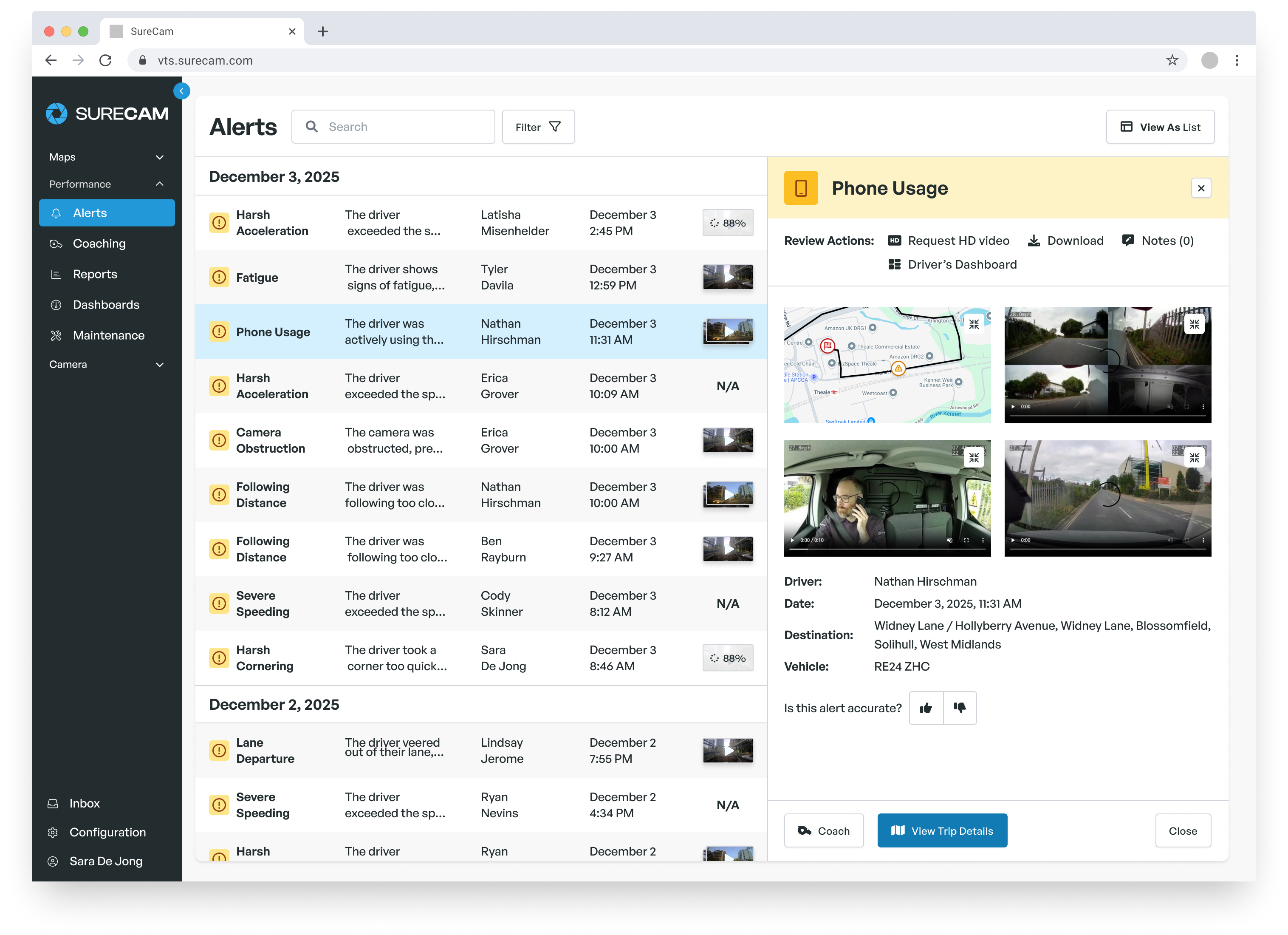
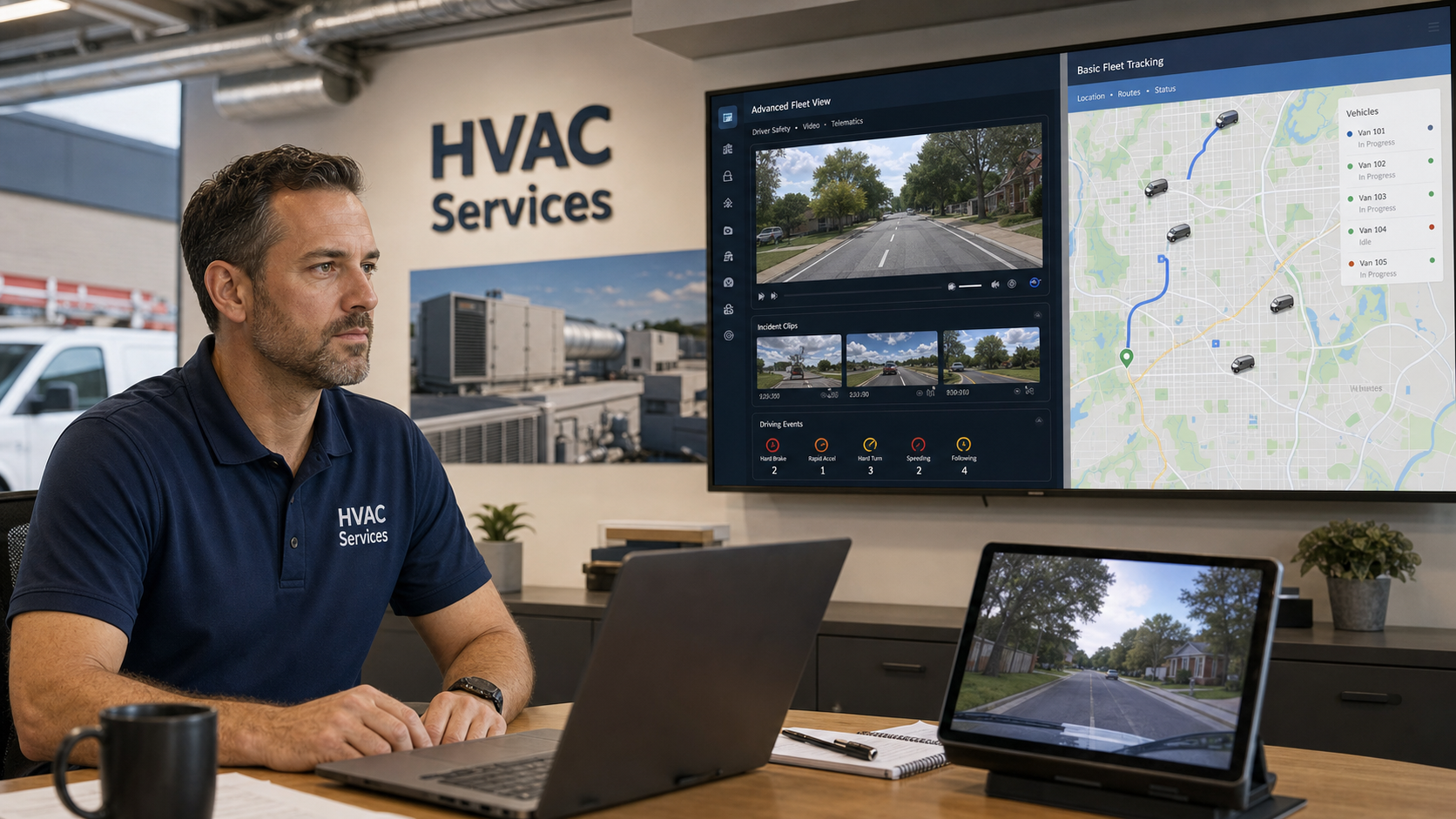
SureCam operates as a video-first telematics platform without a native ELD module. Every camera ships cellular-connected, which means footage uploads automatically on event detection. No SD card retrieval, no manual download, no overnight delay waiting for a driver to return a card at the depot. GPS integrates into each unit, surfacing live location, trip history, and driver behavior alerts. Speeding, harsh braking, and sharp cornering events link to the corresponding footage at the correct timestamp, making coaching conversations evidence-based rather than reliant on a driver's recollection.
For non-ELD fleets, the value sits precisely in what the platform covers and what it omits. SureCam addresses the capabilities that produce measurable results for service and construction operations: cellular incident footage, false claim defense, GPS-based dispatch visibility, and driver coaching from event-triggered alerts. HOS workflows, fuel card management, and compliance automation that non-regulated fleets never activate are not bundled into the per-vehicle cost. The feature set reflects the actual job rather than a compliance architecture the fleet has no regulatory reason to run.
Data ownership stays with the fleet. That distinction proved decisive for SAV Express, a 100-vehicle dry goods carrier based in Coon Rapids, Minnesota. A previous telematics provider had claimed ownership of the fleet's footage, sharing it with SAV Express on the vendor's terms rather than giving the carrier direct control. SAV Express switched to SureCam specifically for the data ownership model. Since adoption, the company has documented over $1 million in repair and claims savings. In one incident, a third-party truck backed into a parked SAV Express vehicle at a truck stop; footage the carrier controlled directly recovered more than $10,000 in damages that would otherwise have required absorbing the loss without recourse. Matt "Jake" Jacobson, Director of Fleet Operations, framed the difference plainly: "It suddenly puts in the truth of the matter rather than the way that the other party wants to shed light on the situation."
Running a Clean Evaluation
The most common mistake in a platform switch: letting the vendor's demo agenda shape the evaluation rather than the fleet's actual use cases. Every platform performs capably in a controlled demonstration with curated scenarios. The evaluation generates its real value when each vendor must respond to the fleet's specific incidents from the past 12 months rather than a feature tour built for maximum impression. Require it from every candidate before moving to a pilot.
Before the first demo, document the three or four incidents that cost the fleet the most in dollars, driver hours, or management time over the past year. Take those scenarios into each vendor conversation and ask directly how the platform would have handled each one. A vendor that redirects to unrelated feature highlights rather than engaging with specific scenarios is providing useful information about the support relationship that follows implementation.
Three questions worth requiring answers to in writing before any contract goes down:
Who controls footage access, and what happens to that access during a billing dispute or at contract termination? That answer belongs in specific contract language, not a verbal assurance during the sales process. Require the clause number and read it.
What does onboarding look like for a fleet without a dedicated telematics administrator? Ask for a specific timeline and a named point of contact, not a general commitment to support availability.
Which features are included in the monthly per-vehicle cost, and which can be excluded if the fleet does not use them? Non-ELD fleets overpay on bundled platforms by subsidizing compliance and workflow features that never activate.
Choosing the Right Motive Alternative
For non-ELD service, construction, and local delivery fleets, the platform decision reduces to a direct question: does the replacement match the actual job? Motive's compliance architecture carries real cost for fleets operating outside federal HOS requirements. Each alternative in this guide addresses a different portion of that gap, with different trade-offs in feature depth, pricing model, and integration flexibility.
SureCam fits fleets that prioritize cellular video, data ownership, and focused driver coaching without compliance overhead or platform complexity. The alternatives marked for editorial review in this guide may fit specific fleet types, existing telematics configurations, or budget constraints that SureCam does not address: the right answer depends on what the fleet is actually trying to solve.
A 30-day pilot using real incident data is the fastest path to validating fit before a full commitment. Any vendor unwilling to support a structured pilot against the fleet's actual use cases deserves additional scrutiny before a signature. Short on time? Check out our online 5-minute SureCam demo video here.
Posted On: 21 Aug 2026Tagged: driver coaching,Fleet Safety,dash cams,fleet management,fleet risk managementWritten by: Rob FreedmanShare this page: