The Fastest Path to a Dismissed Claim
Connected dash cam footage doesn't just help fight a false accident claim. It ends it. When a third party fabricates or exaggerates what happened, a timestamped, GPS-tagged video from a network-connected camera provides the kind of objective evidence no adjuster ignores and no claimant credibly contradicts. Most false claims reach litigation because liability stays unclear long enough for the other party to build a case. Clear it with video, and that timeline collapses.
Access speed makes the difference. An SD-card camera records the moment but requires physical retrieval of the card, manual download, and time the other party uses against you. A network-connected camera uploads footage automatically upon an event trigger, making it available from a web portal within minutes. That speed matters because the third party's insurer may file a claim within hours of an incident. Whoever presents evidence first shapes the narrative.
This piece covers both tracks: what to do if a claim is already in motion, and how to build a repeatable false-claim defense for the incidents not yet on the radar.
The Steps to Take When a Claim Comes In
The moment a driver reports a collision or a fleet receives notice of a potential claim, the clock starts. False or exaggerated claims gain traction fastest when the other party moves first. The process below assumes a network-connected camera system. Fleets running SD-card cameras face a slower version of the same sequence: physical card retrieval, manual download, and typically 12–24 hours before footage arrives.
(Driver was exonerated with the help of this video and cleared as not at fault, on the scene.)
Access the Footage Before the Other Party Moves
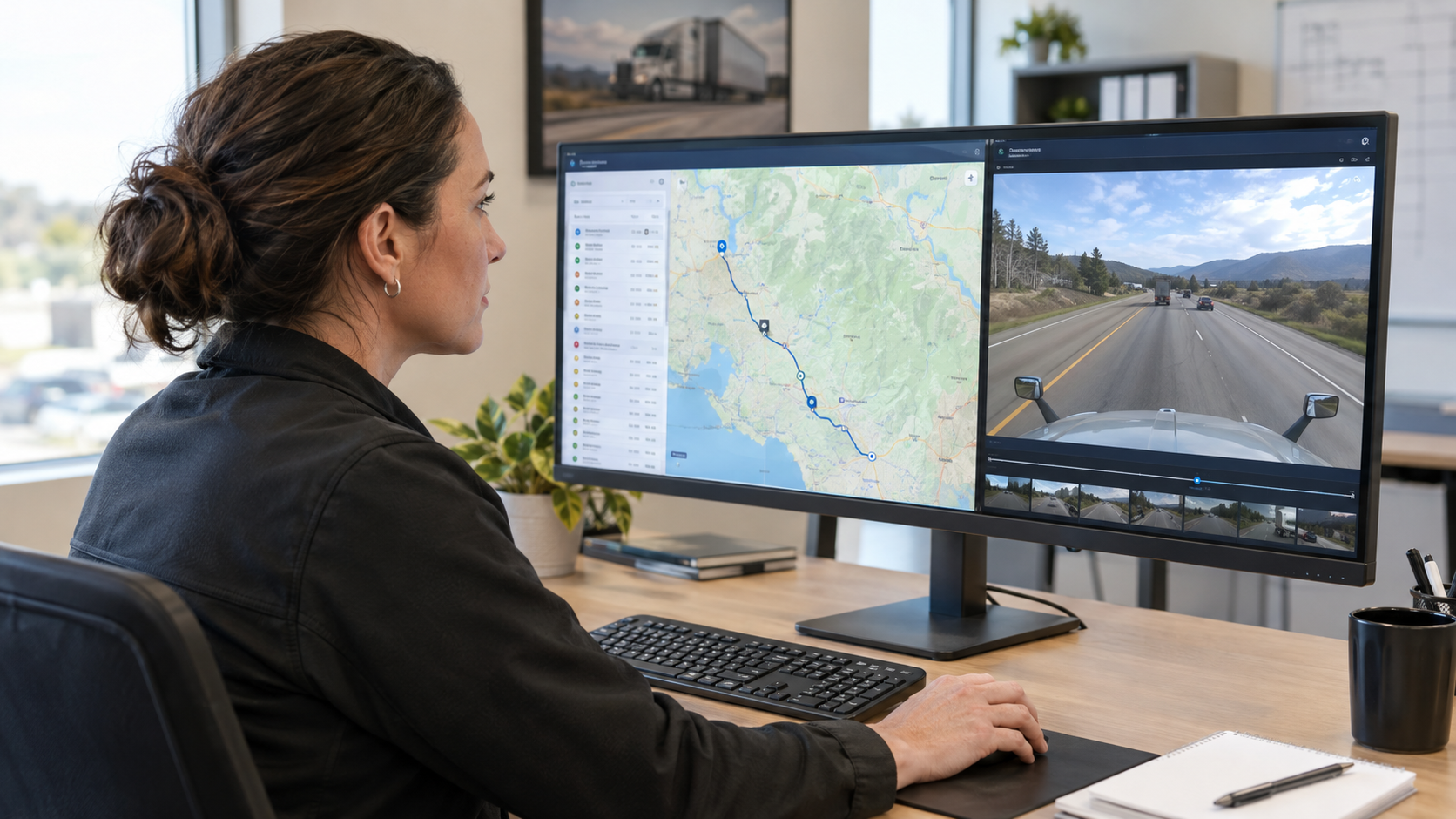
Log in to the camera platform immediately. Most connected systems store event-triggered video in the cloud within minutes of the incident. Search by vehicle, date, and time. Download and archive a local copy in addition to preserving the cloud version, and label it with the incident date, vehicle ID, and driver name.
The footage to pull includes the primary event clip plus any continuous recording from the surrounding window, typically five minutes before and after the trigger. That surrounding context matters. Vehicle position, speed, and lane placement in the minutes before a collision can resolve disputes that the event clip alone cannot. A driver who held the lane, signaled correctly, and braked proportionally before impact presents a very different picture from one who did not. The video shows both.
Notify Your Insurer Before the Third Party Files
First Notification of Loss (FNOL) represents the moment where the fastest-acting fleets consistently win false claims. Contact your insurer or broker the same day the incident occurs, even when the driver believes they bore no fault. Provide the vehicle ID, incident time, location, and a note that footage is available and ready to share.
A third party that files first creates an initial record your insurer then reacts to. File first with video evidence, and you control the frame. Adjusters who receive a clean video file within hours of an incident resolve those claims faster and at lower cost than claims that arrive days later through written exchanges and back-and-forth calls. The claims process does not inherently favor either party. Speed and evidence favor the party that shows up first with both.
Submit the Video Itself, Not a Description of It
Do not send a paragraph explaining what the video shows. Send the video. Written descriptions require trust and leave room for interpretation. A clear video of the actual incident does not. When transmitting footage to your insurer, include the event clip with a visible timestamp, GPS track data for the relevant period, and G-force readings from the incident trigger when your platform exports them. Most connected camera platforms allow you to share a direct link or export a single file bundling video and supporting data together. Use that format when available.
Completeness matters in that submission. An insurer or attorney reviewing a claim wants video, location data, and a speed record together in a single package. Three items presented together mean a cleaner file, a faster review, and a more predictable outcome.
What Footage Proves That a Driver Statement Cannot
A driver's account of an incident carries weight, but it draws on memory under stress and comes from one perspective. The opposing party presents their own account. Adjusters hear two conflicting versions and begin negotiating rather than deciding. Video removes the negotiation.
A network-connected dash cam with GPS captures direction, speed, lane position, vehicle proximity, and the precise moment of impact. It records driver inputs in the seconds before contact, the road conditions, and in dual-facing systems, in-cab behavior at the time of the event. That data does not shift based on who tells the story. A false claimant who asserts a fleet vehicle ran a red light either has footage that supports the claim or footage that contradicts it. No interpretive middle ground remains.
The data layer amplifies the video. G-force readings confirm whether impact severity matches a claimed injury. GPS records confirm the vehicle's position against the claimed incident location. Speed data counters exaggerated speeding allegations. Fleet managers who understand the full evidentiary package their camera system produces deploy that package far more deliberately in claims negotiations than those who treat the camera as just a video recorder.
How This Looks in Practice: Yuill & Dodds
Among the fleets with the most documented experience defending against fraudulent and fabricated claims, Yuill & Dodds offers a clear illustration. The haulage and logistics company runs more than 100 vehicles from its base near Hamilton, Scotland, and operates across the UK. The company deployed SureCam network-connected cameras after identifying false claims as a growing liability. Two incidents illustrate how the footage changed outcomes.
The first involved a car that deliberately braked without cause in front of a company vehicle, positioning the encounter as a rear-end collision with Yuill & Dodds at fault. The camera footage showed the deliberate braking clearly. The third-party claim did not survive.
The second involved a passenger transported away from a scene on a stretcher, with a personal injury claim filed shortly after. The camera told a different story. Footage showed the passenger fit and well before responders transported her away. Yuill & Dodds contested the false injury claim with that footage directly.
Brian Yuill, Managing Director, described their standard protocol: live email and SMS alerts fire on every collision, footage reaches the web portal within minutes, and the team routes details to their insurance partner through FNOL as a standing procedure.
"Using the vehicle cameras, we are immediately alerted of an incident, so we can ensure that the driver is safe, while quickly assessing liability and sending details to our insurance partner." — Brian Yuill, Managing Director, Yuill & Dodds Ltd.
The pattern their experience demonstrates holds consistent across fleets that have adopted the same approach: fast access, fast notification, and clean evidence submitted before the opposing party builds a narrative.
Building a Defense Before the Next Claim Arrives
Handling false claims most effectively comes down to preparation, not reaction speed. The fleet managers with the strongest track records set up the right conditions at the hardware and process level long before any claim arrives.
The first decision involves camera type. SD-card cameras create a retrieval problem in a time-sensitive situation. A connected camera uploads footage automatically and makes it accessible within minutes. For a fleet dealing with false claims, that difference in access time frequently determines whether a claim gets contested effectively or becomes a payout. The connected camera does not cost more per incident. It creates fewer of them.
The second decision covers alert configuration. A network-connected camera system should have collision and harsh-event alerts set up and routed to the right people from day one. The alert that arrives within minutes of an incident triggers the FNOL process fast enough to matter. Alerts that go to a general inbox, or to someone who reviews them weekly, do not perform the same function.
The third decision centers on process. Establish in advance who pulls footage, who contacts the insurer, and in what order. A verbal understanding does not create a repeatable process. A written one, reviewed with drivers and dispatchers, converts a reactive scramble into a controlled response. The fleets that win false claims consistently treat camera footage as operational evidence and the FNOL process as a standard operating procedure, not as an emergency response they figure out as they go.