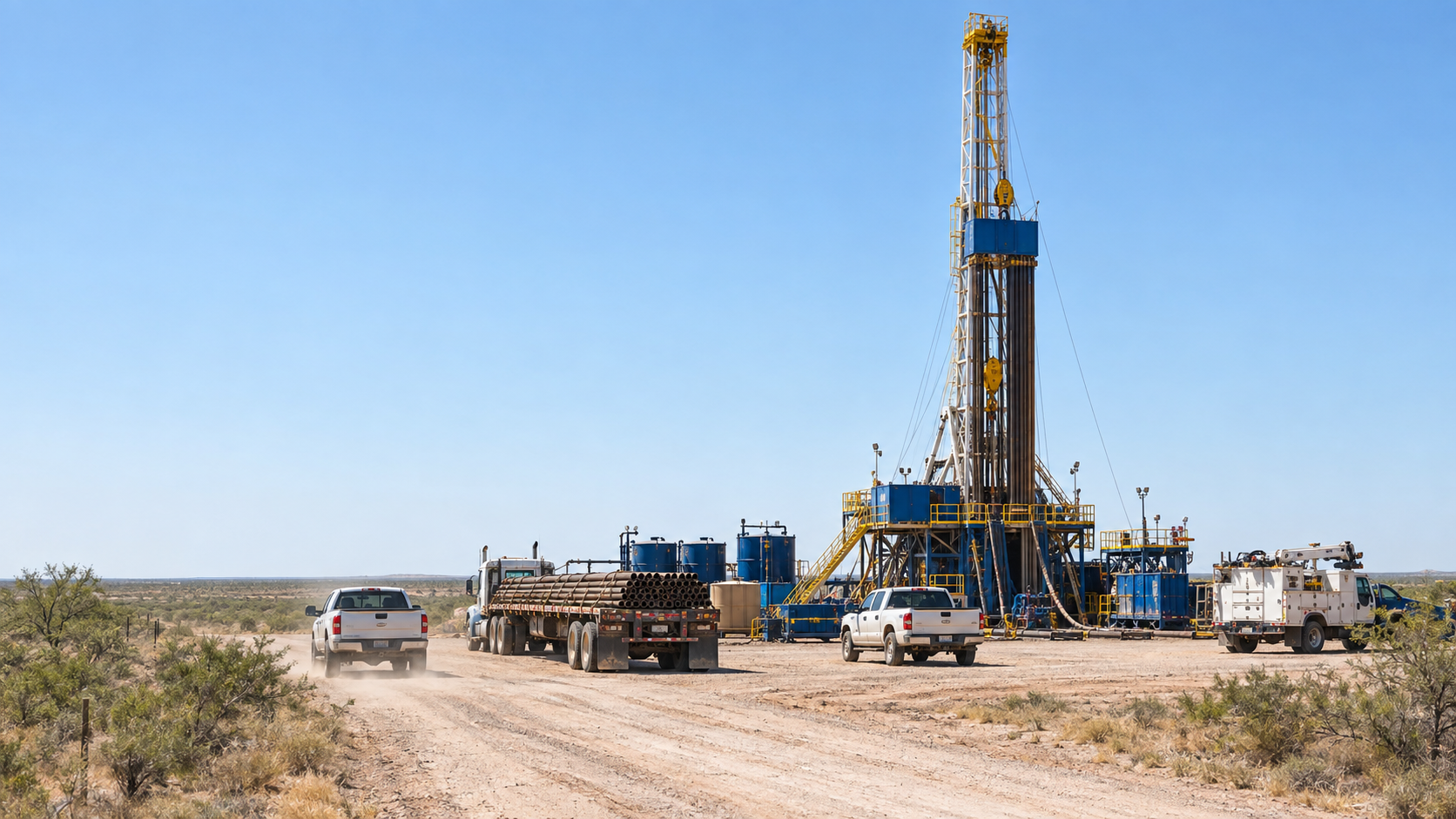
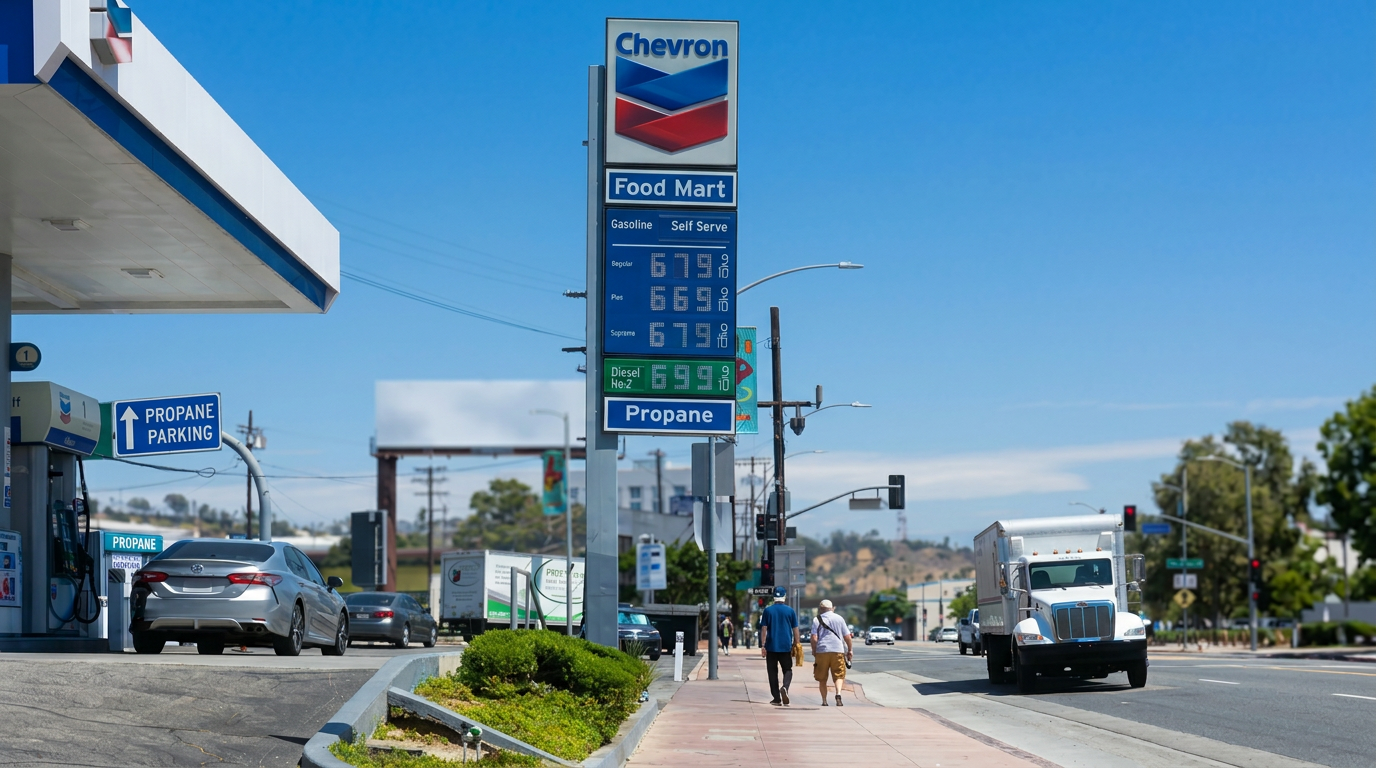
Fuel prices have spiked sharply this week, with both crude and retail gasoline moving to their highest levels since mid‑2022. Fuel spikes like this immediately raise operating costs, compress margins, and force fleet managers to adjust pricing, routing, and replacement plans much faster than usual. These fuel price spikes hit already tight P&Ls, forcing teams to find new solutions.
GPS fleet tracking has been sold as the fix for years. But GPS alone, sitting in one platform while maintenance history lives in a spreadsheet and dash cam footage requires a separate login, stops well short of its potential. The money is not in the GPS data itself. It's in what happens when GPS, video, and maintenance work together in one place.
The Real Drain on Fleet Budgets in 2026
Operating costs for commercial fleets have risen across the board. Fuel remains volatile. Unplanned repairs are now routinely 3–4 times more expensive than scheduled preventive maintenance. Insurance carriers are tightening underwriting standards and asking harder questions about fleet safety programs before quoting renewals.
For mid-sized fleets without dedicated safety directors or large back-office teams, the pressure lands on one or two people who are already managing dispatch, driver issues, and customer calls. There is rarely time to proactively mine data across three or four disconnected tools.
That's where GPS fleet tracking with full telematics integration changes the equation. Not just by showing where trucks are, but by connecting location data to what drivers are doing, how vehicles are being treated, and when maintenance is due.
What GPS Fleet Tracking Actually Fixes
Route efficiency and idle time reduction
Idle time is quiet money walking out the door. A truck idling for 30 minutes a day across a 50-vehicle fleet adds up to tens of thousands of dollars in wasted fuel annually. GPS fleet tracking surfaces idle time by vehicle and by driver, turning a vague suspicion into a concrete number a fleet manager can act on.
Route optimization goes further. Real-time tracking lets dispatchers redirect drivers around congestion, assign the closest available vehicle to a new job, and eliminate the unauthorized detours that inflate mileage and wear. Fewer miles driven means less fuel consumed, less wear, and longer intervals between services.
Historical GPS data also reveals patterns that aren't obvious in the moment. Routes that looked efficient on paper may consistently add 15 minutes due to peak-hour bottlenecks at a specific intersection. Over a month, that adds up to lost service capacity, and GPS data makes the case for route adjustments in a way a driver's verbal report never will.
Accountability that changes driving behavior
Speeding, hard braking, and aggressive acceleration are not just safety concerns. They are fuel efficiency problems. Aggressive driving can increase fuel consumption by 15–30% compared to smooth, consistent driving. GPS fleet tracking ties driving behavior data to individual vehicles and, with dash cam integration, to individual drivers.
When drivers know their routes are tracked and their driving style is visible, behavior tends to improve. That's not speculation; it's a pattern fleets see consistently after implementation. The result is better fuel economy across the fleet, fewer preventable wear events, and a driver coaching conversation grounded in data rather than assumptions.
Why GPS and Dash Cam Integration Multiplies the Value
GPS tells a fleet manager where a truck was. Video tells them what happened while it was there.
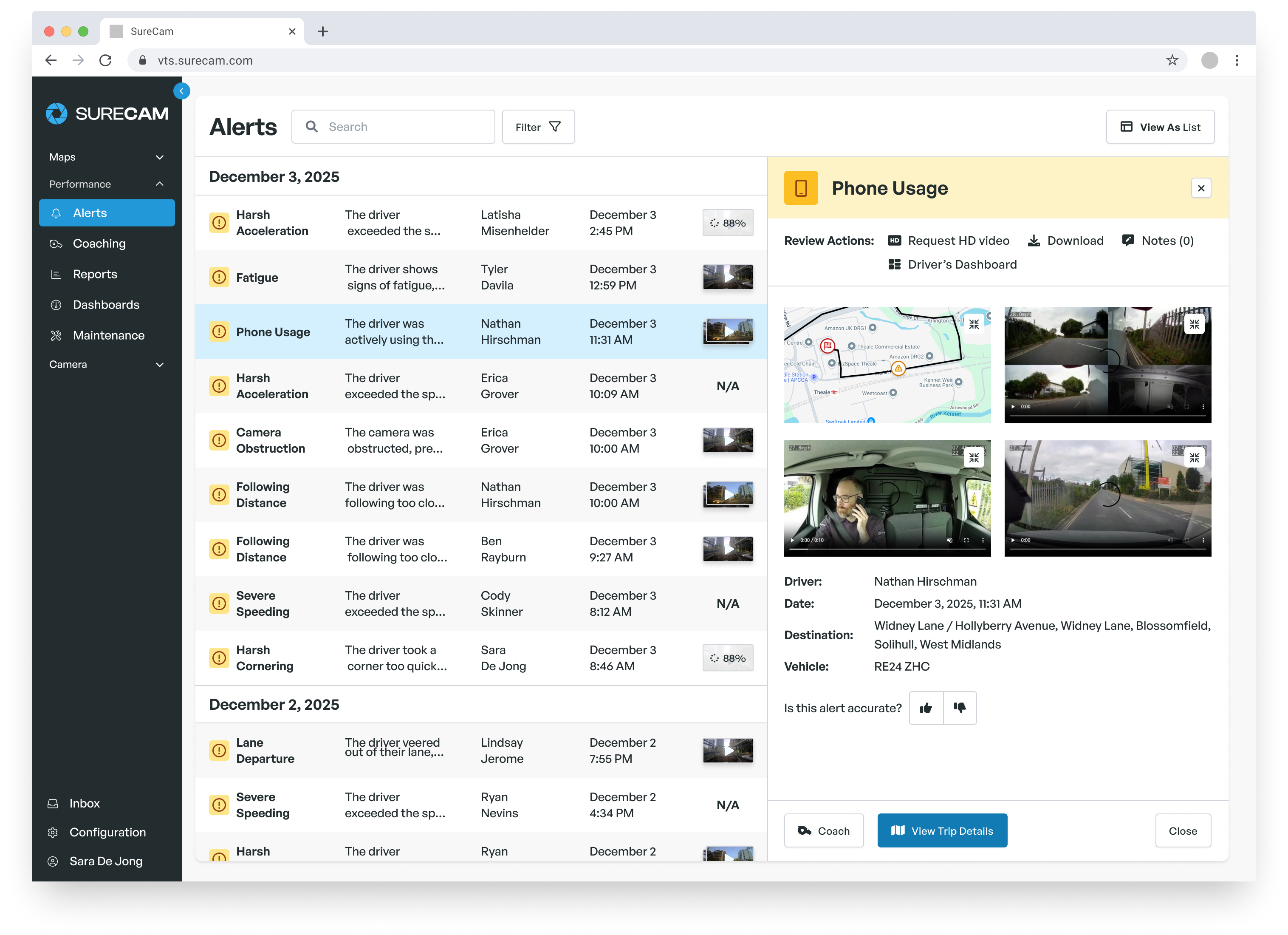
That combination closes gaps that GPS alone cannot cover. A vehicle that logs a hard-braking event near a job site is one data point. Pairing that event with dash cam footage showing road conditions, driver behavior, and the full context turns it into a coaching moment, or an exoneration, depending on what the footage shows.
For fleet managers fielding complaints from customers about late arrivals or unsafe driving, GPS and dash cam integration provides a defensible, timestamped record. No more he-said/she-said. No more paying out claims that footage would have refuted.
From a cost standpoint, GPS and dash cam integration also accelerates claims resolution. Incidents that drag on for months while liability is disputed carry real costs in administrative time, legal exposure, and insurance impact. Video evidence moves those cases toward resolution faster, and in the majority of cases where the fleet driver is not at fault, it prevents payouts entirely.
The Platform That Ties It Together: Maintenance in the Loop
Here is where mid-sized fleets leave the most money on the table. GPS and video are increasingly common. But maintenance management, for most fleets, still runs on spreadsheets, whiteboards, or a shop's internal system that no one in the operations office can access in real time.
The cost of that gap is high. Vehicles following recommended maintenance schedules typically last 30–40% longer than neglected ones. Preventive maintenance costs a fraction of emergency roadside repairs. And deferred maintenance doesn't just break down trucks; it quietly erodes fuel efficiency. A vehicle with worn tires, a dirty air filter, or low fluid levels burns more fuel on every route.
When maintenance tracking lives in the same platform as GPS fleet tracking and video telematics, a fleet manager sees the full picture from one dashboard. A vehicle flagged for a hard-braking pattern is also the vehicle that's 800 miles overdue for a brake inspection. A high-idle truck is also the one with an oil change coming up. Instead of catching problems after they become expensive, the operation shifts toward planned, proactive management.
SureCam's maintenance suite integrates directly with its GPS and video platform, setting automated reminders by mileage, engine hours, or calendar interval. Service history is logged per vehicle, including parts, costs, and vendor records. That data supports repair-versus-replace decisions, warranty compliance, and vendor negotiations, all from the same interface a fleet manager is already in every day.
What This Looks Like on the Ground
A field service fleet running 60 vans across three metro areas. Before integration, the operations manager spent hours each week correlating fuel card reports, calling the shop for vehicle status, and responding to customer complaints with incomplete information.
After deploying GPS fleet tracking with dash cam integration and unified maintenance management, the workflow changed. Idle time reports flagged two drivers responsible for a disproportionate share of fuel waste. Route adjustments based on GPS history reduced average daily mileage by 11 miles per vehicle. Maintenance alerts prevented two roadside breakdowns in the first quarter. And when a customer disputed a service window, footage resolved the complaint in under 10 minutes.
The ROI conversation is not abstract for fleets like this. It's fuel saved, hours recovered, and repair bills avoided.
Four Questions to Ask Before Your Next Vendor Evaluation
1. Does GPS data connect to driver behavior and video? Location data alone is not enough. The platform should link GPS events to dash cam footage and driver coaching workflows.
2. Is maintenance tracking integrated, or a separate subscription? Siloed maintenance tools add cost and require manual reconciliation. Look for a platform where service history, mileage-based reminders, and vehicle records live alongside GPS and video.
3. Can the finance team access the data they need? Controllers and operations directors need summary reporting on costs, incidents, and fleet utilization without requiring a full telematics login. Confirm reporting is accessible without creating dependency on a single user.
4. How long until ROI? 45% of fleet managers achieve positive ROI within 11 months of deploying integrated telematics and fleet management solutions. Ask vendors for benchmark data from fleets similar in size and industry.
Mid-Sized Fleets Deserve a Complete Picture
Enterprise trucking companies have had integrated fleet management software for years. The tools, the data analysts, and the IT infrastructure to run them have not always been accessible to the fleet manager running 40 service vehicles out of a regional yard.
That gap has closed. SureCam's approach puts GPS fleet tracking, AI dash cam integration, and maintenance management into a single, straightforward platform built for fleets that do not have the time or budget for complicated implementations. One subscription. One login. One place to see what's happening across the operation and take action before problems become expensive.
The savings are not hypothetical. They show up in the fuel report, the repair log, and the insurance renewal conversation.