What GPS Asset Tracking Does for Your Fleet
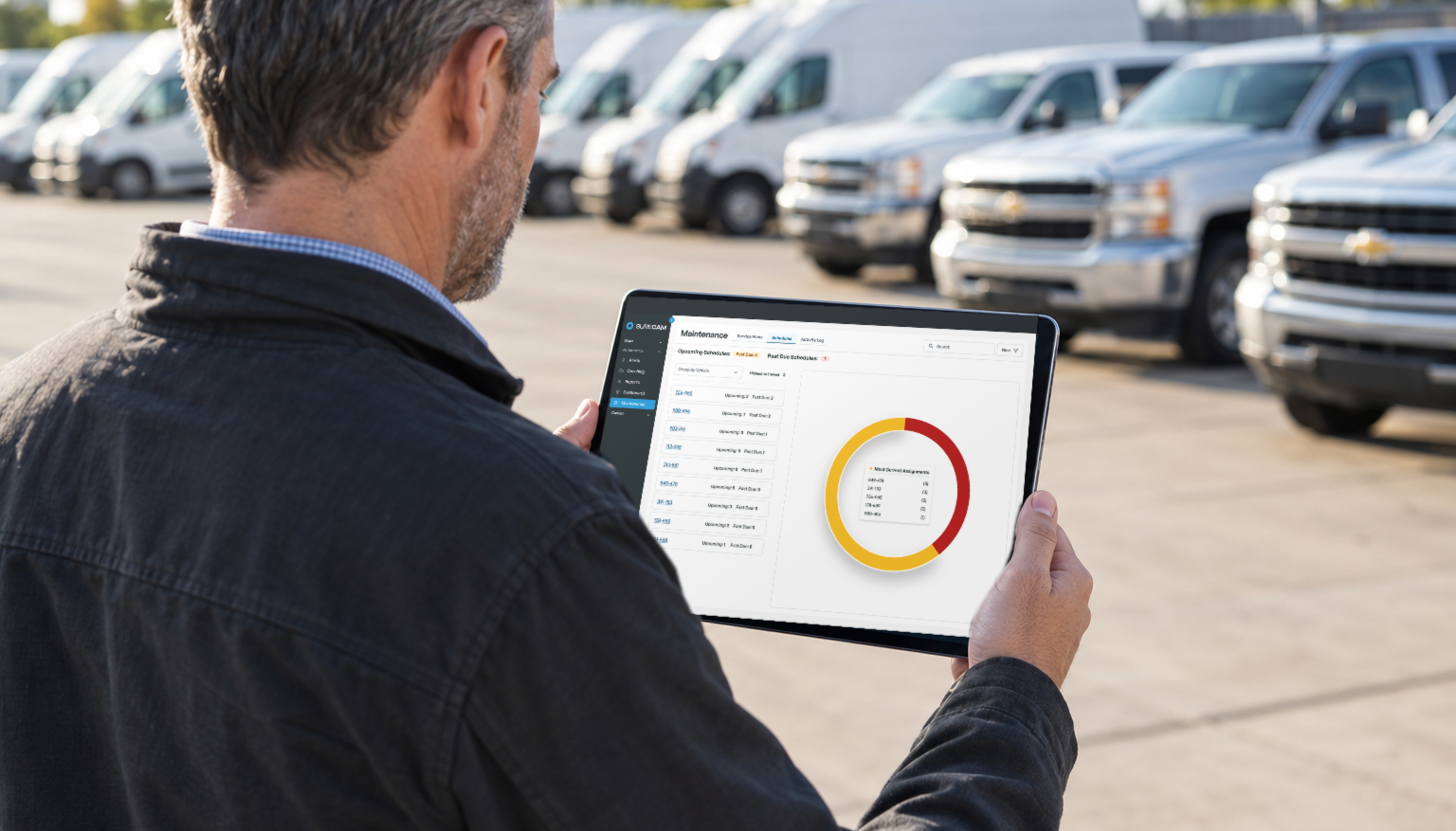
GPS asset trackers attach to non-powered equipment (trailers, generators, pumps, containers) and transmit location data over cellular networks, giving fleet managers real-time visibility into every asset regardless of whether it carries its own power source. For commercial and construction fleets managing equipment across multiple jobsites, that visibility converts directly into theft deterrence, reduced rental duplication, and faster site mobilization.
The distinction between tracking vehicles and tracking non-powered assets matters. Vehicle telematics run off the vehicle's own power supply and report continuously. Non-powered asset trackers run off an internal battery designed to last years at typical reporting frequencies, which makes the hardware requirements and deployment strategy fundamentally different from what most fleets already operate. Understanding that difference is the starting point for selecting the right solution.
The Business Case for Tracking Non-Powered Equipment
Equipment Theft and the Cost of Unrecovered Assets
Construction equipment theft is difficult to measure comprehensively. The National Equipment Register and National Insurance Crime Bureau identify delays in discovering and reporting theft, incomplete ownership records, and complex equipment identification systems as barriers to recovery. The financial impact can extend beyond the stolen asset to rental costs, project delays, and lost staff time. Unlike vehicle theft, which benefits from VIN-based recovery systems and well-established insurance protocols, non-powered equipment theft is harder to prosecute, slower to report, and frequently goes unrecovered. A stolen generator or trailer leaves a fleet carrying both the replacement cost and the rental expense to cover the operational gap while that replacement arrives.
Consider a 60-truck general contracting fleet running projects across four active jobsites in a metro area. Without GPS tracking on non-powered equipment, a missing trailer might not surface for 24 hours or longer, at which point recovery becomes unlikely. With real-time location data, a geofence departure alert can notify a fleet manager the moment equipment leaves an approved area, compressing the response window from days to minutes. That speed difference frequently determines whether an asset gets recovered or becomes an insurance claim.
The Operational Cost of Poor Asset Visibility
Theft gets attention, but the day-to-day operational cost of poor asset visibility often exceeds the theft risk for most fleets. When a project manager cannot confirm where a specific generator or pump sits, the path of least resistance is renting another one. Those rental decisions compound across a fleet. A single piece of equipment rented unnecessarily twice per month at typical construction equipment day rates adds a material cost line before the year ends, one that rarely appears as a distinct line item in fleet reporting.
Mobilization delays carry a similar cost. Crews arriving at a jobsite to find that a trailer or compressor moved to another site without a location update have to stop, make calls, and wait. That idle time multiplies across a fleet and ultimately comes out of the project margin. Knowing the precise location of every asset, updated on a configurable schedule, closes that gap before the delay hits the job.
What to Look for in a GPS Asset Tracker
Environmental Durability for Jobsite Conditions
Jobsite conditions test equipment hard. Temperature swings, vibration, mud, water, and chemical exposure are not edge cases; they describe an ordinary week on most commercial and construction sites. An asset tracker that fails under those conditions provides no data at the moment the fleet needs it most. When evaluating hardware, ingress protection ratings and environmental test certifications offer the most reliable indicators of real-world durability.
IP68 protection represents a minimum viable standard: it indicates the device survives sustained immersion in water. IP69K adds high-pressure, high-temperature jet wash resistance, which matters for equipment exposed to wash-down procedures on site. MIL-STD-810G testing across vibration, mechanical shock, salt fog, and temperature cycling provides additional confidence that the device holds up under sustained physical stress. A tracker that passes those standards costs more to manufacture than one that skips them, and that difference shows up in service life rather than in the spec sheet.
Battery Life and Transmit Frequency
The transmit frequency decision ranks as the most consequential configuration choice for a non-powered asset tracker. Reporting more frequently provides finer-grained location history but consumes battery faster.
Reporting less frequently extends battery life dramatically but reduces the resolution of location data. There is no universally correct answer; the right frequency depends on how assets move and what level of tracking granularity operations actually require.
For assets that sit on a jobsite for extended periods, one or two transmits per day likely provides adequate visibility. For trailers moving between sites multiple times per week, a higher frequency keeps location data current without waiting for the next scheduled update. Motion-triggered reporting modes offer a useful middle ground: the tracker activates and transmits when the asset moves, then returns to a low-power state when stationary, concentrating reporting around the events that matter rather than the hours nothing changes.
Integration with an Existing Fleet Management Platform
Standalone asset trackers solve a visibility problem but create a data silo. If vehicle tracking data lives in one platform and asset tracking data lives in another, fleet managers context-switch between systems and manually correlate information that should already appear together. The operational impact compounds as fleet size grows.
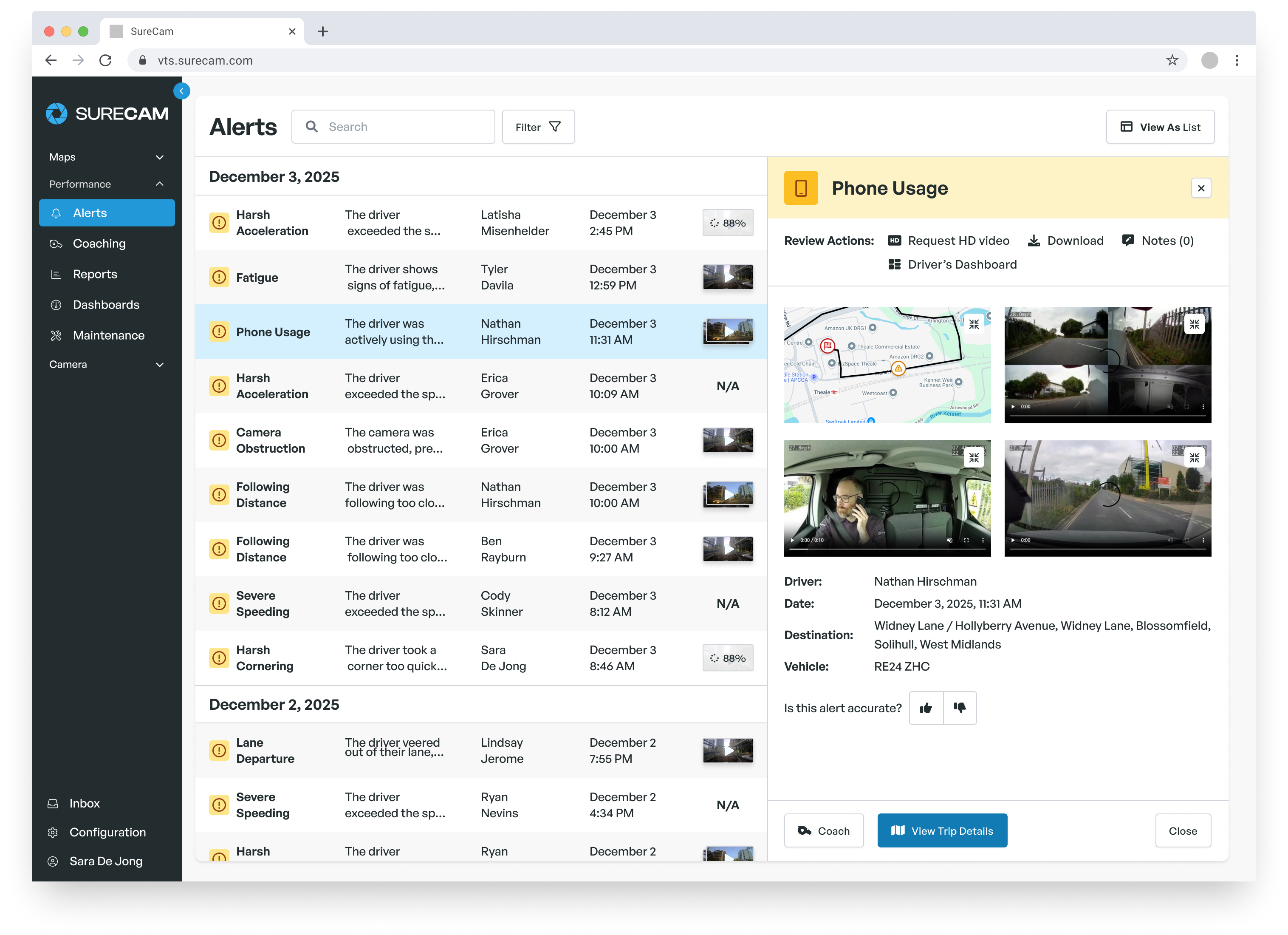
The more durable solution places asset tracking within the same fleet management platform already running vehicle GPS and dash cam data. That integration puts vehicle location, trip history, driver events, and asset location on a single map view under a single login. For fleets already running connected cameras and GPS vehicle tracking, adding asset tracking to the same platform avoids a second vendor relationship, a second data export for reporting, and a second set of alerts competing for a manager's attention.
Inside the SureCam ST1 Asset Tracker
The SureCam ST1 Asset Tracker is a cellular-connected GPS tracker designed for non-powered equipment in commercial and field service environments. It runs on LTE-M, a low-power cellular IoT standard that extends battery life compared to standard LTE, with fallback to NB-IoT for markets where LTE-M network coverage requires it.
The ST1 carries IP68 and IP69K ingress protection ratings and passes MIL-STD-810G testing across vibration (to 7.5 Grms), mechanical shock (to 300Gpk), operating temperature (-40°F to 185°F), salt fog exposure, and acidic atmosphere exposure. At 2.8 inches square and 0.44 pounds, the base unit mounts discreetly on trailers, generators, tanks, containers, and other non-powered equipment. An optional reinforced plastic bezel provides additional mounting stability in high-contact or high-vibration applications.
Three reporting modes are available: interval, scheduled, and motion-triggered. Configuration happens remotely over cellular or in the field via Bluetooth using the SureCam mobile app, with no need to recall the device for setting changes. When equipment moves indoors (into a warehouse, loading dock, or maintenance facility), the ST1 maintains indoor proximity tracking so the asset does not go dark at the building threshold.
Battery life scales with transmit frequency. The estimates below reflect figures from SureCam's product documentation:
| Transmit Frequency |
Estimated Battery Life |
| 1 per day |
8–10 years |
| 2 per day |
5–8 years |
| 4 per day |
2.5–4.5 years |
| 6 per day |
2–3 years |
| 12 per day |
1.5–2 years |
| 24 per day |
1–1.5 years |
Battery life estimates will vary based on operating conditions.
The ST1 integrates with the SureCam fleet management platform, so vehicle tracking, driver event video, and asset location data appear in the same portal fleet managers already use for their dash cam program. A fleet running SureCam cameras on its vehicles adds asset tracking without adding a second vendor, second login, or second data stream to manage alongside the first.
Getting Asset Tracking Deployed Across Your Fleet
Starting with the highest-value assets produces the fastest return and the clearest proof of concept for expanding the program. For most construction and commercial fleets, that means trailers and generators before containers or bins. These assets move frequently, carry significant replacement cost, and represent the most common targets for opportunistic theft.
Geofence configuration comes next. Setting an approved boundary around each active jobsite and the main yard means the system notifies a fleet manager when equipment leaves that zone without authorization, rather than relying on driver reports or manual check-ins. That alert capability converts a passive tracking tool into an active deterrent, not because it stops a determined thief, but because it compresses the recovery window to a point where intervention remains possible.
For fleets already running SureCam cameras on vehicles, integrating the ST1 into the same platform account brings vehicle and asset visibility together on one map. A manager can see where each truck sits and where each piece of tracked equipment sits without switching screens. When a job requires specific equipment, the question of where it currently sits resolves in seconds rather than through a chain of phone calls. That operational clarity carries value on every working day, not just the days something goes wrong. Ready to start tracking your equipment alongside your vehicles? Contact our team to get started today.