When Driver Coaching Technology Creates a Queue Instead of Clearing One
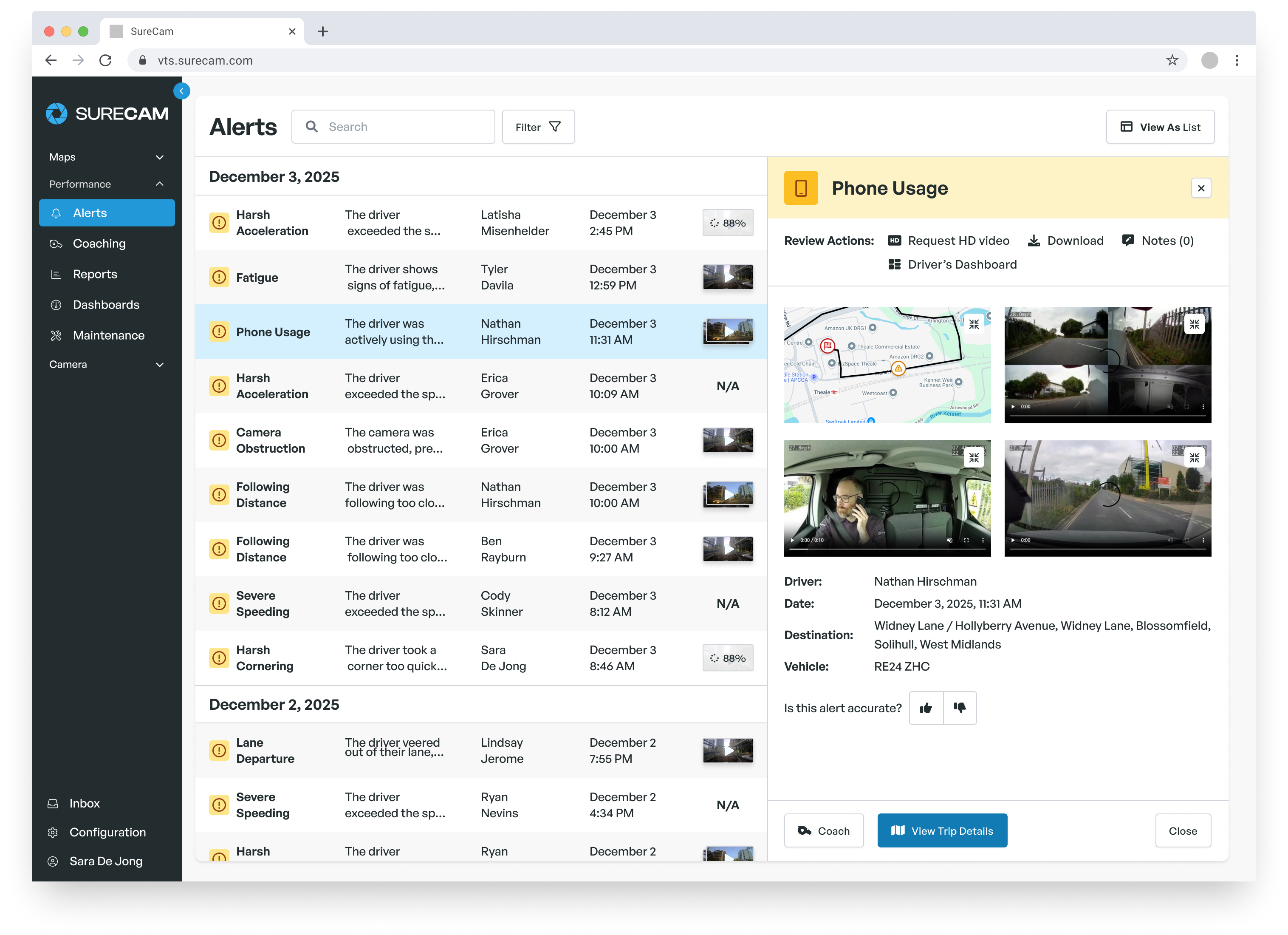
An AI driver coaching system should reduce administrative pressure, not extend it. When a platform surfaces relevant events, prioritizes them by risk, and supports a documented process from detection through follow-up, safety teams spend time on decisions that actually move safety outcomes. When it does not, those teams spend their days sorting alerts, exporting clips, and chasing acknowledgment records while the behaviors most likely to affect accidents, claims, and customer service wait unaddressed.
The friction usually traces to workflow design, configuration, or platform fit rather than to AI itself. But identifying where the pressure lives requires knowing what the warning signs look like.
Sign One: Alert Volume Is Outpacing Your Review Capacity
A Growing Queue Signals a Priority Gap
Alert volume is not a safety result. When a manager receives hundreds of events each week, the queue sorts itself by arrival time rather than by risk priority. Minor infractions consume the same attention as behaviors most likely to contribute to a collision or a disputed claim. High-severity patterns wait while lower-severity events get processed first.
Common warning signs of a review process under pressure: events sitting unreviewed for multiple days, different reviewers reaching different conclusions about identical behaviors, dismissal rates rising as reviewers default to "non-coachable" to keep pace, and recurring patterns staying open while one-time minor events get closed. Any combination signals a mismatch between event volume and the team's capacity to act on it.
Delayed review also degrades the footage itself. The longer an event sits, the harder it becomes to have a grounded, timely conversation with the driver. Operating context fades. The coaching moment passes before anyone gets to it.
Building an Event Priority Framework
Not every detected event deserves the same response. A hard-braking event in congested city traffic may call for different treatment than repeated distracted driving, persistent close following, or consistent seat belt non-compliance. A platform that helps apply that distinction before every clip reaches a manager significantly reduces the sorting burden on safety staff.
A written priority framework identifies critical events for immediate review, recurring patterns for documented manager follow-up, and lower-severity events to monitor across time. The rules should reflect the specific fleet: vehicle class, route conditions, driver experience, and existing safety policies. Generic default settings are a starting point; they rarely match the operational realities of a specific fleet after months in the field.
Useful tracking measures include the percentage of AI events reviewed within a defined window, average time from event to review, and the percentage dismissed as non-coachable. Together, these show where reviewer attention actually goes and whether the queue has become manageable or continues growing faster than the team can address it.
Sign Two: Video Review Stops Where Coaching Should Begin
Where Administrative Work Accumulates
Reviewing footage occupies only the first step in an effective coaching process. An event becomes useful coaching only when someone owns it, speaks with the driver, documents the discussion, and tracks whether the behavior improves afterward. Without those steps, a platform collects information without producing a repeatable intervention.
Lisa Lamons, Safety Training and DOT Compliance Manager at Concrete Strategies, described the operational cost of working without that structure. Before implementing cameras, incidents became he-said/she-said disputes with no reliable video context, and claims handling consumed approximately one week of her time each month. After deploying SureCam cameras on the fleet's largest vehicles and building a process to review harsh event alerts the same day or the following day as coaching opportunities, third-party claims fell by 75%. Claims handling time dropped from approximately one week per month to under ten hours. The shift required both the technology and the process built around it.
What a Documented Coaching Process Covers
Administrative work accumulates when video and coaching records live in separate systems. Exporting clips manually, tracking conversations in spreadsheets, confirming whether a manager completed a coaching session, or following up weeks later to check whether a behavior changed: each step adds time that belongs to administrative friction rather than safety improvement.
A workable coaching process covers the full path from detection through resolution. That includes a clear owner for each event or coaching action, notes that capture the video context and the substance of the coaching conversation, acknowledgments from coach and driver, follow-up dates for recurring behavior concerns, and a driver history that makes patterns visible across time rather than surfacing only isolated clips. This structure matters because fair coaching depends on context. Footage can protect drivers when an event reflects road conditions rather than driver error. It can support evidence-based conversations when behavior genuinely needs attention. A process that feels inconsistent across terminals, regions, or managers creates resentment rather than accountability. When managers can see a driver's full history alongside a current event, they separate a one-time incident from a pattern that requires a different kind of intervention.
Sign Three: Reporting Requires Manual Assembly
When Data Lives in the Wrong Places
A driver coaching platform should answer practical questions without requiring a monthly spreadsheet project. Which behaviors are rising or falling across the fleet? Which drivers need more support? Have coaching actions reached completion? Do certain routes, vehicle types, or operating conditions correlate with more events?
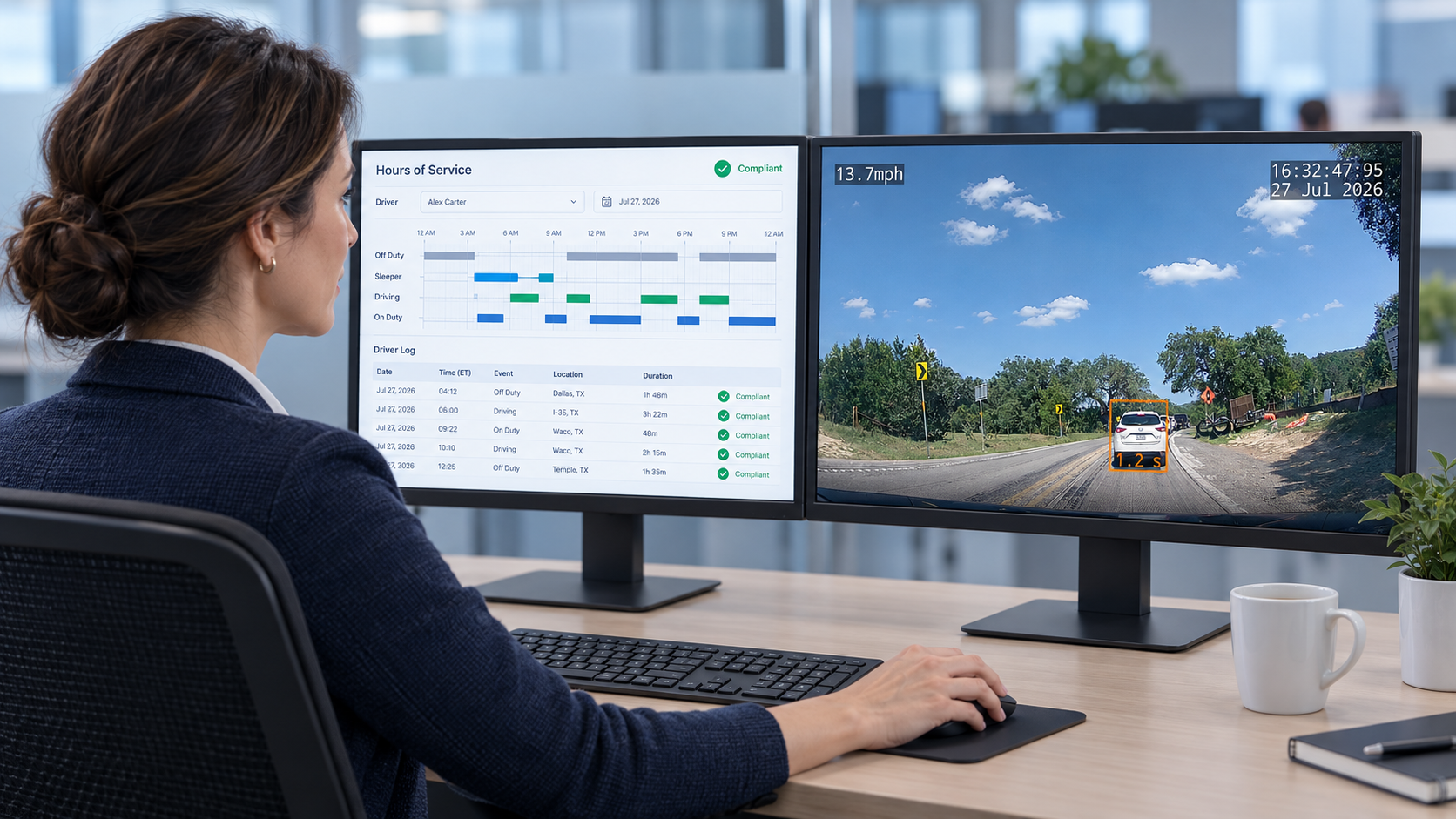
When safety staff must combine video, GPS, telematics, and coaching records by hand to answer those questions, reporting itself has become a workload problem. It also becomes difficult to distinguish a brief statistical dip from a sustained change in driver behavior, which makes it harder to direct coaching resources toward the areas where they will have the most effect.
Measures That Show Whether Coaching Works
A small, consistent set of measures tied directly to the coaching process delivers more useful signal than a large dashboard that no one has time to read. Event trends by behavior type, coaching completion rates, repeat-event rates after coaching, time from event detection to coach review, and open coaching actions by manager or location each answer a specific operational question without requiring a multi-system export.
These measures give safety and operations teams visibility into where follow-up slows down and where attention needs to shift. Before peak demand arrives in the fall, an audit of the past thirty to sixty days surfaces friction points while the team still has room to address them. Delivery volumes, service calls, school-zone traffic, and year-end demand place additional pressure on both drivers and reviewers. Resolving process gaps now costs far less than resolving them during a period of compressed margins and limited staff bandwidth.
The audit can start with a few targeted questions: which alert types consume the most reviewer time, which coaching actions have gone overdue, where escalation rules remain unclear, and whether drivers understand how footage functions within the coaching process. Drivers who understand that video provides context and can exonerate them when an event falls outside their control tend to engage with the coaching process differently than drivers who experience the camera as surveillance without a feedback loop.
Replacing Alert Volume with a Coaching Workflow That Holds
The goal of AI driver coaching technology is not a larger library of captured events. The goal is fewer incidents, more consistent coaching conversations, and a process that safety teams can sustain without building a secondary administrative operation to support it.
Identifying one measurable bottleneck and addressing it before expanding scope produces faster, more durable results than tackling everything simultaneously. Backlog size, coaching completion rates, and repeat-event rates after coaching each provide a concrete starting point. A fleet that wants to assess where its current process adds administrative friction and where it reduces risk can start with a direct conversation about configuration, workflow design, and what the platform actually supports today.
FAQs
What Counts as a Manageable AI Event Review Time?
A manageable review time means the team addresses urgent events while video context remains fresh and before the queue grows faster than staff can clear it. That threshold varies by fleet: a 30-vehicle service company and a 200-truck regional carrier face different staffing ratios and event volumes, so a shared benchmark rarely applies across both.
Fleets benefit most from setting review expectations by event severity, then tracking actual performance against those targets. Critical events may warrant same-day review. Lower-severity events may allow a 48 to 72-hour window before the coaching opportunity meaningfully degrades. Tracking average review time by severity tier shows where the process holds and where volume is winning.
Which AI Driving Events Should Be Prioritized?
Priority should track risk level, recurrence, and existing safety policy rather than arrival order in the alert queue. Critical events, such as collision warnings, near-miss captures, or violations with immediate liability implications, typically warrant immediate review. Repeated distracted driving, persistent close following, seat belt non-compliance, or other ongoing patterns usually require documented manager follow-up once a recurrence threshold has been met.
Lower-severity events, such as a single minor hard-braking event in conditions that explain it, can often be monitored for trends rather than triggering an individual coaching session. A written priority framework, reviewed and updated as fleet conditions change, keeps these distinctions consistent across reviewers and locations rather than leaving them to individual discretion.
How Can Fleets Reduce False-Positive Coaching Alerts?
Start by reviewing the event types staff most frequently dismiss as non-coachable. High dismissal rates within a specific category often point to sensitivity settings that need adjustment for the fleet's typical operating environment. A long-haul fleet on interstate routes and a last-mile delivery fleet in dense urban terrain produce different event profiles; default thresholds rarely fit either well out of the box.
A well-designed review process also gives reviewers a consistent method for documenting why an event received a dismissal. That documentation surfaces configuration improvement opportunities over time and reduces the ongoing volume of low-value events reaching the queue. Without it, teams end up tuning settings by intuition rather than by a systematic reading of where false positives actually concentrate.