Fall Driving Conditions Reset the Risk Profile for Landscaping Operations
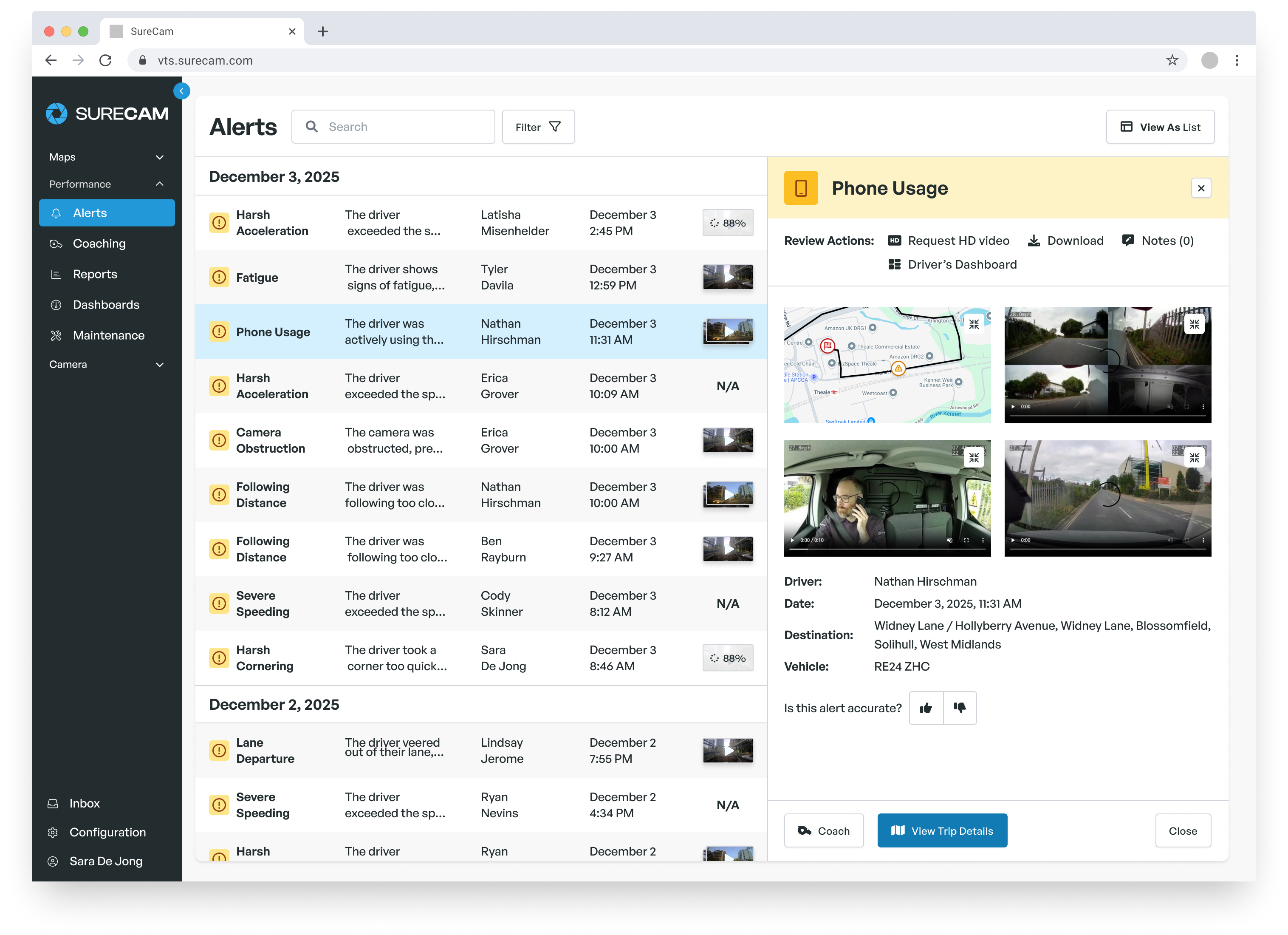
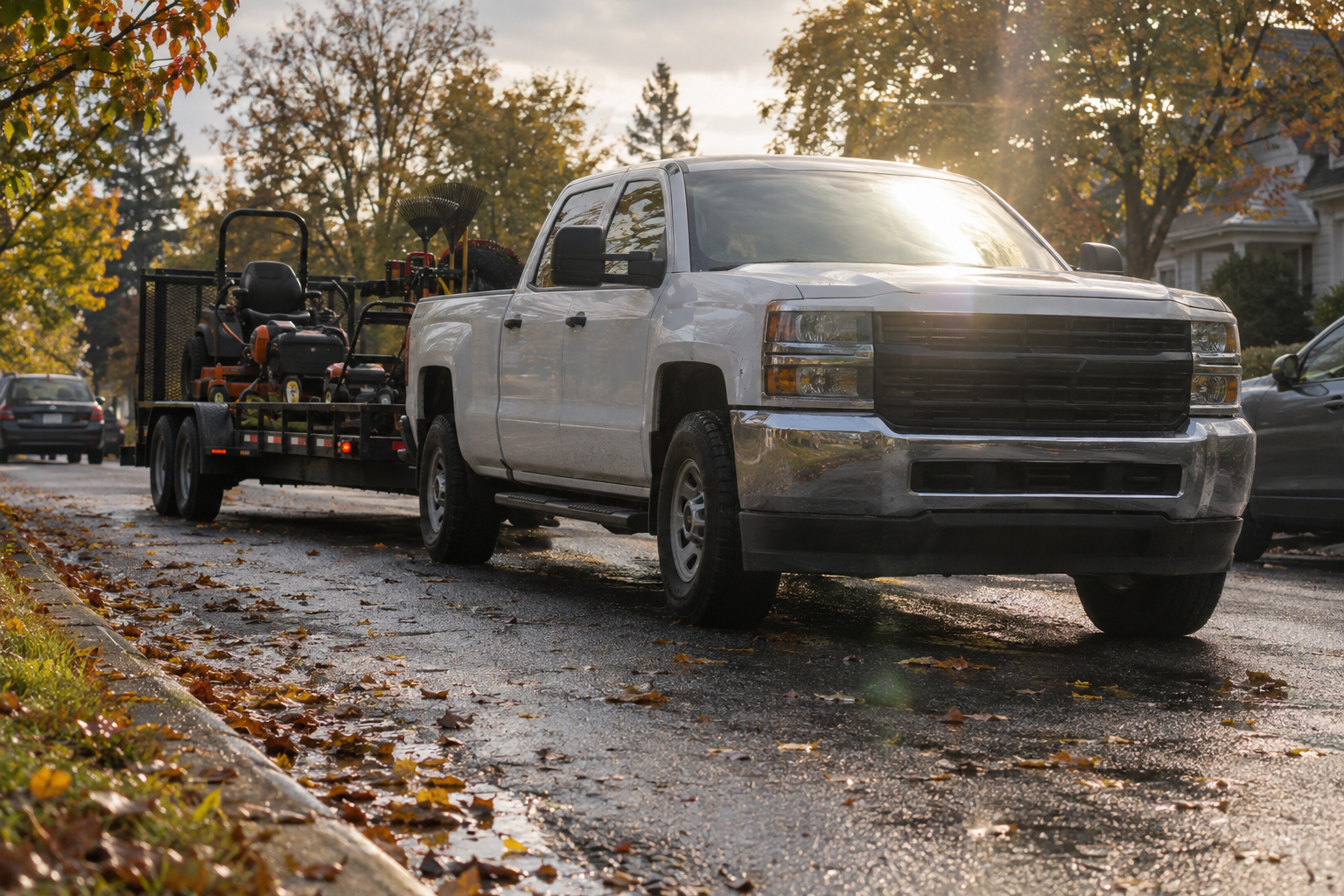
Landscaping fleets face a different fall risk than most. Trucks, trailers, and service vans move between residential and commercial properties all day in short, stop-and-go patterns. When days shorten, those same routes suddenly include pre-sunrise departures, after-dark returns, wet leaves on access roads, low-angle sun glare at peak commute hours, and customer properties with limited exterior lighting. A video telematics program configured for those conditions gives fleet managers incident context before problems escalate, and footage that protects drivers when disputes arise.
The risk does not concentrate at one point in the day. It distributes across every trip: backing into a tight driveway, turning with a trailer, parking near pedestrian traffic, and stopping repeatedly in residential neighborhoods where children, cyclists, and pets are less predictable. Fall makes each of those moments harder.
Identify Fall Exposure Before the Season Gets There
Getting ahead of fall risk starts with understanding which vehicles and routes carry the most exposure. Not every truck in a landscaping fleet operates the same way. Some pull trailers through narrow residential streets. Others cover commercial accounts with loading docks and security gates. Some drivers work dawn routes. Others finish well after dark.
Map Routes and Vehicles by Actual Risk Pattern
Before fall routes are locked in, review trip data by vehicle, time of day, and route type. Group vehicles by how they actually operate rather than applying one standard to the whole fleet. The most useful categories for landscaping operations:
- Vehicles that depart before sunrise or return after dark regularly
- Routes with frequent stops near pedestrian areas, school zones, or afternoon commuter traffic
- Trucks towing trailers that require larger turn radii and rear clearance
- Properties with steep driveways, tight access roads, or limited exterior lighting
- Seasonal or newer drivers who have not operated on fall routes before
As a hypothetical example: imagine a 40-truck landscaping operation running pickup trucks and open trailers across suburban residential routes. At peak fall demand, roughly half the fleet departs before 6 a.m. Those early-departure trucks carry the sharpest fall exposure, not because their drivers are less skilled, but because low light, wet roads, and residential traffic patterns create conditions that summer routes rarely presented. Flagging those vehicles first focuses review resources where fall conditions change the risk most.
Complete a Pre-Season Camera and Vehicle Readiness Check
Once high-priority vehicles are identified, a pre-season walkaround confirms the equipment is ready to perform when conditions are worst. Landscaping vehicles take more physical abuse than most: equipment loading, dust, vibration, and seasonal temperature swings all affect camera performance over a full season of operation.
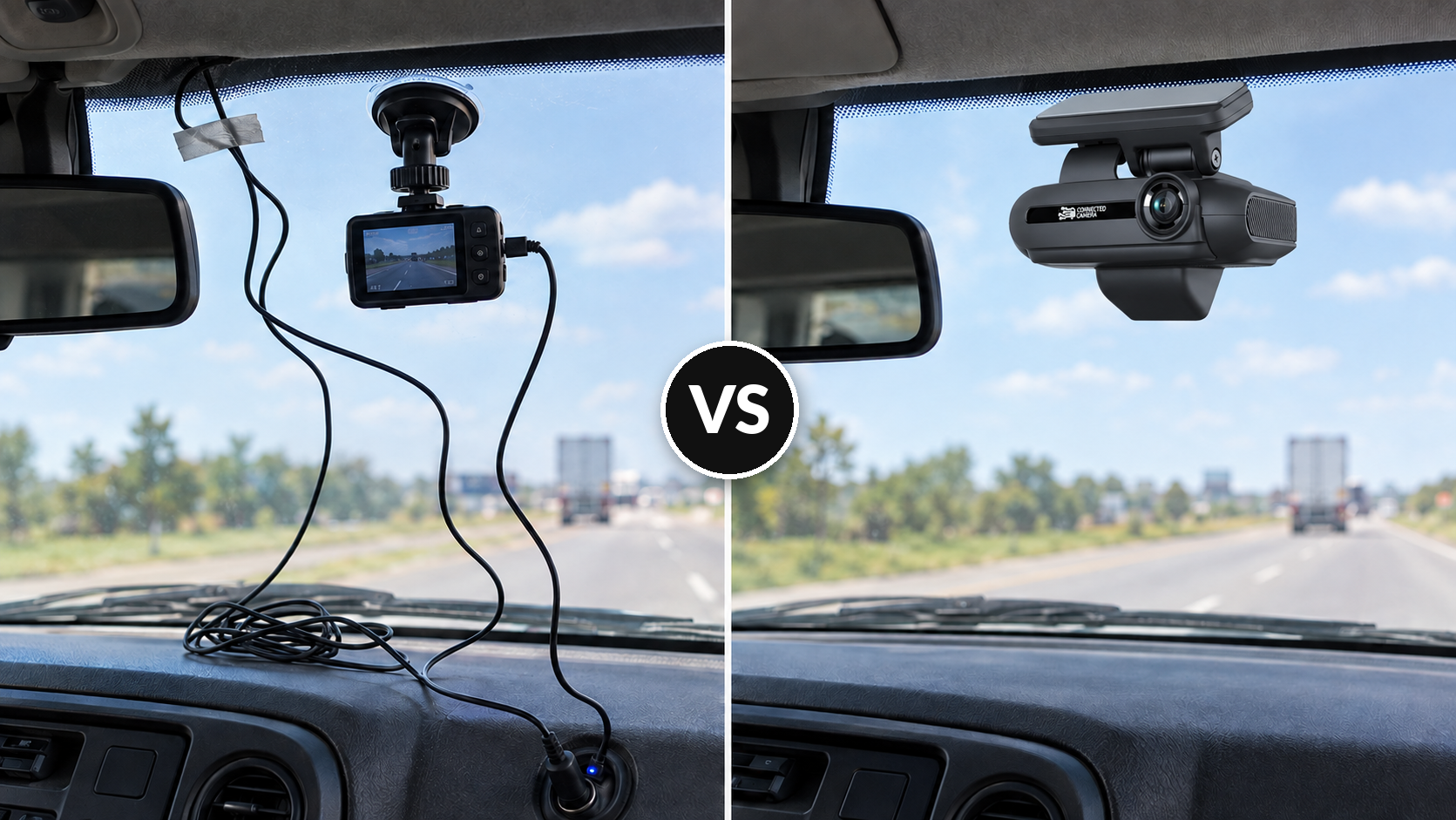
Check camera mounting and field of view to confirm coverage is still properly aligned after a full summer of use. Inspect windshields and lenses for chips, haze, or debris buildup. Verify power connections and test video upload performance. Confirm GPS is logging accurately. For trailer-equipped vehicles, extend the inspection to tow connections, brake lights, and rear camera visibility as part of the same check.
Configure Event Alerts for Landscaping's Stop-and-Go Reality
Landscaping fleets run short, multi-stop routes. That operating pattern shapes how alert thresholds should be set. Alerts calibrated for highway trucking may fire repeatedly on residential routes with repeated acceleration and braking, steep driveways, and rough access roads. A threshold that worked well in summer may become noise by October.
Pilot Settings with a Small Driver Group First
Before pushing alert configurations across the full fleet, run a two-week pilot with five to ten vehicles covering the most varied routes in the network. Review events from that period for quality: are the flagged events worth a coaching conversation, or are they artifacts of driveway grades and gravel access roads? Adjust thresholds based on what the footage actually shows rather than what the defaults suggest.
A useful calibration question to carry through the pilot: does each alert capture something a reviewer needs to see, or does it produce footage of a normal stop on a steep property? If it is the latter, tighten the sensitivity before fleet-wide rollout.
Prepare Drivers for What Fall Routes Require
Driver preparation should run parallel to the technical configuration. Before early fall routes begin, address low-light and wet-road habits in a dedicated safety meeting tied to the specific conditions crews will face. The goal is not a general safety reminder but a concrete, scenario-specific conversation connected to the routes and properties on the schedule.
Cover at minimum these five practices before fall routes begin:
- Clear windshields, mirrors, and camera lenses each morning before departure
- Check headlights, brake lights, and trailer connections as part of the pre-trip inspection
- Slow down on any property entrance or parking area with limited lighting or tight clearance
- Extend following distance on wet roads, particularly near school zones and intersections
- Report any jobsite access issue (tight backing areas, limited lighting, inadequate turning space) so routing or scheduling can address it proactively
Drivers respond better to the program when they understand what the system records and why. Explain the review process, what triggers an event, and how footage is used to support drivers when a property owner or third party offers a different account of what happened.
Review Footage Consistently and Use It to Spot Operational Patterns
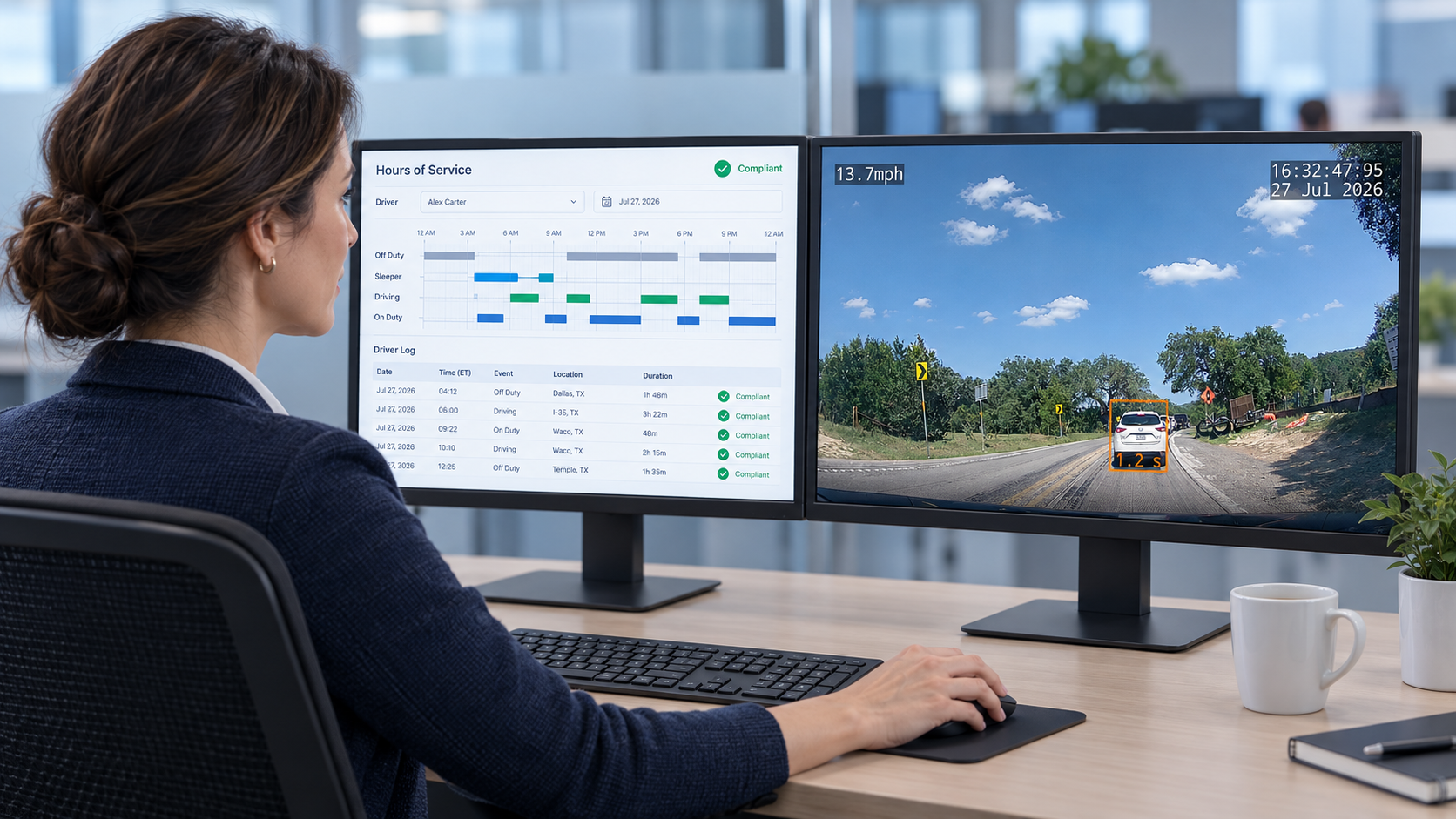
Video is only as useful as the process behind it. Assign a safety manager or operations lead to check priority events within one business day when possible. Coaching conversations should follow within three to five business days, while route details, weather conditions, and jobsite context are still fresh for the driver.
Build a Coaching Process Around Context, Not Just the Clip
A dash cam event does not tell the full story on its own. Before a coaching conversation, pull the relevant route, time of day, weather conditions, and jobsite details alongside the footage. A hard braking event on a dark residential street at 5:45 a.m. calls for a different conversation than the same event on a dry surface at noon. That context shapes whether coaching focuses on driving habits, site conditions, scheduling, or equipment.
Effective coaching targets the specific decision points visible in the footage: the speed entering a narrow driveway, the following distance near a school zone, the turning sequence with a trailer on a tight street. Concrete, situational feedback sticks better than general safety reminders delivered without a frame of reference.
Track Recurring Events to Identify Operational Problems, Not Just Driver Problems
When the same type of event clusters on a specific property, access road, or time window, the cause may be operational rather than individual. Route planning, jobsite access, equipment configuration, or crew scheduling may need adjustment before driver coaching makes a meaningful difference.
Track events by vehicle, route segment, time of day, and category. If multiple drivers flag on the same steep access road or consistently hard-brake at the same residential intersection, the answer is probably a routing conversation with the crew lead or a site review with the property contact rather than additional one-on-one coaching.
Run the Program Through the Final Fall Route
A phased rollout starting with high-exposure vehicles before expanding fleet-wide gives time to validate installation quality, alert settings, and reviewer workload before the full fleet generates events. Two to four weeks on the pilot group provides a reasonable baseline before expansion.
Once full fall routes are running, a monthly review covering event trends, coaching completion, camera readiness issues, and recurring patterns by route or vehicle keeps the program calibrated through the season. Fall conditions shift as weather changes and daylight-saving adjustments take effect. A configuration that works in September may need adjustment by November. Confirm camera readiness, clarify review ownership, communicate expectations to drivers, and document how incidents get escalated for additional operational attention.
Frequently Asked Questions
Fleet managers and operations leads most frequently ask three questions when building a fall dash cam program for landscaping operations: what the plan should cover, when preparation should begin, and how footage translates into meaningful driver coaching. Each answer addresses the practical application rather than the general principle, because the specifics of landscaping fleet operations make generic answers less useful in this context.
What Should a Landscaping Fleet Dash Cam Plan Cover for Fall?
A fall dash cam plan for landscaping operations should address four areas: vehicle and camera readiness, alert configuration for stop-and-go routes, a consistent event review and coaching process, and incident documentation procedures. Each of those areas connects directly to the seasonal conditions that separate fall driving from summer operations.
The specific priorities will vary by fleet. A company running mostly residential maintenance routes faces different conditions than one covering commercial accounts with loading docks and delivery windows. Start with the vehicles and routes that carry the most low-light exposure and build outward from there.
When Should Landscaping Fleets Begin Preparing for Shorter Fall Days?
Preparation should begin before routes regularly include departures before sunrise or returns after dark. Waiting until daylight-saving adjustments take effect leaves limited time to complete camera checks, validate alert settings, and brief drivers on seasonal conditions before those conditions are already producing incidents.
A practical benchmark: beginning pre-fall planning four to six weeks before the earliest dawn routes are scheduled leaves enough time to complete vehicle inspections, run an alert pilot, and conduct driver preparation conversations without compressing any step. The seasons do not wait for an administrative calendar.
How Does Dash Cam Footage Support Driver Coaching for Landscaping Fleets?
Dash cam footage supports coaching in two distinct ways. First, it gives the reviewer specific, visual context for events that might otherwise come down to conflicting accounts: a backing incident at a residential property, a hard braking event on a wet road, a tight turn with a trailer in a cul-de-sac. Second, it creates a documented record that protects the driver when a property owner or third party offers a different version of what happened.
Effective coaching uses footage alongside route, time-of-day, and weather context rather than treating the clip as the complete picture. A driver who braked hard on a steep, wet driveway at dawn needs a different conversation than one who followed too closely on a dry suburban street at midday. Specific context produces actionable coaching. Generic review produces defensive conversations.