Proactive vs. Reactive: The Difference That Determines Claims Outcomes
A proactive fleet incident management plan uses AI event detection, connected video, and pre-built FNOL workflows to place footage and liability data in an insurer's hands within minutes of an incident. Reactive claims handling does the opposite. It waits for police reports, driver recollections, and adjuster phone calls. For most commercial fleets, the gap between those two approaches appears directly on the insurance bill.
The reactive model persists because it was once the only option. Something happened, a driver called the office, a supervisor scrambled for details, and the fleet hoped the other party's account matched reality. That model functions when everyone tells the same story. It fails badly when they don't. And in a legal environment where verdicts against commercial trucking defendants have reached tens of millions of dollars, "hoping everyone tells the same story" does not qualify as a risk management strategy.
Proactive incident management reframes the response entirely. Rather than reacting after the fact, the fleet has already established detection triggers, footage retrieval steps, and insurer submission protocols before any incident occurs. When something happens, the workflow runs automatically. The result: faster claims resolution, lower legal exposure, and a documented safety record that gives insurers a reason to hold premiums steady.
How AI Dash Cams Reduce At-Fault Collisions Before They Happen
AI-enabled connected dash cams operate at two points in the safety timeline: before an incident occurs, through continuous driver coaching and real-time behavior alerts, and immediately after, through automated footage capture and supervisor notification. The prevention side of that equation represents the highest-value return on the investment, because every incident avoided generates no claim to manage.
Coaching Drivers on the Events That Predict Accidents
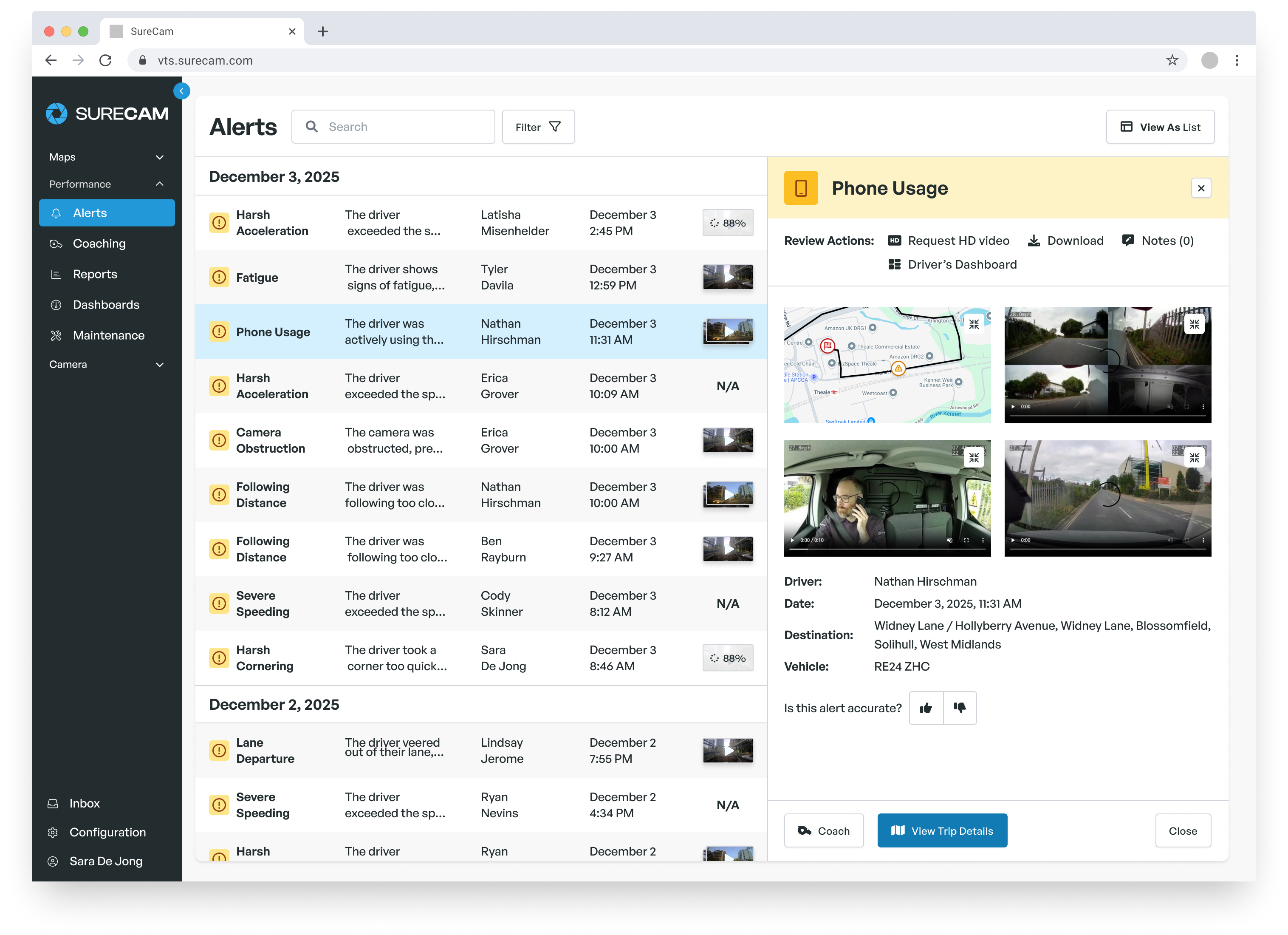
Every at-fault collision traces back to a series of detectable behaviors: hard braking that signals following distances are too short, harsh cornering on familiar routes, late-night speeding that correlates with fatigue. AI-enabled dash cams capture these events automatically and flag them for coaching review without requiring a supervisor to watch hours of unfiltered footage. The output is a coaching dataset grounded in what drivers actually do, not what they self-report.
Effective coaching programs use this data to create brief, regular conversations between supervisors and drivers. When a driver reviews a specific 30-second clip of a hard-braking event from Tuesday afternoon, the conversation becomes concrete. There is no argument about whether the behavior occurred, only discussion about what to do differently next time. Fleets that establish this review rhythm report measurable reductions in harsh-event frequency in the months following deployment, which translates directly into lower at-fault incident rates over time.
Real-Time Alerts That Intervene Before a Risk Escalates
AI event detection does more than create coaching opportunities after the fact. Modern connected dash cam systems issue in-cab alerts the moment a triggering event occurs, giving drivers real-time feedback while the context remains fresh. A driver who receives an immediate audio nudge after a hard-brake event processes that feedback differently than one who hears about it in a weekly review.
The practical value compounds across the fleet. Drivers who know their harsh events generate immediate alerts tend to self-regulate more consistently than those operating under after-the-fact review alone. Fleet managers gain the ability to see live event data across every vehicle simultaneously, identifying patterns by route, time of day, or vehicle type, then addressing them at a systemic level rather than incident by incident. Reducing event frequency before a serious incident occurs represents the highest-value outcome a proactive safety program can produce. Prevention costs less than claims.
Video Evidence and FNOL: The Foundation of Faster Claims Resolution
The two elements that most consistently separate well-managed fleet claims from costly, drawn-out disputes are video footage and the speed with which it reaches an insurer. Neither element delivers full value without the other: footage without a rapid submission process delays the claim, and a fast submission without footage leaves the narrative to whoever tells the more convincing story first.
First Notification of Loss: Why Speed Determines Outcomes
First Notification of Loss (FNOL) is the initial report submitted to an insurer following an incident. It sounds administrative. In practice, it represents one of the highest-leverage moments in the entire claims process, because the speed and completeness of that first notification shapes everything that follows: how quickly adjusters engage, how liability gets framed at the outset, and how much the fleet controls the narrative versus reacting to someone else's account.
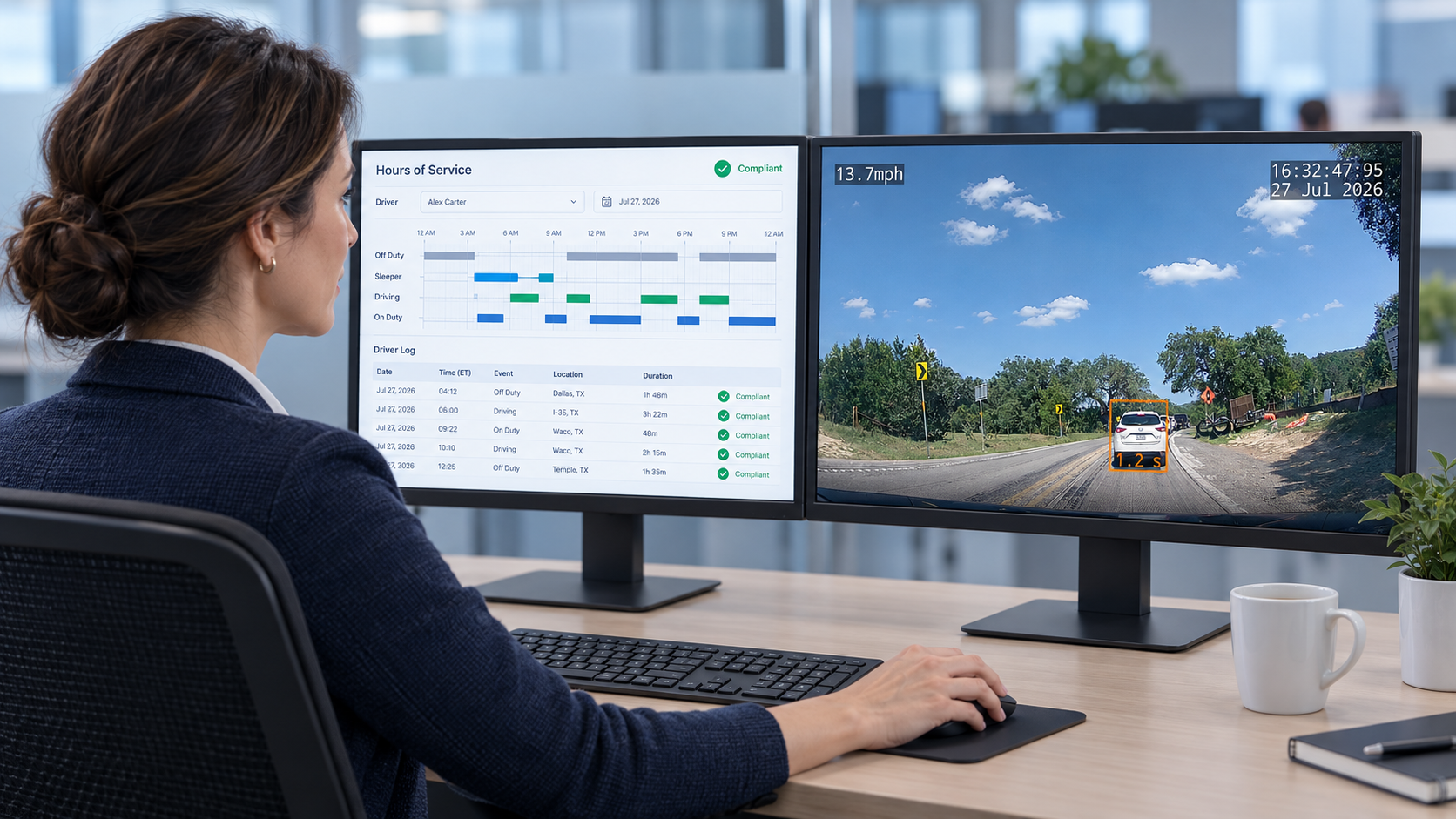
Connected dash cam footage changes FNOL from a paperwork exercise into an evidence-first workflow. When a vehicle experiences a collision-level g-force event, the system automatically uploads video, GPS, and speed data. A fleet manager receives an alert within minutes. With footage in hand, the insurer opens the claim with a clear picture of what happened rather than reconstructing events from driver accounts days later, when details have faded and liability narratives have hardened on both sides. That speed advantage matters because adjusters who receive complete documentation at first contact set reserves more accurately and move toward resolution faster than those left to gather information across multiple follow-up calls.
Using Video to Close Claims and Contest False Ones
Video evidence does two distinct jobs in claims management. The first is acceleration: when liability is documented and unambiguous, adjusters close straightforward claims in days rather than weeks. The second job is contestation. When a third party misrepresents what happened, whether through deliberate fraud or honest misrecollection, footage provides an objective account that written reports and witness statements cannot match on their own.
The scale of that shift shows up in documented fleet outcomes. Concrete Strategies, a commercial concrete and construction company that deployed cameras on its 33 largest vehicles, watched third-party claims volume drop 75 percent. Before cameras, Safety Training and DOT Compliance Manager Lisa Lamons spent roughly a week every month on claims handling, each dispute requiring hours of back-and-forth across drivers, adjusters, and attorneys. "One claim would take me at least 8–10 hours spread over a series of days," she explains. "Now, with the cameras, it's pretty cut and dry. The answer is in the video." Fabricated flying-debris complaints, which had arrived weekly from mixer truck operations, fell to roughly one call per month or fewer after deployment.
Building a Repeatable Incident Response Workflow
A solid incident management plan does not leave the response to individual judgment in the moment. It defines the workflow in advance so that when an event triggers, every role in the organization knows the next step without waiting for a supervisor to improvise one under pressure.
The workflow starts at event detection. AI event detection systems classify incidents by severity the moment they occur. A minor harsh-braking event enters the coaching queue for next-day review. A collision-level event triggers immediate notification to the supervisor and fleet manager simultaneously. No one needs to wait for a driver call to know something happened on the road.
The second phase is footage retrieval. Connected cameras upload event footage automatically, but a defined process tells the operations team where to find it, how to pull supporting GPS and speed data, and who holds authority to share it with an insurer or legal representative. This step takes minutes when the process exists in writing and the right people know their roles. Without a defined process, it takes hours, and those hours matter most when liability remains unresolved and the other party has already filed.
The third phase is insurer submission. A pre-built FNOL template with required fields, footage attachment instructions, and a clear submission path means the first contact with the insurer arrives with a complete package rather than a verbal account that gets revised over the following 48 hours. Fleets that treat insurer submission as a defined operational step consistently report faster claim closure and better liability outcomes than those treating it as an improvised post-incident task.
Running the full workflow in a tabletop exercise before any real incident surfaces gaps in authority, missing contact details, and unclear handoffs between roles. The preparation investment runs to a few hours of internal time. The claims outcomes it protects can run to tens of thousands of dollars per incident.
Municipal and Government Fleets: Proactive Safety as Taxpayer Protection
Government and municipal fleets operate under a distinct accountability structure. When a city vehicle is involved in an at-fault incident, the financial exposure falls on the public. A single uncontested liability claim can cost a municipality hundreds of thousands of dollars in settlements, legal fees, and increased self-insurance reserves. Across a full fleet and a full year of operations, the case for proactive incident management becomes a budget argument as much as a safety argument.
Video telematics gives municipal fleet managers the same tools their commercial counterparts rely on, with an added layer of public accountability documentation. Live GPS, driver coaching from AI event data, and automatic footage upload create an auditable operational record for each vehicle in the fleet. For city councils, risk managers, and taxpayers, that record represents something commercial fleets also value but rarely need to defend publicly: demonstrable, retrievable proof that the fleet operates responsibly and with evidence to support that claim.
The specific risks municipal fleets face deserve direct attention. Refuse trucks, utility vehicles, and transit buses operate in dense pedestrian environments, at predictable hours, on consistent routes. These operating conditions make behavioral patterns detectable and correctable at scale. A fleet that identifies a specific route segment where harsh-braking events cluster, then addresses the root cause through driver coaching or route adjustment, prevents incidents rather than processing their financial consequences. Proactive safety investment in driver behavior consistently delivers a better return than reactive claims spend, and for a government fleet, that difference belongs to the public rather than an insurer's bottom line.