Video Evidence Gives Plumbing Fleets a Clearer Starting Point
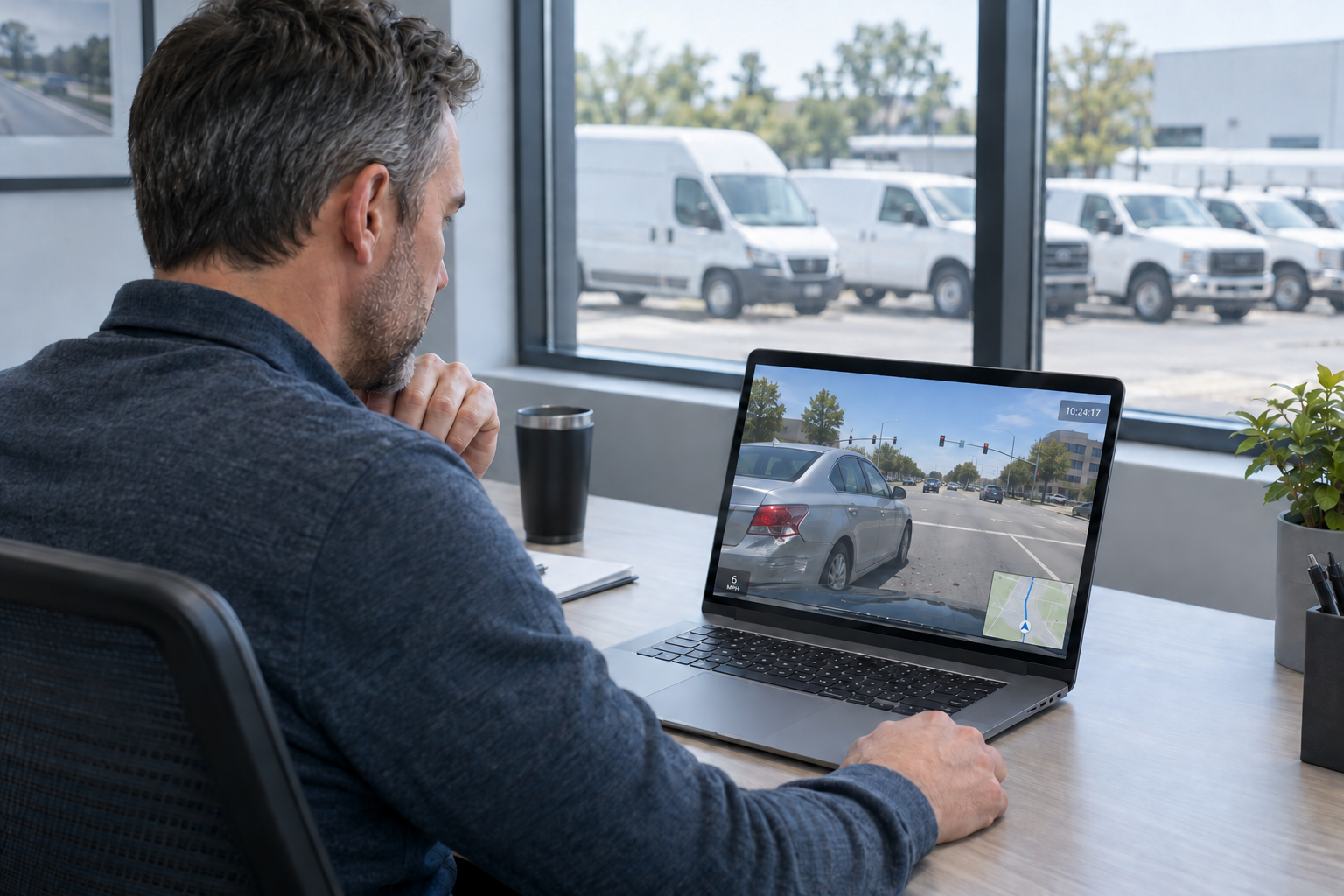
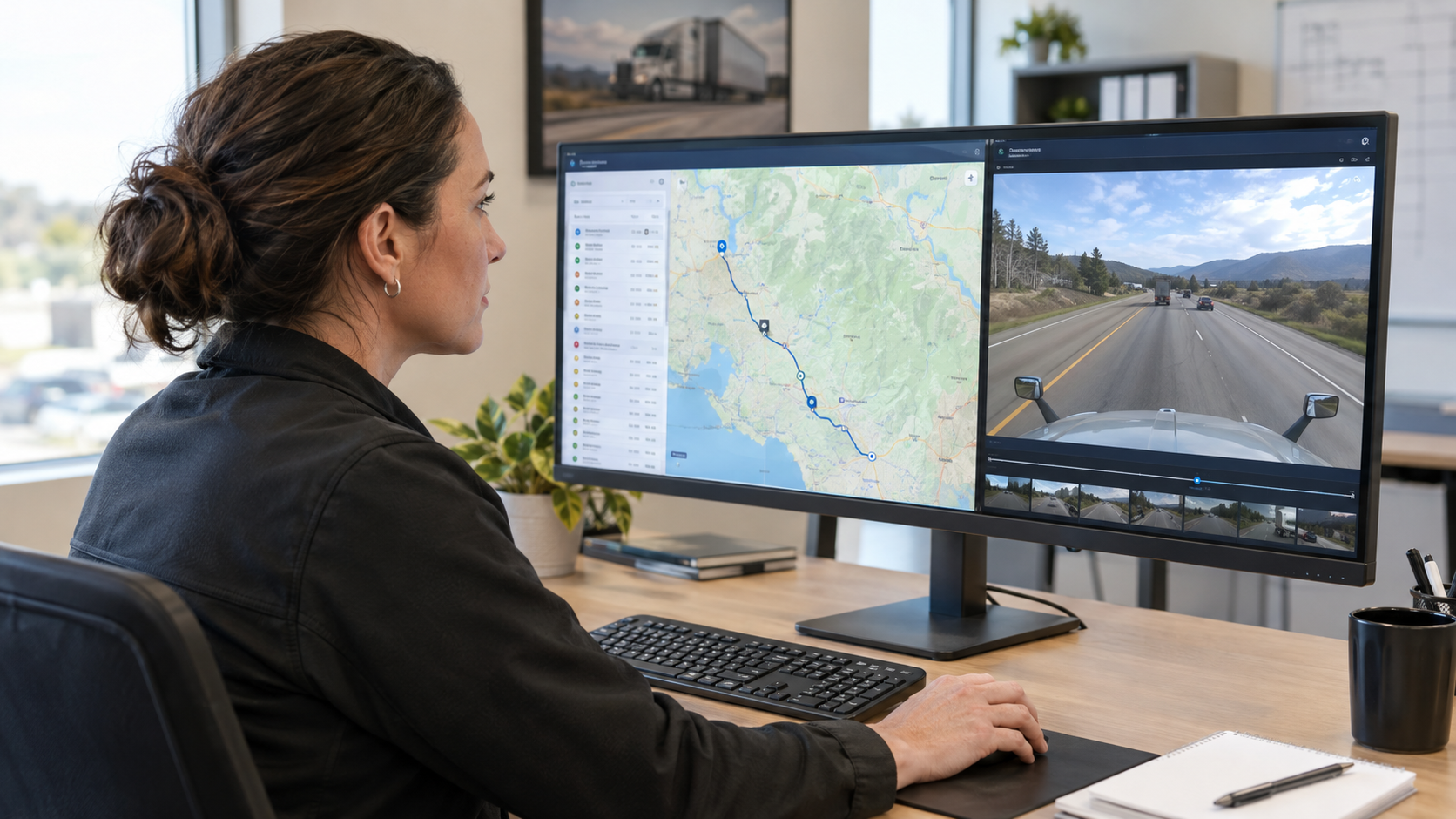
When a customer calls to dispute an arrival time, report damage near a service stop, or question a technician's conduct, the review process starts faster when video exists. A plumbing fleet dash cam gives fleet managers time-stamped footage, GPS location history, and trip data that can be matched against dispatch records and technician notes within minutes, turning a conflicting-accounts situation into a documented, reviewable record.
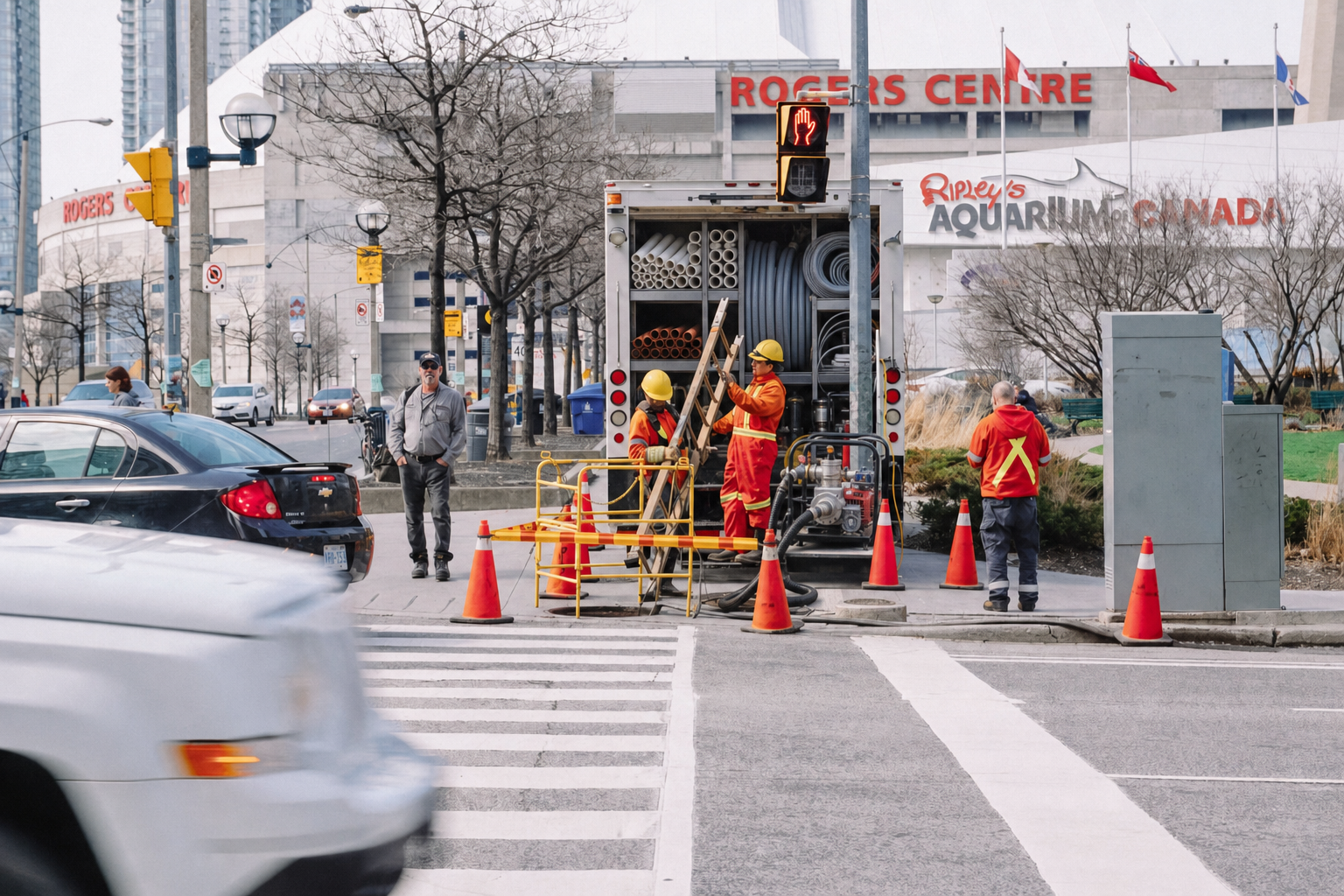
Field service generates a high volume of customer contact. Technicians travel to unfamiliar addresses, work under time pressure, and operate across wide service areas where conditions change throughout the day. When something goes wrong, or when a customer believes something went wrong, the facts can be difficult to reconstruct from memory alone. Video and location data do not replace judgment, but they give dispatch teams and operations managers something concrete to work from.
What a Plumbing Fleet Dash Cam Captures at Each Stop
Road-Facing Footage and Property Access Documentation
A forward-facing camera records the vehicle's approach to a service address, surrounding traffic conditions, curbside access, and the timing of arrival and departure. That footage speaks directly to dispute categories plumbing fleets encounter regularly: an allegation that a service van blocked a driveway, a report of damage to landscaping or a curb, or a disagreement over when a technician arrived and left the property.
Road-facing video has limits. It does not capture the service interaction inside a home or business, and it does not replace accurate work orders and technician notes. Its value increases when reviewed alongside other records rather than treated as a standalone verdict. A complaint review that starts with footage typically needs dispatch records and technician documentation before it can reach any defensible conclusion.
Driver-facing cameras add a second dimension for fleets that run active coaching programs or need to address behavioral complaints. Whether to include driver-facing capability depends on fleet policy, the nature of complaints the fleet typically handles, and how the footage factors into the review and coaching workflow. SureCam gives fleets the option to configure road-facing or dual-facing cameras based on operational need, with the inward-facing camera configurable to activate only on specific events.
Pairing Video with GPS and Dispatch Records
Most service disputes come down to timeline questions: when was the technician dispatched, when did the vehicle arrive at or near the service address, how long did it remain, and when did it depart? GPS location history answers those questions independently of what the driver or customer recalls.
A complete dispute review combines the vehicle's GPS trip history with matching dash cam footage, work-order timestamps, dispatch activity logs, and any technician documentation or field photos from the stop. When those records align, the review produces a defensible account of what occurred. When they conflict, the conflict itself becomes the most useful piece of information for understanding what actually happened.
Maneri Traffic Control, a service fleet operating across California, uses SureCam LiveCheck for real-time remote oversight of crews at active job sites. By pairing live video access with GPS data, supervisors verify crew location and activity without relying on after-the-fact recall. The company reported a 70% increase in team productivity after implementing the system.
Building a Dispute Review Process That Holds Up
A Repeatable Internal Workflow
Consistency matters when handling customer complaints. When every manager handles a dispute differently, the review becomes harder to track, harder to explain to customers or insurance contacts, and harder to use as a foundation for driver coaching. A shared process reduces those gaps.
A practical internal workflow covers six steps: log the complaint with the customer's stated date, time, address, and allegation; identify the assigned vehicle and technician; preserve relevant video and GPS records immediately; review footage alongside dispatch, work-order, and technician records; document findings in a consistent internal format; and share only the relevant information with the appropriate stakeholder. That sequence keeps the review structured and creates a record that can be referenced later.
Ownership should be clear across safety, operations, and dispatch. When no one owns the process, complaints sit while teams wait for direction. For fleets managing a high volume of service calls, a logging template that captures the same fields every time makes review faster and comparison across complaints easier over time.
Retention, Access, and AI Event Detection
Before a complaint arrives, fleet managers should understand how long footage is available in their platform, which events trigger automatic saves, and who has authority to retrieve and preserve records. SureCam stores event video for up to 60 days and continuous video for up to 50 hours of rolling storage, with live video accessible in real time. Knowing those parameters before a complaint requires a response prevents the avoidable situation of footage already cycling out of retention when a team finally looks for it.
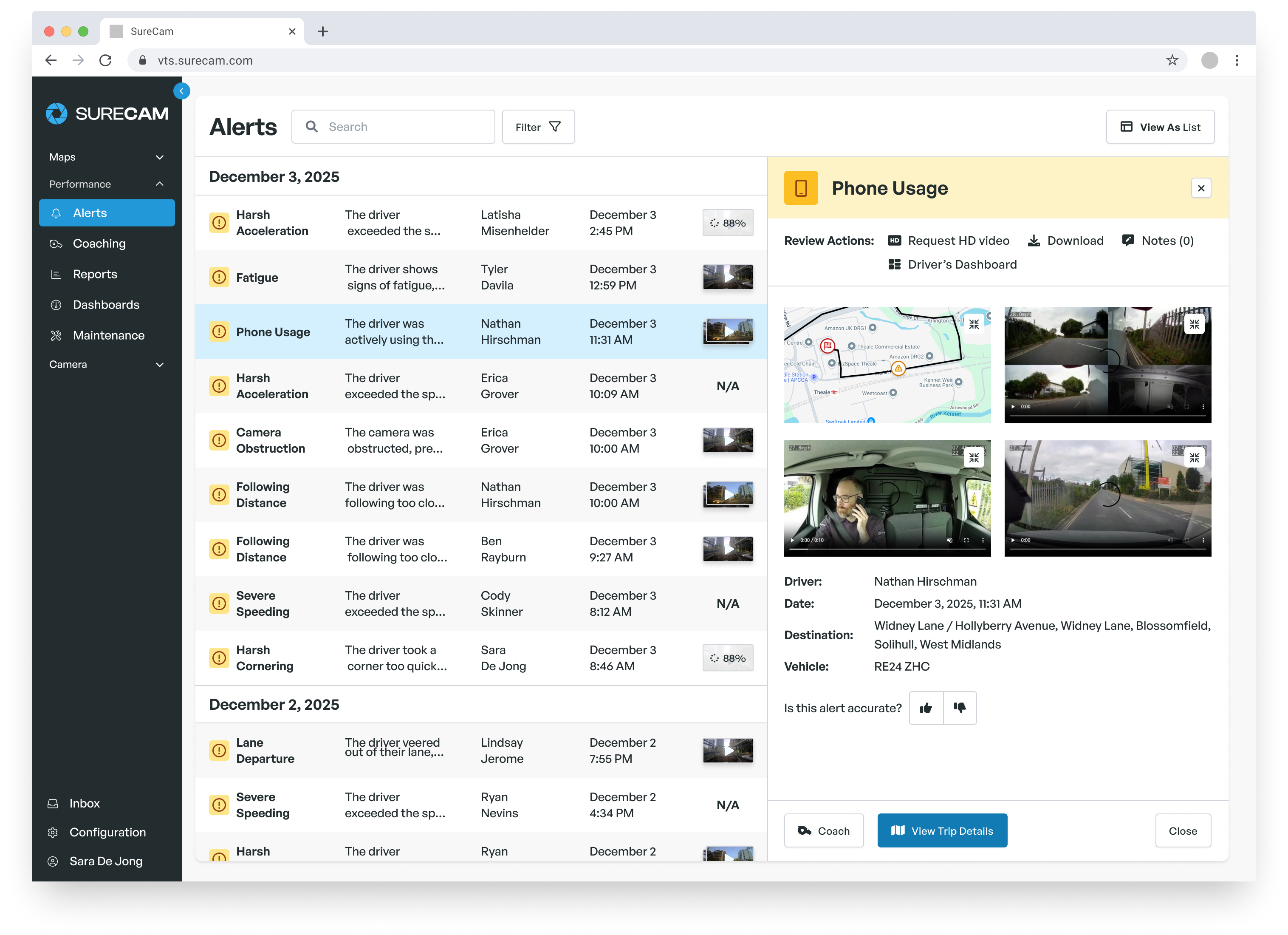
AI-enabled event detection flags clips linked to harsh braking, rapid acceleration, distracted driving indicators, and collision-related events. Those flags surface relevant footage more quickly than manual review, particularly when a complaint references a specific driving behavior during a known time window. A qualified manager should review the full timeline and supporting records before drawing conclusions from event flags alone; detection narrows the search, but it does not replace the review.
Access rules deserve the same planning as retention schedules. Define who on the team can retrieve, preserve, and share footage. Internal clarity on that question prevents delays when a complaint needs a fast response.
Turning Dispute Reviews Into Coaching Opportunities
Video sometimes reveals a driver error. More often, it reveals the operational conditions behind a complaint: a blocked driveway approach, unclear dispatch instructions, a difficult parking situation, or a service address with restricted access that no one flagged in advance. Footage that provides that context makes coaching more accurate and more fair than a conversation that relies on the customer's account alone.
Constructive coaching might address parking placement near residential properties, backing procedures on narrow streets, residential speed management, and how to document unusual access conditions before leaving a site. When the record shows that a technician handled a difficult situation correctly, that outcome warrants recognition rather than a complaint response. When the issue traces to dispatch notes or address information, the fix belongs in the operations workflow, not a coaching conversation with the driver.
Tracking complaint categories over a 30-to-90-day period reveals patterns. Repeat disputes from a specific service area, route type, or time of day can point toward an operational issue that individual coaching will not solve. That pattern data helps operations leaders target the right level of the system rather than repeating the same conversations with individual drivers.
Frequently Asked Questions
The questions below cover how plumbing fleet managers use video evidence, GPS data, and operational records together to handle service disputes, along with what to preserve and how long footage remains available.
How Can Dash Cams Help Plumbing Fleets Resolve Customer Complaints?
Dash cams provide time-stamped footage of vehicle activity that can be matched against GPS data, dispatch records, and technician notes. That combination helps fleet managers verify vehicle location, arrival windows, curbside conditions, and driving events tied to a specific complaint.
Can GPS Data Confirm Whether a Technician Arrived at a Service Address?
GPS history shows whether a vehicle reached or remained near the service location during the relevant time window. The complete review should combine GPS data with dispatch activity, video, and technician documentation, since each record covers a different part of the timeline.
What Records Should a Plumbing Fleet Preserve After a Service Dispute?
Preserve the customer's complaint details, the assigned vehicle and technician, GPS trip history for the relevant window, dash cam footage, dispatch activity, work-order timestamps, technician notes, and any field photos connected to the stop. A consistent internal format makes the review faster and creates a defensible account of what occurred.
How Does AI Event Detection Help Identify Relevant Footage?
AI detection flags clips linked to harsh braking, acceleration events, and distracted driving indicators, which helps managers locate relevant footage faster when a complaint references a specific driving behavior. A qualified reviewer should examine the full context before drawing conclusions from an event flag alone.
How Long Is Dash Cam Footage Available for Dispute Review?
SureCam stores event video for up to 60 days and continuous video for up to 50 hours of rolling storage. Fleet managers should preserve relevant clips as soon as a complaint arrives to avoid footage cycling out of retention before the review is complete.