All-in-One Fleet Management Software: 2026 Buyer's Guide
12 Oct 2026
driver coaching


Improve fleet safety, reduce operating costs, and optimize field performance with an easy-to-use platform for video, GPS tracking, driver coaching, maintenance, asset tracking, and real-time fleet insights.
Drive your total fleet operations with SureCam’s all-in-one video telematics solution.
Valuable guides, case studies, and videos to help you optimize fleet management, safety, and productivity with telematics solutions.
Values, job opportunities, and ways to connect or partner with SureCam.




If you're running a 50-truck construction fleet or a 200-van field service operation and you've been on Verizon Connect for years, you probably signed up for the GPS tracking. Maybe your insurance company recommended it. Maybe it was bundled with your wireless plan. And for basic location visibility, it did the job.
But this is 2026. We have GPS. We know where trucks are. That’s easy. What we don’t have is the ability to actually prevent crashes, defend against false claims, or coach drivers without hours of footage manually.
That's where the gap is. Verizon Connect built a massive platform for enterprise fleets that need everything—fuel cards, ELD compliance, route optimization, maintenance tracking, and yes, dash cams as an add-on. As an afterthought. But if you're a smaller or mid-sized fleet that only needs AI-powered video telematics that actually stops incidents before they become claims, you're paying for features you'll never use and missing the simplicity that gets your team to actually adopt safety tech.
This article walks through why so many fleets are switching from Verizon Connect to SureCam in 2026, what you gain (and what you're not giving up), and exactly how to make the migration without disrupting operations.
Let's be clear: Verizon Connect is a legitimate platform. If you're a Fortune 500 fleet running 5,000+ vehicles and you need deep integration across fuel, payroll, routing, compliance, and video—all in one ecosystem—it makes sense.
But most of the fleets aren't Fortune 500. They're:
These fleets don't need a Swiss Army knife. They need a video telematics scalpel that solves four specific problems:
Here's where Verizon Connect falls short for mid-sized fleets' video needs:
Verizon Connect started as a GPS and fleet management platform. Dash cams were added later to stay competitive. The result? Video feels bolted on. You'reusing a platform built for routing and fuel optimization to get to the safety features you actually care about.
The AI event detection exists, but it's not purpose-built for proactive driver coaching—it's reactive incident review. You still get alerts after the hard brake or the close call, but there's no real workflow to turn that into a coaching moment before the next shift.
Fleet managers can get 40+ alerts per driver per week from Verizon Connect. Hard braking. Cornering. Speeding. Following distance. Distraction detection (if you've paid for the premium tier).
When everything is an alert, nothing is actionable. Your safety managers stop looking at the dashboards because they're drowning in noise. Drivers tune out because they assume it's another false positive.
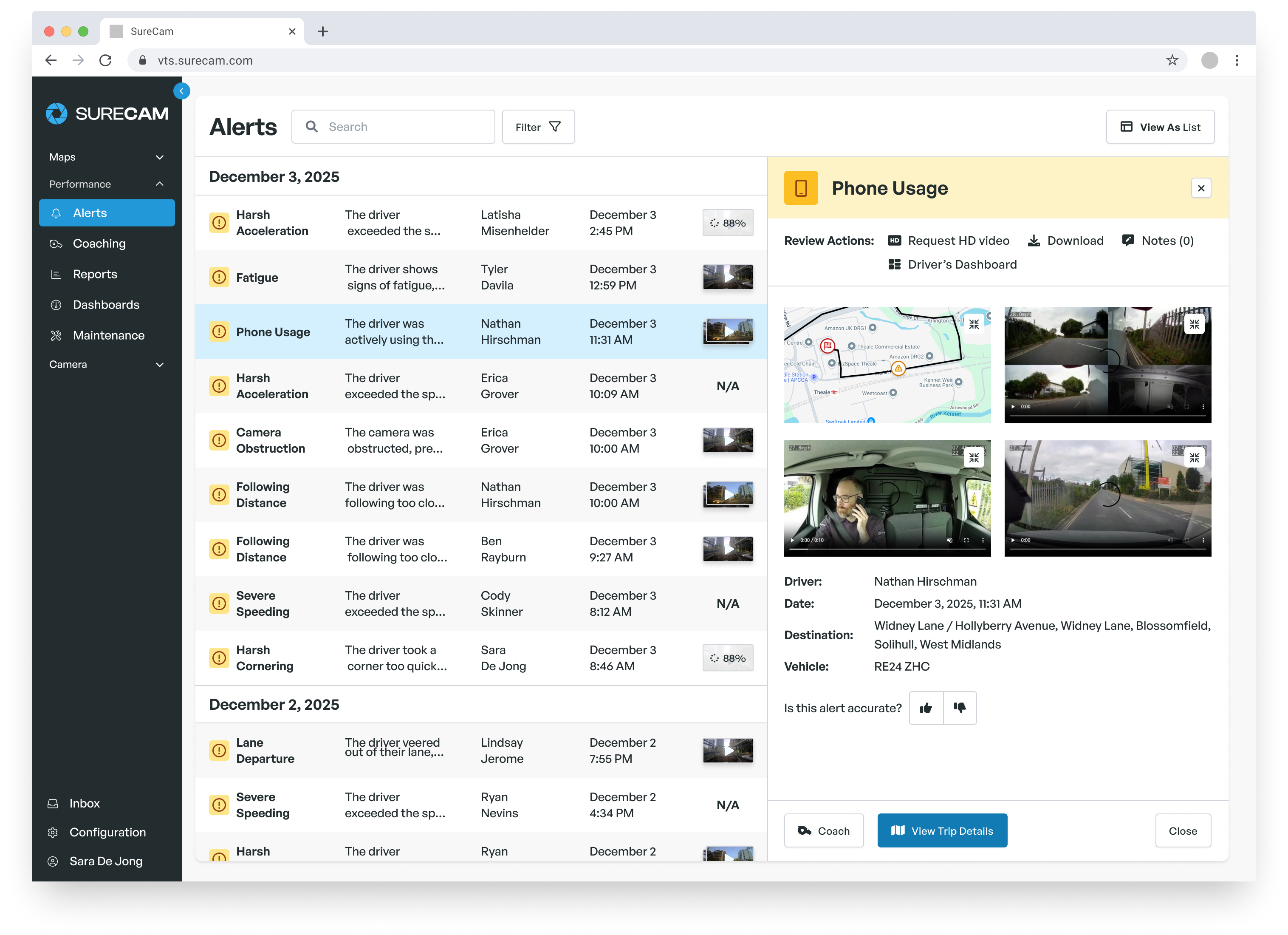
SureCam's AI is trained specifically on the highest-risk behaviors that lead to crashes and claims: phone use, fatigue, tailgating, and blind-spot violations. We surface 80% fewer alerts, but the ones you get actually matter. And our coaching workflow is built into the platform, not a separate module you have to piece together.
Have you ever had the experience of just needing to add cameras? But it takes forever to get a response and the rep doesn’t really understand your operation or what you are asking for?
Verizon Connect supports tens of thousands of accounts. You're competing for attention with national trucking fleets and massive logistics operations. If you're a 75-vehicle HVAC company in the Southeast, you're not the priority.
At SureCam, mid-sized fleets are the priority. Our onboarding team trains your dispatchers and safety leads in 2–3 hours, not two weeks. When you call support, you're talking to someone who's worked with a dozen fleets just like yours in the past month. We know the field service pain points. We know the construction site visibility challenges. We know how municipal fleets need defensible video for public records requests.
Verizon Connect's video pricing is structured around recording hours and cloud storage tiers. The more video you capture, the more you pay. Some fleets end up limiting camera usage or only turning on recording for "high-risk" drivers, which defeats the entire purpose of a safety program.
SureCam pricing is per vehicle, all-inclusive. Unlimited cloud storage. Unlimited event requests. No surprise overage fees when you pull footage for a claim or need to review a customer complaint.
Let me walk through the four big wins fleets tell me about after they migrate:
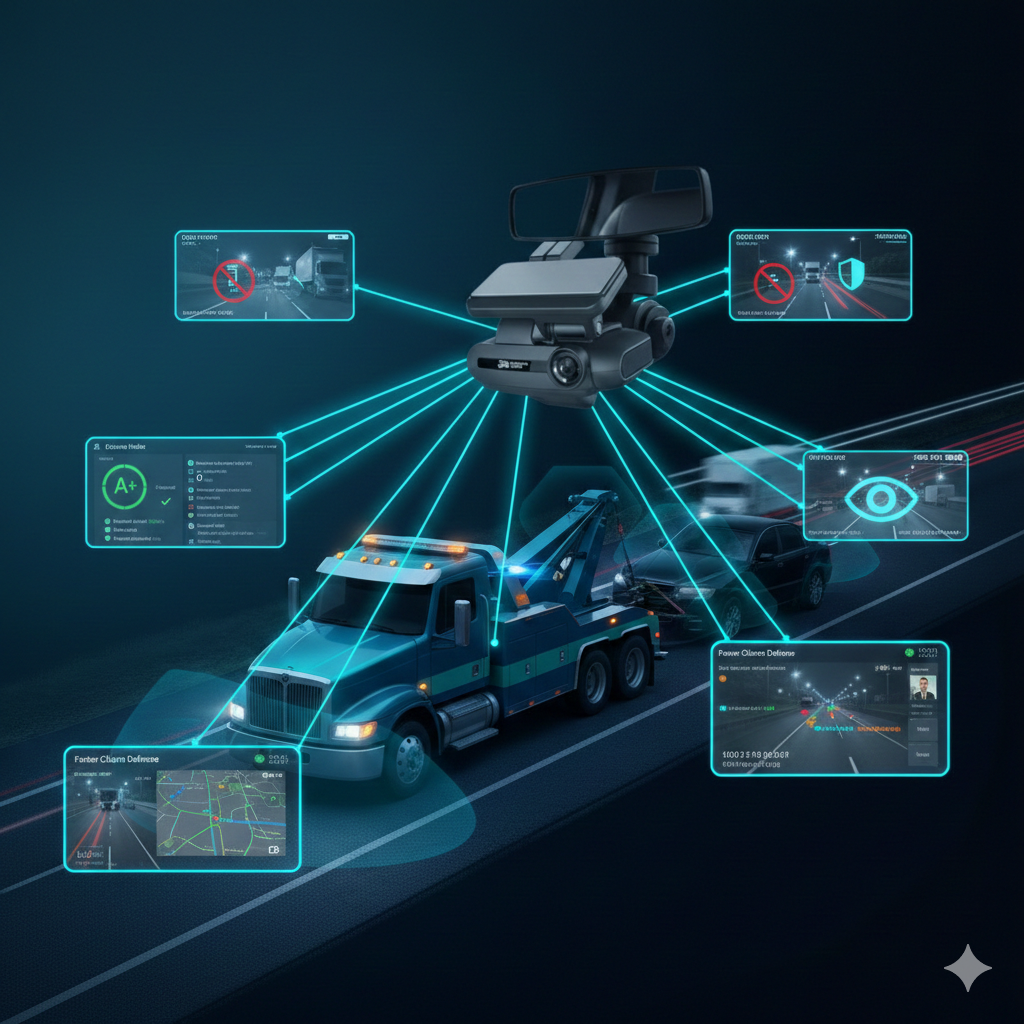
SureCam's dual-lens cameras (road + driver) run AI detection models that alert in real time when a driver is:
The in-cab audio alert happens in the moment—not five minutes later when the dispatcher reviews the event. That's the difference between a near-miss that becomes a coaching conversation and a $250,000 rear-end collision that becomes a nuclear verdict claim.
One of our clients, a 90-vehicle electrical contractor in Texas, saw a 43% reduction in preventable collisions in the first nine months after switching from Verizon Connect. Not because their drivers suddenly became safer—but because the AI caught risky behavior before it became an incident.
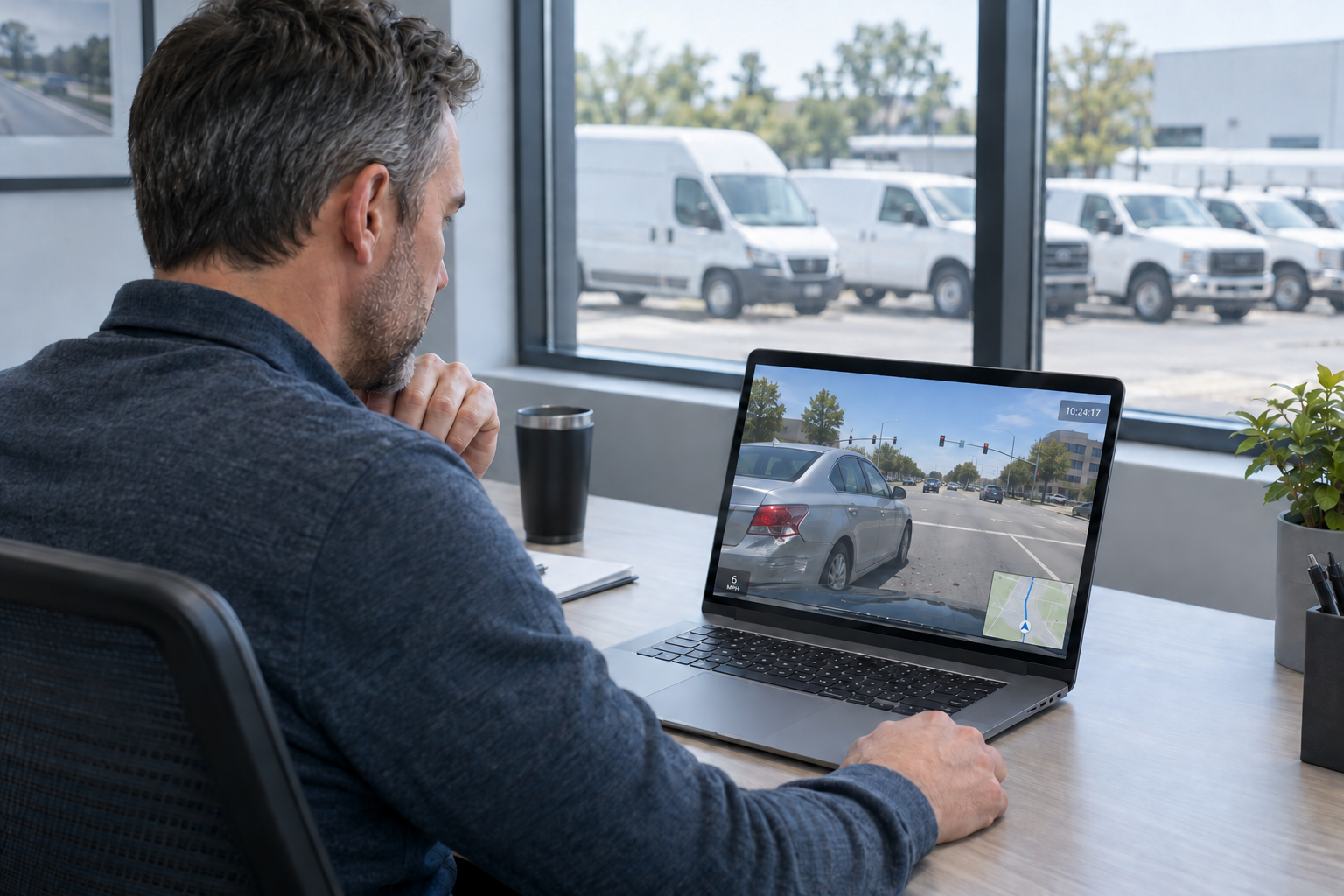
When a customer alleges your driver damaged their fence, or another motorist claims your van cut them off, you need video now—not three hours from now after you've logged into a portal, navigated six menus, submitted a request, and waited for the clip to process.
SureCam's platform lets you pull footage in under 60 seconds. You can share a secure link with your insurance adjuster or legal team instantly. No downloading. No file size limits. No "request pending" status screens.
A municipal fleet in the Midwest told me they went from an average of 11 days to close false claims with Verizon Connect to 36 hours with SureCam, simply because they could get video to their risk manager and city attorney the same day the complaint was filed.
Most mid-sized fleets don't have a full-time safety manager. The operations director or fleet lead is juggling driver scheduling, vehicle maintenance, customer service escalations, and safety—all at once.
Verizon Connect assumes you have someone who's going to spend hours each week reviewing dashboards, tagging events, and building coaching reports manually.
SureCam's Driver Scorecard and Coaching Inbox automatically surface the top-priority behaviors for each driver based on severity and frequency. You're not watching 40 clips. You're watching 3—the ones that matter. You can send a coaching video snippet directly to the driver's phone with a 30-second voice note explaining what to watch for next time. SureCam also has an entire suite of privacy features that you may enable for your drivers, including Facial Blurring, Location Privacy, and the ability to turn in-cab audio off.
It's not about being Big Brother. It's about giving your team the feedback they need to improve—without making it a full-time job for you.
Here's the concern I hear: "If we leave Verizon Connect, we lose our GPS tracking and routing."
Not true. SureCam integrates with Geotab and other telematics platforms through open APIs. If you want to keep using Verizon Connect's GPS/routing module, you can—you're just replacing the video component with something purpose-built for safety.
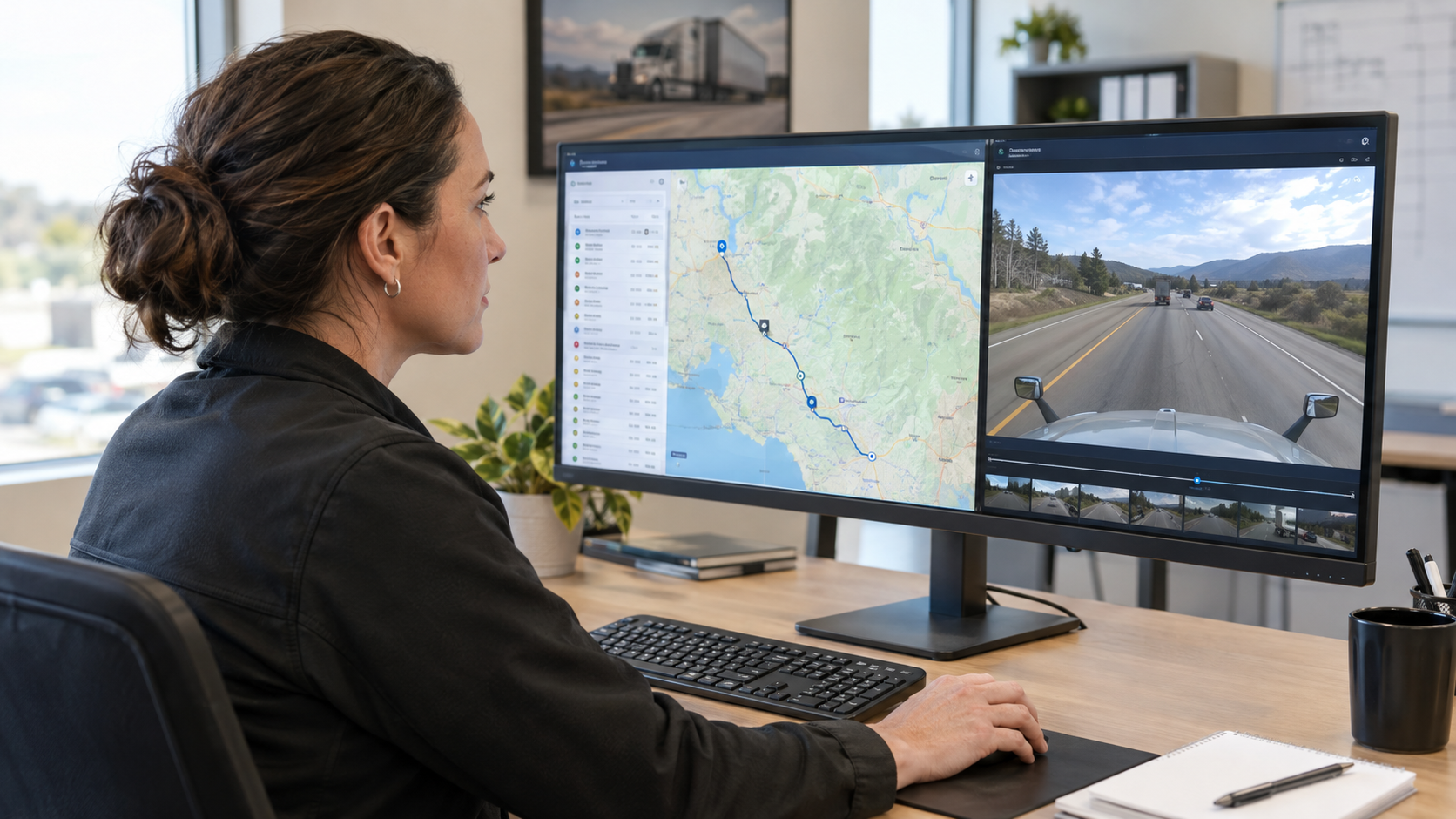
Or, if you're ready to simplify, SureCam includes built-in GPS tracking with geofencing, breadcrumb trails, and speed monitoring. It's not a 50-feature routing optimization engine—but it's exactly what most SMB fleets actually need: visibility into where trucks are, where they've been, and how they're being driven.
We've helped dozens of fleets migrate off Verizon Connect in the past 18 months. Here's the process that works:
Don't rip out your entire Verizon Connect deployment on day one. Start with an initial batch:
SureCam onboarding takes 2–3 hours. We'll train:
You're not learning a new platform for two weeks. You're up and running in days.
Once the training is complete, we'll schedule installation for the rest of your fleet. Most fleets choose one of two paths:
Most Verizon Connect contracts are annual. If you're mid-contract, you have two options:
Switch to SureCam if:
Stay with Verizon Connect if:
Here's what's changed in the past 18 months:
If your video telematics platform isn't helping you prevent incidents, defend claims, and coach drivers efficiently, you're not just missing out—you're taking on unnecessary risk.
Verizon Connect is a capable platform. But it's built for enterprise scale and breadth, not mid-sized simplicity and video-first safety.
At SureCam, we believe small and mid-sized fleets deserve enterprise-grade AI and video telematics without the bloat, the complexity, or the enterprise price tag.
You shouldn't need a dedicated IT team to get cameras installed. You shouldn't need a team of safety managers to make sense of your alerts. And you shouldn't have to navigate a platform built for 5,000-vehicle fleets when you're running 50.
If you're on Verizon Connect today and you're frustrated with video quality, support responsiveness, or coaching workflows, let's talk. We'll walk through a no-obligation pilot, show you the difference in alert accuracy and ease of use, and build a migration plan that fits your operations.
Because in 2026, the question isn't whether you need video telematics. It's whether the platform you're using is actually making your fleet safer—or just checking a box.
Ready to see the difference? Schedule a demo with SureCam's team and bring your toughest questions about migration, integrations, and ROI. We'll show you exactly how we've helped fleets like yours make the switch without missing a beat.