Oil Field Dash Cams: Remote Route Incident Review
25 Sep 2026
driver coaching


Improve fleet safety, reduce operating costs, and optimize field performance with an easy-to-use platform for video, GPS tracking, driver coaching, maintenance, asset tracking, and real-time fleet insights.
Drive your total fleet operations with SureCam’s all-in-one video telematics solution.
Valuable guides, case studies, and videos to help you optimize fleet management, safety, and productivity with telematics solutions.
Values, job opportunities, and ways to connect or partner with SureCam.




[2026 UPDATE: This article has been revised to reflect current commercial dash cam technology, real-world fleet deployments, and updated industry use cases.]
Commercial dash cams give fleet managers real-time video visibility into every vehicle on the road. When an incident happens, footage uploads automatically over a cellular connection. When nothing happens, the footage sits in the cloud, available if something comes up days later. That simple capability solves a problem every commercial fleet faces: incidents turn into costly disputes when there is no video evidence, and disputes almost always favor whichever party has the clearest account of what happened.
Fleet managers deploy commercial dash cams to cut insurance claims costs, defend against false third-party claims, coach drivers on unsafe behaviors, and document on-site operations. This guide covers how those outcomes play out across seven commercial fleet categories.
A concrete mixer fleet and an HVAC dispatch operation share the same legal exposure in a road incident but face very different operational risks on a job site. Construction fleets contend with debris claims and complex multi-vehicle environments. Field service fleets need to verify that employees showed up, stayed on schedule, and behaved professionally. Towing and recovery operations need documentation of vehicle condition before and after a tow.
The case for commercial dash cams strengthens when the technology addresses the specific risks each fleet type actually faces. The sections below break down that match, industry by industry.
Construction fleets generate a disproportionate share of third-party claims. Debris claims are particularly common: a piece of aggregate falls from a mixer drum, a driver in the following lane calls the company, and the dispute begins. Without video, the outcome often depends on who tells the better story.
Concrete Strategies, an American concrete company with 136 vehicles and 800+ field workers, equipped their 33 largest vehicles with SureCam forward-facing cameras. The result: a 75% drop in third-party claims. Lisa Lamons, Safety Training and DOT Compliance Manager, described the pre-camera reality: "You'd have to go on what the driver said, you'd have to go on a police report if a police report was made. Then, you had to go on pictures and hope that the pictures told a story — and a lot of times those pictures didn't tell the story." Camera footage also eliminated the administrative burden. Claims that once consumed nearly a full week of staff time per month now resolve in under 10 hours.
HVAC, plumbing, pest control, and similar field service operations carry a specific liability exposure: the vehicle in a customer's driveway and the employee entering a customer's property. Disputed arrival times, customer complaints about driver behavior, and false claims about damage caused on-site all consume significant management time.
Real-time GPS combined with camera footage addresses these disputes before they escalate. Dispatch can verify arrival time with timestamp data. Managers can pull footage of how the vehicle arrived, how the employee behaved, and what the vehicle looked like before and after a job. Maneri Traffic Control, a California highway traffic control company with 30+ vehicles, layered GPS and LiveCheck cameras to verify employee arrival times and conduct randomized daily safety audits via live video. The outcome: a 70% increase in team productivity, with daily live safety checks built into standard operations.
Towing operators face a compound liability problem. A vehicle towed from an accident scene may already carry pre-existing damage. A vehicle collected from a parking lot may have scratches the owner never noticed until they saw the tow truck leaving. Without documentation, the towing company absorbs the dispute cost.
Forward and rear-facing cameras document vehicle condition at the moment of contact, during the tow, and at drop-off. That footage resolves condition disputes before they reach an attorney. Real-time LiveCheck enables supervisors to monitor difficult recovery operations remotely, providing immediate support when a driver encounters an unusual situation on the road or at a scene.
Food and beverage delivery fleets operate on tight schedules with high per-incident liability. A single collision during a delivery run can cost the company the vehicle repair, the cargo, and the delivery window. More damaging over time: a pattern of incidents that pushes insurance premiums up year over year.
Krispy Kreme UK deployed SureCam forward-facing cameras across their national delivery fleet after finding that GPS-only telematics lacked the video context needed to manage incidents effectively. Ben Povey, Logistics Manager, noted the core problem with SD-card cameras: retrieval depended on the driver, footage could be lost or overwritten, and there was no live visibility. After switching to network-connected cameras, the fleet achieved an 80% drop in incident and accident frequency, along with a 40% reduction in paid motor fleet claims over a six-month period.
Commercial trucking faces the highest per-incident exposure of any fleet type. Nuclear verdicts (jury awards exceeding $10 million) have become an established risk in the US trucking industry, and insurers price accordingly. A single at-fault incident without clear video documentation can produce a claims outcome that threatens a small carrier's financial viability.
Lansberry Trucking, an 80-truck US and Canada carrier founded in 1959, reached their inflection point after a $550,000 claim for an accident that was not their fault. Founder Sam Lansberry II invested in network-connected cameras across the fleet and reframed the decision: "I don't view our investment in SureCam as a cost, it's a profit-center. Last year alone, our claims losses reduced by over 80%."
SAV Express, a 100-vehicle dry goods carrier based in Minnesota, documented a separate angle on commercial trucking exposure. A third-party truck backed into a parked SAV Express vehicle at a truck stop, causing $10,000+ in damage. Without the camera, that incident would have been absorbed out of pocket. Director of Fleet Operations Matt Jacobson described the pre-camera situation plainly: "Before cameras, we previously didn't have a chance. We were hoping on a good Samaritan or maybe a nearby fellow driver." SAV Express has saved more than $1 million in repair and claims costs since adopting SureCam.
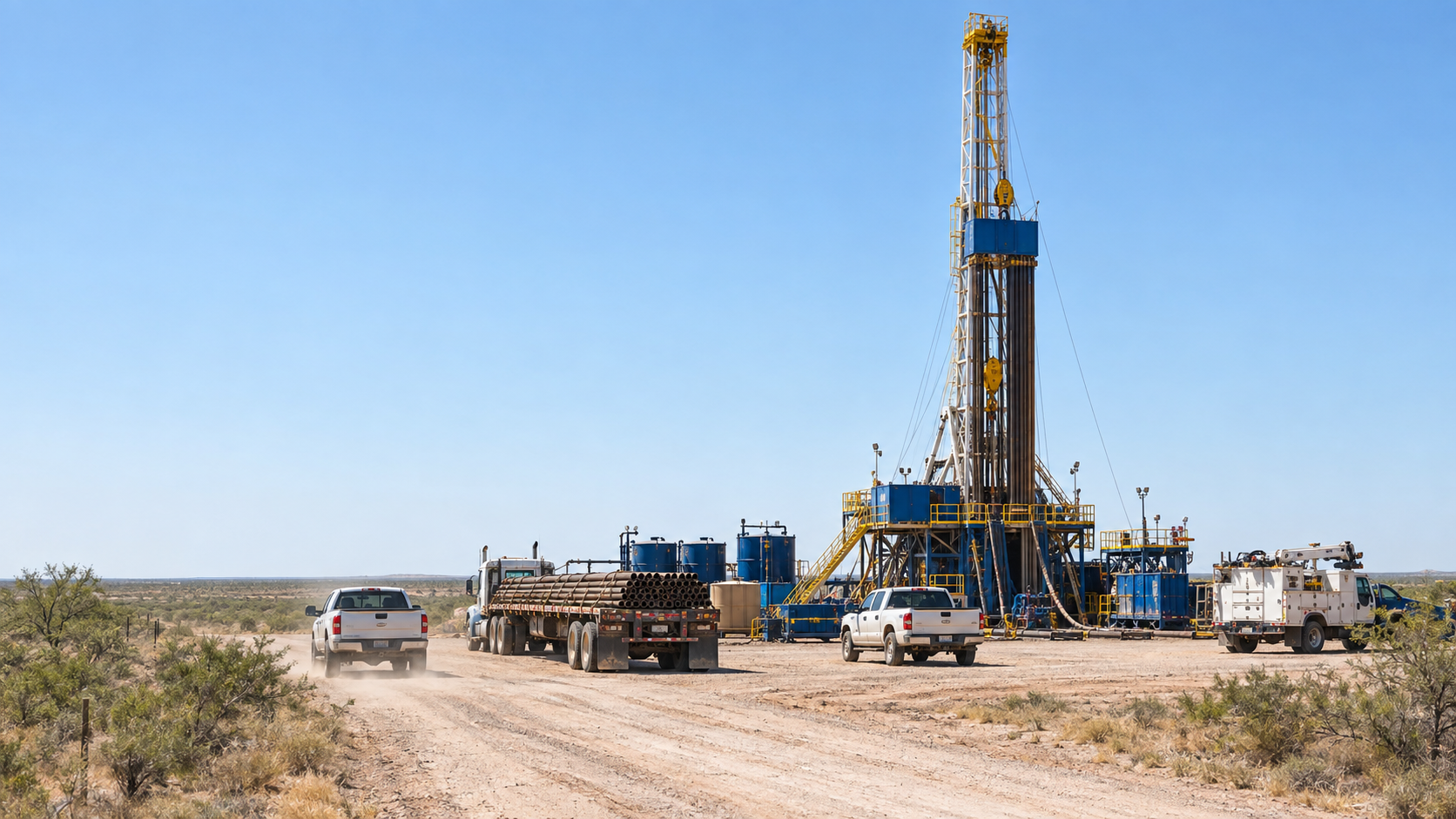
Remote operations create a supervision gap that GPS and connected cameras fill directly. Vehicles traveling long distances to isolated job sites operate outside normal managerial visibility. Driver behavior on those routes, equipment usage at the site, and vehicle condition at return all become difficult to verify without video data.
Network-connected cameras with GPS give operations managers a real-time read on vehicle location, speed events, and driving behavior regardless of how remote the route. Event-triggered recording flags harsh braking, hard cornering, and g-force events automatically, generating coaching material without requiring managers to review continuous footage. For fleets operating in high-compliance environments, that data also supports safety program documentation and incident reporting.
Moving Company fleets carry a liability dimension most other industries avoid: they take physical possession of a customer's property and transport it in an enclosed trailer. When a dispute arises about damage during transit, video cannot show what happened inside the trailer, but it can document the condition of the truck before and after loading, capture how the vehicle handled on the route, and record any incidents that occurred in transit.
Forward-facing cameras document road incidents, hard braking events, and collisions in real time. GPS tracking verifies that drivers took approved routes and maintained appropriate speeds. That data supports both claims defense and customer service: when a customer calls to dispute an arrival time or allege unsafe driving, the footage answers the question directly.
SD-card cameras store footage locally. Retrieving that footage requires a driver to physically remove the card, which introduces delay, potential for loss, and no live visibility for the fleet manager. Network-connected cameras upload footage automatically over cellular as events occur. When an incident triggers the g-force sensor, the footage transmits before the driver completes the incident report.
That difference in retrieval speed directly affects claims outcomes. Insurance adjusters move faster when footage arrives within minutes of a First Notification of Loss call. Opposing counsel makes different decisions when video evidence already exists in the insurer's file. The practical advantage of connected cameras scales with the size and geographic spread of the fleet: the more vehicles operating out of range of a home base, the more retrieval latency matters.
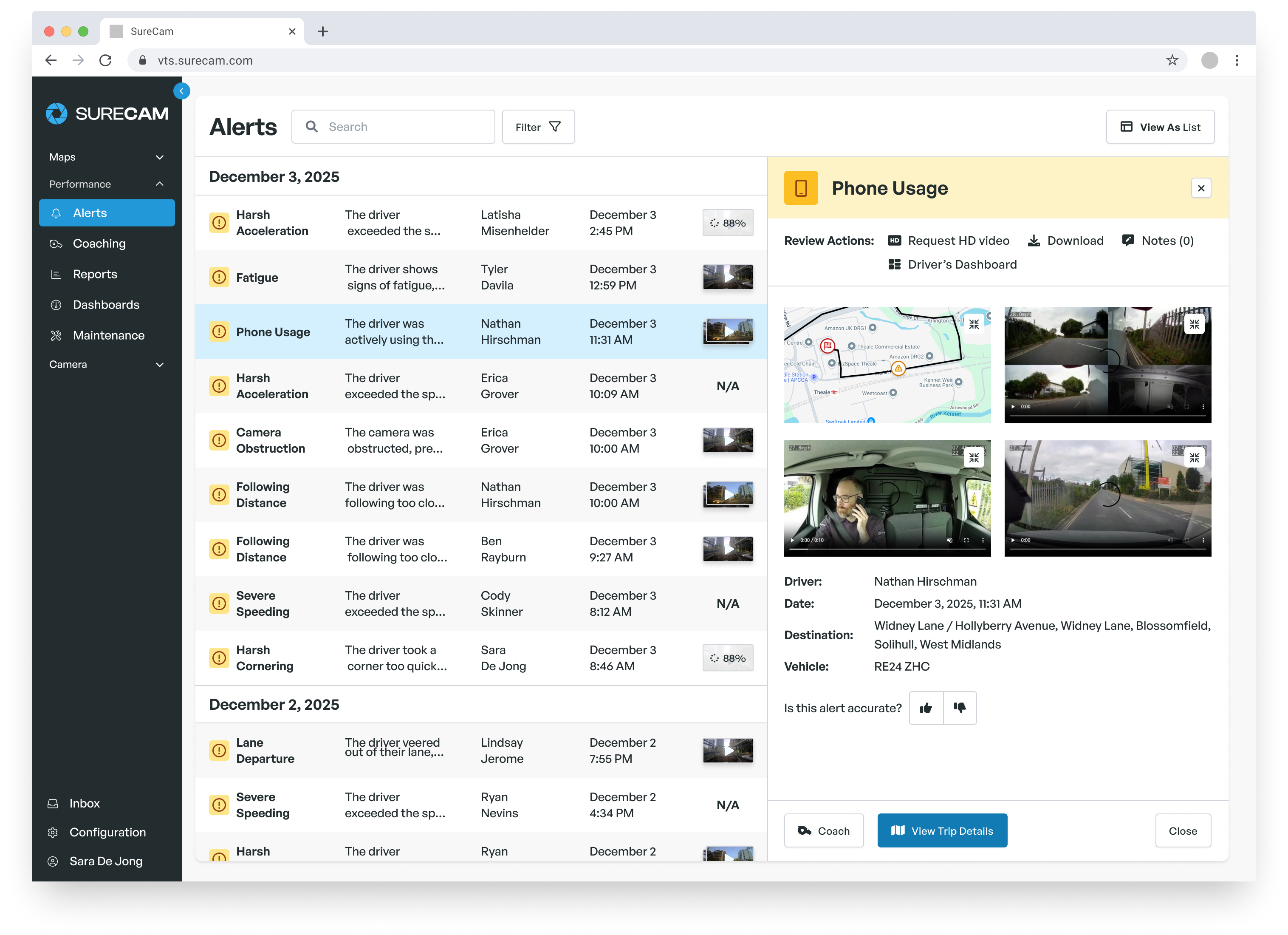
Event-triggered recording activates when the camera's accelerometer detects a g-force event above a set threshold. That captures hard braking, sharp cornering, and collision-level impacts automatically, with the relevant footage tagged for immediate review. Managers receive an alert, pull the clip, and can assess the incident within minutes.
GPS data layers onto the video, giving reviewers speed, location, and vehicle heading at the moment of the event. That combined package (video plus telemetry) gives insurance partners and legal counsel a reconstruction of the incident rather than a single clip. For false claim defense, the difference between "here is video of the incident" and "here is video plus GPS data showing the vehicle was traveling at 28 mph in a 35-mph zone when the third-party driver changed lanes" can determine the entire outcome.
LiveCheck enables supervisors to view a live video feed from any camera in the fleet on demand. For industries with on-site operations (construction, traffic control, towing), that capability extends managerial visibility to locations that would otherwise require a physical supervisor on-site.
Maneri Traffic Control used LiveCheck to conduct randomized safety audits of highway work zones without sending a manager to the site. Vulcraft Carrier, a steel carrier operating trucks up to 80 feet long, deployed LiveCheck to monitor difficult turning maneuvers and unloading operations at job sites, capturing forklift damage on video for liability documentation. The live monitoring capability shifts supervisor time from reactive (responding to incidents after the fact) to proactive (verifying compliance during operations).
The seven cases below represent independent deployments across different fleet types and geographies. They share a common structure: cameras provided video evidence that resolved disputes faster, reduced exposure, or identified driver behaviors worth correcting.
Krispy Kreme UK reduced incident and accident frequency by 80% and paid motor fleet claims by 40% over six months following network-connected camera deployment across their national delivery fleet.
Yuill & Dodds Ltd., a Scotland-based haulage company with 100+ vehicles, defended multiple fraudulent claims using SureCam footage. One incident captured a car that deliberately braked without cause; a second showed a passenger who appeared uninjured at the scene before later claiming personal injury. Both claims were successfully challenged.
Lansberry Trucking reduced claims losses by 80% in one year following camera deployment across 80 trucks, reframing the camera investment as a profit center rather than an operating cost.
Vulcraft Carrier deployed forward and rear-facing cameras plus LiveCheck to document unloading damage at job sites and support real-time driver oversight on large-format steel loads up to 80 feet long.
SAV Express saved more than $1 million in repair and claims costs since integrating SureCam fleet video, with a specific truck-stop collision capture that resolved a $10,000+ incident that would otherwise have been unrecoverable out-of-pocket.
Concrete Strategies reduced third-party claims by 75% across their mixer fleet, cutting claims-related staff time from nearly a full week per month to under 10 hours.
Maneri Traffic Control achieved a 70% increase in team productivity by layering GPS arrival verification and LiveCheck safety audits into daily operations.
Three questions cut through most vendor evaluations for commercial fleets.
First: does the footage transmit automatically, or does retrieval depend on the driver? Network-connected cameras remove driver dependency from the equation. If footage retrieval requires physically accessing the camera or SD card, that footage will not always be available when it matters most.
Second: who owns the footage? Some telematics vendors claim partial or full ownership of video data captured by their hardware. That has real consequences in litigation and claims management. SAV Express left a previous provider specifically because that provider claimed the footage belonged to them, not to the fleet. Verify data ownership terms before signing a contract.
Third: does the vendor integrate with existing telematics or ELD systems? Fleets already running a telematics platform benefit from camera integration that puts GPS data and video in the same interface. Mismatched systems create manual work at exactly the moment when response speed matters most.
Ready to see how SureCam can work for you? Schedule a call with one of our experts today.